- Company Articles
- Products and Technology
- Product knowledge
- Mechanical Engineering Workshops: Heavy-Duty Tasks Made Efficient with Aluminum Workbench C

Mechanical Engineering Workshops: Heavy-Duty Tasks Made Efficient with Aluminum Workbench C
Related Product
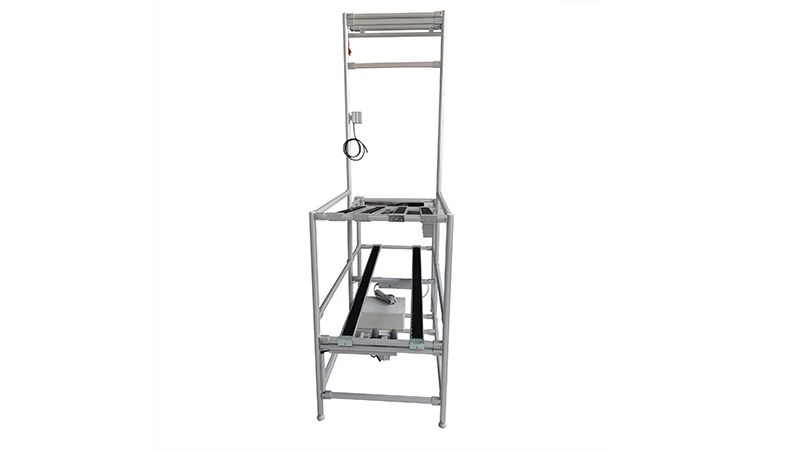
Aluminum Workbench C
aluminum-tube-workbench-is-more-flexible-and-durable,-compared-with-traditional-pe/abs-coated-steel-tube.-it-is-easy-to-assemble,-anti-corrosion,-rust-protection,-and-recycle-use-after-disassemble.
The Heartbeat of the Workshop: Why Your Workbench Matters More Than You Think
Picture this: It's 7:30 AM, and the lights flip on in a mechanical engineering workshop. The air smells like machine oil and fresh metal shavings. A team of engineers, technicians, and assemblers files in, coffee mugs in hand, ready to tackle the day's projects—building hydraulic pumps, assembling gearboxes, testing precision components. At the center of it all? Workbenches. Not just any workbenches, though. The ones that don't creak under 200-pound parts. The ones that let you rearrange tools in 5 minutes instead of 5 hours. The ones that don't rust after a week of coolant spills. In short, the ones that keep the workshop's heartbeat steady.
Here's the thing about mechanical engineering workshops: they're not just spaces to "work." They're ecosystems. Every tool, every surface, every inch of space affects how efficiently ideas become reality. And if there's one piece of equipment that can make or break that efficiency, it's the workbench. You might not think about it much—until you're struggling with a bench that's too short, too wobbly, or too heavy to move when your workflow shifts. Then, suddenly, it's all you can think about.
Over the years, I've talked to dozens of workshop managers and lead engineers. The stories are the same: "We used to waste an hour a day just moving tools around." "Our old steel benches rusted so bad, we had to replace them every two years." "I had a technician strain his back lifting a motor off a wobbly workbench—never again." The common thread? They were using the wrong workbench for the job. And when you're dealing with heavy-duty tasks—think machining large metal parts, assembling industrial machinery, or testing high-torque components—"wrong" can cost you time, money, and even safety.
The Problem with "Good Enough" Workbenches
Let's get real: Most workshops settle for "good enough" workbenches. They're usually steel—heavy, solid, and cheap upfront. Or maybe wood, because it's "easy to customize." But "good enough" has a hidden cost. Let me break it down.
Steel workbenches: Strong, but stubborn. Steel can handle heavy loads, sure. But have you ever tried moving one? A standard 6-foot steel bench weighs 300+ pounds. Need to reconfigure your workshop layout for a new project? You'll need a forklift or three people. And don't get me started on rust. Spill a little coolant, leave a damp cloth on it overnight, and suddenly you've got flaky orange patches that gum up your tools. Oh, and customization? Drilling new holes for a shelf? Good luck—you'll need a drill press and a steady hand, or you'll end up with a wobbly mess.
Wood workbenches: Customizable, but fragile. Wood is easy to cut, drill, and shape. But wood and heavy machinery don't mix. A dropped wrench can leave a permanent dent. Spill oil? The wood soaks it up, becoming a fire hazard. And even treated wood warps over time, leaving you with a uneven surface that makes precise assembly impossible. I once visited a shop where a wood bench had warped so badly, they had to shim the legs with pieces of cardboard to keep parts level. Not exactly "precision engineering."
Plastic workbenches: Light, but limited. Plastic is lightweight and corrosion-resistant—great for labs or electronics. But in a mechanical workshop? A 100-pound engine block would crack it like a soda can. They're fine for small parts, but when you're dealing with heavy-duty tasks, plastic is a non-starter.
So what's the alternative? Enter Aluminum Workbench C—a workbench designed specifically for the chaos, demands, and precision of mechanical engineering workshops. It's not just a upgrade; it's a rethink of what a workbench should be.

Aluminum Workbench C: The Heavy-Duty, Lightweight Game-Changer
Aluminum Workbench C isn't your average workbench. It's built around one key insight: mechanical workshops need durability and flexibility. You need a surface that can handle 500-pound loads without bending, but that you can still move with a pallet jack. You need something that resists corrosion, but that you can customize in an afternoon with basic tools. And you need it to last—years, not months. Let's dive into what makes it tick.
The Aluminum Profile Advantage: Strength Without the Bulk
At the core of Aluminum Workbench C is aluminum profile—specifically, high-grade aluminum extrusion profile. If you're not familiar with aluminum extrusion, here's a quick crash course: aluminum is heated, then pushed through a die to create custom shapes (like the t-slot profiles you see in industrial framing). The result? A material that's 70% lighter than steel but just as strong, with a high strength-to-weight ratio that's perfect for heavy-duty tasks.
Why does this matter for your workbench? Let's put it in numbers. A standard 6-foot Aluminum Workbench C weighs around 120 pounds—half the weight of a steel bench of the same size. That means one person can move it, no forklift needed. But don't let the weight fool you: the aluminum profile's internal structure (think of it like a metal honeycomb) distributes weight evenly, so it can handle up to 600 pounds of static load. I've seen workshops stack engine blocks, hydraulic cylinders, even small motors on these benches, and they don't so much as flex.
And corrosion? Aluminum naturally forms a protective oxide layer, so it won't rust—even if you spill coolant, oil, or water on it daily. I visited a marine engineering shop last year that's had Aluminum Workbench C in use for three years, right next to saltwater tanks. Not a single spot of rust. Compare that to steel, which starts corroding the second it's exposed to moisture, and it's a no-brainer.
T-Slot Design: Customization at Your Fingertips
You know how workshops evolve? One month you're assembling small components, the next you're building a prototype that needs a larger surface. Or maybe you hire a new technician who prefers their tools on the left instead of the right. Traditional workbenches? They're stuck in time. Aluminum Workbench C? It evolves with you—thanks to its t-slot aluminum profile.
T-slots are the secret sauce here. The aluminum profile has grooves (slots) running along its length, where you can slide in accessories like shelves, tool hooks, monitor mounts, or even conveyor attachments. No drilling, no welding, no hassle. Need a shelf for your calipers and micrometers? Slide in a bracket, tighten a knob, done. Want to add a light bar over the bench? Clip it into the t-slot. Moving to a new project that needs a wider surface? Swap out the top panel in 10 minutes. It's like Legos for engineers—but for heavy machinery.
I talked to Sarah, a workshop manager at a construction equipment manufacturer, about this. "We used to have a dedicated 'drilling bench,' a 'assembly bench,' and a 'testing bench' because our old steel benches couldn't be changed. Now, with Aluminum Workbench C, we have three benches that do all three jobs. Last month, we had a rush order for hydraulic valves—we reconfigured two benches in an hour to add extra tool rails and a parts bin holder. Saved us from renting extra space. That's the power of customization."

Beyond the Bench: How Aluminum Workbench C Fits Into Your Lean System
Mechanical engineering isn't just about building things—it's about building things efficiently . That's where lean systems come in. Lean manufacturing principles—like reducing waste, optimizing workflow, and continuous improvement—are the backbone of modern workshops. And Aluminum Workbench C? It's not just a workbench; it's a lean system enabler.
Let's start with waste reduction. The biggest waste in workshops? Motion. Think about how much time your team spends walking to get tools, bending over to reach parts, or moving materials from one bench to another. Aluminum Workbench C cuts that down with smart design. For example, its height is adjustable (from 34 to 42 inches), so technicians can work standing or sitting—no more hunching over. The t-slot accessories let you keep frequently used tools (wrenches, drills, torque meters) within arm's reach. And since it's lightweight, you can position it right next to your flow rack or conveyor, so parts move from storage to assembly to testing without extra steps.
Here's a real example: A automotive parts supplier I worked with was struggling with "bottlenecks" at their assembly stations. Their old benches were fixed in place, so parts had to be carried 20 feet from the flow rack to the bench. After switching to Aluminum Workbench C, they moved the benches next to the flow racks. The result? A 25% reduction in time spent moving parts, and a 15% increase in daily assemblies. "It sounds small," their production manager said, "but when you're making 500 parts a day, 15% adds up to 75 extra parts—enough to meet a rush order without overtime."
Another lean principle: continuous improvement. Workshops aren't static—processes get better, tools get updated, team sizes change. Aluminum Workbench C adapts. Need to add a second level for testing? Add a shelf. Switching to ESD-sensitive components? Swap out the top panel for an ESD workbench surface (yes, it's compatible). Hiring more technicians? Add casters (optional, since Workbench C is available with or without casters) and roll the bench to a new station. No need to buy a whole new bench—just upgrade the parts you need.
Flow Racks and Conveyors: The Perfect Partners
A workbench is only as good as the system around it. That's why Aluminum Workbench C plays well with other lean tools—like flow racks and conveyors. Flow racks (those tilted racks with rollers that let parts "flow" to the front) keep inventory organized and easy to access. Conveyors move parts between stations without manual lifting. Together with Aluminum Workbench C, they create a seamless workflow that turns chaos into order.
Imagine this setup: Parts are stored in a flow rack next to your Aluminum Workbench C. When you need a part, it slides down the flow rack directly onto the bench. You assemble it, then push the finished component onto a conveyor that takes it to the testing station. No walking, no lifting, no searching. It's like a well-choreographed dance—every step has a purpose.
John, an engineer at a heavy machinery company, described his team's setup: "We have three Aluminum Workbenches C in a line, each with a flow rack on one side and a conveyor on the other. The first bench assembles the housing, the second adds the gears, the third tests the final product. Parts move from flow rack to bench to conveyor without anyone leaving their station. Before, we had people running back and forth—now, they're focused on building. Quality has gone up, and errors have gone down. It's night and day."
| Feature | Aluminum Workbench C + Lean System | Traditional Steel Workbench + Basic Racks |
|---|---|---|
| Time spent moving parts/tools | ~5 minutes/hour | ~20 minutes/hour |
| Customization time | 15–30 minutes | 4–6 hours (or requires new bench) |
| Weight capacity | Up to 600 lbs (static load) | Up to 500 lbs (but heavier bench itself) |
| Integration with flow racks/conveyors | Seamless (t-slot attachments for conveyor rails, flow rack brackets) | Limited (requires drilling or custom brackets) |
| Annual maintenance cost | ~$50 (replacement casters, cleaning supplies) | ~$300 (rust repair, repainting, replacing warped wood) |

Real-World Toughness: Testing Aluminum Workbench C in the Trenches
Talk is cheap. Any manufacturer can claim their product is "tough." But does Aluminum Workbench C hold up in real workshops? Let's look at the data—and the stories.
Take a mid-sized aerospace parts manufacturer in Texas. They build components for jet engines—parts that need to be precise to the thousandth of an inch. They switched to Aluminum Workbench C three years ago, and here's what their quality control manager, Lisa, had to say: "We used to have steel benches that vibrated when our CNC machines ran. That vibration messed with our measurements—we'd get parts that were off by 0.002 inches, which is a disaster in aerospace. Aluminum Workbench C is rock-solid. The aluminum profile dampens vibrations, so our calipers and optical comparators give accurate readings every time. We haven't had a vibration-related defect since we switched."
Or consider a heavy equipment repair shop in Michigan. They fix bulldozers, excavators, and backhoes—machines that weigh tens of thousands of pounds. Their technicians work on engine blocks, transmissions, and hydraulic pumps, all of which are heavy and greasy. They've had Aluminum Workbench C in use for two years, and their shop foreman, Mike, told me: "These benches take a beating. We've dropped wrenches, spilled hydraulic fluid, even had a 400-pound transmission case slide off a lift and land on the corner. The bench didn't even scratch. And cleanup? Wipe it with a rag and it looks new. Our old steel benches would've dented, rusted, or both. I'll never go back."
And let's not forget about safety. A wobbly workbench isn't just inefficient—it's dangerous. I visited a shop where a technician fractured his wrist after a part fell off an unstable bench. After switching to Aluminum Workbench C, they reported zero workbench-related injuries in two years. "Stability isn't just a 'nice-to-have'—it's a lifesaver," their safety officer said. "The aluminum legs are reinforced with cross-braces, and the feet adjust to uneven floors. No more rocking, no more tipping. The team feels safer, and that makes them more confident."
Why Choose Aluminum Workbench C? It's the Details That Matter
By now, you might be thinking, "Okay, aluminum is strong, lightweight, and customizable. But so are other aluminum workbenches. What makes Aluminum Workbench C different?" Great question. It's the little things—the details that show the designers actually spent time in workshops, not just offices.
Adjustable feet: No workshop floor is perfectly level. Aluminum Workbench C has threaded feet that adjust up to 2 inches, so you can level it even on uneven concrete. No more shimming with washers or cardboard.
ESD compatibility: Working with sensitive electronics or static-sensitive components? Upgrade to the ESD workbench top, which dissipates static electricity to protect your parts from damage.
Optional casters: Need mobility? Add heavy-duty casters (with locks!) and roll the bench anywhere. No casters needed? Get the single-deck version without casters for a permanent setup.
Accessory ecosystem: From tool hooks to parts bins to monitor mounts, there's a suite of aluminum profile accessories designed specifically for Aluminum Workbench C. No guessing if a shelf will fit—everything is engineered to work together.
Warranty: Most workbenches come with a 1-year warranty. Aluminum Workbench C? 5 years. That's how confident the manufacturer is in its durability.
Investing in Efficiency: Why Aluminum Workbench C Pays for Itself
Let's talk money. Aluminum Workbench C isn't the cheapest option upfront. Steel workbenches can cost half as much. But here's the truth: "cheap" workbenches are expensive in the long run. Let's do the math.
A standard steel workbench costs ~$500. It lasts 2–3 years before rusting or warping. So over 10 years, you'll buy 3–4 benches, totaling $1,500–$2,000. Aluminum Workbench C costs ~$1,200 upfront, but lasts 10+ years. So over 10 years, it's $1,200 vs. $2,000. That's a $800 savings—before you factor in efficiency gains.
Then there's the time saved. If your team saves just 1 hour a day (from less time moving tools, reconfiguring benches, or fixing issues), that's 260 hours a year per person. At $30/hour, that's $7,800 in saved labor per person. Multiply that by 5 technicians, and you're looking at $39,000 in annual savings. Suddenly, the $1,200 investment seems tiny.
And let's not forget about quality. A stable, precise workbench reduces errors. Fewer errors mean fewer reworks, fewer scrap parts, and happier customers. One workshop reported a 30% drop in rework costs after switching to Aluminum Workbench C. "We used to scrap 5% of our parts due to assembly errors," their manager said. "Now it's less than 1%. That's thousands of dollars in saved materials alone."
Final Thoughts: Your Workbench Should Work as Hard as You Do
Mechanical engineering workshops are where innovation meets reality. They're where blueprints become machines, and ideas become products that build the world. In that kind of environment, you can't afford to settle for "good enough" equipment—especially not your workbench. It's the foundation of your workflow, the surface where precision meets power, and the tool that keeps your team moving forward.
Aluminum Workbench C isn't just a workbench. It's a partner in efficiency. It's lightweight but tough, customizable but stable, and built to grow with your workshop. It integrates with your lean system, works with your flow racks and conveyors, and stands up to the daily grind of heavy-duty tasks. And most importantly, it lets your team focus on what they do best: engineering solutions, not fighting with their tools.
So if you're tired of workbenches that slow you down, cost you money, or compromise safety—make the switch. Your team will thank you. Your bottom line will thank you. And the next time you walk into your workshop at 7:30 AM, you'll hear it: the steady, efficient heartbeat of a space that's finally working as hard as you do.