- Company Articles
- Products and Technology
- Application Cases
- Mechanical Manufacturing: 2040 Aluminum Profile End Caps Applications

Mechanical Manufacturing: 2040 Aluminum Profile End Caps Applications
Related Product
2040 Aluminum Profile End Cap
The aluminum profile end cap adds a finishing touch to your project and closes off profile ends to limit dust and debris buildup, also it can avaid some scratch for material and labor during the assemble work.
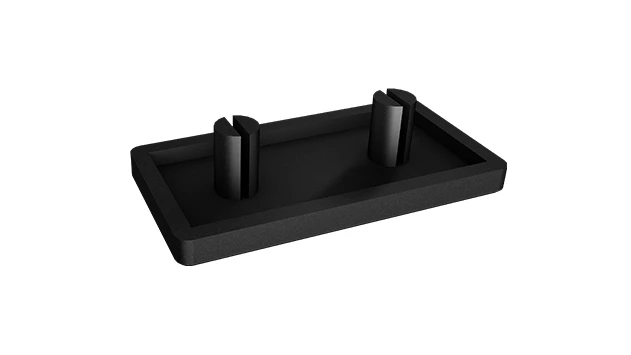
In the fast-paced world of mechanical manufacturing, where precision and efficiency are the cornerstones of success, it's often the smallest components that play the most critical roles. While large machinery and high-tech equipment grab the spotlight, there's a quiet hero working behind the scenes: the aluminum profile end cap. Specifically, the 2040 aluminum profile end cap—though unassuming in size—stands as a testament to how thoughtful engineering in small parts can elevate safety, durability, and workflow in factories and assembly lines worldwide. In this article, we'll dive into the world of aluminum extrusion profiles, explore why the 2040 profile has become a staple in manufacturing, and uncover the myriad applications of its end caps that keep production floors running smoothly.
Understanding Aluminum Profiles: The Backbone of Modern Factories
What Are Aluminum Extrusion Profiles?
Aluminum extrusion profiles are the building blocks of modern manufacturing. Created by forcing heated aluminum through a die to form specific cross-sectional shapes, these profiles are prized for their strength, lightweight nature, and versatility. Unlike traditional steel structures, aluminum profiles offer a unique combination of rigidity and flexibility—they can be easily cut, drilled, and assembled into custom structures without the need for welding or heavy machinery. This adaptability has made them indispensable in industries ranging from automotive and electronics to aerospace and logistics.
Why Aluminum Profiles Dominate Mechanical Manufacturing
So, why have aluminum profiles become the go-to choice for manufacturers? For starters, their lightweight composition reduces the strain on conveyor systems and assembly line equipment, lowering energy costs and extending the lifespan of machinery. Aluminum is also naturally resistant to corrosion, a critical feature in environments where exposure to oils, coolants, or humidity is common. Additionally, the T-slots running along the length of most profiles allow for quick attachment of accessories—think brackets, shelves, or tools—making reconfiguration of workspaces a breeze. In an era where manufacturing lines need to adapt to changing product designs or production demands, this flexibility is invaluable.
Meet the 2040 Aluminum Profile: A Versatile Workhorse
Dimensions and Design
Among the many aluminum extrusion profiles available, the 2040 stands out as a true workhorse. As the name suggests, it measures 20mm in width and 40mm in height, striking a perfect balance between compactness and load-bearing capacity. Its cross-section typically features two or three T-slots, providing ample space for attaching accessories while maintaining structural integrity. This design makes the 2040 profile ideal for applications where space is limited but strength can't be compromised—think workbenches, material racks, or lightweight conveyor frames.
Common Applications of 2040 Profiles
The 2040 aluminum profile's versatility shines in its range of applications. In electronics manufacturing, it's used to build ESD (Electrostatic Discharge) workstations, where its non-conductive properties help protect sensitive components from static damage. In automotive plants, it forms the framework for parts storage racks, allowing easy access to tools and components. Logistics facilities rely on 2040 profiles for lightweight turnover trolleys, which glide smoothly across warehouse floors thanks to their low weight. Even in small-scale workshops, hobbyists and DIY enthusiasts favor the 2040 for its ease of use in building custom tool organizers or 3D printer enclosures. Simply put, if a structure needs to be sturdy, lightweight, and adaptable, the 2040 profile is often the first choice.

The Role of End Caps: More Than Just a Finishing Touch
Protection: Safeguarding Profiles and People
Now, let's turn our attention to the unsung hero of this story: the 2040 aluminum profile end cap. At first glance, end caps might seem like little more than decorative covers—after all, they're small, often made of plastic or aluminum, and sit at the ends of profiles. But their role is far more critical than meets the eye. One of their primary functions is protection. Raw aluminum profiles have sharp, unfinished edges that can pose a safety hazard to workers. A stray hand brushing against an exposed profile end could result in a cut, and in high-traffic areas, the risk of injury increases. End caps smooth these edges, turning a potential hazard into a safe, rounded finish.
Debris Prevention: Keeping Workspaces Clean
Beyond safety, end caps play a vital role in maintaining the longevity of aluminum profiles. The hollow interior of most profiles can easily collect dust, debris, or liquids—think metal shavings from drilling, coolant spills, or even small screws and washers. Over time, this buildup can corrode the inside of the profile, weakening its structure, or clog the T-slots, making it difficult to attach accessories. End caps seal off the open ends of the profile, acting as a barrier against these intruders. In a busy manufacturing environment, where time is money, the last thing a team needs is to stop production to clean out a clogged profile or replace a corroded section. End caps help avoid these disruptions, keeping workflows running smoothly.
Aesthetic and Functional Integration
End caps also contribute to the overall professionalism of a workspace. A manufacturing line dotted with exposed profile ends looks unfinished and unpolished, which can leave a poor impression on clients or auditors. End caps provide a clean, uniform appearance, signaling attention to detail and a commitment to quality. Additionally, some end caps are designed with functional features—like slots for cable management or holes for mounting labels—further enhancing their utility. For example, in an electronics assembly line, labeled end caps can help workers quickly identify which tools or components belong on a specific workstation, reducing errors and speeding up production.

2040 Aluminum Profile End Caps in Action: Key Applications
Workbenches: Where Precision Meets Safety
Workbenches are the heart of any manufacturing or assembly operation, and 2040 aluminum profiles are a popular choice for their construction. A typical workbench built with 2040 profiles features a sturdy frame, a tabletop (often made of plywood, MDF, or aluminum honeycomb panel), and accessories like tool hooks or overhead shelves. Here, end caps are non-negotiable. Imagine a worker leaning over the bench to assemble a small electronic component—their arm brushes against the edge of the profile. Without an end cap, that could mean a painful cut; with one, it's a smooth, harmless contact. End caps also prevent small parts—like screws or washers—from falling into the hollow profile, where they could rattle around and damage the structure or become a lost, costly component.
Take, for example, a workbench used in smartphone assembly. The 2040 profile frame supports a static-sensitive ESD mat, and end caps ensure that no sharp edges come into contact with delicate screens or circuit boards. The sealed ends also prevent dust from accumulating inside the profiles, which is critical in cleanroom environments where even a speck of dirt can ruin a product. In this scenario, end caps aren't just accessories—they're essential to maintaining product quality and worker safety.
Material Racks: Organizing Efficiency
Material racks are another area where 2040 aluminum profile end caps shine. Whether it's a "material rack b (3 row and 3 floor)" for storing bulk components or a smaller shelf unit for tools, these racks need to withstand constant loading and unloading. End caps play a dual role here: protecting workers from sharp edges when retrieving items and preventing debris from falling into the profiles, which could weaken the rack over time. In high-volume warehouses, where material racks are accessed by forklifts or pallet jacks, end caps also act as a buffer against accidental bumps, reducing the risk of dents or scratches to the profiles.
Consider a automotive parts warehouse using 2040 profile racks to store small components like nuts, bolts, and washers. Each shelf is labeled, and the end caps on the vertical supports are color-coded to match the labels, making it easy for workers to quickly locate the parts they need. The sealed ends ensure that no dirt or moisture gets inside the profiles, keeping the rack structurally sound even in humid conditions. Over time, this attention to detail translates to fewer replacements, lower maintenance costs, and a more efficient workflow.
Conveyor Systems: Keeping Production Moving
Conveyor systems are the arteries of manufacturing, transporting products from one station to the next. 2040 aluminum profiles are often used to build lightweight conveyor frames, especially for small or medium-sized products like cosmetics, pharmaceuticals, or electronic parts. In these systems, end caps are critical for maintaining smooth operation. The open ends of the profiles could catch on conveyor belts or roller tracks, causing jams or damaging the product. End caps eliminate this risk, ensuring that the conveyor runs seamlessly.
For instance, a food packaging line using a roller conveyor built with 2040 profiles relies on end caps to prevent crumbs or liquid spills from entering the profile ends. Without them, spilled juice or crumbs could attract pests or cause the rollers to seize up, halting production. End caps also make cleaning the conveyor easier—instead of having to vacuum or wipe inside the profiles, workers can simply wipe down the exterior, saving time and effort. In a industry where downtime can cost thousands of dollars per minute, this reliability is priceless.
Assembly Lines: Adaptable and Safe
Modern assembly lines need to be adaptable, able to switch between product models with minimal retooling. 2040 aluminum profiles excel here, as they can be quickly reconfigured into different workstations or production cells. End caps play a key role in these dynamic environments by ensuring that even as the line is rearranged, safety isn't compromised. When workers disassemble and reassemble sections of the line, end caps provide a consistent, safe finish to the profiles, reducing the risk of injury during the process.
Imagine a toy manufacturer that produces both action figures and dolls on the same assembly line. When switching from one product to the other, the team reconfigures the 2040 profile workstations to accommodate different tools and fixtures. Thanks to end caps, the workers can handle the profiles without worrying about cuts, and the new setup maintains a clean, professional appearance. The end caps also help secure accessories like light fixtures or barcode scanners, ensuring they stay in place during production. This adaptability, paired with the safety and functionality of end caps, allows the manufacturer to meet tight deadlines and changing customer demands.
Comparing Aluminum Profile End Caps: A Quick Reference
Not all aluminum profile end caps are created equal. Different profile sizes require different end caps, each with its own set of features and benefits. The table below compares common end caps used with popular aluminum profiles, including the 2040:
| Profile Type | Dimensions (W x H) | End Cap Material Options | Typical Load Capacity | Primary Applications |
|---|---|---|---|---|
| 2020 | 20mm x 20mm | Plastic, Nylon | Light (up to 50kg per linear meter) | Small shelving, Cable management, Light-duty frames |
| 3030 | 30mm x 30mm | Plastic, Aluminum | Medium (up to 150kg per linear meter) | Workstations, Tool racks, Medium-duty conveyor frames |
| 4040 | 40mm x 40mm | Aluminum, Steel-reinforced Plastic | Heavy (up to 300kg per linear meter) | Heavy-duty shelving, Industrial workbenches, Large conveyor systems |
| 2040 | 20mm x 40mm | Plastic, Aluminum | Medium (up to 120kg per linear meter) | Workbenches, Material racks, Light-to-medium conveyor frames, ESD workstations |
Material Matters: Choosing the Right 2040 End Cap
Plastic End Caps: Cost-Effective and Lightweight
Plastic end caps are the most common choice for 2040 aluminum profiles, and for good reason. Made from durable materials like polypropylene (PP) or polyethylene (PE), they're lightweight, affordable, and resistant to impact. Plastic end caps are available in a range of colors, making them ideal for color-coding workstations or racks. They're also easy to install—most simply snap into place, requiring no tools. However, they may not be suitable for high-temperature environments, as plastic can warp or melt when exposed to extreme heat. For most general manufacturing applications, though, plastic end caps offer the perfect balance of cost and performance.
Aluminum End Caps: Durability for Heavy-Duty Use
For applications where strength and heat resistance are priorities, aluminum end caps are the way to go. Machined from solid aluminum, these end caps offer superior durability, able to withstand heavy impacts and temperatures up to 200°C (392°F). They're often used in industrial settings, such as foundries or welding shops, where plastic end caps would fail. Aluminum end caps also provide a more premium, integrated look, as they match the finish of the profile itself. The downside? They're heavier and more expensive than plastic options, and they typically require screws or adhesive for installation. For most manufacturers, though, the added durability is worth the investment in high-stress environments.
Specialized Materials: ESD-Compliant and Chemical-Resistant Options
In specialized industries, end caps may need to meet additional requirements. For example, in electronics manufacturing, ESD-compliant end caps are essential to prevent static electricity from damaging sensitive components. These end caps are made from conductive plastics or rubber, which dissipate static charges safely. In chemical processing plants, end caps made from chemical-resistant materials like PVC or Teflon protect the profiles from corrosive substances. While these specialized end caps are more expensive, they're critical for maintaining product quality and worker safety in niche applications.
Installation Tips: Ensuring a Secure Fit
Tools Needed
Installing 2040 aluminum profile end caps is a straightforward process, but having the right tools on hand makes it even easier. For plastic snap-on end caps, you'll need nothing more than your hands—simply align the end cap with the profile and press firmly until it clicks into place. For aluminum or screw-on end caps, a Phillips-head screwdriver or hex key (depending on the fastener type) is necessary. If the profile ends are rough or uneven, a deburring tool can smooth them out, ensuring a tight fit and preventing damage to the end cap.
Step-by-Step Installation Guide
- Prepare the Profile End: Use a deburring tool to remove any sharp edges or burrs from the cut end of the 2040 profile. This ensures a smooth surface for the end cap to adhere to and reduces the risk of injury during installation.
- Align the End Cap: For snap-on end caps, line up the tabs or prongs with the T-slots or inner edges of the profile. For screw-on end caps, ensure the holes in the end cap align with the pre-drilled holes (if any) in the profile.
- Secure the End Cap: For snap-on caps, press firmly around the edges until you hear a "click," indicating it's locked in place. For screw-on caps, insert the screws and tighten them until snug—be careful not to over-tighten, as this could strip the threads or crack the end cap.
- Test the Fit: Give the end cap a gentle tug to ensure it's secure. If it wiggles or comes loose, recheck the alignment and try again.
Common Pitfalls to Avoid
While installing end caps is simple, there are a few common mistakes to watch out for. One is using the wrong size end cap—always double-check that the end cap is designed for 2040 profiles, as using a 2020 or 3030 cap will result in a loose or ill-fitting seal. Another mistake is skipping the deburring step—rough edges can tear or crack plastic end caps, reducing their effectiveness. Finally, over-tightening screws on aluminum end caps can damage the profile or the end cap itself; hand-tightening is usually sufficient.
The Benefits of Quality End Caps: ROI Beyond the Initial Cost
Extended Profile Lifespan
Investing in quality end caps pays off in the long run by extending the lifespan of your aluminum profiles. By preventing debris, moisture, and corrosive substances from entering the profile ends, end caps reduce the risk of internal damage, such as rust or weakening of the structure. A profile protected by end caps can last up to 50% longer than one left exposed, reducing the need for frequent replacements and lowering overall material costs.
Reduced Maintenance Costs
Maintenance is a fact of life in manufacturing, but end caps can help minimize the time and money spent on upkeep. Without end caps, profiles may need to be cleaned or repaired regularly to remove debris or fix corrosion. End caps eliminate these tasks, freeing up maintenance teams to focus on more critical issues. For example, a warehouse with 100 material racks built with 2040 profiles could save hundreds of hours per year in cleaning and repairs by using end caps.
Improved Workplace Safety and Compliance
Safety is a top priority in any manufacturing environment, and end caps play a key role in keeping workers safe. By smoothing sharp edges, they reduce the risk of cuts and lacerations, which are among the most common workplace injuries. In addition, many regulatory bodies—like OSHA in the United States—require machinery and structures to have rounded edges to prevent injury. Using end caps helps manufacturers meet these compliance standards, avoiding fines and legal issues.
Enhanced Workflow Efficiency
Finally, end caps contribute to a more efficient workflow by reducing disruptions. A conveyor system without end caps is more likely to jam; a workbench with exposed profile ends may slow workers down as they avoid sharp edges. By eliminating these issues, end caps help keep production lines running smoothly, reducing downtime and increasing output. In a manufacturing facility producing 10,000 units per day, even a 1% increase in efficiency can translate to 100 additional units—all thanks to a small component like an end cap.
Future Trends: Innovations in Aluminum Profile End Caps
Sustainability: Recyclable and Eco-Friendly Materials
As the manufacturing industry moves toward sustainability, end cap materials are evolving too. Many manufacturers now offer end caps made from recycled plastics or biodegradable materials, reducing their environmental impact. Aluminum end caps, already recyclable, are being produced using more energy-efficient processes, lowering their carbon footprint. In the future, we can expect to see even more innovations in sustainable end cap design, such as end caps made from plant-based plastics or aluminum alloys with higher recycled content.
Customization: Tailored to Specific Needs
Manufacturers are increasingly demanding end caps tailored to their unique applications. This has led to the development of custom end caps with features like integrated cable channels, RFID tags for inventory tracking, or ergonomic grips for easy handling. For example, a medical device manufacturer might request end caps with antimicrobial coatings to meet strict hygiene standards, while a logistics company could opt for end caps with built-in barcode scanners to track inventory. As 3D printing technology advances, we may even see on-demand production of custom end caps, allowing manufacturers to order exactly what they need, when they need it.
Integration with Smart Manufacturing Systems
Smart manufacturing, or Industry 4.0, is transforming the way factories operate, and end caps are no exception. Future end caps may include sensors that monitor temperature, vibration, or stress on the profile, sending real-time data to a central system. This would allow manufacturers to predict when a profile might fail or need maintenance, preventing downtime. For example, a sensor in an end cap could detect excessive vibration in a conveyor frame, alerting maintenance teams to tighten a loose bolt before a breakdown occurs. While this technology is still in its early stages, it's clear that end caps will play an increasingly integrated role in the smart factories of tomorrow.
Conclusion: Small Components, Big Impact
In the grand scheme of manufacturing, 2040 aluminum profile end caps may seem like small fry. But as we've explored, these unassuming components play a critical role in ensuring safety, efficiency, and durability in factories and assembly lines worldwide. From protecting workers from sharp edges to preventing debris buildup and enhancing workflow, end caps are the unsung heroes that keep production moving. As manufacturing continues to evolve—becoming more sustainable, adaptable, and smart—end caps will evolve with it, proving that even the smallest components can make a big impact. So, the next time you walk through a factory or assembly line, take a moment to appreciate the end caps on those aluminum profiles—they're working harder than you think.