- Company Articles
- Products and Technology
- Product knowledge
- Mechanical Manufacturing: 4040E EU Standard Aluminum Profile for Custom Machinery Frames

Mechanical Manufacturing: 4040E EU Standard Aluminum Profile for Custom Machinery Frames
Related Product
4040E EU Standard Aluminum Profile
4040E is a 4.00x4.00 CM fractional 40 series square extrusion T-slot profile with two side open T-slots, two side with closed face, each side with 4.00cm face. The profile has align-a-grooves to assist in aligning connecting profiles.
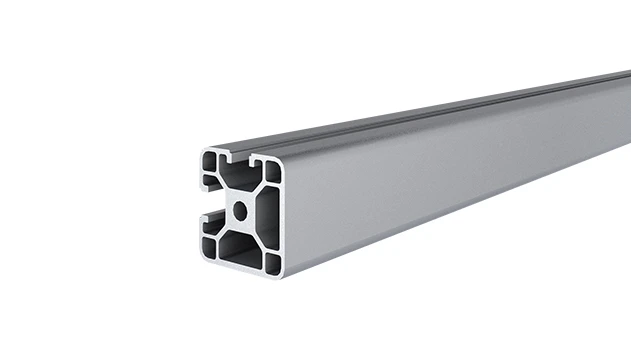
In the fast-paced world of mechanical manufacturing, the backbone of any efficient production line, workshop, or automated system lies in its structure. Whether you're building a sturdy workbench for assembly tasks, a flexible production line frame, or an enclosure for precision machinery, the materials you choose can make or break performance, durability, and adaptability. Enter the 4040E EU Standard Aluminum Profile —a game-changer in the realm of custom machinery frames. Designed to balance strength, versatility, and ease of use, this aluminum extrusion has become a go-to choice for manufacturers aiming to build lean, modular, and future-proof systems. In this article, we'll dive into what makes the 4040E profile stand out, how it integrates with essential accessories, and why partnering with a trusted lean system supplier can elevate your manufacturing setup.
What Makes 4040E EU Standard Aluminum Profile Stand Out?
At first glance, aluminum profiles might all seem similar—long, metallic beams with grooves. But the 4040E isn't just any profile. Let's break down its core attributes that set it apart in the competitive landscape of mechanical manufacturing.
Material Composition: The Foundation of Reliability
The 4040E is crafted from high-grade aluminum alloy, typically 6063-T5, a material renowned for its excellent mechanical properties. This alloy offers a rare combination of strength, ductility, and corrosion resistance, making it ideal for both indoor and controlled outdoor environments. Unlike cheaper alternatives that may warp under stress or degrade over time, the 4040E's composition ensures it can withstand the rigors of daily manufacturing use—from supporting heavy equipment on a workbench to enduring vibrations in automated production lines.
Dimensions and Practical Design
True to its name, the 4040E features a square cross-section of 40mm x 40mm—an optimal size for medium to heavy-duty applications. This dimensions strike a perfect balance: it's compact enough to fit into tight workshop spaces yet robust enough to support substantial loads. The profile's walls are engineered with precision, ensuring uniform thickness that enhances structural integrity without adding unnecessary weight. Whether you're building a stationary frame or a mobile unit with caster wheel attachments, this balance of size and strength is a critical advantage.
EU Standards: Compliance You Can Trust
"EU Standard" isn't just a label here—it's a promise of quality and safety. The 4040E adheres to strict European regulations for material safety, dimensional accuracy, and performance. This compliance matters for two key reasons: first, it ensures compatibility with a wide range of aluminum profile accessories (think connectors, brackets, and panels) from global suppliers, eliminating the hassle of mismatched parts. Second, it guarantees that the profile meets environmental and safety benchmarks, a must for manufacturers operating in regulated industries like automotive, aerospace, or medical device production.
Key Features of 4040E Aluminum Profile
Beyond its material and compliance, the 4040E's design is packed with features that cater to the needs of modern manufacturers. Let's explore the most impactful ones:
T-Slot Design: The Heart of Versatility
At the core of the 4040E's appeal is its T-slot geometry. Running along all four sides of the profile, these slots are precision-machined to accept bolts, nuts, and specialized connectors without the need for drilling or welding. Imagine building a workbench: with T-slots, you can easily attach a tool rack on one side, a monitor arm on another, and a storage bin below—all in minutes, without modifying the profile itself. This flexibility is a game-changer for custom machinery frames, where no two projects have the same requirements. Need to reconfigure your production line next month? Simply loosen the bolts, adjust the accessories, and tighten—no cutting or rewelding required.
Strength-to-Weight Ratio: Sturdy Yet Lightweight
Steel has long been a staple for heavy-duty frames, but it comes with a downside: weight. A steel frame of the same size as the 4040E would be significantly heavier, making it harder to move, install, or reconfigure. The 4040E, by contrast, leverages aluminum's natural lightness while maintaining impressive load-bearing capacity. Depending on the wall thickness and alloy temper, it can support up to 500kg per linear meter in static applications—more than enough for most machinery frames, workbench tops, or material racks. This strength-to-weight ratio not only eases installation but also reduces strain on caster wheel s and floor structures, extending the lifespan of your entire setup.
Corrosion Resistance: Built to Last
Manufacturing environments are rarely gentle. From coolants and lubricants to humidity and dust, machinery frames face constant exposure to elements that can cause rust or degradation. The 4040E addresses this with an anodized surface treatment—a process that forms a protective oxide layer on the aluminum. This layer acts as a barrier against corrosion, ensuring the profile retains its structural integrity and appearance even after years of use. Unlike steel, which requires regular painting or coating, the 4040E's anodized finish is low-maintenance, saving time and resources in the long run.
Modularity: Grow and Adapt with Ease
Lean manufacturing isn't just a buzzword—it's a philosophy centered on minimizing waste and maximizing efficiency. The 4040E embodies this philosophy through modularity. Unlike welded steel frames, which are fixed once built, 4040E-based frames are assembled using aluminum profile accessories like connectors and brackets. This means you can start small—a basic workbench, for example—and expand it later by adding shelves, extensions, or even integrating it into a larger production line. If a project ends or needs to be repurposed, the frame can be disassembled, and the profiles reused elsewhere. This reduces material waste and ensures your initial investment continues to deliver value over time.

Aluminum Profile Accessories: Enhancing Functionality
A profile is only as good as the accessories that bring it to life. The 4040E's T-slot design is compatible with a vast ecosystem of aluminum profile accessories , turning a simple beam into a fully functional frame. Let's explore the must-have accessories that make customization possible:
Connectors and Joints: The Glue of Modularity
Connectors are the unsung heroes of aluminum profile assembly. From 90° angle brackets for corner joints to swivel connectors for adjustable angles, these (pèijiàn—accessories) ensure profiles can be joined securely in any configuration. For the 4040E, popular options include:
- Internal corner connectors : Hidden inside the T-slots for a clean, streamlined look—perfect for visible frames like workbench fronts.
- Flange connectors : Bolted externally for extra strength in high-load areas, such as material rack supports.
- Swivel joints : Allow for rotational movement, ideal for adjustable components like tiltable work surfaces.
Brackets and Supports: Adding Stability
Even the strongest profiles need support, especially when spanning long distances or holding heavy loads. Brackets like gusset plates reinforce corners, while shelf supports and cross-beam brackets add layers to your frame. For example, a 4040E workbench might use L-shaped brackets to mount a plywood top, or angle supports to attach a tool rail. These accessories distribute weight evenly, preventing sagging and ensuring long-term stability.
Casters and Mobility Solutions
Not all frames need to stay put. Adding caster wheel s to a 4040E frame transforms it into a mobile workstation, material trolley, or portable machine base. When selecting casters, look for options with locking mechanisms to keep the frame stable during use, and heavy-duty designs (rated for 100kg+ per wheel) to match the 4040E's load capacity. Accessories like caster mounting plates ensure a secure fit to the profile, eliminating wobble even when moving heavy equipment.
Panels and Covers: Enclosing and Protecting
For machinery enclosures or dust-proof work areas, panels are essential. Aluminum honeycomb panels, acrylic sheets, or even plywood can be attached to 4040E frames using panel brackets or T-slot nuts. This is particularly useful for automated machinery, where protecting internal components from debris or operators from moving parts is critical. The T-slot design makes it easy to swap panels if access or ventilation needs change.
Applications in Custom Machinery Frames
The 4040E's versatility shines in its applications. Let's look at real-world scenarios where it excels:
Workbench Frames: The Workshop Workhorse
A well-built workbench is the cornerstone of any workshop. With 4040E profiles, you can design a bench tailored to your needs: height-adjustable legs for ergonomic use, integrated tool rails for organization, and even built-in storage shelves. Add a non-slip top and caster wheel s for mobility, and you have a workstation that adapts to assembly, testing, or packaging tasks. Manufacturers in electronics, for example, often use 4040E workbenches with ESD (electrostatic discharge) accessories to protect sensitive components.
Production Line Structures: Lean and Adaptable
Modern production lines need to evolve with demand, and rigid steel frames simply can't keep up. 4040E profiles enable lean, modular line structures where stations can be added, removed, or repositioned in hours, not days. For instance, a food packaging line might use 4040E to build conveyor supports, with T-slots allowing for quick adjustments to belt height or width as product sizes change. This adaptability reduces downtime and keeps production agile.
Material Handling Equipment
From turnover trolleys to heavy-duty material racks, 4040E frames are ideal for material handling. A trolley built with 4040E profiles can carry loads up to 300kg (when paired with robust casters), while a multi-tiered material rack can organize parts efficiently. The corrosion resistance of the 4040E also makes it suitable for cleanrooms or environments with frequent cleaning, such as pharmaceutical manufacturing.
Automated Machinery Enclosures
Automated machines like CNC routers or robotic arms need sturdy, protective enclosures. The 4040E provides a lightweight yet rigid frame that can support acrylic or metal panels, with T-slots for mounting sensors, control panels, or cable management systems. Its modularity also makes it easy to access internal components for maintenance—simply remove a panel, service the machine, and reattach it without disrupting the entire frame.
Why Choose a Reputable Lean System Supplier?
With so many suppliers offering aluminum profiles, why partner with a specialized lean system supplier ? The answer lies in expertise, quality, and long-term support.
Quality Assurance Beyond the Profile
A lean system supplier doesn't just sell profiles—they curate solutions. They ensure the 4040E profiles meet EU standards, test accessories for compatibility, and even provide material certificates for traceability. This attention to quality reduces the risk of defective parts, which can lead to frame failure or costly rework down the line.
Technical Support for Custom Projects
Building a custom machinery frame isn't always straightforward. Maybe you need to calculate the maximum load for a cantilevered shelf, or design a frame that fits through a narrow doorway. A reputable supplier will have engineers on hand to offer guidance, from material selection to assembly tips. They can even provide 3D models or CAD drawings to help visualize your design before you order—saving time and minimizing mistakes.
Cost-Effectiveness in the Long Run
While budget suppliers may offer lower upfront prices, they often cut corners on material quality or accessory compatibility. A lean system supplier prioritizes value over cost, offering profiles and accessories that last longer and require less maintenance. For example, high-grade aluminum profile accessories won't strip or corrode, ensuring your frame remains sturdy for years. When you factor in reduced downtime and fewer replacements, the investment pays off.
Comparing 4040E with Other Aluminum Extrusion Profiles
To truly appreciate the 4040E, it helps to see how it stacks up against other common aluminum extrusion profile options. Below is a comparison table highlighting key differences:
| Profile Type | Dimensions (mm) | Max Static Load (kg/m) | Common Applications | Key Advantage |
|---|---|---|---|---|
| 4040E EU Standard | 40x40 | 500 | Workbenches, production lines, material racks | Balanced strength, EU compliance, versatile T-slot design |
| 4040A (Non-EU) | 40x40 | 450 | Light-duty frames, DIY projects | Lower cost, but limited accessory compatibility |
| 3030 EU Standard | 30x30 | 300 | Small workstations, electronics enclosures | Compact size, ideal for lightweight applications |
| 2020 EU Standard | 20x20 | 150 | Prototyping, small robotics, shelving | Ultra-lightweight, easy to handle for small projects |
As the table shows, the 4040E hits the sweet spot for most medium to heavy-duty manufacturing needs. It outperforms smaller profiles like the 3030 and 2020 in load capacity while offering better compliance and accessory compatibility than non-EU 4040A models. For custom machinery frames that need to balance strength, adaptability, and reliability, the 4040E is hard to beat.
Installation Tips and Best Practices
Even the best profiles require careful installation to perform optimally. Here are some tips to ensure your 4040E frame is built to last:
Measure Twice, Cut Once
Aluminum profiles are precision-engineered, so accurate measurements are critical. Use a digital caliper or tape measure to confirm lengths before cutting. For clean cuts, use a miter saw with a fine-tooth blade (aluminum-specific blades work best) to avoid burrs that can interfere with T-slot accessories. After cutting, deburr the edges with a file or sandpaper—sharp edges are not only dangerous but can also damage gaskets or panels.
Tighten Connectors Properly
Over-tightening connectors can strip T-slots or warp the profile; under-tightening leads to loose joints. Use a torque wrench set to the manufacturer's recommended value (typically 4-6 Nm for M5 bolts) to ensure a secure, consistent fit. For critical joints, apply a small amount of thread locker to prevent bolts from loosening due to vibration.
Test Load Capacity Before Full Assembly
Before adding heavy equipment or panels, test the frame's stability with a gradual load increase. For example, if building a workbench , place weighted boxes on the surface incrementally to check for sagging or shifting. This catch potential issues early, before the frame is fully assembled.
Plan for Cable Management
Machinery frames often need to route cables for power, sensors, or controls. Use T-slot cable carriers or clip-on cable channels to keep wires organized and protected. This not only improves safety but also makes maintenance easier—no more hunting for loose cables behind the frame.
Conclusion: The Foundation of Efficient Manufacturing
In the world of mechanical manufacturing, where efficiency, adaptability, and durability are paramount, the 4040E EU Standard Aluminum Profile stands tall as a foundation for custom machinery frames. Its blend of strength, modularity, and compatibility with aluminum profile accessories makes it a versatile choice for everything from workbench s to production lines. When paired with a trusted lean system supplier , it becomes more than just a material—it's a partner in building lean, future-ready manufacturing systems.
Whether you're a small workshop owner or a large-scale manufacturer, investing in quality materials like the 4040E isn't just about today's projects—it's about ensuring your setup can evolve with tomorrow's demands. After all, in manufacturing, the strongest frames aren't just built to last—they're built to adapt.