- Company Articles
- Products and Technology
- Application Cases
- Mechanical Manufacturing: Five Way Straight Lean Pipe Joint Use Cases

Mechanical Manufacturing: Five Way Straight Lean Pipe Joint Use Cases
Related Product
Five Way Straight Lean Pipe Joint
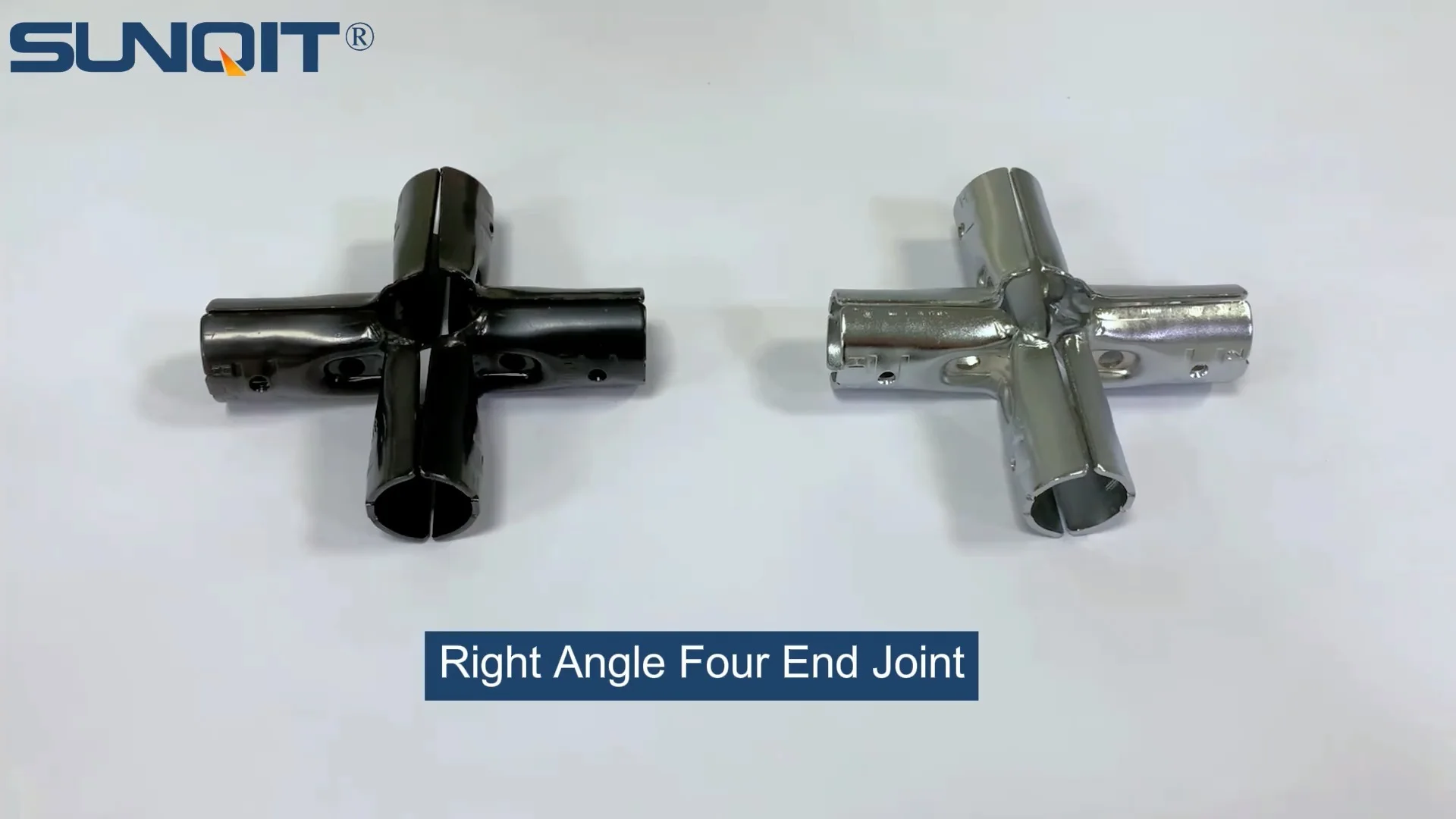
Five way straight lean pipe joint, for 5 pcs 28mm lean pipe connect in straight angle,which used widely in workbench, flow rack, hand trolley frame connection.
The Backbone of Modern Manufacturing: Lean Systems and Modular Components
In the fast-paced world of mechanical manufacturing, where every second counts and adaptability is key, the difference between a thriving production line and a stagnant one often lies in the tools and systems that keep operations running smoothly. At the heart of this efficiency revolution is the concept of
lean system
– a philosophy built on eliminating waste, optimizing flow, and empowering teams to respond quickly to changing demands. But lean systems don't just happen by accident; they're crafted from a network of modular, flexible components that work together to create agile workspaces. Among these unsung heroes are lean pipe joints – simple yet ingenious connectors that turn basic pipes into custom-built structures tailored to specific tasks. And today, we're shining a spotlight on one of the most versatile players in this space: the five way straight lean pipe joint.
Imagine a factory floor where assembly lines can be reconfigured in hours instead of days, where workbenches adjust to fit new product dimensions without requiring a complete overhaul, and where material handling systems adapt seamlessly to seasonal demand spikes. This isn't a distant dream – it's the reality made possible by components like the five way straight lean pipe joint. Designed to connect multiple pipes at once, this small but mighty tool unlocks a level of flexibility that traditional fixed structures simply can't match. Whether you're building workbenches for electronics assembly, flow racks for warehouse storage, or conveyor systems for automotive parts, the five way joint is the quiet force that turns rigidity into adaptability.
What Is a Five Way Straight Lean Pipe Joint?
Before diving into its use cases, let's take a closer look at what makes the five way straight lean pipe joint unique. At first glance, it might seem like just another metal connector, but its design is a masterclass in functional simplicity. As the name suggests, this joint features five distinct connection points – typically four in a horizontal plane and one vertical, though configurations can vary – allowing it to link multiple
lean pipe
segments in different directions. Unlike standard two-way or three-way joints, which limit connections to a few angles, the five way joint acts as a central hub, enabling the creation of complex, multi-dimensional structures with minimal parts.
Materials matter here, too. Most five way joints are crafted from durable materials like high-grade steel (often part of the
stainless steel pipe series
) or lightweight aluminum, depending on the application. Steel joints excel in heavy-duty environments where load capacity is critical, such as automotive manufacturing, while aluminum variants shine in industries like electronics, where corrosion resistance and portability are priorities. Some even come with protective coatings to withstand harsh chemicals or repeated wear, ensuring they hold up in the toughest factory conditions.
But what truly sets this joint apart is its modularity. Unlike welded or bolted connections, which are permanent and time-consuming to adjust, five way lean pipe joints use a simple friction-based or threaded locking mechanism. This means assembly requires no specialized tools – just a wrench or even a firm hand – and disassembly is just as straightforward. For manufacturers, this translates to lower labor costs, faster setup times, and the freedom to reimagine workflows on the fly.

Use Case 1: Custom Workbenches for Dynamic Assembly Lines
Adapting to Changing Assembly Needs
Walk into any electronics manufacturing plant, and you'll find workbenches everywhere – from PCB assembly stations to final product testing areas. But not all workbenches are created equal. A bench used for assembling small sensors, for example, needs precise tool placement and anti-static surfaces, while one handling larger components like circuit boards might require extra storage shelves and adjustable height settings. This is where the five way straight lean pipe joint truly shines: it turns generic
workbench
frames into customizable workstations that grow with your needs.
Consider a scenario where a smartphone manufacturer introduces a new model with a larger screen. The existing assembly workbenches, designed for smaller devices, suddenly need more surface area to accommodate the bigger components. With traditional wooden or metal workbenches, this would mean ordering new furniture – a costly and time-consuming process. But with a lean pipe setup using five way joints, the solution is far simpler. By adding extra horizontal pipes to the existing frame via the joint's multiple connection points, teams can extend the work surface in hours. Need a shelf above to hold tools? Attach vertical pipes to the joint. Want a side rack for holding component bins? Just add another pipe segment. The five way joint acts as a central hub, letting you build outwards or upwards without disrupting the entire structure.
Take the example of a medical device assembly line producing insulin pumps. These delicate devices require strict ergonomics to prevent worker fatigue and errors. A workbench built with five way joints can integrate adjustable monitor arms (connected via vertical pipes), under-shelf tool hooks (attached to horizontal pipes), and even ESD (electrostatic discharge) mats to protect sensitive electronics. If the company later adds a new pump model with different wiring requirements, the workbench can be reconfigured to include a small parts organizer by adding a crossbar using the joint's unused connection points. No new workbench, no downtime – just a quick adjustment to keep pace with change.

Use Case 2: Flow Racks for Efficient Material Handling
Optimizing Storage and Retrieval in Warehouses
In warehouses and distribution centers, the ability to move materials quickly and safely from storage to production is critical. This is where
flow rack
systems come into play – sloped racks that use gravity to feed products forward, ensuring first-in-first-out (FIFO) inventory management and reducing the need for manual lifting. But flow racks aren't one-size-fits-all; they need to accommodate different product sizes, weights, and throughput rates. Here, the five way straight lean pipe joint proves its worth by enabling the creation of multi-tiered, adjustable flow racks that adapt to evolving storage needs.
Let's consider a third-party logistics (3PL) provider handling e-commerce orders for a clothing brand. During peak seasons like Black Friday, the warehouse needs to store thousands of extra boxes, each varying in size from small accessories (socks, belts) to large items (jackets, luggage). A static flow rack system would struggle to keep up, leading to cluttered aisles and delayed order fulfillment. But with a modular flow rack built using five way joints, the solution is dynamic. The joint's five connection points allow for the addition of extra vertical supports to create more tiers, or horizontal pipes to widen shelves for bulkier items. For example, a standard 3-tier flow rack can be upgraded to 5 tiers by adding vertical pipes at intervals, with each tier supported by crossbars connected via five way joints. This not only maximizes vertical space but also ensures each shelf is sturdy enough to hold heavy boxes.
Another example comes from the automotive industry, where flow racks are used to store small parts like bolts, washers, and gaskets near assembly lines. These parts often come in standardized bins, but their quantities vary based on production schedules. A flow rack built with five way joints can be adjusted to change the angle of the slope (by raising or lowering one end using vertical pipes) to control how quickly bins slide forward. If a particular part is in high demand, the slope can be steepened to speed up access; for slower-moving items, a gentler slope prevents bins from sliding too quickly. The five way joint makes these adjustments possible by providing stable connection points for the roller tracks (another key component in flow racks) that hold the bins in place. By simply repositioning the tracks on the joint's horizontal pipes, the entire rack's functionality changes – no welding, no drilling, just quick, tool-free adjustments.

Use Case 3: Conveyor Systems for Seamless Production Flow
Building Flexible Conveyors That Keep Pace with Demand
Conveyors are the arteries of manufacturing, moving parts and products from one station to the next with minimal human intervention. But traditional conveyor systems are often rigid, built to follow a fixed path that's expensive to alter if production needs change. Enter modular conveyor systems built with lean pipes and five way joints – a game-changer for industries where product lines evolve frequently, such as consumer electronics or packaging.
Consider a beverage bottling plant that produces both 12-ounce cans and 2-liter bottles. During the summer, bottle production ramps up, requiring a longer conveyor to handle the increased volume; in the winter, can production takes over, needing a shorter, more compact line. With a fixed conveyor, this would mean shutting down production to reconfigure the system – a costly disruption. But with a lean pipe conveyor using five way joints, the transition is seamless. The joint's multiple connection points allow for easy extension or shortening of the conveyor frame by adding or removing pipe segments. For example, to extend the line, workers can attach additional horizontal pipes to the existing frame via the joint's unused ports, then add
roller track
segments on top to guide the bottles. Need to create a merge point where two conveyor lines meet? The five way joint can connect the main line to a secondary line at a 90-degree angle, using two of its horizontal ports for the main track and a third for the merge track. This flexibility ensures the conveyor system adapts to demand without halting production.
In the aerospace industry, where components like engine parts are large and heavy, conveyor systems need to be both strong and adaptable. A modular conveyor built with five way joints and steel lean pipes can support the weight of these parts while still allowing for adjustments. For instance, if a new engine model has a longer shaft, the conveyor can be widened by adding crossbars via the joint's vertical ports, ensuring the part sits securely during transport. The joint's durability – often made from high-strength steel – ensures it can handle the load without bending or breaking, making it a reliable choice for heavy-duty applications.
Comparing Traditional vs. Five Way Straight Lean Pipe Joints
To truly appreciate the impact of the five way straight lean pipe joint, it helps to see how it stacks up against traditional pipe joints. Below is a comparison table highlighting key differences in flexibility, assembly time, and applications:
| Feature | Traditional Pipe Joints (2-way/3-way) | Five Way Straight Lean Pipe Joint |
|---|---|---|
| Connection Points | 2-3, limiting structural complexity | 5, enabling multi-directional builds |
| Assembly Time | Longer; requires precise alignment and often tools like wrenches or drills | Shorter; tool-free or minimal tool assembly with quick-locking mechanisms |
| Flexibility | Low; difficult to reconfigure without disassembly | High; easy to add/remove pipes from unused connection points |
| Load Capacity | Varies, but limited by fewer connection points | Higher; multiple connection points distribute weight more evenly |
| Best For | Static structures (fixed shelving, permanent workbenches) | Dynamic environments (assembly lines, seasonal storage, custom workstations) |
Why Choose Five Way Joints? The Bottom-Line Benefits
At this point, you might be wondering: Are five way straight lean pipe joints worth the investment? The answer, for most modern manufacturers, is a resounding yes – and the reasons go beyond just flexibility. Let's break down the tangible benefits:
Cost Savings:
By reducing the need for custom-built structures and minimizing downtime during reconfigurations, five way joints lower long-term costs. Instead of buying new workbenches or racks every time production needs change, you're repurposing existing pipes and joints.
Speed to Market:
In industries where product cycles are short (think consumer electronics or fashion), the ability to adapt quickly can mean the difference between capturing market share and missing the boat. Five way joints let teams prototype new assembly lines or storage solutions in days, not weeks.
Worker Empowerment:
Traditional manufacturing setups often require engineering or maintenance teams to make even small adjustments. With modular lean pipe systems, line workers – the people closest to the work – can make changes themselves, fostering a sense of ownership and agility.
Sustainability:
By promoting reuse over replacement, five way joints align with lean principles of waste reduction. Fewer new materials mean less environmental impact, a priority for many modern companies and their customers.
Conclusion: The Five Way Joint – A Small Part with a Big Impact
In the grand scheme of mechanical manufacturing, the five way straight lean pipe joint might seem like a small component. But as we've explored, its impact is anything but minor. From custom workbenches that adapt to new products, to flow racks that maximize storage space, to conveyor systems that keep pace with demand, this versatile joint is the glue that holds lean systems together. It transforms static factories into dynamic ecosystems where change is not just tolerated – it's embraced.
As manufacturing continues to evolve, driven by trends like automation, customization, and global supply chain shifts, the need for flexible, modular solutions will only grow. The five way straight lean pipe joint isn't just a tool for today – it's an investment in tomorrow's ability to adapt, innovate, and thrive. So the next time you walk through a factory floor and marvel at how efficiently everything flows, take a moment to look down at the pipes and joints holding it all together. Chances are, there's a five way joint hard at work, quietly making it all possible.