- Company Articles
- Products and Technology
- Product knowledge
- Mechanical Manufacturing: Lean Pipe Clamp B for Heavy-Duty Pipe Joints

Mechanical Manufacturing: Lean Pipe Clamp B for Heavy-Duty Pipe Joints
Related Product
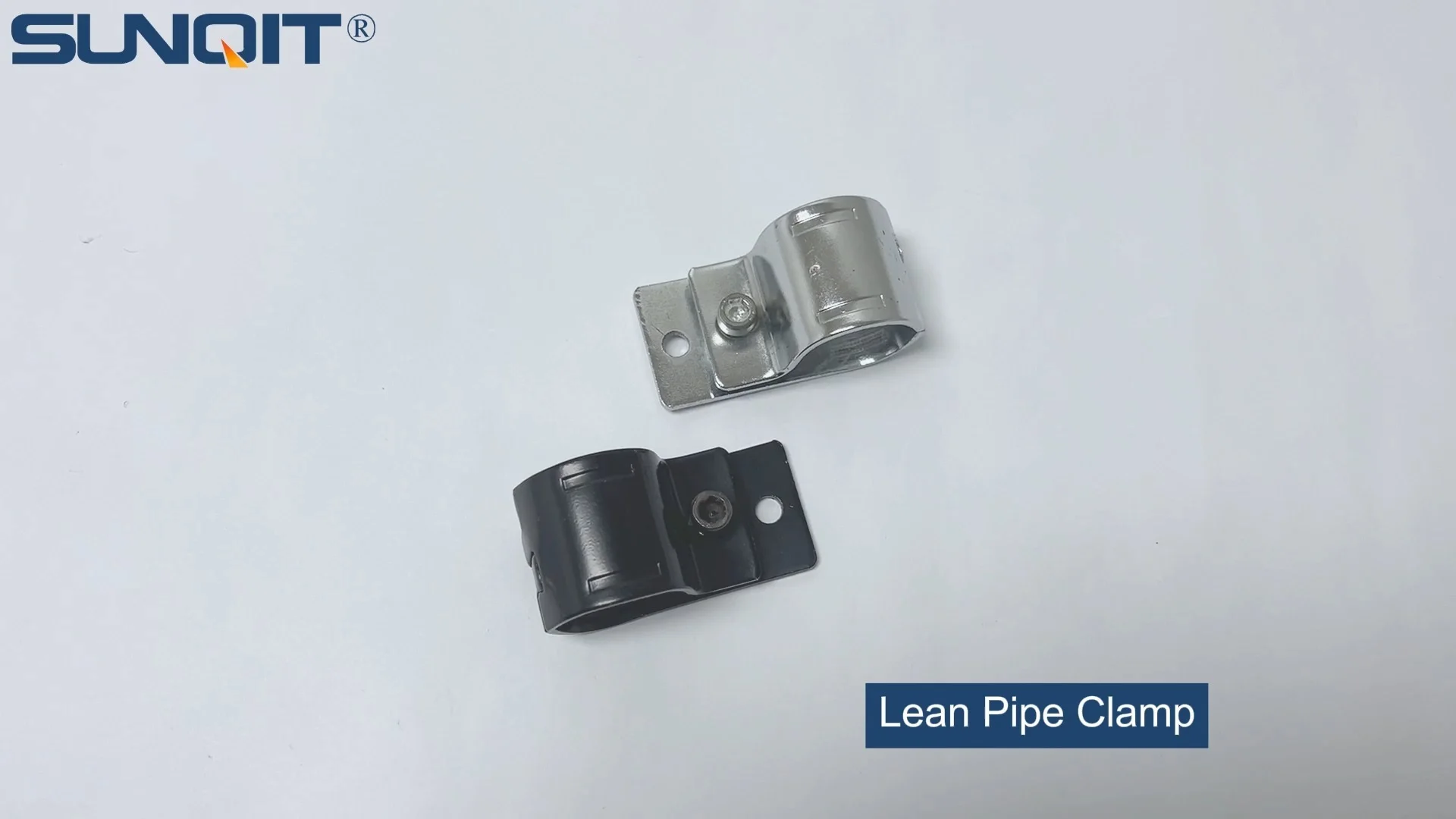
Lean Pipe Clamp
Lean pipe clamp is used for rack system hang monitor or other panel for workbenck, flowrack in production daily use.
The Unsung Hero of Manufacturing: Why Pipe Joints Matter More Than You Think
Walk into any manufacturing plant, and your eyes might be drawn to the shiny robots, the whirring conveyor belts, or the bustling assembly lines. But if you look closer—past the flashy machinery—you'll notice something far more critical: the quiet, unassuming components that hold everything together. Pipe joints, clamps, and connectors are the backbone of these operations. They're the reason a workbench stays stable during a 12-hour shift, why a material rack doesn't collapse under the weight of raw materials, and how a lean system maintains its precision day in and day out.
In heavy-duty settings—think automotive assembly, aerospace part production, or large-scale electronics manufacturing—these joints face relentless stress. Vibrations from machinery, constant load shifts, and the need for quick reconfigurations (a cornerstone of lean manufacturing) can turn even the sturdiest connections into points of failure. A loose clamp here, a worn joint there, and suddenly you're looking at downtime, safety risks, and compromised efficiency. That's where specialized solutions like the Lean Pipe Clamp B come into play. It's not just another piece of hardware; it's a precision tool designed to tackle the unique challenges of heavy-duty pipe joints in modern manufacturing.
Understanding Lean Systems: More Than Just a Buzzword
Before diving into the specifics of Lean Pipe Clamp B, let's take a step back and talk about lean systems —the philosophy that shapes how today's manufacturers operate. At its core, lean manufacturing is about eliminating waste, streamlining processes, and maximizing value. But here's the thing: lean isn't just a set of principles; it's a physical ecosystem built on modular, adaptable components. From workbenches that can be reconfigured in minutes to material racks that adjust to changing inventory needs, every part of a lean system is designed to be flexible yet reliable.
Central to this ecosystem are lean pipe joints and clamps. These components act as the "building blocks" of lean setups. Unlike fixed, one-size-fits-all structures, lean pipes and joints let teams customize their workspace on the fly. Need to add a new shelf to a material rack? Swap out a joint. Want to reposition a conveyor to align with a new assembly line? Loosen a clamp, adjust, and retighten. But this flexibility can't come at the cost of strength—especially in heavy-duty environments where pipes might support hundreds of pounds of materials or withstand constant movement. That's the balance Lean Pipe Clamp B strikes: adaptability without compromise.

Meet Lean Pipe Clamp B: The Heavy-Duty Workhorse
Let's get up close with the star of the show: Lean Pipe Clamp B. If you've ever struggled with a clamp that slips mid-shift, or a joint that wears out after a few months of heavy use, you'll appreciate why this tool has become a favorite among manufacturing teams. At first glance, it might look similar to other clamps, but a closer inspection reveals thoughtful design choices that set it apart.
Design That Prioritizes Grip and Durability
Lean Pipe Clamp B is engineered for one primary goal: to create a rock-solid connection between pipes, even under extreme stress. Made from high-grade steel with a corrosion-resistant coating, it's built to withstand the grime, moisture, and temperature fluctuations common in factory floors. But what really makes it stand out is its grip mechanism. Unlike standard clamps that rely on a single point of pressure, this clamp uses a dual-locking system: a threaded bolt that tightens into the pipe, paired with a serrated inner jaw that bites into the pipe's surface. This combination doesn't just "hold"—it anchors .
I spoke with Maria, a plant supervisor at a mid-sized automotive parts manufacturer, who put it this way: "We used to replace standard clamps every quarter. They'd loosen after weeks of vibrations from the stamping machines, and we'd spend hours retightening them. Since switching to Lean Pipe Clamp B, we haven't had a single slip in over a year. It's like the clamp and pipe become one piece."
Ease of Use: Because Time Is Money
In lean manufacturing, downtime is the enemy. Every minute spent fumbling with tools or struggling to align components eats into productivity. Lean Pipe Clamp B addresses this with a user-friendly design that doesn't sacrifice security. The clamp features a quick-release lever that lets operators loosen or tighten it with minimal effort—no need for specialized tools. Even better, its universal fit means it works with most standard lean pipes (including 28mm and 30mm diameters), so you won't have to overhaul your existing setup to use it.
John, a lead assembler at an electronics plant, shared his experience: "When we reconfigure our workbenches for new product lines, speed is key. With old clamps, two people would spend 20 minutes per joint. Now, one person can do it in 5 minutes with Lean Pipe Clamp B. The lever makes it so easy—tighten, lock, and you're done. No more stripped bolts or misaligned pipes."

How Lean Pipe Clamp B Stacks Up Against the Competition
To truly understand the value of Lean Pipe Clamp B, it helps to see how it compares to other common clamps on the market. Let's break down the key differences in a side-by-side comparison:
| Feature | Lean Pipe Clamp B | Standard Steel Clamp | Plastic Composite Clamp |
|---|---|---|---|
| Material | High-grade steel with corrosion-resistant coating | Mild steel, prone to rusting | Reinforced plastic, limited heat resistance |
| Max Load Capacity | Up to 500 lbs per clamp | Up to 300 lbs (decreases with wear) | Up to 150 lbs (risk of cracking under heavy load) |
| Installation Time | 3-5 minutes (no special tools) | 10-15 minutes (requires wrench/screwdriver) | 5-8 minutes (can strip if over-tightened) |
| Compatibility | Fits 28mm, 30mm, and most standard lean pipes | Limited to specific pipe diameters | Only compatible with lightweight pipes |
| Maintenance Needs | Minimal (annual lubrication of lever) | Frequent retightening; prone to rust | Replacement after 6-12 months (plastic degrades) |
| Safety Rating | OSHA-compliant for heavy-duty applications | Basic compliance; risk of slippage under stress | Not recommended for heavy or overhead loads |
As the table shows, Lean Pipe Clamp B outperforms competitors in nearly every category that matters to manufacturers: durability, load capacity, ease of use, and safety. It's not just a "better clamp"—it's a solution that aligns with lean principles by reducing waste (fewer replacements, less maintenance) and improving efficiency (faster installation, fewer disruptions).

Real-World Applications: Where Lean Pipe Clamp B Shines
Theory is great, but let's talk about how Lean Pipe Clamp B performs in the trenches. From workbenches to material racks, this clamp has proven its worth in a variety of heavy-duty scenarios. Here are a few examples:
Case 1: Heavy-Duty Workbenches for Assembly Lines
At a medical device manufacturer in Ohio, assembly workbenches must support not just tools, but also semi-finished products weighing up to 300 lbs. The team previously used wooden workbenches with fixed legs, but they struggled to adapt to new product sizes. Switching to a lean system with aluminum profiles and Lean Pipe Clamp B changed everything. The clamps secure the aluminum profile legs to the workbench frame, creating a stable surface that can be adjusted in height or width in minutes. "We recently reconfigured 12 workbenches for a new product line in a single afternoon," said the plant manager. "With the old setup, that would have taken a week and a carpenter."
At a medical device manufacturer in Ohio, assembly workbenches must support not just tools, but also semi-finished products weighing up to 300 lbs. The team previously used wooden workbenches with fixed legs, but they struggled to adapt to new product sizes. Switching to a lean system with aluminum profiles and Lean Pipe Clamp B changed everything. The clamps secure the aluminum profile legs to the workbench frame, creating a stable surface that can be adjusted in height or width in minutes. "We recently reconfigured 12 workbenches for a new product line in a single afternoon," said the plant manager. "With the old setup, that would have taken a week and a carpenter."
Case 2: Material Racks for Bulk Storage
A beverage bottling plant in Texas relies on material racks to hold pallets of empty bottles—each pallet weighs over 800 lbs. Standard racks with welded joints were expensive to modify and prone to cracking at the welds. The solution? A modular rack system using lean pipes and Lean Pipe Clamp B. The clamps connect horizontal and vertical pipes, creating a grid that can be expanded or reconfigured as inventory needs change. "During peak season, we add extra shelves in a day. When demand drops, we disassemble and store the pipes—no wasted space," explained the logistics coordinator. "And the clamps? They've never budged, even with the constant jostling from forklifts."
A beverage bottling plant in Texas relies on material racks to hold pallets of empty bottles—each pallet weighs over 800 lbs. Standard racks with welded joints were expensive to modify and prone to cracking at the welds. The solution? A modular rack system using lean pipes and Lean Pipe Clamp B. The clamps connect horizontal and vertical pipes, creating a grid that can be expanded or reconfigured as inventory needs change. "During peak season, we add extra shelves in a day. When demand drops, we disassemble and store the pipes—no wasted space," explained the logistics coordinator. "And the clamps? They've never budged, even with the constant jostling from forklifts."
Case 3: Conveyor Systems for Heavy Parts
In the aerospace industry, moving large components like engine casings (which can weigh over 500 lbs) requires conveyor systems with rock-solid frames. A manufacturer in Washington state replaced their old chain-driven conveyors with a roller conveyor built using lean pipes and Lean Pipe Clamp B. The clamps secure the roller tracks to the aluminum profile frame, ensuring the conveyor doesn't shift under the weight of passing parts. "Vibrations from the rollers used to loosen our old clamps, leading to misaligned tracks and jammed parts," said the maintenance supervisor. "With Lean Pipe Clamp B, the tracks stay perfectly aligned. We've cut maintenance time by 60%."
In the aerospace industry, moving large components like engine casings (which can weigh over 500 lbs) requires conveyor systems with rock-solid frames. A manufacturer in Washington state replaced their old chain-driven conveyors with a roller conveyor built using lean pipes and Lean Pipe Clamp B. The clamps secure the roller tracks to the aluminum profile frame, ensuring the conveyor doesn't shift under the weight of passing parts. "Vibrations from the rollers used to loosen our old clamps, leading to misaligned tracks and jammed parts," said the maintenance supervisor. "With Lean Pipe Clamp B, the tracks stay perfectly aligned. We've cut maintenance time by 60%."
These examples share a common thread: Lean Pipe Clamp B transforms rigid, one-use structures into flexible, adaptable systems that grow with the business. It's not just about holding pipes together—it's about empowering teams to build the workspace they need, when they need it.
The Cost Factor: Investing in Long-Term Savings
Let's address the elephant in the room: cost. At first glance, Lean Pipe Clamp B is pricier than standard clamps. A pack of 10 might cost 30-50% more than generic options. But as any lean practitioner will tell you, the true cost of a tool isn't its sticker price—it's the total cost of ownership over time. Let's break it down:
The Hidden Costs of Cheap Clamps
Standard clamps might save you money upfront, but they come with hidden expenses: frequent replacements (every 3-6 months in heavy use), downtime from retightening or repairs, and even safety incidents from slippage. A single accident—like a falling rack or a collapsed workbench—can cost thousands in damaged materials, worker injuries, or regulatory fines.
In contrast, Lean Pipe Clamp B has a lifespan of 5+ years with minimal maintenance. Let's do the math: If a standard clamp costs $5 and needs replacement 4 times a year, that's $20 per clamp annually. Lean Pipe Clamp B costs $10 but needs replacement once every 5 years, totaling $2 per year. Over time, it's not just cheaper—it's a fraction of the cost. Add in savings from reduced downtime and fewer accidents, and the ROI becomes clear.
Aligning with Lean Principles: Waste Reduction
Lean manufacturing teaches us to eliminate "muda" (waste) in all forms—including waste from unnecessary replacements, excess inventory (of spare clamps), and inefficient processes. Lean Pipe Clamp B reduces muda by:
- Minimizing replacement waste: Fewer clamps end up in landfills.
- Reducing inventory waste: No need to stockpile spare clamps.
- Eliminating process waste: Faster installation and reconfiguration mean less time spent on non-value-adding tasks.
"We used to keep a bin of 50+ spare clamps in the maintenance room," said Tom, a lean coordinator at a furniture manufacturer. "Now, we have 10 Lean Pipe Clamp Bs in stock, and we haven't touched them in 18 months. That bin? We turned it into a parts organizer for tools. Talk about reducing waste!"
Choosing the Right Supplier: Why Quality Matters
Not all Lean Pipe Clamp B products are created equal. As demand for this tool has grown, some suppliers have cut corners—using cheaper steel, skipping the corrosion coating, or simplifying the grip mechanism. To ensure you're getting the real deal, look for a supplier who:
Prioritizes Material Quality
Ask about the steel grade and coating process. High-quality clamps use cold-rolled steel (stronger than hot-rolled) and a zinc-plated or powder-coated finish to resist rust. Avoid suppliers who can't provide material certifications.
Offers Testing Data
Reputable suppliers will share load-testing results, showing how much weight the clamp can hold before slipping. Look for clamps rated for at least 500 lbs of static load—more if you're using them for overhead applications.
Understands Your Industry
A good supplier doesn't just sell clamps—they partner with you to solve problems. They'll ask about your specific application (e.g., "What's the maximum weight your rack holds?" or "How much vibration does the clamp need to withstand?") and recommend the right configuration.
Remember: The cheapest supplier isn't always the best. Investing in a reliable supplier ensures you get a clamp that performs as promised—and stands behind their product if issues arise.
The Future of Manufacturing: Flexibility Meets Strength
As manufacturing evolves—with trends like automation, customization, and on-demand production—flexibility is no longer a luxury; it's a necessity. Factories need systems that can adapt to smaller batch sizes, new product lines, and changing market demands. Lean Pipe Clamp B is more than a tool for today; it's a foundation for tomorrow.
Imagine a future where a single assembly line can switch from making smartphones to medical devices in hours, thanks to modular workbenches secured by clamps that never slip. Or a warehouse where material racks reconfigure automatically as inventory levels change, guided by clamps that adjust with precision. These scenarios aren't science fiction—they're achievable with tools like Lean Pipe Clamp B that blend strength and adaptability.
As Maria, the automotive plant supervisor, put it: "Manufacturing isn't just about making things—it's about making things better . Lean Pipe Clamp B helps us do that by letting us build smarter, safer, and more efficiently. It's not the most glamorous tool in the factory, but it's one of the most important."
Conclusion: The Clamp That Builds Better Systems
In the world of mechanical manufacturing, success often hinges on the smallest components. Lean Pipe Clamp B may not grab headlines, but it's a quiet revolution in how factories operate. By combining uncompromising strength with lean-friendly flexibility, it solves the age-old problem of "either/or" in manufacturing: you don't have to choose between durability and adaptability. You can have both.
Whether you're building a workbench, a material rack, or an entire assembly line, this clamp is more than a fastener—it's a partner in efficiency. It reduces waste, improves safety, and empowers teams to build the kind of flexible, responsive systems that define modern manufacturing.
So the next time you walk through a factory, take a moment to look at the pipes and joints. Chances are, if the system is running smoothly, there's a Lean Pipe Clamp B holding it all together—quietly, reliably, and without fanfare. Because in manufacturing, the best tools are the ones that let you focus on what matters: making great products.