- Company Articles
- Products and Technology
- Product knowledge
- Mechanical Manufacturing: Reliance on End Support for Roller Track Placon Mount with Wheel

Mechanical Manufacturing: Reliance on End Support for Roller Track Placon Mount with Wheel
Related Product
End Support for Roller Track Placon Mount with Wheel
End support for roller track placon mount with wheel,the special design with end wheel,make it with more flexible function for roller track and pipe connection and give more option for selection for building flow rack system.
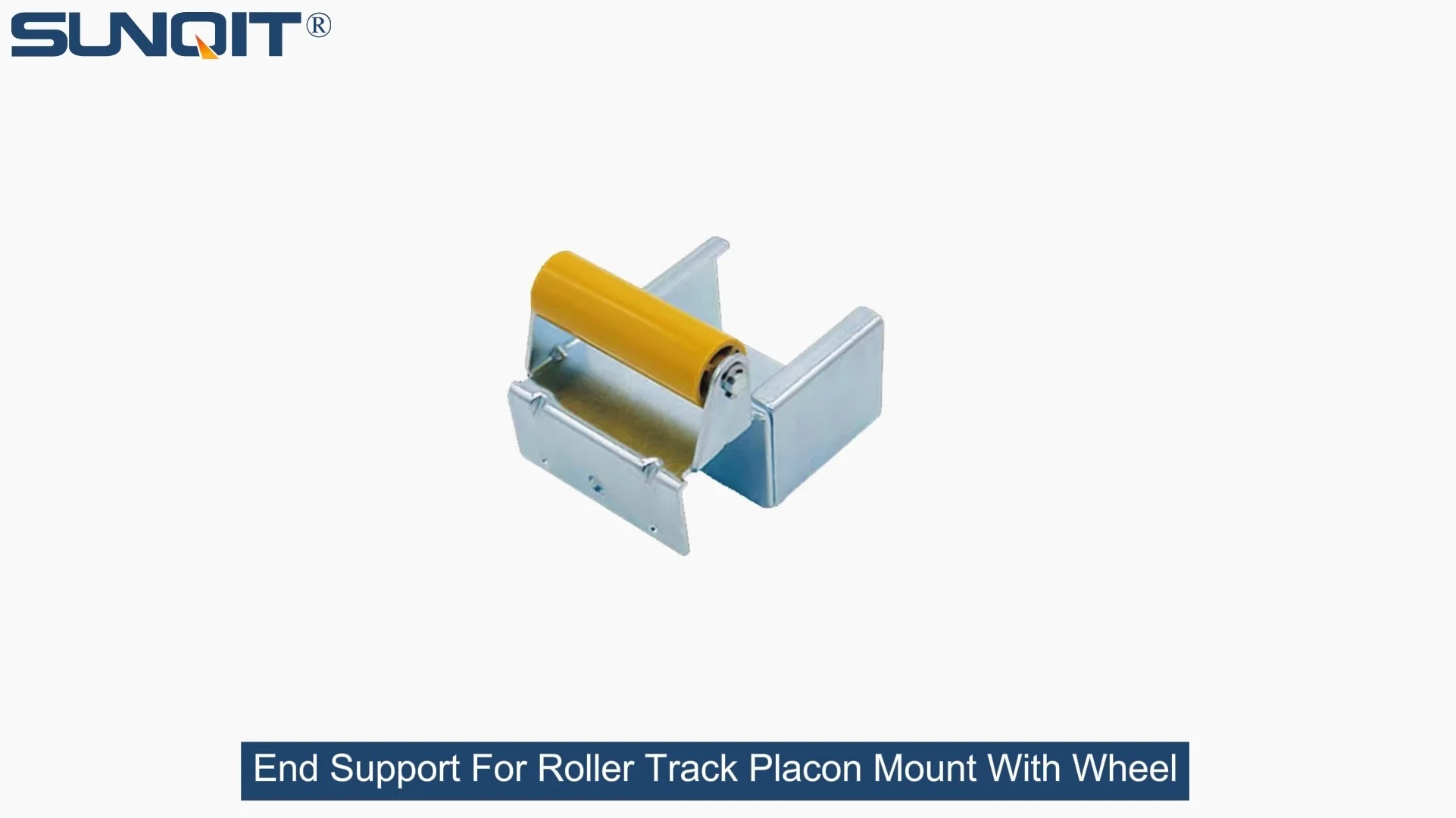
In the fast-paced world of mechanical manufacturing, where every second counts and precision is non-negotiable, the backbone of efficient production lies in the seamless flow of materials. From the assembly lines of consumer electronics to the heavy-duty floors of automotive plants, the ability to move components quickly, safely, and reliably can make or break a manufacturer's competitiveness. This is where lean production systems step in, and at the heart of these systems lies a seemingly small yet critical component: the end support for roller track placon mount with wheel. Far more than just a "part," this unassuming piece of engineering ensures that roller tracks—those silent workhorses of material handling—operate at peak performance, day in and day out.
As manufacturers worldwide strive to adopt lean principles—eliminating waste, optimizing workflows, and enhancing flexibility—the demand for robust, adaptable material handling solutions has never been higher. Roller track systems, integrated into flow racks, conveyors, and workstations, have become indispensable in achieving these goals. But what keeps these systems stable when transporting heavy loads? What allows them to adapt to uneven floors or frequent reconfigurations? The answer often points to the end support with wheels—a component designed to balance stability, mobility, and durability, all while aligning with the core lean of "reusable, continuously improvable" solutions.
The Backbone of Material Flow: Understanding Roller Track Systems
Before diving into the specifics of end supports, let's first ground ourselves in what roller track systems are and why they matter. At their core, roller tracks (or roller conveyors) are sequences of rotating rollers mounted on a frame, designed to move materials from one point to another with minimal friction. They're the unsung heroes in warehouses, assembly lines, and distribution centers, quietly ensuring that parts, components, and finished goods reach their next destination without manual lifting or dragging.
These systems come in various forms: from the gravity-fed flow racks that allow bins to glide smoothly toward pickers, to motorized conveyors that transport heavy assemblies across factory floors. In lean manufacturing setups, they're often paired with other lean system components—like workbenches, turnover trolleys, and modular racks—to create a cohesive, efficient workflow. For example, a typical 3C assembly line might use a combination of aluminum roller tracks (lightweight yet strong) and ESD workbenches (to prevent static damage to sensitive electronics), all interconnected to minimize material movement and maximize worker productivity.
But here's the thing: even the most well-designed roller track is only as good as its support structure. Without proper end supports, a track might sag under heavy loads, vibrate excessively during operation, or even detach from its frame—leading to downtime, damaged products, or worse, safety hazards. This is where the end support for roller track placon mount with wheel shines. Engineered to anchor the track securely while allowing for and mobility, it addresses the unique challenges of modern manufacturing environments.
Why End Support with Wheel Matters: Key Functions in Manufacturing
To understand the critical role of end supports with wheels, let's break down their functions in real-world manufacturing scenarios. Imagine a busy automotive parts plant: hundreds of pounds of engine components need to move from the storage area to the assembly line hourly. The roller track system here isn't just moving boxes—it's moving the lifeblood of production. Any instability could lead to delays, rework, or even accidents. Here's how end supports with wheels step up:
1. Stability Under Pressure
Heavy loads are par for the course in manufacturing. A single pallet of electronic components or a batch of metal parts can weigh hundreds of kilograms. The end support with wheel is designed to bear this weight without bending or shifting. Its robust construction—often using high-grade aluminum or steel—distributes the load evenly across the track's frame, preventing sagging that could slow material flow or damage the track itself. For instance, the "end support for roller track placon mount with wheel" from our product line features a reinforced base plate and a durable caster wheel, rated to handle loads up to 500kg per unit. This ensures that even in high-volume operations, the track remains stable and reliable.
2. Flexibility for Dynamic Workflows
Modern manufacturing isn't static. Production lines are reconfigured regularly to accommodate new products, seasonal demand, or process improvements—hallmarks of lean solution implementation. Fixed supports might require extensive disassembly and reinstallation, eating into valuable time. End supports with wheels, however, allow for quick adjustments. Need to shift the roller track a few inches to align with a new workstation? Simply unlock the caster wheels, move the support, and lock it back into place. This flexibility reduces downtime during reconfigurations, letting teams adapt to changes in hours rather than days.
3. Vibration Reduction for Sensitive Components
In industries like 3C assembly or medical device manufacturing, even minor vibrations can damage delicate components—think circuit boards, sensors, or precision instruments. The end support with wheel addresses this by incorporating shock-absorbing features. The caster wheels, often made of high-density rubber or polyurethane, dampen vibrations caused by material movement, ensuring that sensitive items glide smoothly without jostling. This is especially critical when paired with ESD workstations, where static control and stability go hand in hand to protect electronic parts.
4. Safety First: Preventing Misalignment and Accidents
A misaligned roller track is a safety hazard. Materials can get stuck, leading to jams that require manual intervention, or worse, tip over. The end support with wheel includes built-in alignment guides and locking mechanisms to keep the track straight and secure. For example, the "end support for roller track placon mount with stop" features a rubberized stop pad that prevents materials from sliding off the track's end, while the wheel's brake system locks the support in place during operation, eliminating unwanted movement. These details might seem small, but they add up to a safer work environment for operators.

Engineering Excellence: Technical Features of End Support with Wheel
Not all end supports are created equal. The best ones are engineered with manufacturing's unique demands in mind—durability, adaptability, and ease of integration. Let's take a closer look at the technical features that set high-quality end supports apart, using our "end support for roller track placon mount with wheel" as a case study:
| Feature | Description | Benefit to Manufacturing |
|---|---|---|
| Heavy-Duty Caster Wheel | 1.5-inch diameter polyurethane wheel with ball bearings | Smooth mobility, noise reduction, and resistance to oils/chemicals common in factories |
| Adjustable Height | Threaded stem allows height adjustment from 100mm to 150mm | Accommodates uneven floors, ensuring track remains level for consistent material flow |
| Locking Mechanism | Dual-locking caster (wheel lock + swivel lock) | Prevents movement during operation; secure positioning during reconfigurations |
| Placon Mount Design | Compatible with standard aluminum profiles (e.g., 4040, 3030) | Easy integration with existing lean system components like workbenches and racks |
| Corrosion Resistance | Zinc-plated steel frame with powder-coated finish | Longevity in harsh environments (e.g., automotive plants with coolant exposure) |
These features aren't just checkboxes—they're solutions to real problems manufacturers face daily. For example, the adjustable height feature is a game-changer in old factories with uneven concrete floors. Instead of spending hours shimming supports to level the track, technicians can simply twist the stem to raise or lower the support, saving time and frustration. Similarly, the compatibility with aluminum profiles means the end support can be paired with existing lean pipe workbenches or material racks, avoiding the need for costly system overhauls.

Real-World Impact: End Support with Wheel in Key Industries
The true value of end supports with wheels lies in their versatility across manufacturing sectors. From 3C assembly lines to medical device workshops, they adapt to diverse needs while maintaining performance. Let's explore how they're making a difference in three critical industries:
3C Electronics: Precision and Speed in Assembly
In 3C manufacturing (computers, communications, consumer electronics), production lines are fast-paced and detail-oriented. Workers assemble tiny components—microchips, circuit boards, connectors—with little room for error. Here, flow racks equipped with roller tracks are essential for feeding parts to workstations efficiently. The end support with wheel ensures these racks remain stable, even as operators quickly load and unload bins of components.
Take a smartphone assembly plant, for example. Each workstation might have a flow rack with 5-6 levels, each holding bins of screws, screens, or batteries. The roller tracks on these racks need to tilt slightly to allow gravity to feed bins forward, but they must also stay in place to prevent spills. The end support's locking caster wheels keep the rack steady during operation, while its adjustable height ensures the track aligns perfectly with the workstation's surface—so workers don't have to reach or bend, reducing fatigue and improving accuracy. In this scenario, the end support isn't just a part of the rack; it's a contributor to ergonomic safety and production speed.
Automotive Manufacturing: Heavy Loads, Reliable Transport
Automotive plants are a test of durability for material handling equipment. From engine blocks to door panels, components are heavy and bulky, requiring roller tracks and conveyors that can withstand constant use. End supports with wheels here are often paired with heavy-duty steel roller tracks, designed to move loads up to 1,000kg. The dual-locking casters on these supports ensure the track stays put when transporting engine parts, while the corrosion-resistant finish stands up to oil, grease, and coolant exposure.
Consider a transmission assembly line: a motorized conveyor carries half-assembled transmissions from one station to the next. The end supports anchor the conveyor's frame, absorbing vibrations from the motor and preventing the track from shifting. If the line needs to be reconfigured to accommodate a new transmission model, the supports' wheels make it easy to adjust the conveyor's path—no need for welding or heavy lifting. This adaptability is key in an industry where model changes are frequent and downtime is costly.
Medical Devices: Cleanliness and Compliance
Medical device manufacturing has strict standards for cleanliness and precision. Even small particles or vibrations can compromise sterile packaging or delicate instruments. End supports with wheels here are often made with stainless steel or aluminum (resistant to corrosion and easy to sanitize) and feature non-marking caster wheels to avoid contaminating cleanroom floors.
A surgical instrument manufacturer, for instance, might use roller tracks in its packaging area to move sterilized instruments from the autoclave to the sealing station. The end supports' smooth surfaces prevent dust buildup, and their locking mechanisms ensure the track doesn't shift during packaging—critical for maintaining sterility. Additionally, the supports' mobility allows the line to be reconfigured for small-batch production runs, a common need in medical manufacturing where product variations are frequent.

Beyond Components: Integrating End Supports into Lean Solutions
At the end of the day, manufacturing success isn't about individual parts—it's about systems that work together seamlessly. The end support with wheel is more than just a support; it's a building block of a comprehensive lean solution. By integrating it with other lean system components—lean pipe workbenches, flow racks, conveyors—manufacturers can create workflows that are not only efficient but also adaptable and sustainable.
For example, a custom lean solution for a might combine flow racks (with end supports), lean pipe workstations, and motorized conveyors into a unified system. The end supports ensure the flow racks align with the conveyors, so materials move from storage to shipping without manual handling. If the warehouse expands or changes layout, the supports' wheels allow the racks and conveyors to be repositioned, avoiding the need for new infrastructure. This "reusable, continuously improvable" approach is at the heart of lean philosophy—and it's made possible by components like the end support with wheel.
Sustainability is another key benefit. By designing end supports to be durable and compatible with existing systems, manufacturers reduce waste from frequent replacements. Aluminum and steel components are also recyclable, aligning with eco-friendly manufacturing goals. For instance, our aluminum end supports are made from 6063-T5 aluminum alloy, known for its strength and recyclability, ensuring that even at the end of their lifecycle, they contribute to a circular economy.
The Unsung Hero: End Support with Wheel as a Catalyst for Manufacturing Excellence
In the grand scheme of manufacturing, it's easy to overlook components like end supports. But as we've explored, they're the quiet enablers of efficiency, safety, and flexibility. In a world where lean production and adaptability are no longer optional, the end support for roller track placon mount with wheel stands out as a small but mighty tool in the manufacturer's toolkit.
Whether it's stabilizing a flow rack in a 3C plant, supporting heavy loads in an automotive facility, or ensuring sterility in a medical device workshop, this component addresses the unique challenges of modern manufacturing. It's a testament to the idea that great systems are built on great details—and that sometimes, the most critical parts are the ones you don't notice until they're missing.
As manufacturing continues to evolve, one thing is clear: the demand for smarter, more adaptable material handling solutions will only grow. End supports with wheels, integrated into comprehensive lean systems, will remain at the forefront of this evolution, helping manufacturers build better products, faster, and with less waste. After all, in the race to excellence, every detail counts—and the end support with wheel is a detail that delivers.