- Company Articles
- Products and Technology
- Product knowledge
- Medical Device Assembly: Cleanroom-Compliant Aluminum Workbench C Applications

Medical Device Assembly: Cleanroom-Compliant Aluminum Workbench C Applications
Related Product
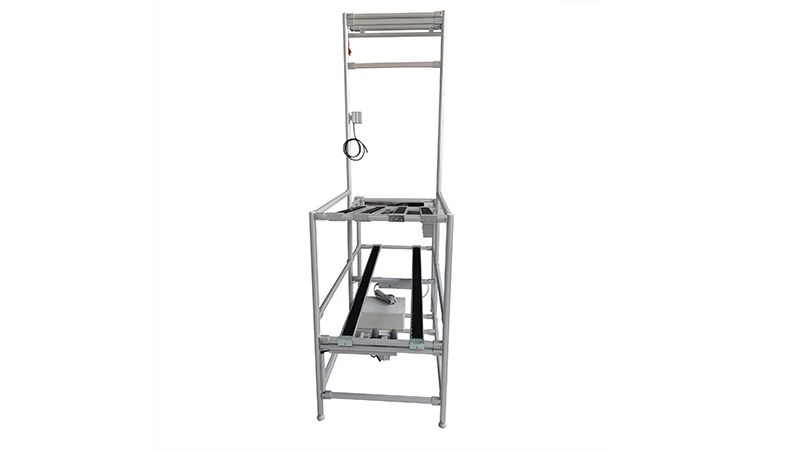
Aluminum Workbench C
aluminum-tube-workbench-is-more-flexible-and-durable,-compared-with-traditional-pe/abs-coated-steel-tube.-it-is-easy-to-assemble,-anti-corrosion,-rust-protection,-and-recycle-use-after-disassemble.
In the quiet hum of a medical device assembly facility, every movement matters. A technician's steady hand positions a tiny sensor onto a pacemaker prototype; an engineer adjusts a microscope to inspect a catheter's precision-machined tip. These moments—small, deliberate, and critical—are the backbone of healthcare innovation. But behind every successful assembly lies an often-overlooked hero: the workspace itself. In cleanrooms where contamination risks, static electricity, and workflow bottlenecks can derail even the most meticulous processes, the right tools don't just support work—they safeguard lives. Enter the Aluminum Workbench C , a cleanroom-compliant solution designed to meet the unique demands of medical device assembly. More than just a table, it's a partner in precision, a bridge between human skill and technological reliability.
The Invisible Battle: Cleanroom Challenges in Medical Assembly
Medical devices—from life-saving implants to diagnostic tools—are held to standards that leave no room for error. A single particle of dust, a static discharge, or a misaligned workstation can compromise sterility, damage sensitive components, or slow production to a crawl. Cleanrooms, with their air filtration and contamination controls, are the first line of defense, but they bring their own set of challenges for the teams working within them.
Consider static electricity: many medical components, like microchips in insulin pumps or circuit boards in monitors, are highly susceptible to electrostatic discharge (ESD). A technician walking across the floor or adjusting a tool could generate enough static to fry a $10,000 component in an instant. Then there's contamination: even a fingerprint residue on a surgical instrument part can lead to post-implant infections. Work surfaces must resist harboring bacteria, be easy to sanitize, and avoid shedding particles themselves.
Perhaps less obvious, but equally critical, is workflow efficiency. In a space where every square inch is optimized for cleanliness, cluttered workbenches or rigid layouts force technicians to waste time reaching, bending, or repositioning tools. This isn't just about speed—it's about reducing fatigue, which directly impacts focus and precision. For teams assembling devices that millions depend on, these challenges aren't just operational hurdles; they're barriers to delivering care.
Aluminum Workbench C: Built for the Cleanroom, Designed for the People Behind It
The Aluminum Workbench C wasn't created in a vacuum. It emerged from listening—to assembly technicians who needed surfaces that wouldn't scratch delicate parts, to quality managers frustrated by ESD-related component failures, and to facility engineers struggling to adapt static workspaces to evolving production needs. At its core is a commitment to lean system principles: eliminating waste, streamlining flow, and putting the human operator at the center.
Crafted from high-grade aluminum profile , the workbench starts with a material choice that addresses two critical cleanroom needs: durability and cleanliness. Unlike wood or painted steel, aluminum resists corrosion, doesn't off-gas harmful chemicals, and wipes clean with standard disinfectants—no lingering pores or crevices for bacteria to hide. Its smooth, non-porous surface is gentle enough for delicate components yet tough enough to withstand daily use, from clamping tools to supporting heavy equipment.
But what truly sets it apart is its adaptability. Medical device assembly lines rarely stay static; new devices are developed, production volumes fluctuate, and team sizes shift. The Aluminum Workbench C's modular design—think interchangeable shelves, adjustable heights, and compatible accessories—means it grows with your needs. Need to add a monitor arm for digital work instructions? Screw it into the t-slot aluminum frame. Require extra storage for specialized tools? Attach a side rack without drilling or welding. This flexibility isn't just about convenience; it's about preserving cleanroom integrity by minimizing modifications that could disrupt airflow or create new contamination risks.

Beyond the Surface: Key Features That Matter
Let's dive deeper into what makes the Aluminum Workbench C a standout in medical cleanrooms. These features aren't just checkboxes—they're solutions to the daily frustrations of assembly teams:
1. ESD Compliance: Protecting Sensitive Components
Static damage is a silent threat, but the Aluminum Workbench C fights back with built-in ESD protection. Its aluminum frame conducts electricity safely to ground, while optional ESD-safe work surfaces (available in both single-deck and double-deck configurations) prevent charge buildup. For technicians handling microelectronics or optical components, this isn't just a feature—it's peace of mind. No more second-guessing whether that sudden spark was harmless; the workbench acts as a shield, letting them focus on the task at hand.
2. Ergonomic Design: Putting People First
A technician leaning over a workbench for eight hours isn't just uncomfortable—they're at risk of repetitive strain injuries that could sideline them for weeks. The Aluminum Workbench C prioritizes ergonomics with height-adjustable legs (manual or electric options) that accommodate technicians of all statures. The single-deck, caster-free design (Workbench E configuration) keeps the surface stable during precision work, while rounded edges reduce the risk of bumps and scrapes in tight cleanroom spaces. It's a small detail, but ask any assembly line worker: a workspace that fits them makes every task feel lighter.
3. Compatibility with Lean Systems
Medical device production thrives on efficiency, and the Aluminum Workbench C is engineered to integrate seamlessly with lean system practices. Its modularity means you can design workflows that minimize motion—no more walking across the room for a tool when it can be stored on a side shelf. Pair it with flow racks (like Material Rack B, with 3 rows and 3 floors) to keep components within arm's reach, or attach roller tracks to feed parts directly into the workbench. It's not just about saving time; it's about creating a rhythm where every action adds value, not waste.

From Implants to Diagnostics: Real-World Applications
The Aluminum Workbench C isn't a one-size-fits-all solution—it's a chameleon, adapting to the diverse needs of medical device assembly. Here's how it shines in some of the most critical applications:
Implantable Device Assembly
Assembling pacemakers, stents, or spinal implants demands sterility and precision at a microscopic level. The workbench's smooth aluminum surface resists chemical corrosion from disinfectants like isopropyl alcohol, making daily sanitization quick and thorough. Its ESD protection ensures that even the tiniest electronic components (like the sensors in a neurostimulator) remain intact. Technicians often pair it with mini aluminum roller tracks (yellow or black ESD variants) to gently slide delicate parts into position without manual handling.
Diagnostic Equipment Production
Devices like blood analyzers or imaging machines rely on intricate circuit boards and optical systems. The Aluminum Workbench C's modular shelves and tool holders keep soldering irons, tweezers, and calibration tools organized, reducing clutter that could harbor dust. For teams assembling multiple device models, the workbench's quick-change accessories (like adjustable side guides or tray holders) let them reconfigure the space in minutes, switching from assembling a benchtop scanner to a portable ultrasound unit without missing a beat.
Laboratory Testing Stations
Even after assembly, medical devices undergo rigorous testing. The Aluminum Workbench C's stability makes it ideal for mounting testing equipment—think microscopes, force gauges, or vibration testers. Its compatibility with aluminum profile accessories, like monitor arms for data logging screens, creates a unified testing station where results are recorded in real time, and samples are handled without contamination risks.

Why Aluminum Workbench C Stands Apart: A Side-by-Side Comparison
To truly appreciate the difference, let's compare the Aluminum Workbench C with traditional workbenches still common in many facilities:
| Feature | Traditional Wood/Steel Workbench | Aluminum Workbench C |
|---|---|---|
| Material | Porous wood (harbors bacteria) or painted steel (prone to chipping, rust) | Anodized aluminum profile (non-porous, corrosion-resistant, easy to sanitize) |
| ESD Protection | Requires aftermarket mats (unreliable, prone to wear) | Integrated ESD grounding in frame; optional ESD-safe work surfaces |
| Modularity | Fixed design; modifications require drilling/welding (risks contamination) | T-slot aluminum frame accepts accessories without tools; reconfigurable in minutes |
| Cleanroom Compatibility | Sheds particles (wood) or chips (painted steel); hard to disinfect thoroughly | Low particle emission; compatible with ISO 7/8 cleanroom standards |
| Ergonomics | Fixed height; limited adjustability | Height-adjustable legs; customizable surface layout to reduce strain |
Beyond the Workbench: Building a Lean, Connected Ecosystem
The Aluminum Workbench C is most powerful when it's part of a larger system. Medical device assembly rarely happens in isolation, and integrating the workbench with complementary tools amplifies its impact:
Flow Racks: Keeping Components Moving
Pairing the workbench with flow racks (like Material Rack B) creates a seamless material flow. Components move from storage to the workbench via gravity-fed roller tracks, reducing the need for technicians to fetch parts. This not only cuts down on foot traffic (a contamination risk) but also ensures that the right parts are always within reach, minimizing errors from using incorrect components.
Lean System Principles in Action
At its core, the Aluminum Workbench C embodies lean thinking: eliminating waste, optimizing flow, and empowering teams. By reducing setup time (thanks to modular accessories), minimizing motion (through ergonomic design), and preventing defects (via ESD and contamination controls), it aligns with the dual goals of medical manufacturing: quality and efficiency. For facilities aiming to achieve Lean Six Sigma certification, this isn't just a workspace upgrade—it's a step toward operational excellence.
The Bottom Line: More Than a Workbench—A Commitment to Care
In the end, the Aluminum Workbench C is about more than metal and bolts. It's about recognizing that behind every medical device is a team of people dedicated to improving lives. When a technician can focus on assembling a pacemaker without worrying about static, when an engineer can reconfigure a workspace in minutes to test a new design, when a quality inspector can trust that the surface beneath their samples is sterile—those are the moments that drive innovation forward.
Medical device assembly is a high-stakes dance between human skill and technological precision. The Aluminum Workbench C doesn't just provide a stage for that dance; it ensures the music never stops. For facilities ready to invest in their most valuable asset—their people—it's not just a purchase. It's a promise: that every device that leaves their cleanroom is built with the care, precision, and reliability that patients deserve.