- Company Articles
- Products and Technology
- Solution
- Medical Device Assembly Line Transformation Using Lean Pipe Clamp Chrome

Medical Device Assembly Line Transformation Using Lean Pipe Clamp Chrome
Related Product
Lean Pipe Clamp Chrome
Lean pipe clamp is used for rack system hang monitor or other panel for workbenck, flowrack in production daily use.
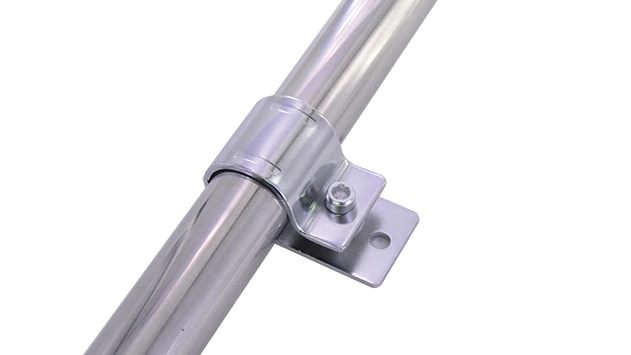
In the high-stakes world of medical device manufacturing, where precision can mean the difference between life and death, the assembly line is more than just a production tool—it's the backbone of innovation, compliance, and patient safety. Yet, many facilities still operate with outdated, rigid setups that struggle to keep pace with evolving regulations, increasing demand, and the need for near-flawless efficiency. Enter lean manufacturing principles, and at the heart of this revolution: the humble yet mighty
lean pipe clamp chrome
. This unassuming component, paired with complementary tools like
lean pipe workbenches
and
flow racks
, is redefining how medical devices are assembled, one reconfigurable workstation at a time.
The Challenges of Traditional Medical Device Assembly Lines
To appreciate the impact of lean pipe clamp chrome, it's critical to first understand the pain points of traditional assembly lines. Medical device manufacturing is governed by some of the strictest regulations in the industry—think FDA guidelines, ISO 13485 standards, and rigorous quality control checks. These rules demand traceability, cleanliness, and consistency, but traditional setups often fall short:
Rigidity:
Fixed steel or wooden workbenches and racks can't adapt to new product designs or changing production volumes. When a facility needs to shift from assembling syringes to surgical tools, reconfiguring the line means costly renovations and downtime.
Material Handling Bottlenecks:
Parts stored in distant warehouses or awkwardly placed bins force workers to waste time walking, reaching, or bending—actions that not only slow production but also increase the risk of ergonomic injuries and human error.
Static and Contamination Risks:
Many medical devices, such as pacemakers or diagnostic sensors, are sensitive to electrostatic discharge (ESD). Traditional workstations often lack built-in ESD protection, putting components at risk of damage. Similarly, hard-to-clean surfaces can harbor bacteria, violating sterility requirements.
Wasted Space:
Bulky, permanent structures consume valuable floor space, limiting the ability to expand or integrate new technologies like automated inspection systems.
For workers on the line, these inefficiencies translate to frustration. "I used to spend 20 minutes every hour just fetching parts from the back storage room," recalls Maria, a lead assembler at a mid-sized medical device plant. "By the time I got back, I'd forgotten the next step in the process. It was exhausting, and I knew we could do better."
Lean Manufacturing: A Prescription for Efficiency
Lean manufacturing, born from Toyota's "Toyota Production System" in the mid-20th century, is built on the principle of eliminating waste—whether that's wasted time, materials, or movement. In medical device manufacturing, lean isn't just about cutting costs; it's about creating a system that prioritizes value (what the customer needs) while minimizing "muda" (waste). This includes:
Transport Waste:
Moving materials unnecessarily.
Inventory Waste:
Storing more parts than needed, tying up capital and space.
Motion Waste:
Unnecessary movement by workers (e.g., reaching, bending).
Defects:
Errors that require rework or scrapping components.
To tackle these, lean manufacturing relies on flexible, modular tools that adapt to the production process—rather than forcing the process to adapt to rigid tools. And that's where
lean pipe clamp chrome
shines.

Lean Pipe Clamp Chrome: The Backbone of Transformation
At first glance, a lean pipe clamp chrome might look like a simple metal connector, but its design is a masterclass in lean thinking. Made from high-quality steel with a chrome-plated finish, these clamps are engineered to connect lightweight steel or aluminum pipes into custom structures—from workbenches to flow racks to material trolleys. But why chrome? In medical settings, where cleanliness is non-negotiable, chrome's smooth, non-porous surface resists corrosion, repels bacteria, and wipes clean with disinfectants—critical for meeting FDA and ISO sanitation standards.
The real magic, though, is in its flexibility. Unlike welded steel frames, lean pipe clamp chrome allows workers to assemble, disassemble, and reconfigure structures in minutes using nothing more than a hex key. Need to raise a workbench by 6 inches to reduce worker strain? Swap out a few clamps. Launching a new catheter line that requires a longer flow rack? Add more pipes and clamps. This adaptability means facilities can pivot quickly without halting production for weeks of construction.
"We used to have a fixed wooden workbench that took up half the room," says Raj, a production manager at a California-based medical device company. "With lean pipe clamp chrome, we built a modular bench that we can break down and rearrange in an hour. When we got a rush order for insulin pumps, we added an extension in the morning and were production-ready by lunch. It's like having a production line that can think on its feet."
Complementary Tools: Building a Complete Lean Ecosystem
Lean pipe clamp chrome doesn't work alone. To transform an assembly line, it needs supporting players that address specific pain points. Here are three key components that, when paired with chrome clamps, create a lean, efficient system:
1. Lean Pipe Workbenches: Ergonomics Meets Precision
The
lean pipe workbench
is the centerpiece of any assembly station, and with lean pipe clamp chrome, it becomes a customizable hub. These workbenches are built by connecting aluminum or steel pipes with chrome clamps, topped with a durable surface (often ESD-safe laminate or stainless steel). What sets them apart?
Ergonomic Adjustability:
Heights can be tweaked to match worker heights, reducing back and shoulder strain. Some models even include adjustable shelves or under-bench storage for tools, keeping everything within arm's reach.
Integrated ESD Protection:
For sensitive components, ESD-safe workbenches use conductive materials and grounding straps to channel static electricity away from parts—critical for devices like neurostimulators, where a single static spark could render a component useless.
Tool Organization:
Pegboards, tool rails, and bin holders (all attached via chrome clamps) keep screwdrivers, tweezers, and gauges organized, eliminating the "hunt for tools" that wastes precious time.
For Maria, the assembler, the switch to a lean pipe workbench was life-changing. "My old bench was too low, so I was always hunching over. Now my bench is at waist height, and my tools hang right in front of me. I used to get home with a sore back; now I feel energized. And because everything's within reach, I'm assembling 15% more units a day—no more rushing to make quota."
2. Flow Racks: Streamlining Material Delivery
Material handling is often the biggest source of waste in assembly lines, but
flow racks
—built with lean pipe clamp chrome—solve this by bringing parts directly to workers. These racks use gravity-fed roller tracks (another component connected via chrome clamps) to slide bins of parts from the back to the front, ensuring the first part in is the first part used (FIFO inventory management). This reduces walk time, minimizes overstocking, and keeps parts fresh (critical for items with expiration dates, like sterile packaging).
Flow racks are also customizable. A facility assembling large devices like MRI coils might use wide, sturdy racks with heavy-duty rollers, while a lab making microfluidic chips could opt for compact, lightweight versions. And because they're built with chrome clamps, adding or removing shelves is as easy as adjusting the pipe lengths.
"Before flow racks, our workers walked an average of 2 miles a day fetching parts," says Raj. "Now, parts come to them. We tracked it: that's 10 miles saved per worker per week. Less walking means more assembling—and fewer blisters. The team even jokes that we should rename the flow rack 'the lazy Susan of manufacturing.'"
3. ESD Workstations: Protecting Sensitive Components
For facilities assembling electronics-heavy devices—think heart monitors or surgical robots—
esd workstations
are non-negotiable. These specialized stations combine lean pipe clamp chrome frames with ESD-safe surfaces, grounding cords, and anti-static mats to neutralize static electricity. Even the tools and bins on these workstations are ESD-rated, ensuring components aren't damaged during assembly.
"We had a batch of pacemaker circuit boards that kept failing quality checks," recalls Priya, a quality control specialist. "After weeks of testing, we realized static from the old plastic workbench was frying the microchips. We switched to an ESD workstation with lean pipe clamp chrome, and the failure rate dropped from 8% to 0.5%. It wasn't just a cost-saver—it saved us from a potential recall."
From Concept to Reality: Implementing Lean Pipe Clamp Chrome
Transforming an assembly line with lean pipe clamp chrome isn't about ripping out everything and starting over—it's a gradual, worker-driven process. Here's how facilities typically approach it:
1. Value Stream Mapping:
First, teams map out the current assembly process to identify waste (e.g., "Workers spend 30 minutes/day retrieving parts"). This helps prioritize which areas to tackle first.
2. Designing the New Layout:
Using lean pipe clamp chrome, workers and managers collaborate to design custom structures. Often, they start small—a single workbench or flow rack—to test the concept before scaling.
3. Building and Testing:
With the help of suppliers, teams assemble the first prototypes. Workers test them for ergonomics, efficiency, and compliance, making tweaks (e.g., adjusting bench height, adding ESD mats) before full deployment.
4. Training the Team:
Since lean systems rely on worker input, training sessions teach employees how to reconfigure the clamps and pipes themselves. This empowers the team to make on-the-spot adjustments without waiting for maintenance.
5. Continuous Improvement:
The line isn't "finished" once it's built. Teams hold regular kaizen (continuous improvement) meetings to identify new inefficiencies and tweak the setup—because in lean, there's always room to get better.
The Results: More Than Just Efficiency
The benefits of lean pipe clamp chrome go beyond faster production. Facilities report:
Cost Savings:
Reduced downtime, lower material waste, and fewer defective products cut operational costs by 15-30%.
Compliance Ease:
Chrome's easy-to-clean surface and modular design simplify FDA audits, as inspectors can quickly verify sanitation and traceability.
Happier Workers:
Ergonomic workstations reduce injuries, while the ability to shape their own workspace boosts morale and retention. "When you let workers design their stations, they take ownership," says Raj. "Our turnover rate dropped by 20% after the lean upgrade."
Faster Time-to-Market:
With a reconfigurable line, facilities can launch new products in weeks instead of months, staying ahead of competitors.
Traditional vs. Lean: A Side-by-Side Comparison
| Feature | Traditional Assembly Line | Lean Pipe Clamp Chrome Line |
|---|---|---|
| Reconfigurability | Fixed; requires renovation for changes | Reconfigurable in minutes with basic tools |
| ESD Protection | Often lacking; requires add-on mats | Integrated into workstations and surfaces |
| Worker Ergonomics | One-size-fits-all; high risk of strain | Adjustable height and layout; reduced injuries |
| Sanitation | Hard-to-clean surfaces; risk of bacterial buildup | Chrome and stainless steel surfaces; easy disinfection |
| Lead Time for New Products | Weeks/months (due to setup changes) | Days/hours (modular reconfiguration) |
The Future of Lean in Medical Manufacturing
As medical device technology advances—with smaller, more complex devices and growing demand for personalized medicine—lean pipe clamp chrome and its counterparts will only grow more critical. Innovations like aluminum pipes (lighter and more corrosion-resistant than steel) and smart sensors (to track material flow in real time) are already enhancing flexibility and data-driven decision-making. But at its core, the lean revolution remains human-centered: empowering workers to build a production line that works
for
them, not against them.
"Lean pipe clamp chrome isn't just a tool—it's a mindset," says Raj. "It teaches us that the people on the line know best how to make things work. When you give them the power to shape their workspace, they don't just build better products—they build a better workplace."
Conclusion: Building a Leaner, Safer Future
In medical device manufacturing, where every second and every component matters, the assembly line is more than a production tool—it's a reflection of a company's commitment to quality, safety, and innovation. Traditional setups, with their rigidity and waste, can't keep up with the demands of modern healthcare. But with
lean pipe clamp chrome
, paired with
lean pipe workbenches
,
flow racks
, and
esd workstations
, facilities are building lines that are flexible, efficient, and worker-centric.
It's a transformation that goes beyond numbers on a spreadsheet. It's about workers who no longer dread their morning commute, because their workspace adapts to them. It's about quality control teams who sleep easier, knowing components are safe from static and contamination. And ultimately, it's about patients who receive devices built with the precision and care they deserve—all made possible by a simple, chrome-plated clamp that's changing the face of medical manufacturing, one pipe at a time.