- Company Articles
- Products and Technology
- Technology Sharing
- Medical Device Assembly Lines: Five Way Straight Lean Pipe Joint Efficiency

Medical Device Assembly Lines: Five Way Straight Lean Pipe Joint Efficiency
Related Product
Five Way Straight Lean Pipe Joint
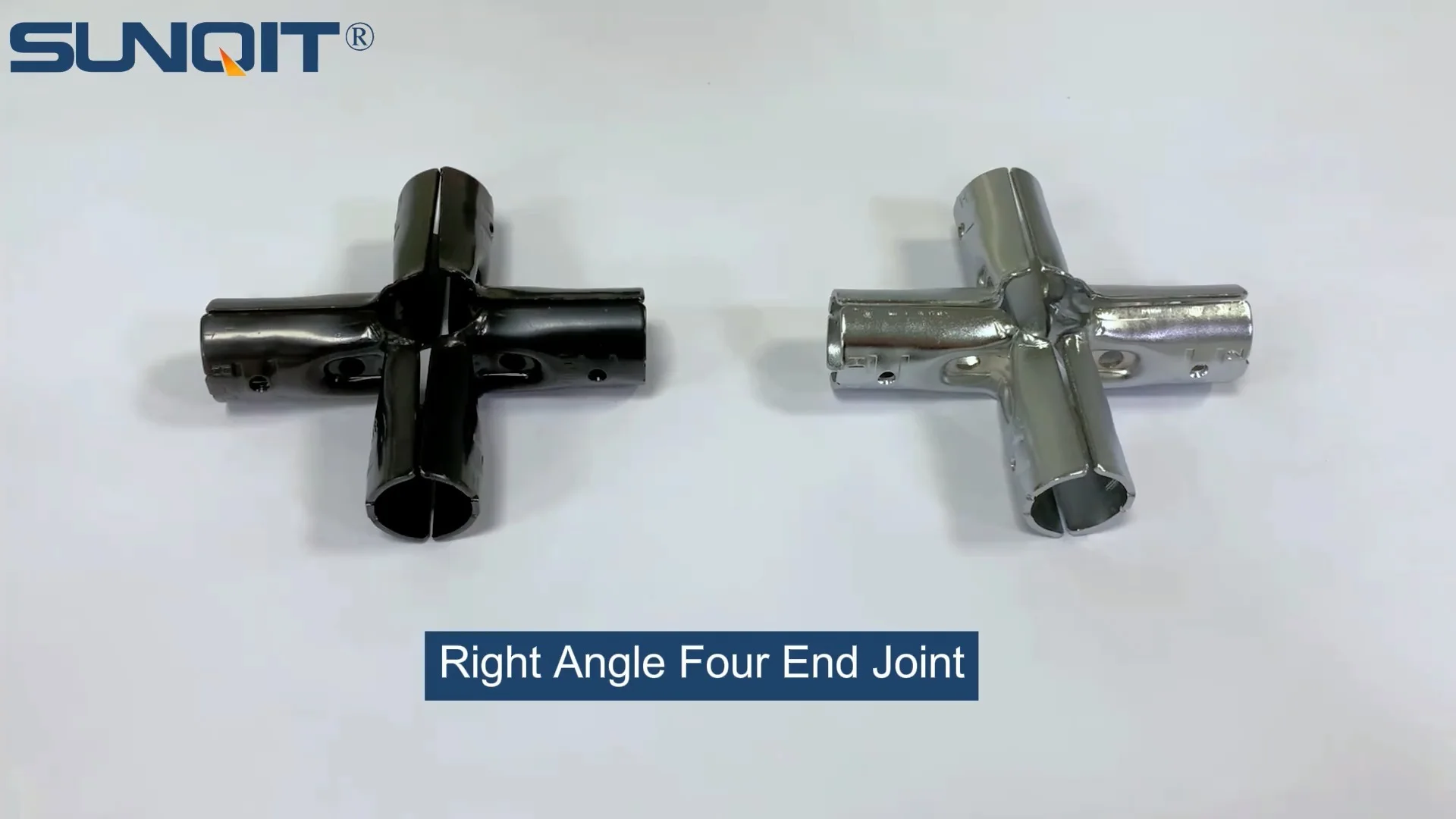
Five way straight lean pipe joint, for 5 pcs 28mm lean pipe connect in straight angle,which used widely in workbench, flow rack, hand trolley frame connection.
Introduction: Precision, Agility, and the Need for Lean Innovation
In the world of medical device manufacturing, precision isn't just a buzzword—it's a mandate. From surgical tools to diagnostic equipment, every product that leaves the assembly line must meet (stringent) standards for safety, accuracy, and reliability. But here's the catch: while compliance is non-negotiable, so is efficiency. As demand for innovative medical devices grows, manufacturers are under pressure to produce more, faster, without compromising on quality. This is where lean systems step in—not as a one-size-fits-all solution, but as a philosophy that adapts to the unique rhythms of medical production.
At the core of these lean systems lies a network of components designed to reduce waste, enhance flexibility, and streamline workflows. And among these components, one small but pivotal part has been quietly revolutionizing assembly lines: the five way straight lean pipe joint. Often overlooked, this unassuming connector is the backbone of modular workspaces, enabling teams to build, reconfigure, and optimize their setups with unprecedented ease. In this article, we'll dive into how this joint, paired with tools like lean pipe workbenches, flow racks, and conveyors, is transforming medical device assembly from a rigid process into a dynamic, responsive ecosystem.
The Critical Role of Lean Systems in Medical Device Manufacturing
Before we zoom in on the five way straight lean pipe joint, let's first understand why lean systems have become indispensable in medical manufacturing. Unlike industries where mass production is the norm, medical device assembly often involves low-to-medium volume runs, frequent design changes, and strict regulatory oversight (think FDA audits, ISO 13485 compliance, and cleanroom requirements). Traditional assembly lines, with their fixed structures and inflexible layouts, struggle to keep up.
Consider this: A manufacturer switches from producing a standard pacemaker to a newer model with a smaller battery compartment. With a rigid setup, reconfiguring the line could take weeks—delaying time-to-market and increasing costs. Lean systems, by contrast, are built on modularity. They use lightweight, durable components that can be rearranged in hours, not weeks, ensuring that production keeps pace with innovation.
But lean isn't just about speed. It's about intelligence . In medical assembly, waste comes in many forms: excess inventory cluttering workspaces, unnecessary movement of staff between stations, or downtime due to poorly organized tool storage. Lean systems tackle these issues by prioritizing "flow"—ensuring that materials, tools, and workers move in harmony, with minimal friction. And this is where the five way straight lean pipe joint becomes a game-changer.

The Five Way Straight Lean Pipe Joint: Small Component, Big Impact
At first glance, the five way straight lean pipe joint might seem like just another piece of hardware. But look closer, and you'll see why it's the unsung hero of modular assembly. Designed to connect up to five lean pipes (or aluminum pipes) in a straight line, this joint provides a level of structural flexibility that traditional welding or fixed brackets simply can't match. Let's break down its key benefits:
1. Flexibility Without Compromise
Medical device assembly lines rarely stay the same for long. A new device might require additional shelving for components, or a workflow adjustment might demand a longer conveyor path. The five way joint lets teams adapt on the fly. Need to add a side arm to a lean pipe workbench for tool storage? Simply slide the joint onto the existing pipe, lock it in place, and attach the new pipe—no drilling, no welding, no downtime. This flexibility is a lifesaver during product transitions or when scaling production for a sudden surge in demand.
2. Strength Meets Cleanability
In medical manufacturing, durability and hygiene go hand in hand. The five way joint is typically made from high-grade aluminum or stainless steel—materials that resist corrosion, stand up to repeated use, and are easy to sanitize. Unlike plastic connectors that can harbor bacteria or rust-prone metals that flake over time, these joints maintain their integrity even in cleanroom environments, ensuring compliance with strict (sanitation) standards.
3. Cost-Effective Long-Term Value
Investing in modular components might seem pricier upfront than buying fixed equipment, but the long-term savings are undeniable. When a traditional workstation becomes obsolete, it's often scrapped entirely. With the five way joint, components can be repurposed. A flow rack used for assembling syringes can be disassembled and rebuilt into a material cart for IV fluid bags. This "reuse and reconfigure" model reduces waste and keeps capital costs in check—critical for manufacturers operating on tight margins.

Building Efficient Workspaces: Lean Pipe Workbenches and Beyond
The true power of the five way straight lean pipe joint shines when it's used to build foundational workspaces—starting with the lean pipe workbench. In medical device assembly, workbenches aren't just tables; they're command centers where technicians spend hours piecing together intricate components. A poorly designed bench can lead to fatigue, errors, and wasted time. A well-designed one? It becomes an extension of the technician, streamlining every motion.
Lean pipe workbenches, constructed using five way joints and aluminum lean pipes, are customizable to the smallest detail. Need a bench with adjustable height to accommodate technicians of different statures? The joints allow for easy modification. Want integrated shelving for component bins or a built-in ESD mat to protect sensitive electronics (a must for devices with circuit boards)? The modular design makes it possible. Even accessories like tool hooks, monitor arms, or lighting can be added or removed as needs change—all without altering the bench's core structure.
| Feature | Traditional Workbench | Lean Pipe Workbench (with Five Way Joints) |
|---|---|---|
| Flexibility | Fixed structure; cannot be reconfigured without modification. | Easily reconfigured with tools; components can be added/removed in minutes. |
| Compliance Readiness | Hard to clean; crevices trap dust and debris. | Smooth, non-porous surfaces; easy to sanitize for cleanroom standards. |
| Ergonomics | One-size-fits-all height; limited accessory options. | Height-adjustable; customizable with tool holders, lighting, and ESD protection. |
| Longevity | Becomes obsolete when workflows change; often replaced entirely. | Components reused across projects; adapts to new workflows. |
But workbenches are just the start. The five way joint also plays a key role in building material racks, turnover trolleys, and even custom storage solutions. For example, a material rack B (3 row and 3 floor) can be assembled using the joints to create a vertical storage system that keeps components organized and within arm's reach—eliminating time wasted searching for parts. When production needs shift, the rack can be disassembled and rebuilt into a different configuration, ensuring the workspace always aligns with current priorities.

Streamlining Material Flow: Flow Racks and Conveyors
In medical device assembly, the movement of materials is just as critical as the assembly itself. A component that gets stuck in transit, or a bin that's placed too far from the workbench, can disrupt the entire line. This is where flow racks and conveyors—powered by the five way joint—come into play, ensuring that materials flow seamlessly from storage to assembly to inspection.
Flow Racks: Gravity-Powered Efficiency
Flow racks, equipped with roller tracks (another modular component), use gravity to move component bins from the back of the rack to the front, where technicians can access them. This "first-in, first-out" (FIFO) system reduces the risk of expired or outdated components being used—a critical safeguard in medical manufacturing. The five way joint is instrumental here, allowing racks to be built with multiple levels, angles, and configurations. For instance, a three-row, three-floor material rack can be customized to hold different-sized bins, with roller tracks tilted at the perfect angle to ensure smooth, controlled movement.
Conveyors: Bridging Workstations with Precision
Conveyors, too, benefit from the flexibility of the five way joint. In medical assembly, where lines might have sharp turns or need to navigate around cleanroom barriers, rigid conveyors are impractical. Modular conveyors, built using aluminum pipes and five way joints, can be curved, extended, or shortened as needed. Roller conveyors, for example, use plastic or steel rollers mounted on aluminum frames (connected via joints) to transport partially assembled devices between workstations. If a new inspection station is added, the conveyor can be easily reconfigured to include a detour—no need for expensive custom fabrication.
The result? A material flow system that's not just efficient, but predictable . Technicians spend less time fetching parts and more time assembling devices. Bottlenecks are identified and resolved quickly. And with every component connected via five way joints, the entire system remains adaptable to future changes.
Real-World Impact: How Lean Systems Transform Medical Assembly
To put this into perspective, let's consider a hypothetical (but realistic) case study: A mid-sized medical device manufacturer specializing in surgical staplers was struggling with inefficiencies in its assembly line. The company's traditional setup included fixed steel workbenches, static shelving, and a rigid conveyor system. When it introduced a new stapler model with a slimmer design, the line needed to be reconfigured—but the process took six weeks, during which production slowed to a crawl. Frustrated, the manufacturer turned to a lean system supplier for help.
The supplier recommended a complete overhaul using aluminum lean pipes, five way straight lean pipe joints, lean pipe workbenches, and flow racks. The transformation was striking: Workbenches were adjusted to ergonomic heights, flow racks were installed to deliver components directly to each station, and a modular roller conveyor replaced the old rigid system. When the next product redesign came six months later, the team reconfigured the line in just two days—saving weeks of downtime and cutting production costs by 18%.
But the benefits went beyond speed. The clean, organized workspace reduced errors by 23%, and the modular design made FDA audits smoother, as inspectors could easily verify that components were stored and handled in compliance with regulations. For the manufacturer, the five way joint wasn't just a part—it was the key to unlocking a more agile, reliable, and profitable operation.
Future Trends: Where Lean Systems and Medical Manufacturing Meet
As medical device technology continues to advance—with smaller, more complex devices and the rise of personalized medicine—lean systems will only grow in importance. And the five way straight lean pipe joint, along with its modular counterparts, will evolve to meet new demands. Here are a few trends to watch:
1. Integration with Smart Manufacturing
Industry 4.0 is coming to medical manufacturing, and lean systems are poised to be part of it. Imagine lean pipe workbenches equipped with sensors that track tool usage or monitor component inventory in real time. The modular design of these workbenches, enabled by five way joints, makes adding smart technology (like RFID readers or IoT-connected bins) simple and cost-effective.
2. Sustainability in Materials
With manufacturers under pressure to reduce their environmental footprint, aluminum lean pipes and joints are becoming even more popular. Aluminum is lightweight, recyclable, and requires less energy to produce than steel. Future iterations may use recycled aluminum or bio-based plastics for accessories, aligning lean principles with sustainability goals.
3. Enhanced Ergonomics
As focus on worker well-being increases, lean systems will prioritize ergonomics even more. Think workbenches with motorized height adjustment (powered via modular components) or conveyor systems that adapt to technicians' movements to reduce strain. The five way joint will remain central, enabling these customizations without sacrificing stability.
Conclusion: The Five Way Joint—A Foundation for Future-Proofing Medical Assembly
In the high-stakes world of medical device manufacturing, success depends on the ability to balance precision with adaptability. Lean systems, built around components like the five way straight lean pipe joint, offer exactly that balance. They transform rigid assembly lines into flexible ecosystems where waste is minimized, efficiency is maximized, and compliance is built into every workflow.
From lean pipe workbenches that adapt to technicians' needs to flow racks and conveyors that keep materials moving, the five way joint is the quiet force that holds it all together. It's a reminder that innovation in manufacturing doesn't always come from flashy technology—it often comes from reimagining the basics. As medical device manufacturers look to the future, those who embrace modular, lean solutions won't just keep up with change—they'll lead it.
So the next time you see a medical device, take a moment to appreciate the invisible infrastructure behind it. Chances are, a five way straight lean pipe joint played a role in bringing it to life—one small, but mighty, step at a time.