- Company Articles
- Products and Technology
- Application Cases
- Medical Device Manufacturing: A Case for Suction Cup Anti-Slip Foot Adjusters

Medical Device Manufacturing: A Case for Suction Cup Anti-Slip Foot Adjusters
Related Product
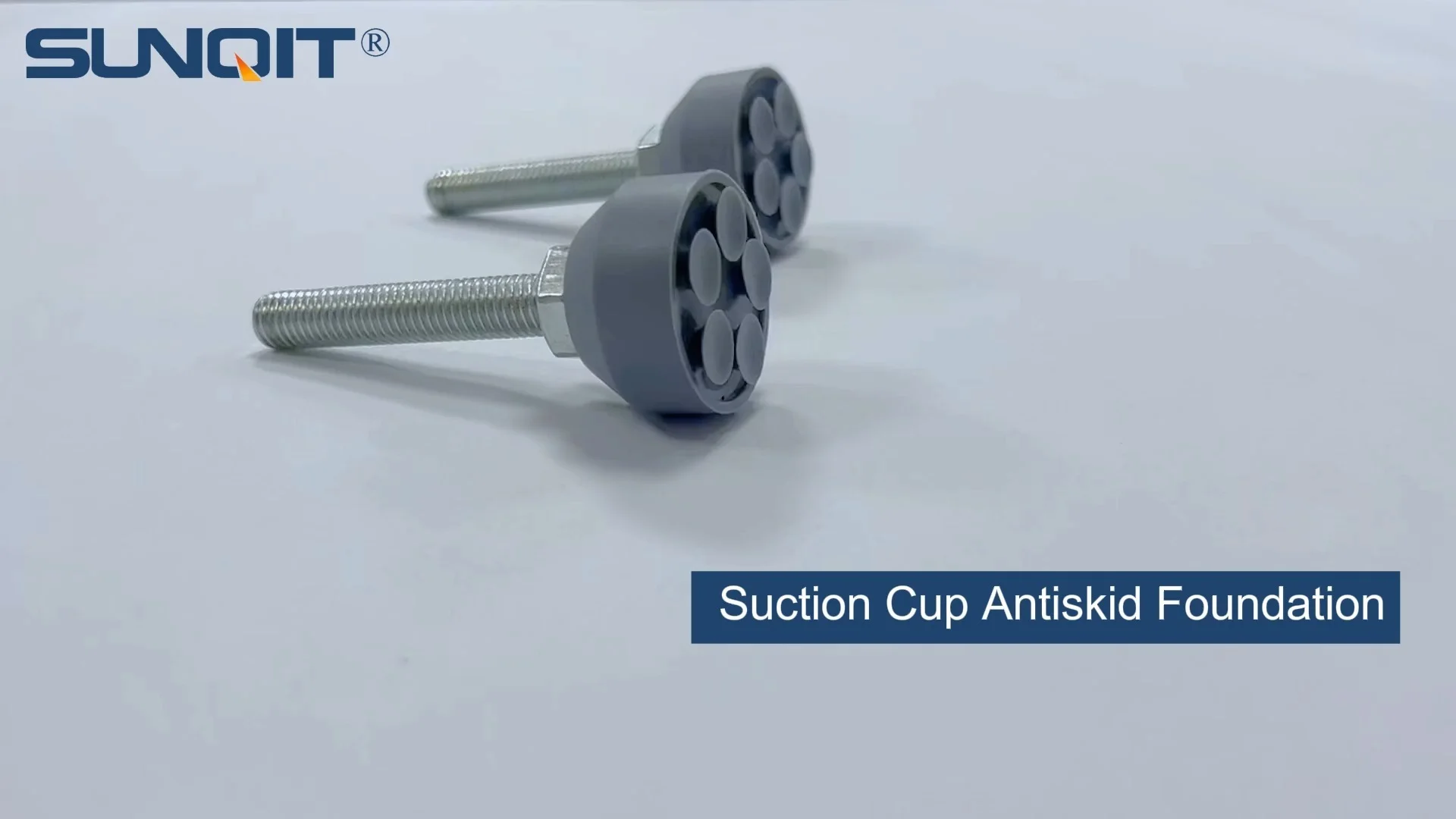
Suction Cup Anti-slip Foot Adjuster
D=35mm suction cup anti-slip foot adjusterï¼screw M10*55ï¼with a blot, used for workbench, flowrack pipe contact with groud.
Walk into any medical device manufacturing facility, and you'll immediately sense the gravity of the work happening there. Every assembly line, every workstation, every tool is calibrated to a standard that leaves no room for error. Why? Because the products rolling off those lines—pacemakers, insulin pumps, surgical instruments—aren't just machines. They're lifelines. A single misalignment in a catheter tip or a tiny flaw in a diagnostic device could compromise patient safety, trigger costly recalls, or even lead to regulatory penalties. In this high-stakes environment, precision isn't just a goal; it's the foundation of trust between manufacturers, healthcare providers, and the patients who rely on these tools.
But here's the thing: precision doesn't start with the advanced robotics or high-tech sensors. It starts with the basics—the tools that workers interact with every single day. And among those basics, few are as yet critical as the workbench. Think about it: a technician assembling a neurostimulation device spends hours hunched over a workbench, manipulating parts smaller than a grain of rice. A quality inspector leans in to check the tolerance of a surgical tool's edge, their hand steadying against the bench. If that workbench shifts even a millimeter, if it vibrates or slips, the consequences can ripple through the entire production process.
This is where the conversation often overlooks a silent hero: the foot adjuster. Not the generic, run-of-the-mill kind you might find under a garage workbench, but something designed specifically for the demands of medical manufacturing. Today, we're diving into why suction cup anti-slip foot adjusters have become a non-negotiable component in modern medical device assembly lines. We'll explore how they integrate with lean systems to eliminate waste, complement aluminum profile workbenches, and ultimately, ensure that the "basics" never become the weak link in producing life-saving devices.
The Hidden Cost of Unstable Workbenches: More Than Just a "Wobble"
Let's start with a scenario that's all too familiar in manufacturing facilities that haven't upgraded their workbench stability solutions. Picture a mid-sized medical device company producing IV fluid warmers—devices that regulate the temperature of fluids administered to patients during surgery. Their assembly line uses standard steel workbenches with rubber-padded foot adjusters. The floors in their cleanroom are polished epoxy, smooth and easy to sanitize (a must for compliance with ISO 13485 standards). But here's the problem: by mid-morning, the rubber pads on the workbenches start to lose grip. A technician reaches for a component on the far side of the bench, and the whole surface shifts half an inch. The circuit board they're soldering jostles, creating a hairline crack in a solder joint. They don't notice it at the time—who would, with the naked eye?—but two weeks later, that crack causes a short circuit in a hospital, leading to a device failure and an urgent recall.
That's an extreme example, but it highlights a truth: instability in workbenches isn't just an annoyance. It's a hidden source of waste, risk, and inefficiency. Let's break down the costs:
- Rework and Scrap: Even minor shifts can misalign parts during assembly, leading to products that don't meet specs. For a company producing 10,000 units a month, a 2% rework rate (common with unstable workbenches) translates to 200 wasted units—each costing hundreds, if not thousands, of dollars in materials and labor.
- Worker Fatigue: When a workbench wobbles, workers unconsciously tense their muscles to steady themselves or the tools. Over time, this leads to increased fatigue, higher absenteeism, and even repetitive strain injuries—all of which slow down production and raise insurance costs.
- Regulatory Risks: Regulatory bodies like the FDA don't just inspect the final product; they audit the manufacturing process. A facility with "inconsistent workbench stability" could face citations for failing to maintain controlled process conditions, putting certifications (and contracts) at risk.
- Delayed Production: Stopping the line to readjust a slipping workbench, or pausing to inspect parts that "look off" due to misalignment, adds up. A few minutes here and there can turn into hours of lost time over a week.
Traditional foot adjusters—whether rubber-padded, metal, or plastic—fall short in medical environments for a few key reasons. Rubber pads wear down quickly, especially on smooth floors, losing their grip. Metal feet scratch delicate cleanroom floors, creating crevices where bacteria can hide (a compliance nightmare). And most adjusters don't account for uneven floors—a common issue in older facilities—leaving workbenches tilted even after "leveling."
Suction Cup Anti-Slip Foot Adjusters: The Stability Revolution
Enter the suction cup anti-slip foot adjuster —a deceptively simple solution that's transforming how medical device manufacturers approach workbench stability. At first glance, they look similar to standard foot adjusters: a threaded stem for height adjustment, a base that sits on the floor. But the magic is in the base: a durable, medical-grade rubber suction cup that creates a vacuum seal with the floor when weight is applied. Here's how they work:
When you place a workbench (loaded with tools, parts, and equipment) on these adjusters, the weight of the bench compresses the suction cup, squeezing out air from underneath. This creates a vacuum that "locks" the adjuster to the floor, resisting lateral movement (sliding) and vertical lift (tipping). Unlike rubber pads, which rely on friction alone, the suction cup adds a mechanical grip—so even on ultra-smooth epoxy or vinyl floors, the workbench stays put.
But it's not just about grip. These adjusters are designed with medical manufacturing in mind, so they check all the boxes:
- Adjustable Height: The threaded stem lets workers fine-tune the height by up to 2 inches, compensating for uneven floors. No more tilting workbenches or shimming with scraps of material (a huge no-no for cleanrooms).
- Floor Protection: The soft rubber suction cup won't scratch or mar floors, keeping cleanrooms compliant with standards and reducing floor repair costs.
- Chemical Resistance: Medical facilities use harsh disinfectants (like bleach or hydrogen peroxide) to sanitize surfaces. These adjusters are made from rubber compounds that resist degradation from chemicals, ensuring they last for years, not months.
- Easy Installation: They screw into standard workbench legs, so retrofitting an existing line takes minutes—no need for specialized tools or downtime.
To put this in perspective, let's compare them to traditional options. The table below breaks down the key differences:
| Feature | Traditional Rubber-Padded Adjusters | Metal Foot Adjusters | Suction Cup Anti-Slip Foot Adjusters |
|---|---|---|---|
| Grip on Smooth Floors | Low (wears out in 3–6 months) | Very Low (slips easily) | High (vacuum seal lasts 2–3 years) |
| Floor Protection | Moderate (may leave marks over time) | Low (scratches floors) | High (soft rubber, no damage) |
| Adjustability for Uneven Floors | Limited (fixed height range) | Moderate (threaded, but no grip adjustment) | High (2-inch height range + vacuum seal adapts to minor unevenness) |
| Chemical Resistance | Low (rubber breaks down with disinfectants) | High (but risks corrosion in humid cleanrooms) | High (medical-grade rubber resists bleach, peroxide, etc.) |
| Cost Over 5 Years* | $300 (replaced 8x) | $200 (replaced 4x + $1,000 floor repairs) | $150 (replaced once) |
*Estimated cost for a single workbench with 4 adjusters, including replacement and maintenance.
The numbers speak for themselves: suction cup anti-slip foot adjusters aren't just better—they're more cost-effective in the long run. But their real value lies in how they integrate with the broader goals of medical device manufacturing, especially lean systems .

Lean Systems and the "5S" Connection: How Stability Drives Efficiency
Lean manufacturing isn't just a buzzword in medical device production—it's a survival strategy. With margins tight and competition fierce, companies can't afford waste. Lean principles like "5S" (Sort, Set in Order, Shine, Standardize, Sustain) are all about creating a workspace that's organized, efficient, and focused on value. So where do suction cup anti-slip foot adjusters fit in?
Let's walk through the 5S framework and see:
Sort (Seiri): Eliminating Clutter
"Sort" is about removing unnecessary items from the workspace. When a workbench slips, workers often prop it up with random objects—scrap wood, old manuals, even coffee mugs—to stabilize it. These "quick fixes" create clutter, violating the first rule of 5S. Suction cup adjusters eliminate the need for these Band-Aids, keeping workspaces clean and focused on what matters: the tools and parts needed for production.
Set in Order (Seiton): Organizing for Flow
"Set in Order" means arranging tools and materials so they're easy to access. But if the workbench itself moves, that "perfectly organized" layout goes out the window. A technician reaching for a torque wrench might find it's shifted an inch to the left, forcing them to search (wasting time). With stable workbenches, layouts stay consistent—every tool has a fixed home, and workers can grab what they need without hesitation.
Shine (Seiso): Cleaning and Inspection
"Shine" is about keeping the workspace clean to spot issues early. Traditional foot adjusters, especially metal ones, scratch floors, creating hard-to-clean grooves that trap dirt and bacteria. Suction cup adjusters, with their smooth rubber bases, glide over floors without damage, making daily cleaning faster and more effective. Plus, their vacuum seal is visible—if the cup loses suction (a rare occurrence), it's easy to spot during inspections, preventing stability issues before they start.
Standardize (Seiketsu): Creating Consistency
"Standardize" ensures processes are consistent across shifts and workstations. Without stable workbenches, each operator might adjust their bench differently, leading to variations in assembly quality. With suction cup adjusters, setting up a workbench becomes a standardized process: level the adjusters, apply weight, check the seal—and done. Every bench is stable in the same way, reducing variability in output.
Sustain (Shitsuke): Maintaining the System
"Sustain" is about making good habits stick. Traditional adjusters require constant maintenance—replacing worn pads, fixing scratches, readjusting levels. This creates a culture of "reacting" rather than "maintaining." Suction cup adjusters, with their long lifespan and minimal upkeep, let teams focus on sustaining improvements (like optimizing workflows) instead of putting out fires.
In short, suction cup anti-slip foot adjusters aren't just a stability solution—they're a lean enabler. By eliminating waste (rework, clutter, time spent adjusting), they free up teams to focus on adding value: improving processes, innovating, and delivering safer, better devices to patients.

Aluminum Profiles and the Perfect Workbench Partner
Now, let's talk about the workbench itself. In modern medical manufacturing, aluminum profile workbenches have become the gold standard—and for good reason. Aluminum is lightweight yet strong, resistant to corrosion (critical in humid cleanrooms), and infinitely customizable. With T-slot designs, manufacturers can add shelves, tool holders, lighting, and even integrated scales or monitors—all without welding or drilling. It's the ultimate lean material: adaptable to changing needs, easy to reconfigure, and built to last.
But even the best aluminum profile workbench is only as good as its foundation. Aluminum is lighter than steel, which is great for mobility (many medical workbenches are on casters for flexibility), but that lightness can make them more prone to slipping—unless paired with the right foot adjusters. Here's why suction cup anti-slip foot adjusters are the ideal match for aluminum profiles:
- Weight Distribution: Aluminum workbenches are often top-heavy (think: shelves loaded with tools, monitors, or parts bins). Suction cup adjusters distribute that weight evenly across the floor, preventing tipping—even when a technician leans on the edge to reach a part.
- Compatibility with Casters: Many aluminum workbenches have casters for easy movement, but when locked into place, they need to stay put. Suction cup adjusters can be added alongside casters (or replace them for stationary setups), ensuring the bench doesn't roll or shift during use.
- Cleanroom-Friendly: Aluminum profiles are easy to sanitize, but their smooth surfaces can make workbenches slippery. Suction cup adjusters, with their non-porous rubber bases, won't harbor bacteria, keeping the entire workstation compliant with strict hygiene standards.
- Customization: Aluminum profiles come in various sizes (2020, 3030, 4040 series, etc.), and suction cup adjusters are available with threaded stems that fit any leg size. Whether you're building a small benchtop workstation or a large assembly table, you can find adjusters that integrate seamlessly.
Consider this example: a manufacturer of diagnostic test kits uses 4040 aluminum profiles to build modular workbenches. Each bench has a built-in microscope, a reagent cooler, and a bin for test tubes. With traditional rubber adjusters, the benches would slip when technicians opened the cooler (the sudden weight shift was enough to break the rubber grip). After switching to suction cup anti-slip adjusters, the benches stayed locked in place—even during cooler openings. The result? Technicians could focus on pipetting precise amounts of reagent, not bracing the bench, and test accuracy improved by 1.2% (a huge win in a field where even 0.1% matters).

The Bottom Line: Stability as a Competitive Advantage
In medical device manufacturing, every decision comes down to two questions: "Does this improve patient safety?" and "Does this make us more efficient?" Suction cup anti-slip foot adjusters answer "yes" to both. They reduce the risk of errors that could harm patients, cut costs by eliminating waste, and support lean systems that drive continuous improvement.
Think about it: when your workbenches are stable, your workers are more confident. They move faster, make fewer mistakes, and feel valued (because the company invested in their safety and comfort). That confidence translates to better products, happier customers, and a stronger bottom line. In an industry where the margin for error is zero, and the pressure to innovate is constant, sometimes the most powerful upgrades are the ones you can't see—like the humble foot adjuster keeping everything steady, one suction cup at a time.
So, the next time you walk through a medical device assembly line, take a look under the workbenches. What you see there might just be the difference between a good manufacturer and a great one.