- Company Articles
- Products and Technology
- Product knowledge
- Medical Device Manufacturing: Five Way Straight Lean Pipe Joint Applications

Medical Device Manufacturing: Five Way Straight Lean Pipe Joint Applications
Related Product
Five Way Straight Lean Pipe Joint
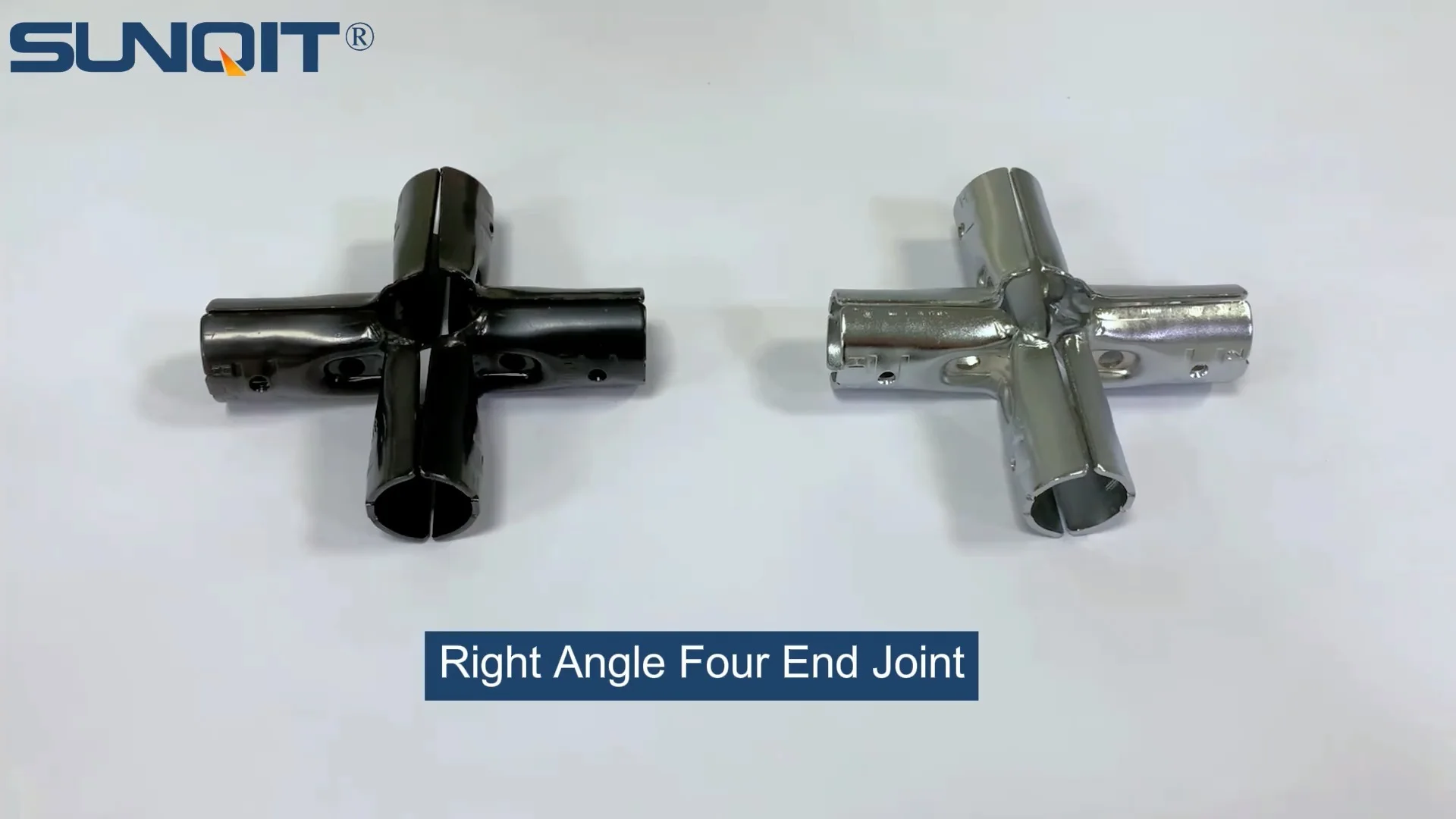
Five way straight lean pipe joint, for 5 pcs 28mm lean pipe connect in straight angle,which used widely in workbench, flow rack, hand trolley frame connection.
In the world of medical device manufacturing, precision isn't just a buzzword—it's a lifeline. Every catheter, pacemaker, and diagnostic tool that leaves the production line carries the weight of patient safety, regulatory compliance, and the reputation of the companies behind them. But here's the thing: creating these life-saving devices isn't just about assembling parts. It's about building a manufacturing ecosystem that's efficient, adaptable, and unyielding in its commitment to quality. That's where lean systems come into play—and at the heart of many of these systems lies a small but mighty component: the five way straight lean pipe joint.
If you've ever walked through a medical device production floor, you've likely seen the fruits of lean manufacturing: workbenches tailored to specific tasks, flow racks that glide materials to workers with minimal effort, and mobile trolleys that keep sterile components moving safely between stations. What you might not have noticed is the unsung hero holding many of these structures together. The five way straight lean pipe joint is more than just a connector; it's a building block for flexibility, a enabler of efficiency, and a silent partner in meeting the rigorous demands of medical manufacturing. Let's dive into how this unassuming component is transforming the way we build the tools that save lives.
Why Lean Systems Matter in Medical Device Manufacturing
Before we zoom in on the five way straight lean pipe joint, let's take a step back and talk about why lean systems are non-negotiable in medical manufacturing. Unlike industries where mass production and cost-cutting are the primary goals, medical device manufacturing operates under a unique set of pressures. Regulations like ISO 13485 and FDA guidelines demand traceability, cleanliness, and consistency at every step. At the same time, companies face the challenge of producing small-batch, highly customized devices (think specialized surgical tools for niche procedures) alongside high-volume staples like syringes or IV components. Add in the need to adapt quickly to new technologies—such as AI-integrated diagnostic devices or biodegradable implants—and you've got a recipe for a manufacturing environment that can't afford waste, delays, or inefficiency.
Enter lean manufacturing. Rooted in the principles of eliminating waste (or "muda"), lean systems focus on streamlining workflows, reducing unnecessary movement, and ensuring every process adds value. In medical manufacturing, this translates to fewer errors in assembly, faster time-to-market for critical devices, and a production line that can pivot without sacrificing compliance. But lean isn't just a philosophy—it's a physical practice. To make lean work, you need tools that are as adaptable as the processes they support. That's where lean pipe systems shine.
Lean pipe systems—often made from aluminum, stainless steel, or plastic-coated steel pipes—are modular by design. They use joints, connectors, and accessories to build custom structures on demand. Need a workbench that can adjust height for ergonomic assembly? A flow rack that keeps sterile parts organized and accessible? A mobile trolley that fits through cleanroom doors? Lean pipes and their joints make it possible—no welding, no custom fabrication, no waiting weeks for specialized equipment. And among all the joints available, the five way straight lean pipe joint stands out for its ability to turn simple pipes into complex, multi-functional systems.
Meet the Five Way Straight Lean Pipe Joint: Design and Functionality
Let's start with the basics: What is a five way straight lean pipe joint? At first glance, it might look like a small, unassuming piece of metal (or sometimes plastic, depending on the application). But its design is deceptively clever. As the name suggests, this joint is engineered to connect five lean pipes in a straight line, allowing for multi-directional builds. Picture a central hub with five ports—each one designed to securely grip a lean pipe, creating a stable connection that can support weight, withstand movement, and adapt to changing needs.
Most five way straight lean pipe joints are made from die-cast aluminum or stainless steel, and for good reason. Aluminum offers a lightweight yet durable option, ideal for structures that need to be moved (like mobile workstations), while stainless steel brings corrosion resistance and strength—critical in environments where cleanliness is paramount (think cleanrooms or areas where frequent sanitization is required). The joints typically feature internal threads or clamping mechanisms that lock pipes in place, eliminating the need for welding or adhesives. This not only speeds up assembly but also makes disassembly and reconfiguration a breeze—key for lean environments where flexibility is king.
But what really sets the five way joint apart is its versatility. Unlike simpler joints (like two-way or three-way connectors), which limit you to linear or L-shaped structures, the five way joint opens up a world of possibilities. Need a workbench with a shelf above, a tool rack to the side, and a material bin below? The five way joint can anchor all those components to a central frame. Building a flow rack with three levels of roller tracks and two vertical supports? This joint ensures the structure stays stable, even when loaded with heavy components. It's the Swiss Army knife of lean pipe connectors—small, but capable of handling a surprising range of tasks.

Applications in Medical Device Manufacturing: Where the Five Way Joint Shines
Now, let's get practical. How does the five way straight lean pipe joint actually improve medical device manufacturing? Let's break it down into three key areas where this component makes a tangible difference: custom workbenches, flow racks, and mobile material handling systems. Each of these applications addresses a specific pain point in medical manufacturing—from reducing assembly errors to ensuring sterile materials stay contamination-free.
1. Custom Lean Pipe Workbenches: Tailored to the Task
Walk into any medical device assembly area, and you'll notice something immediately: no two workbenches are the same. That's because assembling a pacemaker requires different tools, space, and ergonomics than putting together a surgical retractor. A one-size-fits-all workbench just won't cut it. Enter the lean pipe workbench—built with modular components, including (you guessed it) five way straight lean pipe joints.
Here's how it works: Start with a base frame of lean pipes connected by joints. Then, use five way joints to add layers of functionality. Need a shelf above the work surface to hold sterilized tools? Attach a horizontal pipe to the top port of the joint. A side rail for hanging ESD-safe tool hooks? Use a side port. A lower shelf for storing completed assemblies? That's where the bottom port comes in. The result? A workbench that's not just a flat surface, but a complete workstation designed around the specific task at hand.
Take, for example, the assembly of a neurostimulation device—a small, intricate tool used to treat chronic pain. The workers here need precise access to tiny components (think wires thinner than a human hair) and a stable surface to mount microscopes or testing equipment. Using five way joints, manufacturers can build a workbench with adjustable height (via telescoping pipes), integrated LED lighting (mounted on a pipe extension), and a built-in ESD mat (secured to the surface with pipe clamps). The joint ensures all these components stay rigid, even when the microscope is adjusted or tools are moved. No more awkward reaching, no more fumbling for misplaced parts—just a workspace that adapts to the worker, not the other way around.
2. Flow Racks: Keeping Materials Moving, Without the Fuss
In medical manufacturing, time is more than money—it's compliance. When a batch of surgical instruments is ready to be assembled, every minute spent searching for the right screw or washer is a minute that delays production and increases the risk of errors. That's where flow racks come in. These inclined structures use gravity to feed materials to workers, ensuring parts are always within arm's reach. And the five way straight lean pipe joint is the backbone of many of these racks.
Imagine a flow rack designed for a catheter production line. Catheters require dozens of components—tubing, connectors, guide wires—each of which needs to be organized by size, material, and sterilization date. A single-level flow rack might work for a few parts, but with dozens, you need vertical space. That's where the five way joint shines. By connecting vertical support pipes to horizontal rails (which hold the roller tracks), the joint creates a sturdy frame that can support multiple levels of flow lanes. Each level can be adjusted for height, ensuring workers don't have to bend or stretch to reach parts. And because the joint is so stable, the rack can hold heavy bins of materials without wobbling—critical when dealing with sterile components that can't risk contamination from falls or spills.
But it's not just about vertical space. The five way joint also allows for "branching" flow racks—structures that split into multiple lanes to feed different workstations. For example, a single main rail might split into three lanes, each feeding a different assembly station (one for catheter tips, one for tubing, one for final packaging). The joint ensures the split is smooth, with no sharp angles to jam materials. The result? A material flow system that's efficient, organized, and adaptable—exactly what's needed when production schedules shift or new components are introduced.
3. Mobile Trolleys and Turnover Racks: Sterility on the Move
Not all manufacturing happens in one spot. In many medical facilities, components need to move between cleanrooms, testing labs, and packaging areas. But moving sterile materials isn't as simple as throwing them in a box and rolling it down the hall. These components need to stay protected from dust, moisture, and physical damage—all while being easy to transport. Enter mobile trolleys and turnover racks, often built with lean pipe systems and five way joints.
Let's say a batch of pacemaker batteries has just been tested and is ready to be moved to the final assembly area. These batteries are sensitive to electrostatic discharge (ESD) and must remain sterile. A mobile trolley built with five way joints can address both needs. The base frame, connected via joints, supports multiple shelves (each lined with ESD-safe matting). Casters (another key lean pipe accessory) are attached to the bottom, allowing the trolley to roll smoothly across the floor. The five way joints ensure the shelves stay level, even when the trolley is moved over uneven surfaces, preventing batteries from sliding or tipping. And because the joint connections are secure, the trolley can be sanitized with harsh chemicals (like alcohol or hydrogen peroxide) without weakening the structure—critical for maintaining cleanroom standards.
But the real beauty here is adaptability. Need to add a cover to the trolley to protect components from dust? Use a five way joint to attach a pipe frame and drape it with a sterile cover. Want to separate different battery types on the same trolley? Add dividers using vertical pipes connected to the joint. No need to buy a new trolley—just reconfigure the existing one. In an industry where product lines change frequently (think new battery sizes or updated sterilization requirements), this flexibility is invaluable.

Why Medical Manufacturers Choose Five Way Joints: The Benefits Beyond Flexibility
By now, you might be thinking, "Okay, five way joints are flexible—but so are other lean pipe components. What makes them special for medical manufacturing?" The answer lies in three key benefits that align perfectly with the unique demands of this industry: compliance, durability, and cost-effectiveness.
Compliance first. Medical device manufacturing is governed by some of the strictest regulations in the world. ISO 13485, for example, requires manufacturers to maintain "appropriate infrastructure" to ensure product quality. This includes everything from cleanroom design to the materials used in production equipment. Five way straight lean pipe joints, often made from stainless steel or anodized aluminum, check this box with ease. Stainless steel resists rust and corrosion, even after repeated sanitization with industrial-grade cleaners, while anodized aluminum creates a non-porous surface that's easy to wipe down. Unlike painted or plastic components, these materials don't chip or flake, eliminating the risk of contamination from loose particles. For manufacturers, this isn't just a convenience—it's a regulatory requirement.
Durability that stands up to the grind. Medical device production lines run around the clock, and the equipment needs to keep up. A flimsy workbench or wobbly flow rack isn't just inefficient—it's dangerous. Five way joints are built to last. The die-cast construction and secure clamping mechanisms ensure connections stay tight, even under constant use. Load testing shows that a well-built lean pipe structure with five way joints can support hundreds of pounds without bending or warping. For example, a flow rack holding 50-pound bins of surgical tools will stay stable for years, reducing the need for frequent repairs or replacements. In an industry where downtime can cost thousands of dollars (and delay life-saving devices), this reliability is priceless.
Cost-effectiveness, without cutting corners. Let's talk money. Custom metal fabrication for workbenches or racks can cost tens of thousands of dollars, and if production needs change, you're stuck with a structure that's obsolete. Lean pipe systems, and five way joints in particular, flip this model on its head. Because they're modular, you only buy what you need, when you need it. A basic workbench frame might cost a few hundred dollars, and adding a shelf or a flow lane later is just a matter of buying a few extra pipes and joints. When production lines shift, you can disassemble the old structure and rebuild it—no waste, no new investment. Over time, this modular approach can cut equipment costs by 30% or more compared to custom fabrication. For medical manufacturers operating on tight margins (thanks to regulatory costs and R&D investments), this is a game-changer.

How Does It Stack Up? Comparing Five Way Joints to Other Connectors
To really appreciate the five way straight lean pipe joint, it helps to see how it compares to other common lean pipe connectors. Let's take a look at a few popular options and how they measure up in terms of versatility, load capacity, and medical-specific applications.
| Joint Type | Number of Pipe Connections | Primary Material | Typical Load Capacity | Best For | Limitations in Medical Manufacturing |
|---|---|---|---|---|---|
| Two Way Straight Joint | 2 (straight line) | Aluminum or steel | Medium (up to 100 lbs per connection) | Simple frames, horizontal rails | Limited to linear structures; can't support multi-level or branched designs. |
| Three Way T-Joint | 3 (T-shape) | Aluminum or steel | Medium-High (up to 150 lbs per connection) | Adding shelves to frames, basic flow racks | Only one branching direction; not ideal for complex, multi-component workstations. |
| Four Way Cross Joint | 4 (cross shape: up, down, left, right) | Steel (for added strength) | High (up to 200 lbs per connection) | Multi-level racks, vertical supports | No front/back connections; limits horizontal expansion for wide workbenches. |
| Five Way Straight Joint | 5 (straight line with 4 perpendicular ports) | Steel or stainless steel | Very High (up to 250 lbs per connection) | Custom workbenches, complex flow racks, mobile trolleys | Slightly bulkier than smaller joints; may be overkill for simple structures. |
As the table shows, the five way straight lean pipe joint isn't the right choice for every scenario. For a simple horizontal rail, a two way joint is more than enough. But when medical manufacturers need to build complex, multi-functional structures—like a workbench with integrated lighting, tool storage, and material flow—the five way joint is the clear winner. Its ability to connect five pipes in multiple directions, combined with high load capacity and durable materials, makes it the go-to for environments where adaptability and reliability can't be compromised.
Real-World Impact: A Case Study in Lean Adaptation
Let's wrap up with a hypothetical (but realistic) example of how the five way straight lean pipe joint transformed a medical device production line. Meet MedTech Innovations, a mid-sized manufacturer specializing in orthopedic implants (think hip replacements and spinal screws). A few years ago, MedTech faced a challenge: they needed to ramp up production of a new spinal implant, but their existing assembly line was designed for larger, bulkier hip implants. The workbenches were too high, the flow racks were too deep, and the mobile trolleys couldn't fit through the narrow doors of the cleanroom where the spinal implants were tested.
The team at MedTech turned to lean manufacturing—and specifically, lean pipe systems. They started by disassembling their old hip implant workbenches and using the pipes and joints to build new structures. The star of the show? Five way straight lean pipe joints. Here's how they used them:
- Adjustable Workbenches: Using five way joints, they built workbenches with telescoping legs (allowing height adjustments from 30" to 42") and modular shelves. The joints supported side-mounted tool racks and overhead lighting, ensuring workers had everything they needed within arm's reach.
- Compact Flow Racks: The spinal implants required smaller components, so MedTech built narrow, multi-level flow racks using five way joints. The joints allowed for three vertical levels and two horizontal lanes per level, maximizing storage without taking up extra floor space.
- Sterile Mobile Trolleys: To move components from the assembly area to the cleanroom, they built trolleys with five way joint frames, ESD-safe shelves, and lockable casters. The narrow design (thanks to the joint's compact footprint) fit through the cleanroom doors, and the sturdy connections ensured components stayed secure during transport.
The results? Production time for the spinal implants dropped by 22%, and error rates (like misplaced screws or misaligned components) fell by 18%. Workers reported less fatigue, thanks to the ergonomic workbenches, and the cleanroom staff noted fewer contamination incidents, thanks to the secure trolleys. Best of all, when MedTech later introduced a new line of pediatric spinal implants (even smaller than the adult version), they simply reconfigured the existing structures using extra pipes and five way joints—no new equipment needed.
The Bottom Line: Small Component, Big Impact
At the end of the day, the five way straight lean pipe joint is a reminder that innovation in medical device manufacturing isn't always about flashy new technologies or breakthrough materials. Sometimes, it's about the small, thoughtful components that make the everyday work of building life-saving devices a little easier, a little safer, and a lot more efficient.
Whether it's holding together a workbench where a pacemaker takes shape, supporting a flow rack that feeds critical components to assembly line workers, or anchoring a mobile trolley that carries sterile parts through a cleanroom, this unassuming joint plays a vital role in upholding the standards of medical manufacturing. It's a testament to the power of lean systems—proving that by focusing on flexibility, durability, and value, we can build a manufacturing ecosystem that doesn't just meet the demands of today, but adapts to the challenges of tomorrow.
So the next time you see a lean pipe structure on a medical device production floor, take a closer look. Chances are, there's a five way straight lean pipe joint holding it all together—quietly, reliably, and without fanfare. And in an industry where every detail matters, that's more than enough.