- Company Articles
- Products and Technology
- Product knowledge
- Medical Device Manufacturing: The Role of Aluminum Workbench A in Sterile Environments

Medical Device Manufacturing: The Role of Aluminum Workbench A in Sterile Environments
Related Product
Aluminum Workbench A
Aluminum tube workbench is more flexible and durable, compared with traditional PE/ABS coated steel tube. It is easy to assemble, anti corrosion, rust protection, and recycle use after disassemble.
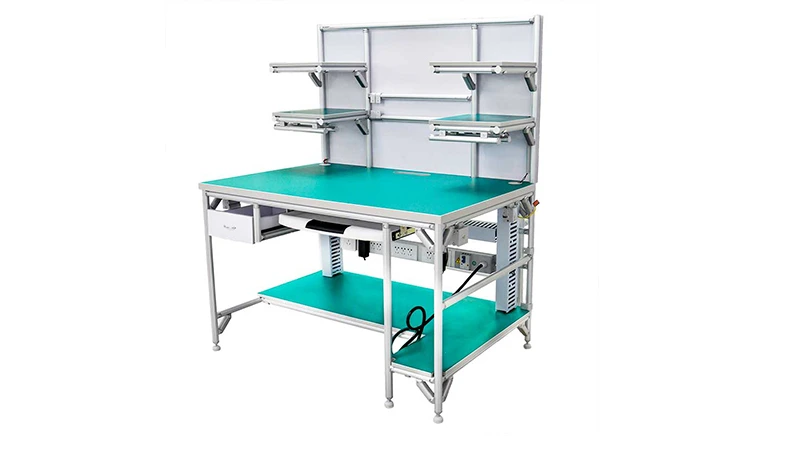
In the world of medical device manufacturing, precision isn't just a goal—it's a life-saving necessity. Every tool, every surface, and every step in the process carries the weight of patient safety. Among the unsung heroes of this high-stakes environment is the workspace itself: the workbench. Not just any workbench, though. In sterile zones where even a single speck of dust can compromise a device, Aluminum Workbench A stands out as a silent guardian, blending functionality, durability, and sterility into a design that supports the meticulous work of creating life-critical tools.
This article dives into why Aluminum Workbench A has become indispensable in medical device manufacturing, exploring its design, material benefits, and how it integrates seamlessly with other essential systems like flow racks and conveyors to maintain the strictest sterile standards. We'll also touch on its role in supporting ESD workstations , a key component in protecting sensitive electronic medical devices from static damage.
Why Material Matters: Aluminum's Edge in Sterile Settings
When it comes to medical manufacturing, the workbench material isn't a minor detail—it's a foundational choice. Traditional materials like wood or steel, while common in other industries, fall short in sterile environments. Wood is porous, harboring bacteria in tiny crevices even after cleaning. Steel, though durable, is prone to rust and corrosion when exposed to the frequent, harsh cleaning agents used in medical facilities. Aluminum, however, brings a unique set of properties that make it the gold standard.
Aluminum is non-porous, meaning it doesn't trap moisture, bacteria, or contaminants. Wiping it down with disinfectants or running it through automated cleaning systems leaves no residue, ensuring a surface that's truly sterile. Its natural resistance to corrosion means it can withstand daily exposure to alcohol, hydrogen peroxide, and other sanitizers without degrading. And unlike heavier materials, aluminum is lightweight enough to reconfigure workspaces as production needs shift, yet sturdy enough to support the weight of delicate instruments and assembly tools.
| Feature | Aluminum Workbench A | Traditional Steel Workbench | Wooden Workbench |
|---|---|---|---|
| Material Composition | High-grade aluminum alloy | Carbon steel (often painted/coated) | Solid wood or plywood |
| Sterility Maintenance | Non-porous; easy to disinfect; no bacterial trapping | Porous coatings can harbor microbes; prone to rust if coating chips | Highly porous; absorbs liquids and bacteria |
| Durability | Resistant to dents, scratches, and corrosion | Strong but prone to rust and coating wear | Prone to warping, cracking, and surface damage |
| Weight | Lightweight (easy to reposition) | Heavy (difficult to move) | Moderate weight but fragile when moved |
| ESD Compatibility | Can be integrated with ESD mats and grounding | Requires additional ESD treatments | Not ESD-friendly; static buildup risk |
Aluminum Workbench A: Engineered for Sterile Precision
Beyond its material advantages, Aluminum Workbench A's design is a masterclass in user-centric engineering. Let's break down its key features and how they support sterile manufacturing:
1. Seamless, Smooth Surfaces
Every inch of the workbench is designed to eliminate crevices. The single-deck top (a deliberate choice over multi-layered designs) has no edges or joints where debris could hide. Even the corners are gently rounded to prevent dust accumulation and make wiping easier. For facilities using automated cleaning robots, this smooth profile ensures the robot can glide over the surface without missing spots—a critical detail in 24/7 production environments.
2. No Casters: Stability for Delicate Work
Unlike mobile workbenches, Aluminum Workbench A is intentionally designed without casters. In sterile zones, movement can stir up air particles, increasing contamination risk. A fixed position ensures stability, reducing the chance of accidental spills or tool displacement during precision tasks, such as assembling microelectrodes or catheter components. For facilities needing flexibility, optional locking casters can be added for transport between zones, but they're easily removed once in place to maintain sterility.
3. Compatibility with Sterile Accessories
The workbench's aluminum frame is drilled with standardized mounting points, allowing easy attachment of aluminum profile accessories like tool holders, LED task lights, and ESD wrist strap anchors. These accessories are made from the same sterile-grade aluminum, ensuring no compromises when adding functionality. For example, a detachable tool tray with drainage holes prevents liquid buildup, while a built-in cable management system keeps power cords and data lines organized—reducing clutter and making cleaning faster.

Integrating into the Sterile Workflow: Flow Racks, Conveyors, and Beyond
A workbench doesn't operate in isolation. In medical device manufacturing, it's part of a larger ecosystem where materials, components, and finished products move seamlessly between stations—all while maintaining sterility. Aluminum Workbench A excels here, thanks to its compatibility with two critical systems: flow racks and conveyors.
Flow Racks: Organized, Sterile Material Storage
Flow racks are a staple in lean manufacturing, designed to deliver components to workers in the order they're needed, minimizing waste and movement. When paired with Aluminum Workbench A, they create a closed-loop system where materials never touch non-sterile surfaces. The workbench's height is adjustable to align perfectly with flow rack levels, so technicians can slide parts directly from the rack to the work surface without bending or reaching—reducing fatigue and contamination risk.
For example, in a syringe assembly line, pre-sterilized barrels and plungers are stored in a flow rack adjacent to Aluminum Workbench A. As each technician finishes a batch, the next set of components slides forward, gravity-fed, ensuring a steady, uninterrupted workflow. The flow rack's aluminum construction matches the workbench, so cleaning protocols remain consistent across the entire station.
Conveyors: Moving Products Without Contamination
Once a device is assembled, it needs to move to the next stage—inspection, packaging, or sterilization—without human touch. Conveyors integrated with Aluminum Workbench A make this possible. The workbench's edge is designed to align flush with conveyor belts, allowing finished devices to slide onto the belt via a smooth aluminum ramp. This eliminates the need for technicians to handle products, reducing the risk of transfer contamination.
In a pacemaker production facility, for instance, assembled units are gently pushed from Aluminum Workbench A onto a stainless steel conveyor (another sterile material) that carries them to an automated inspection station. The conveyor's speed is synchronized with the workbench's production rate, ensuring a steady flow that prevents bottlenecks and keeps the sterile zone undisturbed.
ESD Workstations: Protecting Sensitive Electronics
Many medical devices, such as MRI coils or neurostimulators, contain sensitive electronics vulnerable to electrostatic discharge (ESD). Aluminum Workbench A can be configured as an ESD workstation by adding conductive mats, grounding straps, and ionizers. The aluminum frame itself acts as a ground, dissipating static charges safely to prevent damage to components. This dual functionality—sterility and ESD protection—makes the workbench a versatile solution for mixed-manufacturing environments.

Real-World Impact: Case Studies in Sterile Manufacturing
To understand Aluminum Workbench A's value, look no further than its adoption in leading medical device facilities. Take, for example, a Fortune 500 medical tech company that produces surgical robots. Before switching to Aluminum Workbench A, the company used steel workbenches that required daily scrubbing with abrasive cleaners to maintain sterility—a process that scratched surfaces over time, creating new hiding spots for bacteria. After transitioning, they reported a 40% reduction in cleaning time and a 25% drop in contamination-related product rejections.
Another case: a small-scale manufacturer of custom orthopedic implants. With limited space, they needed a workbench that could adapt to changing production runs (from knee replacements to spinal screws) without sacrificing sterility. Aluminum Workbench A's modular design allowed them to reconfigure tool holders and accessory mounts in minutes, while its lightweight frame made it easy to shift between production lines. The result? A 30% increase in throughput and compliance with FDA's strict sterile manufacturing guidelines.
The Future: Innovations in Sterile Workbench Design
As medical device manufacturing evolves—with smaller, more complex devices and stricter regulatory demands—Aluminum Workbench A continues to adapt. Manufacturers are exploring antimicrobial aluminum alloys that actively kill bacteria on contact, reducing reliance on chemical cleaners. Integrated sensors that monitor surface cleanliness in real time are also in development, alerting staff if a surface needs re-cleaning before the next production run.
Perhaps most exciting is the integration of IoT technology. Imagine a workbench that automatically adjusts lighting based on the time of day, reducing eye strain, or that sends maintenance alerts when accessories like tool holders need tightening. These innovations, built on the foundation of Aluminum Workbench A's sterile design, promise to make medical manufacturing even safer and more efficient.
Conclusion: Aluminum Workbench A—More Than a Workspace
In the high-pressure world of medical device manufacturing, where a single mistake can have life-altering consequences, Aluminum Workbench A is more than just a table. It's a partner in precision, a guardian of sterility, and a cornerstone of efficient production. Its aluminum construction, thoughtful design, and seamless integration with flow racks, conveyors, and ESD systems make it indispensable for facilities committed to quality and patient safety.
As technology advances and regulatory standards rise, one thing remains clear: the tools we use to build life-saving devices must be as reliable as the devices themselves. Aluminum Workbench A isn't just keeping up—it's leading the way.