- Company Articles
- Products and Technology
- Product knowledge
- Medical Device Manufacturing: Using Lean Pipe Clamp Chrome for Sterile Workstations

Medical Device Manufacturing: Using Lean Pipe Clamp Chrome for Sterile Workstations
Related Product
Lean Pipe Clamp Chrome
Lean pipe clamp is used for rack system hang monitor or other panel for workbenck, flowrack in production daily use.
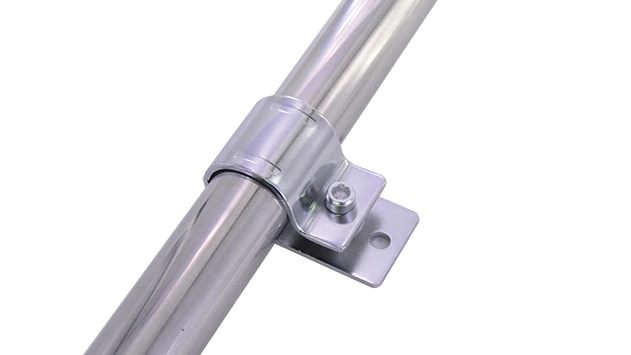
In the world of medical device manufacturing, where precision can mean the difference between life and death, and sterility is non-negotiable, the tools and environments that shape production matter as much as the devices themselves. Every workstation, every rack, and every piece of material handling equipment plays a role in ensuring compliance with strict regulatory standards—from FDA guidelines to ISO 13485—while keeping production efficient, adaptable, and worker-friendly. In recent years, one solution has emerged as a silent workhorse in this high-stakes industry: lean pipe clamp chrome. More than just a component, it's a bridge between lean manufacturing principles and the unique demands of sterile, high-precision environments. Let's dive into how this unassuming tool is transforming medical device production floors, and why it's becoming a staple for manufacturers aiming to balance rigor with flexibility.
The Challenges of Medical Device Manufacturing: Why Workstation Design Matters
Medical device manufacturing is a realm of contradictions. On one hand, it requires unwavering consistency—each instrument, implant, or diagnostic tool must meet exact specifications to ensure patient safety. On the other hand, the industry is in constant flux: new technologies emerge, regulations evolve, and product lines shift to meet changing healthcare needs. This duality creates unique challenges for production facilities, especially when it comes to their most fundamental asset: the workstation.
First and foremost is sterility. Unlike consumer goods, medical devices often come into direct contact with patients, making contamination control critical. Workstations must be easy to clean, resistant to corrosion from harsh disinfectants, and designed to minimize crevices where bacteria or debris can hide. Traditional fixed workbenches, often made of wood or non-sealed materials, struggle here—they're prone to harboring contaminants and degrade quickly under repeated cleaning.
Then there's adaptability. A manufacturer might produce a line of surgical scissors one month and switch to intricate pacemaker components the next. Fixed workstations, bolted to the floor and built for a single purpose, become liabilities in such scenarios. Reconfiguring them is time-consuming, costly, and often requires downtime—something the fast-paced medical industry can ill afford.
Ergonomics and worker safety are equally pressing. Medical device assembly often involves repetitive, detail-oriented tasks, increasing the risk of strain injuries. Workstations must be adjustable to different heights, angles, and layouts to support proper posture and reduce fatigue. Additionally, static electricity (a common issue in electronics assembly) can damage sensitive components or attract dust—making ESD (Electrostatic Discharge) protection a must for many medical devices.
Enter lean manufacturing. Rooted in the idea of minimizing waste while maximizing value, lean principles have long been adopted in industries like automotive. But in medical device manufacturing, lean isn't just about efficiency—it's about creating systems that can adapt to change, maintain sterility, and support the human hands behind the products. And at the heart of this adaptation lies modular, flexible tools like lean pipe clamp chrome.
Lean Pipe Clamp Chrome: The Basics of a Modular Powerhouse
So, what exactly is lean pipe clamp chrome? At its core, it's a system of chrome-plated steel pipes and matching joints designed to build custom workstations, racks, trolleys, and material handling structures. The pipes—typically 28mm in diameter—are strong yet lightweight, and their smooth, chrome-plated finish offers two key benefits: resistance to corrosion (vital for sterile environments) and easy cleaning. The clamps, or joints, are the real magic: they're modular, allowing pipes to be connected at various angles (90°, 45°, 135°, etc.) without welding or specialized tools. This simplicity transforms the pipe and joint system into a building block set for adults—one that can be assembled, disassembled, and reconfigured in hours, not days.
Unlike plastic or uncoated steel alternatives, chrome-plated lean pipes excel in medical settings. The chrome layer acts as a barrier against moisture and chemicals, standing up to daily wipe-downs with alcohol, hydrogen peroxide, or other disinfectants. It also resists scratches, ensuring the surface remains smooth and easy to sanitize over time. For manufacturers operating in cleanrooms or controlled environments, this durability is a game-changer—it reduces the need for frequent replacements and ensures compliance with sterility standards.
But the true strength of lean pipe clamp chrome lies in its versatility. Need a workstation with a built-in tool rack, a shelf for components, and a lower shelf for waste bins? Simply connect the pipes with T-joints, elbow joints, and shelf brackets. Want to add a light fixture or a monitor arm? There's a clamp for that. Need to adjust the height after an ergonomic assessment? Loosen the joints, reposition the pipes, and tighten—no power tools required. This modularity makes it ideal for medical device manufacturers, who often need to pivot between product lines or scale up production quickly.

Traditional vs. Lean Pipe Clamp Chrome Workstations: A Head-to-Head Comparison
| Feature | Traditional Fixed Workstations | Lean Pipe Clamp Chrome Workstations |
|---|---|---|
| Material | Often wood, particleboard, or non-sealed steel; prone to warping or corrosion. | Chrome-plated steel pipes; corrosion-resistant, easy to sanitize, and durable under disinfectants. |
| Sterility Compliance | Hard-to-clean surfaces and crevices; risk of bacterial buildup; degrades with repeated cleaning. | Smooth, non-porous chrome finish; minimal crevices; compatible with strict cleaning protocols (ISO 13485, FDA). |
| Reconfigurability | Fixed design; requires disassembly or replacement to modify layout or function. | Modular joints allow quick reconfiguration (heights, shelves, accessories) with basic tools. |
| Durability | Short lifespan under heavy use; prone to scratches, dents, or water damage. | Chrome plating resists scratches and corrosion; steel pipes handle heavy loads (up to 200kg per shelf). |
| Cost Over Time | Low upfront cost but high long-term expenses (replacement, downtime for reconfiguration). | Slightly higher upfront cost, but lower over time (reusable components, minimal downtime, no need for new workstations). |
| Ergonomics | One-size-fits-all design; limited adjustability for height, angle, or tool placement. | Customizable height, shelf positions, and accessory mounts (e.g., monitor arms, tool hooks) to support worker posture. |
Integrating ESD Workstations: Protecting Sensitive Medical Components
Many medical devices—from pacemakers to diagnostic sensors—rely on delicate electronics. For these, static electricity isn't just a nuisance; it's a threat. A single electrostatic discharge can damage microchips, disrupt circuits, or even render a device non-functional. Worse, static charges attract dust and debris, compromising sterility. This is where ESD workstations come into play, and lean pipe clamp chrome integrates seamlessly with ESD technology to create safe, sterile assembly environments.
An ESD workstation built with lean pipe clamp chrome starts with the basics: ESD-safe materials. While the chrome-plated pipes themselves aren't conductive, the system can be paired with ESD mats (placed on the work surface), grounding straps, and conductive casters to channel static away from sensitive components. The modular design makes adding these features straightforward—ESD accessories can be clamped directly to the pipes, ensuring they're positioned exactly where needed.
Take, for example, a manufacturer assembling hearing aids. These tiny devices contain microelectronics that are highly static-sensitive. A lean pipe clamp chrome workstation for this task might include: a height-adjustable frame, an ESD mat covering the work surface, a grounding wire connected to the pipe frame, and a small ESD-safe shelf for component bins. If the manufacturer later shifts to assembling larger devices (like defibrillator pads), the same workstation can be reconfigured—adding extra shelves, adjusting the height, or swapping out the ESD mat for a larger one—without losing static protection.
This integration of ESD protection with modularity is a boon for compliance. Regulatory bodies like the FDA require manufacturers to document and maintain ESD control measures, and lean pipe clamp chrome systems simplify this. Since the structure itself is durable and reconfigurable, ESD components can be easily inspected, replaced, or updated as needed—ensuring ongoing compliance without major overhauls.
Complementary Tools: Aluminum Profile and Flow Racks in Lean Medical Systems
While lean pipe clamp chrome is a star player, it rarely works alone. In medical device manufacturing, it often teams up with other modular components to create holistic lean systems. Two common partners are aluminum profile and flow racks—each adding unique benefits to the mix.
Aluminum Profile: Lightweight Strength for Specialized Applications
Aluminum profile—extruded aluminum bars with T-slots for accessories—shines in scenarios where weight and aesthetics matter. Lighter than steel but still strong, aluminum profile is ideal for mobile trolleys or overhead structures where minimizing weight reduces strain on casters or supports. Its smooth, anodized finish also resists corrosion, making it compatible with sterile environments. In medical settings, aluminum profile is often used for workstations that need to be moved frequently (e.g., mobile assembly carts for line-side support) or where a sleek, modern look is desired (e.g., cleanroom partitions).
The beauty of aluminum profile is its compatibility with lean pipe clamp chrome. Many manufacturers use hybrid systems: steel pipes for heavy-duty frames and aluminum profile for lighter components like shelves or side panels. For example, a workstation might have a lean pipe clamp chrome base (providing stability) with aluminum profile shelves (reducing weight and adding T-slot accessories like tool holders or label clips). This flexibility allows manufacturers to tailor structures to their exact needs—balancing strength, weight, and cost.
Flow Racks: Streamlining Material Flow with Roller Tracks
Material handling is another area where lean principles shine, and flow racks—often built with lean pipe clamp chrome and roller tracks—are key. Flow racks use gravity to move materials from the loading end to the picking end, reducing the need for manual lifting and ensuring components are always within reach. In medical device manufacturing, where time is critical and errors are costly, this "first-in, first-out" (FIFO) flow minimizes waste and keeps production lines moving.
A typical flow rack in a medical facility might be constructed with lean pipe clamp chrome frames and plastic or steel roller tracks (another modular component). Bins of screws, wires, or plastic parts are loaded onto the higher end of the rack and glide down to the picking station as lower bins are emptied. This not only reduces walking time for workers but also keeps inventory organized—critical for traceability, a cornerstone of medical device compliance.
Roller tracks themselves are highly customizable. They come in various widths, roller materials (e.g., plastic for quiet operation, steel for heavy loads), and can be paired with side guides to prevent bins from slipping. When built with lean pipe clamp chrome frames, flow racks can be adjusted for height, depth, or the number of lanes—adapting to different component sizes or production volumes.
Real-World Impact: A Case Study in Lean Transformation
To understand the real impact of lean pipe clamp chrome, consider a mid-sized medical device manufacturer specializing in orthopedic implants (e.g., knee and hip replacements). Before adopting lean systems, the company struggled with: fixed workstations that couldn't adapt to new implant designs, frequent contamination issues due to hard-to-clean surfaces, and high turnover due to ergonomic strain among assembly workers.
The solution? A complete overhaul using lean pipe clamp chrome, aluminum profile, and flow racks. Here's how it played out:
Step 1: Workstation Reconfiguration – Old wooden workbenches were replaced with lean pipe clamp chrome workstations. Each was customized: height-adjustable frames to accommodate workers of different sizes, ESD mats for handling metal components, and modular shelves with clear bins for tools and parts. The chrome finish allowed daily cleaning with hospital-grade disinfectants, and crevices were minimized—reducing contamination risks by 40% within the first quarter.
Step 2: Material Flow Optimization – Flow racks with roller tracks were installed along the assembly line. Implant components, once stored in distant warehouses, were now delivered directly to the line via the racks—cutting walking time by 30% and reducing errors from misplaced parts.
Step 3: Mobile Support with Aluminum Profile – Aluminum profile was used to build lightweight, mobile carts for transporting completed implants to testing stations. The carts, equipped with locking casters, could be easily moved by a single worker, eliminating the need for heavy lifting.
The results were striking: production downtime dropped by 25%, rework due to contamination fell by 50%, and worker satisfaction scores (measured via surveys) increased by 35%. Most importantly, the manufacturer was able to pivot quickly when a new implant design was approved—reconfiguring workstations in a single weekend instead of the two weeks it would have taken with fixed setups.
Choosing a Lean Pipe Clamp Chrome Supplier: Key Considerations for Medical Manufacturers
Not all lean pipe clamp chrome systems are created equal, and for medical device manufacturers, choosing the right supplier is critical. Here are key factors to prioritize:
Material Quality – Ensure the pipes are made from high-grade steel with a thick, uniform chrome plating. Ask for test reports on corrosion resistance and durability under disinfectants—look for compliance with ISO 10993 (biological evaluation of medical devices) if possible.
Modularity and Compatibility – The supplier should offer a wide range of joints, clamps, and accessories (e.g., ESD mats, roller tracks, aluminum profile adapters) to ensure the system can grow with your needs. Avoid proprietary systems that lock you into a single brand—look for standard sizes that work with third-party components.
Regulatory Expertise – Medical manufacturing has unique compliance requirements. A good supplier will understand FDA, ISO 13485, and cleanroom standards and can provide documentation (e.g., material safety data sheets, cleaning guidelines) to support your audits.
Customer Support – Reconfiguring lean systems can be intimidating at first. Choose a supplier that offers design assistance, installation support, and training for your team. Some suppliers even provide on-site consultations to help optimize workstation layouts for ergonomics and sterility.
The Future of Lean in Medical Manufacturing: Adaptability as a Competitive Edge
As medical technology advances—with trends like 3D-printed implants, AI-driven diagnostics, and miniaturized devices—the need for flexible, sterile production systems will only grow. Lean pipe clamp chrome, with its ability to adapt, clean, and support workers, is poised to remain a cornerstone of this evolution. Future innovations may include smart features: sensors embedded in pipes to monitor cleaning frequency, or IoT-connected joints that alert teams when reconfiguration is needed. But even without high-tech add-ons, the core value of lean pipe clamp chrome—simplicity, modularity, and sterility—will keep it relevant for years to come.
In the end, medical device manufacturing is about more than building products—it's about building trust. Trust that each device is sterile, precise, and made with care. Lean pipe clamp chrome may not be the most glamorous tool in the factory, but it's a quiet enabler of that trust: a system that works as hard as the people behind it, adapting to change, upholding standards, and ensuring that every device that leaves the line is ready to save or improve a life.