- Company Articles
- Products and Technology
- Product knowledge
- Medical Device Packaging Lines: 40 Steel Roller Track Black ESD Wheels for Precision

Medical Device Packaging Lines: 40 Steel Roller Track Black ESD Wheels for Precision
Related Product
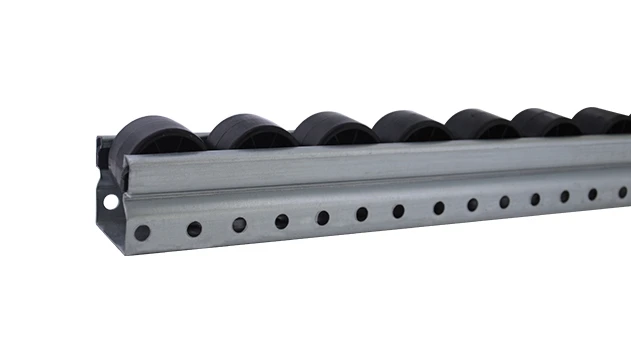
40 Steel Roller Track Black ESD Wheel
The roller track can be installed with multiple accessories to create different slopes and configurations of flow racks.All steel conveyor 40 roller track accessories are engineered to perfectly fit the sliding rail.
The Critical Role of Precision in Medical Device Packaging
In the world of healthcare, every detail matters. From the smallest surgical instrument to life-saving diagnostic equipment, the way medical devices are packaged directly impacts patient safety, product integrity, and regulatory compliance. Imagine a scenario where a delicate pacemaker component is jostled during packaging—even a tiny scratch or static discharge could compromise its functionality, putting lives at risk. This is why medical device packaging lines aren't just production systems; they're guardians of precision, reliability, and trust.
Today, we're diving into a component that quietly ensures this precision: the 40 Steel Roller Track Black ESD Wheels . Far more than just "conveyor parts," these wheels are the unsung heroes of medical packaging lines, working in harmony with ESD workstations , conveyors, and lean systems to create a seamless, safe, and efficient workflow. Let's explore how this technology elevates medical device packaging, one smooth roll at a time.
40 Steel Roller Track Black ESD Wheels: Built for Medical-Grade Demands
When it comes to medical device packaging, two challenges stand out: electrostatic discharge (ESD) protection and mechanical stability . Sensitive electronic components in devices like MRI machines or glucose monitors are damaged by static electricity, while uneven conveying can cause misalignment, scratches, or even component displacement. The 40 Steel Roller Track Black ESD Wheels are engineered to tackle both head-on.
| Core Feature | What It Means for Medical Packaging | Real-World Impact |
|---|---|---|
| Black ESD-Compliant Wheels | Surface resistance of 10⁶–10⁹Ω, dissipating static charges safely | Protects pacemakers, sensors, and circuit boards from electrostatic damage during transport |
| 40mm Steel Track Construction | High-strength steel frame with corrosion-resistant coating | Withstands rigorous cleaning protocols (alcohol wipes, steam) in sterile environments |
| Precision Ball Bearings | Ultra-smooth rotation with minimal friction | Ensures consistent speed, preventing sudden jolts that could misalign delicate components |
| Black Non-Marking Tread | Soft yet durable rubber that leaves no residue | Maintains cleanroom standards—no smudges or debris on packaging materials or device surfaces |
Take, for example, a medical device manufacturer producing insulin pumps. These devices contain microchips that regulate dosage accuracy. As the pumps move along the packaging line, the 40 Steel Roller Track's ESD wheels prevent static buildup, while the steel track's rigidity ensures the pumps glide evenly into their protective casings. No static shocks, no wobbles—just precise, repeatable motion that meets FDA and ISO 13485 requirements.

Beyond the Wheels: A Holistic Lean Solution for Medical Lines
Great components don't work in isolation. The 40 Steel Roller Track Black ESD Wheels shine brightest when integrated into a complete lean solution —a system designed to minimize waste, maximize flexibility, and adapt to the unique needs of medical device manufacturing. Let's break down how key elements of this system collaborate:
1. ESD Workstations: The Control Center of Precision
At the heart of the packaging line sits the ESD workstation . Equipped with grounded surfaces, anti-static mats, and adjustable height settings, these workstations are where operators inspect, assemble, and prepare devices for packaging. The 40 Steel Roller Track feeds directly into these workstations, allowing components to arrive at the operator's fingertips with zero static charge and perfect alignment. For instance, when packaging a batch of surgical robots, operators can seamlessly slide instrument arms from the roller track onto the ESD workstation, confident that neither the arm nor the workstation will generate harmful static.
2. Conveyors: The Nervous System of the Line
Conveyors are the "transport arteries" connecting workstations, inspection points, and final packaging stations. In medical lines, conveyors must be both gentle and reliable—qualities that the 40 Steel Roller Track enhances. Unlike rigid, one-size-fits-all conveyors, this roller track is modular, meaning it can be curved, extended, or reconfigured to fit tight cleanroom spaces or unique product paths. For a manufacturer shifting from packaging syringes to larger ultrasound probes, the roller track can be adjusted in hours, not days, minimizing downtime and supporting agile production.
3. Lean Pipe Systems: Flexibility Meets Sustainability
Medical device trends evolve rapidly—today's hot product might be tomorrow's legacy model. This is where lean pipe systems (think aluminum pipes and joints) add immense value. The 40 Steel Roller Track integrates with these systems, allowing packaging lines to be disassembled, reconfigured, and reused as needs change. For example, a facility producing ventilator components during a health crisis can quickly repurpose its roller track and lean pipes to package oxygen concentrators later, reducing waste and lowering long-term costs. It's sustainability in action—no more scrapping entire lines when product specs shift.

Case Study: How a Medical Device Maker Boosted Yield by 22% with This System
Let's ground this in a real-world example. A mid-sized medical device company specializing in diagnostic test kits was struggling with two issues: frequent ESD-related component failures (costing $50,000/year in scrap) and bottlenecks in their packaging line due to rigid conveyors. Their old system used non-ESD rollers and fixed conveyor belts, leading to static damage and inflexible workflows.
After consulting with a lean solution provider, they upgraded to a system centered on 40 Steel Roller Track Black ESD Wheels , paired with ESD workstations and modular lean pipes. The results were striking:
- 22% reduction in product defects : Static-related failures dropped to near-zero, as the ESD wheels dissipated charges before components reached sensitive stages.
- 30% faster changeovers : Reconfiguring the line for new test kit sizes went from 8 hours to 2.5 hours, thanks to the modular roller track and lean pipes.
- 15% lower operating costs : The reusable lean components reduced the need for new equipment purchases, while smoother conveying cut energy use by 12%.
The plant manager summed it up: "We used to see the packaging line as a 'necessary evil.' Now, it's a competitive advantage. The 40 Steel Roller Track doesn't just move parts—it moves our business forward."
Why Choose a Specialized Lean Solution Provider for Medical Packaging?
Medical device manufacturing isn't just about "meeting standards"—it's about exceeding them. When selecting components like roller tracks or ESD workstations, partnering with a provider who understands both lean principles and medical regulatory needs makes all the difference. Here's what to look for:
Deep Industry Expertise : A provider familiar with FDA, ISO 13485, and CE requirements can guide you away from "general-purpose" solutions that may fail audits. For example, non-medical-grade roller tracks might use lubricants that flake off—contaminating cleanrooms—whereas medical-specific options use food-safe, low-outgassing lubricants.
Customization Capabilities : No two medical packaging lines are identical. A provider offering tailored designs (like roller tracks with adjustable speed controls or ESD workstations with integrated UV sterilization) ensures the system fits your unique needs, not the other way around.
Commitment to Sustainability : The "lean" in lean solutions isn't just about efficiency—it's about sustainability. Look for providers who prioritize reusable, recyclable components (like aluminum lean pipes) to align with your organization's ESG goals and reduce long-term waste.
Final Thoughts: Precision That Protects
In the end, the 40 Steel Roller Track Black ESD Wheels are more than a technical component. They're a promise— a promise that every medical device, from the simplest bandage dispenser to the most complex MRI machine, is handled with the care it deserves. When paired with ESD workstations, conveyors, and lean systems, they form a ecosystem that doesn't just package products—it protects lives.
So the next time you see a medical device on a hospital shelf, remember: behind it is a line of technology working tirelessly to ensure it arrives safely, effectively, and ready to heal. And at the heart of that line? Often, a set of black ESD wheels, rolling steadily toward a more precise, reliable future for healthcare.