- Company Articles
- Products and Technology
- Solution
- Medical Device Plant Upgrade: Four Way Straight Lean Pipe Joint in Cleanroom Workstation Redesign

Medical Device Plant Upgrade: Four Way Straight Lean Pipe Joint in Cleanroom Workstation Redesign
Related Product
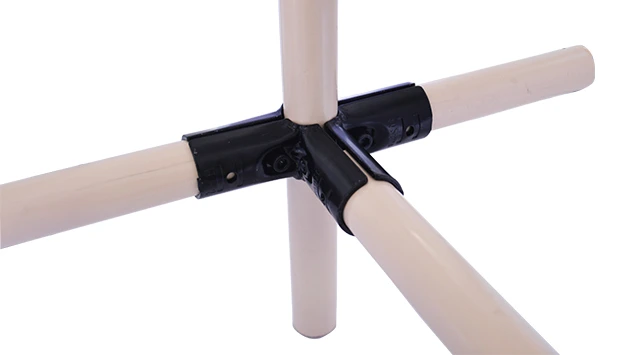
Four Way Straight Lean Pipe Joint
Four way lean pipe joint for 4 pcs 28MM lean pipe connection in straight angle, which used widely in workbench, flow rack, hand trolley frame connection.
The Heartbeat of Medical Manufacturing: Why Cleanroom Workstations Matter
Walk into any medical device plant, and you'll quickly realize that precision isn't just a buzzword—it's the difference between a tool that saves a life and one that fails. Nowhere is this more critical than in the cleanroom, where teams assemble delicate instruments like catheters, pacemaker components, and surgical robots. These spaces operate under strict ISO standards, with controlled airflow, minimal particle counts, and rigorous sanitization protocols. But even the most advanced air filtration system can't compensate for a poorly designed workstation.
For years, the cleanroom at MedTech Innovations—a mid-sized manufacturer outside Boston—had relied on legacy workstations: heavy, bolted-down structures made of welded steel, with fixed shelves and clunky wooden countertops. They got the job done, but barely. "We were constantly fighting two battles," recalls Sarah Lopez, the plant's operations manager. "First, keeping up with production demands—our product line expands every quarter, and reconfiguring those old workstations took days. Second, meeting sterility requirements. Those steel frames had crevices where bacteria loved to hide, and wiping them down took forever. It felt like we were always one missed spot away from a compliance issue."
Then there were the ergonomics. With workstations locked at a single height, assemblers often hunched over or stretched awkwardly to reach tools, leading to strained shoulders and chronic back pain. "We had a 12% injury rate in the cleanroom alone," Sarah adds. "That's not just bad for morale—it's bad for business. Training a new assembler takes 8 weeks, and turnover was costing us tens of thousands annually."
By early 2024, MedTech's leadership knew something had to change. They needed a workstation solution that could keep up with their evolving product lines, slash cleaning time, reduce injuries, and—most importantly—protect the integrity of their life-saving devices. That's when they turned to
lean pipe systems
.
Lean Pipe Systems: More Than Just "Efficient"—A Game-Changer for Flexibility
If you're not familiar with lean pipe systems, think of them as the ultimate building blocks for industrial workspaces. Born from Toyota's lean manufacturing principles, these systems use lightweight, modular pipes and joints to create everything from workbenches and material racks to assembly lines and trolleys. Unlike traditional welded structures, they're designed for quick assembly, easy reconfiguration, and tool-free adjustments. For MedTech, this flexibility was a revelation.
"We'd heard about lean systems in automotive plants, but we weren't sure they'd work in a cleanroom," says Raj Patel, MedTech's lead engineer. "Then we visited a in California that had switched to lean pipe workstations. Their cleanroom looked… calm. Assemblers were moving smoothly, adjusting shelves with a quick twist of a joint, and wiping down surfaces in minutes. We were sold."
But not all lean pipe systems are created equal. MedTech needed components that could withstand daily sanitization, support heavy equipment (like precision microscopes and torque tools), and integrate seamlessly with their existing workflows. After weeks of research, they landed on a key component that would become the backbone of their redesign: the
four way straight lean pipe joint
.

The Unsung Hero: Four Way Straight Lean Pipe Joint Explained
At first glance, the four way straight lean pipe joint might seem unassuming—a small, zinc-plated steel connector with four openings. But its simplicity is its strength. "Think of it as a universal translator for pipes," Raj explains. "It lets you connect four pipes in straight lines or at 90-degree angles, creating sturdy frames without welding or drilling. That's a game-changer for us."
Let's break down why this joint was perfect for MedTech's needs:
Modularity:
Each joint twists onto 28mm lean pipes (the industry standard) with a friction-fit design, so assemblers can build or reconfigure a workstation in hours, not days. Need to add a shelf for a new catheter model? Twist off a joint, add a pipe, and you're done.
Durability:
Zinc plating resists corrosion from daily sanitizing sprays (think isopropyl alcohol and hydrogen peroxide), a must in cleanrooms. MedTech tested samples by soaking them in cleaning solutions for 72 hours—no rust, no degradation.
Strength:
Despite its lightweight design, the joint can support up to 200kg per connection. That's enough to hold a fully loaded instrument tray or a 50kg microscope.
Compatibility:
It works with other lean pipe components, like 90-degree elbows and three-way tees, letting MedTech mix and match to create custom setups.
"We quickly realized this joint wasn't just a connector—it was a design tool," Sarah says. "Our engineers started sketching workstations that could adapt on the fly. One day, a line might assemble 10cm surgical scissors; the next, 30cm forceps. With the four way joint, we could adjust shelf heights, add tool hooks, or even split a workstation into two smaller ones—all without calling a contractor."

Building the Future: From Concept to Cleanroom—The New Workstation Design
MedTech's redesign wasn't just about swapping old workstations for new ones—it was about reimagining how their cleanroom operated. They partnered with a
lean pipe supplier
to co-design a system that checked every box: flexibility, sterility, ergonomics, and durability. Here's how it came together:
Material Choice: Aluminum Profiles Meet Lean Pipes
While traditional lean pipes are often steel with a plastic coating, MedTech opted for aluminum profiles for their workbench frames. "Aluminum is non-porous, so it doesn't trap bacteria," Raj explains. "It's also lighter than steel, which makes reconfiguring easier, and it's naturally resistant to corrosion. Plus, it looks sleek—important for morale. Assemblers feel proud working at a workstation that looks as precise as the tools they use." The four way straight lean pipe joints connected these aluminum profiles into sturdy frames, with 18mm thick aluminum honeycomb panels for countertops (smooth, non-porous, and heat-resistant). For mobility where needed, they added locking casters (another lean pipe accessory), but most workstations stayed stationary—hence the choice of Workbench E (single deck-without caster) as their base model. Ergonomics First: Adjustable Heights and Custom Layouts
One of the biggest complaints from assemblers was fixed workstation heights. MedTech solved this by adding height-adjustable legs to each bench, using telescoping aluminum pipes and locking collars. Now, each assembler can set their workstation to elbow height, reducing strain. "I used to come home with a headache from leaning over my bench," says Mike Chen, a senior assembler with 15 years at MedTech. "Now I adjust my station in 30 seconds. My back pain? Gone. It's like night and day." They also added tool rails along the back of each workstation, with hooks and bins for tweezers, scalpels, and calibration tools—all within arm's reach. "No more twisting to grab a tool from a far shelf," Mike adds. "I can focus on the assembly, not the stretching." Sanitization Simplified: Crevice-Free Design
Remember those hard-to-clean crevices in the old steel workstations? The new lean pipe setup eliminated them. Aluminum profiles have smooth, rounded edges, and the four way joints fit flush against pipes, leaving no gaps for debris. "Our cleaning team used to spend 45 minutes per workstation—now it's 15," says Elena Gomez, head of quality assurance. "We swab-tested surfaces after the first month: 99.7% reduction in bacterial counts. That's a compliance dream."
While traditional lean pipes are often steel with a plastic coating, MedTech opted for aluminum profiles for their workbench frames. "Aluminum is non-porous, so it doesn't trap bacteria," Raj explains. "It's also lighter than steel, which makes reconfiguring easier, and it's naturally resistant to corrosion. Plus, it looks sleek—important for morale. Assemblers feel proud working at a workstation that looks as precise as the tools they use." The four way straight lean pipe joints connected these aluminum profiles into sturdy frames, with 18mm thick aluminum honeycomb panels for countertops (smooth, non-porous, and heat-resistant). For mobility where needed, they added locking casters (another lean pipe accessory), but most workstations stayed stationary—hence the choice of Workbench E (single deck-without caster) as their base model. Ergonomics First: Adjustable Heights and Custom Layouts
One of the biggest complaints from assemblers was fixed workstation heights. MedTech solved this by adding height-adjustable legs to each bench, using telescoping aluminum pipes and locking collars. Now, each assembler can set their workstation to elbow height, reducing strain. "I used to come home with a headache from leaning over my bench," says Mike Chen, a senior assembler with 15 years at MedTech. "Now I adjust my station in 30 seconds. My back pain? Gone. It's like night and day." They also added tool rails along the back of each workstation, with hooks and bins for tweezers, scalpels, and calibration tools—all within arm's reach. "No more twisting to grab a tool from a far shelf," Mike adds. "I can focus on the assembly, not the stretching." Sanitization Simplified: Crevice-Free Design
Remember those hard-to-clean crevices in the old steel workstations? The new lean pipe setup eliminated them. Aluminum profiles have smooth, rounded edges, and the four way joints fit flush against pipes, leaving no gaps for debris. "Our cleaning team used to spend 45 minutes per workstation—now it's 15," says Elena Gomez, head of quality assurance. "We swab-tested surfaces after the first month: 99.7% reduction in bacterial counts. That's a compliance dream."
Old vs. New: The Numbers Speak for Themselves
By mid-2024, MedTech had replaced all 12 cleanroom workstations with the new lean pipe design. The results? Let's crunch the numbers:
"The error rate drop was a pleasant surprise," Sarah notes. "When assemblers aren't straining to reach tools or rushing to meet deadlines because of slow reconfigurations, they're more focused. We've had zero compliance issues since the upgrade—our last FDA audit was a breeze."
| Feature | Legacy Workstations | New Lean Pipe Workstations (w/ Four Way Straight Joint) |
|---|---|---|
| Reconfiguration Time | 3–5 days (required welding/contractors) | 2–4 hours (assemblers can do it themselves) |
| Weekly Cleaning Time | 6 hours (per 12 workstations) | 2 hours (per 12 workstations) |
| Employee Injury Rate | 12% annually | 3% (after 6 months) |
| Assembly Error Rate | 4.2% (due to awkward tool placement) | 1.8% (ergonomic layout reduces mistakes) |
| Durability | 5-year lifespan (before welds corroded) | 10+ year lifespan (zinc-plated joints + aluminum profiles) |
Beyond the Workstation: How Lean Pipes Transformed the Entire Plant
The four way straight lean pipe joint didn't just improve workstations—it sparked a plant-wide shift toward lean thinking. MedTech's engineers began applying the same modular principles to other areas:
Material Racks:
Using the four way joint, they built adjustable
material rack B (3 row and 3 floor)
units for storing components. Now, instead of hunting through fixed shelves, assemblers grab bins from racks that adjust to their height.
Turnover Trolleys:
Lightweight aluminum trolleys, assembled with lean pipe joints, move materials from storage to cleanrooms in half the time. "No more heavy steel carts that scraped the floor," Sarah laughs. "These glide like butter."
Training Stations:
New hires now learn on mini lean pipe workstations, which can be reconfigured to mimic any production line—cutting training time by 30%.
Perhaps the biggest win, though, has been employee engagement. "Our assemblers feel heard," Sarah says. "They're the ones using these workstations every day, so we asked for their input on the design. Now, if someone suggests adding a tool rail or adjusting a shelf, we can make it happen that afternoon. That kind of ownership? It's priceless."
Future-Proofing: What's Next for MedTech's Lean Journey
MedTech isn't stopping at workstations. Next on the docket: integrating
roller track
systems (using lean pipe joints, of course) to automate material flow between workstations. "Imagine a tray of components gliding from the sterilization room to the assembly line, guided by roller tracks we built ourselves," Raj says, eyes lighting up. "That's the next frontier."
They're also exploring
ESD workstations
for sensitive electronics (like pacemaker circuit boards), using conductive lean pipes to prevent electrostatic discharge. "The beauty of the four way joint is that it works with ESD-compatible pipes too," Raj adds. "We won't need to redesign everything—just swap out a few components. That's the power of modularity."
Why Every Medical Device Plant Should Consider Lean Pipe Systems
MedTech's story isn't unique. Across the industry, manufacturers are realizing that rigid, one-size-fits-all workstations hold them back. In a sector where innovation moves at lightning speed—new devices, stricter regulations, evolving customer needs—flexibility isn't a luxury; it's survival.
The four way straight lean pipe joint, as it may seem, embodies that flexibility. It's a reminder that sometimes the most impactful solutions aren't the flashiest—they're the ones that let you adapt, grow, and focus on what matters: making products that save lives.
"At the end of the day, this upgrade wasn't about pipes or joints," Sarah says. "It was about our team. When you give people tools that work with them, not against them, magic happens. And in medical manufacturing, magic means better devices, safer patients, and a stronger bottom line. What more could you ask for?"
For MedTech Innovations, the answer is clear: the future of cleanroom manufacturing is lean, modular, and built on the back of components like the four way straight lean pipe joint. And if their results are any indication, the rest of the industry won't be far behind.