- Company Articles
- Products and Technology
- Product knowledge
- Medical Device Production: Lean Pipe Clamp B Chrome in Cleanroom Environments

Medical Device Production: Lean Pipe Clamp B Chrome in Cleanroom Environments
Related Product
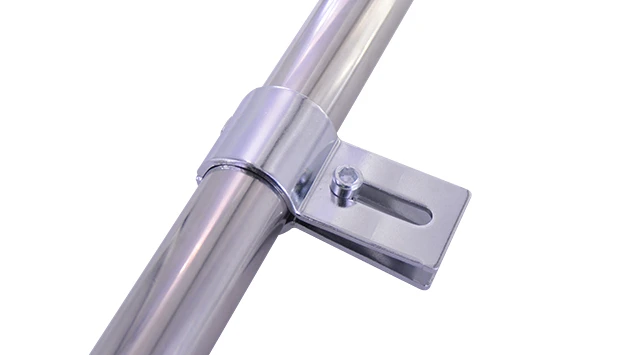
Lean Pipe Clamp B Chrome
Lean pipe clamp is used for turnover trolley, workbench, flowrack adjust the frame or fix some accessory.
Step into any modern medical device cleanroom, and you'll immediately sense the gravity of the work happening there. This isn't just a factory floor—it's a controlled ecosystem where precision isn't optional, and contamination is the enemy. From surgical instruments to implantable devices, every product that leaves these walls carries the weight of patient safety. In such a high-stakes environment, even the smallest components play outsized roles. One such unsung hero? The Lean Pipe Clamp B Chrome.,,,.
The Unique Challenges of Medical Device Cleanrooms
Medical device manufacturing isn't just about making products—it's about making products that can't fail. Cleanrooms are designed to meet ISO 14644 standards, with air filtration systems that remove 99.97% of particles as small as 0.3 microns. But maintaining that level of cleanliness requires more than just advanced HVAC; it demands workflows and tools that work with the environment, not against it. Traditional manufacturing setups, with their fixed structures, hard-to-clean surfaces, and rigid workflows, often fall short here. That's where lean systems come into play.
Lean systems, rooted in the principles of waste reduction and continuous improvement, have long been a cornerstone of efficient manufacturing. In medical contexts, they take on added significance. Here, "waste" isn't just about time or materials—it's about risk. Excess movement of tools increases contamination chances. Inflexible workstations slow down changeovers between product runs, delaying critical supplies. Poorly secured components can lead to spills or misalignments, compromising product integrity. Lean systems address these issues by prioritizing adaptability, cleanliness, and precision—qualities that make them indispensable in medical cleanrooms.
Lean Pipe Clamp B Chrome: Small Part, Big Impact
At first glance, a pipe clamp might seem like the last thing worth writing about. But in the world of lean manufacturing, especially within cleanrooms, not all clamps are created equal. The Lean Pipe Clamp B Chrome stands out for a reason: it's engineered to meet the unique demands of medical device production. Let's break down what makes it special.
Design That Puts Cleanliness First
The "chrome" in Lean Pipe Clamp B Chrome isn't just for aesthetics. Chrome plating creates a smooth, non-porous surface that resists corrosion and repels contaminants. Unlike painted or powder-coated alternatives, which can chip or harbor bacteria in tiny cracks, chrome forms a barrier that's easy to wipe down with disinfectants—essential in environments where daily cleaning with alcohol or hydrogen peroxide is routine. The clamp's design also minimizes crevices: its rounded edges and tight-fitting joints leave nowhere for dust, debris, or moisture to hide, reducing the risk of microbial growth.
Underneath that chrome finish lies a robust core, typically made from high-grade steel or stainless steel alloys. This ensures durability without adding unnecessary weight, a balance that matters when workstations and racks need to be reconfigured regularly. The clamp's mechanism is equally thoughtful: a precision-engineered joint that allows for 360-degree rotation and secure locking, so pipes stay in place once positioned. Unlike traditional bolted clamps, which require tools and time to adjust, the Lean Pipe Clamp B Chrome can be tightened or loosened by hand, making on-the-fly modifications quick and tool-free—critical when production schedules shift or new device models are introduced.
Why "B" and Why Chrome? The Niche It Fills
The "B" in Lean Pipe Clamp B Chrome refers to its specific size and load capacity, optimized for the 28mm and 30mm lean pipes commonly used in medical setups. This standardization matters in cleanrooms, where consistency reduces errors and simplifies maintenance. But it's the chrome plating that truly sets it apart from generic clamps. In environments where electrostatic discharge (ESD) can damage sensitive electronics or ignite flammable agents, chrome's conductive properties also play a role—when paired with ESD workbenches and grounded systems, it helps dissipate static, adding another layer of protection for both products and operators.
Integration with Cleanroom Workhorses: ESD Workbenches, Flow Racks, and Conveyors
A clamp is only as useful as its ability to work with the systems around it. In medical cleanrooms, the Lean Pipe Clamp B Chrome shines as a connector, bridging critical components like ESD workbenches, flow racks, and conveyors into a cohesive, efficient workflow.
ESD Workbenches: Stability Meets Static Control
ESD workbenches are the command centers of medical device assembly. Here, operators handle delicate components—think pacemaker circuits or microsurgical tools—that are highly sensitive to static electricity. A single electrostatic discharge could render a component useless, or worse, create hidden defects that manifest later in a patient's body. The Lean Pipe Clamp B Chrome plays a dual role here: securing the bench's frame and accessories, and contributing to the ESD protection system.
Most ESD workbenches use a frame of lean pipes, connected by clamps like the Lean Pipe Clamp B Chrome. The clamp's tight grip ensures the frame doesn't wobble during assembly, preventing. Meanwhile, the chrome plating, when grounded via the bench's ESD mat and wrist straps, helps channel any static buildup away from the workspace. Unlike plastic clamps, which can insulate and trap static, chrome conducts electricity, making it a safer choice for ESD-sensitive tasks. And because the clamp is adjustable, workbenches can be customized with shelves, tool holders, or lighting arms—all secured firmly without drilling or welding, which would create permanent, hard-to-clean joints.
Flow Racks: Keeping Materials Moving, Without the Mess
In lean manufacturing, "flow" is king. Flow racks are designed to move materials from storage to assembly points smoothly,""(FIFO),.,,,.The Lean Pipe Clamp B Chrome is instrumental in building these racks, securing the roller tracks and side rails that guide materials along their path.
What makes the clamp ideal for flow racks? Its adjustability. Medical device production often involves small-batch runs—one day assembling catheters, the next orthopedic screws. Flow racks need to adapt to different package sizes and weights, and the Lean Pipe Clamp B Chrome makes that possible. Loosen the clamp, reposition the roller track, retighten, and the rack is ready for the next product. No tools, no downtime, no hassle. Additionally, the chrome surface resists the occasional spills of cleaning agents or lubricants, ensuring the rack remains stable and functional even after repeated wipe-downs.
Conveyors: Precision Alignment for Delicate Transitions
Conveyors are the arteries of cleanroom production, moving products between assembly stations, inspection points, and packaging. But in medical settings, conveyors can't just "work"—they need to work with millimeter precision. Misaligned belts or tracks can cause products to shift, leading to scratches, misalignment, or even contamination. The Lean Pipe Clamp B Chrome helps maintain that precision by securing conveyor rails and supports to the facility's frame or workstations.
Unlike fixed mounting brackets, which require precise measurements during installation, the clamp allows for even after setup. If a conveyor belt starts to drift, a quick adjustment to the clamp can realign the rail, preventing costly jams or product damage. And when it's time for deep cleaning—a regular occurrence in cleanrooms—clamps can be loosened to disassemble sections of the conveyor, making it easier to reach every surface. Once cleaned, the components can be reassembled just as quickly, minimizing production interruptions.
The Cleanroom Advantage: Why Chrome Plating Matters
In most manufacturing environments, a clamp's job is simple: hold things together. In medical cleanrooms, that job comes with a laundry list of. Let's take a closer look at how the Lean Pipe Clamp B Chrome's chrome plating addresses these unique needs.
Resistance to Corrosion and Chemicals
Cleanrooms are harsh on equipment. Daily cleaning routines involve aggressive disinfectants like quaternary ammonium compounds, hydrogen peroxide, or isopropyl alcohol. Over time, these chemicals can degrade untreated metals, causing rust, pitting, or flaking—all of which create rough surfaces where bacteria can thrive. Chrome plating acts as a sacrificial layer, protecting the underlying steel from chemical attack. Its resistance to corrosion ensures the clamp maintains its integrity, even after years of daily exposure to cleaning agents.
Easy-to-Clean Surfaces: No Hiding Spots for Contaminants
The smooth, mirror-like finish of chrome isn't just for show. It leaves nowhere for particles or microbes to cling. A quick wipe with a lint-free cloth and disinfectant is all it takes to sanitize the clamp, reducing the risk of cross-contamination between product runs. Compare that to painted clamps, which can develop hairline cracks over time, or plastic clamps, which may absorb chemicals and become breeding grounds for bacteria. In a setting where a single contaminated device can lead to recalls or worse, this simplicity of cleaning is priceless.
Durability That Withstands the Rigors of Cleanroom Life
Medical cleanrooms are busy places. Workstations are reconfigured. Flow racks are moved. Conveyors are adjusted. Through all this activity, the Lean Pipe Clamp B Chrome holds strong. Chrome plating is harder than most other finishes, resisting scratches and dents that could compromise its smooth surface. The clamp's internal spring mechanism, often made from heat-treated steel, maintains consistent tension over thousands of adjustments, ensuring a secure hold every time. In an industry where equipment downtime is measured in lost revenue and delayed patient care, reliability isn't a luxury—it's a necessity.
How Lean Pipe Clamp B Chrome Stacks Up: A Comparison
To truly appreciate the value of the Lean Pipe Clamp B Chrome, it helps to see how it compares to other common clamp types used in manufacturing. Below is a breakdown of key features that matter most in medical cleanrooms:
| Feature | Lean Pipe Clamp B Chrome | Standard Steel Clamp (Unplated) | Plastic Clamp |
|---|---|---|---|
| Material | Chrome-plated high-grade steel | Carbon steel (uncoated) | Nylon or polypropylene |
| Corrosion Resistance | Excellent (chrome barrier prevents rust) | Poor (prone to rust with moisture/chemicals) | Good (resists chemicals, but may degrade in UV light) |
| ESD Compatibility | High (conductive; grounds static when paired with ESD systems) | Medium (conductive, but rust can hinder performance) | Low (insulating; may trap static) |
| Ease of Cleaning | Excellent (smooth, non-porous surface; no crevices) | Poor (rough surface; rust pits trap debris) | Good (smooth, but may scratch easily, creating hiding spots) |
| Adjustability | High (tool-free, 360° rotation, secure locking) | Medium (often requires tools; limited rotation) | Medium (flexible, but may lose tension over time) |
| Load Capacity | High (supports up to 50kg per clamp) | High (similar to chrome, but reduced by corrosion) | Low (best for light loads only) |
| Cleanroom Compliance | Meets ISO 14644 and FDA standards for surface finish | Not compliant (rust and rough surfaces violate particle control) | May comply (if FDA-approved material), but static risk is a drawback |
As the table shows, the Lean Pipe Clamp B Chrome isn't just a "better" option—it's often the only option for medical cleanrooms where cleanliness, compliance, and reliability are non-negotiable.
Real-World Impact: A Case Study
Consider the example of a mid-sized medical device manufacturer specializing in minimally invasive surgical tools. Prior to adopting lean systems, their cleanroom relied on fixed stainless steel workbenches and welded flow racks. Changeovers between product lines took 4–6 hours, as workers had to disassemble and reconfigure rigid structures. Cleaning was equally time-consuming, with nooks and crannies in the welded joints requiring special tools to sanitize. worst of all, a routine FDA inspection flagged several areas of concern, including rust spots on unplated steel clamps and static buildup on plastic components.
The solution? A shift to lean systems, centered around Lean Pipe Clamp B Chrome. The manufacturer replaced their fixed workbenches with ESD workbenches built using lean pipes and the chrome clamps. Flow racks were reimagined with adjustable roller tracks, secured by the same clamps. Conveyor rails, once bolted permanently to the floor, were now mounted on adjustable frames using—you guessed it—Lean Pipe Clamp B Chrome.
The results were striking: Changeover times dropped to under 2 hours, as workers could quickly reposition clamps instead of rebuilding structures. Cleaning time decreased by 30%, thanks to the smooth, crevice-free surfaces of the chrome clamps. Most importantly, the next FDA inspection resulted in zero citations related to equipment cleanliness or static control. The clamps,,.
Looking Ahead: The Future of Lean Components in Medical Manufacturing
As medical device technology advances—with smaller, more complex devices and stricter regulatory requirements—the demand for adaptable, cleanroom-friendly manufacturing solutions will only grow. Lean systems, and components like the Lean Pipe Clamp B Chrome, are poised to play an even larger role in this evolution. We're already seeing innovations, such as clamps with integrated RFID tags for asset tracking, or antimicrobial chrome coatings that actively inhibit bacterial growth.,4.0,,,.
But even as technology evolves, the core principles that make the Lean Pipe Clamp B Chrome invaluable will remain: simplicity, durability, and a design that puts cleanroom needs first. In a world where the difference between success and failure can be measured in microns, it's the small, thoughtful choices that make the biggest impact.
Conclusion: The Clamp That Keeps Cleanrooms Clamping Down on Risk
Medical device cleanrooms are temples of precision, where every detail matters. The Lean Pipe Clamp B Chrome may not grace the cover of industry magazines or get mentioned in boardroom presentations, but its contribution to patient safety is undeniable. By securing critical equipment, simplifying cleaning, enabling adaptability, and supporting lean principles, it helps manufacturers meet the dual demands of efficiency and compliance. In the end, that's what medical device manufacturing is all about: making sure the tools we trust with lives are built on a foundation of reliability—right down to the clamps that hold everything together.