- Company Articles
- Products and Technology
- Product knowledge
- Medical Device Production: Lean Pipe Clamp B for Sterile Workstation Builds

Medical Device Production: Lean Pipe Clamp B for Sterile Workstation Builds
Related Product
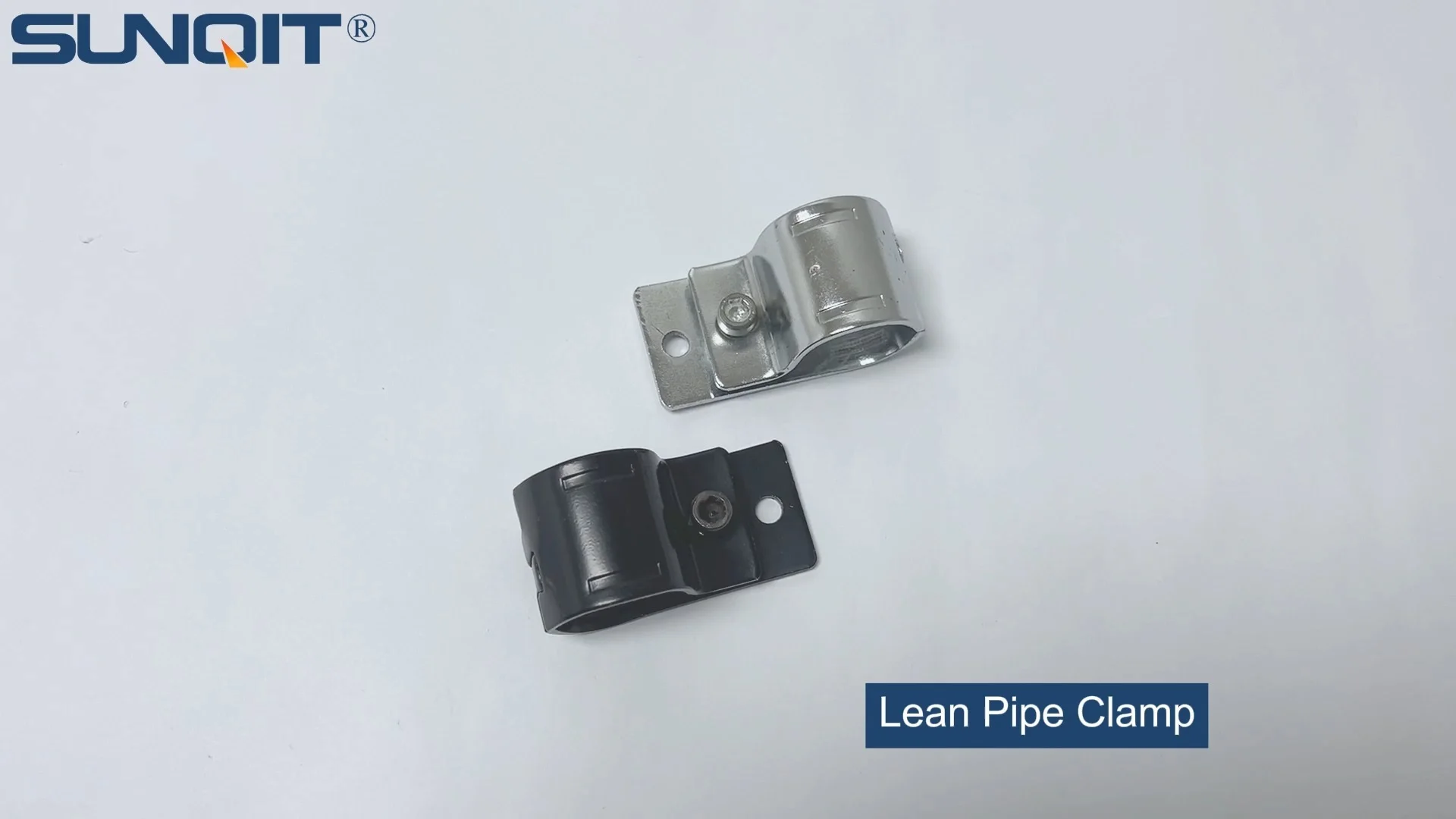
Lean Pipe Clamp
Lean pipe clamp is used for rack system hang monitor or other panel for workbenck, flowrack in production daily use.
In the high-stakes world of medical device manufacturing, precision isn't just a goal—it's a life-saving necessity. Every component, from tiny surgical screws to complex diagnostic equipment, must meet rigorous standards for sterility, accuracy, and reliability. But here's the challenge: how do you maintain that level of precision while keeping production efficient, adaptable, and cost-effective? Enter lean manufacturing principles, and more specifically, the unsung heroes of modular workstation design: lean pipe systems. At the heart of these systems lies a yet critical component: the Lean Pipe Clamp B. In this article, we'll explore how this small but mighty clamp, paired with complementary tools like lean pipe workbenches, ESD workstations, and aluminum profiles, is transforming sterile workstation builds in medical device production.
The Unique Demands of Medical Device Manufacturing
Medical device production floors are unlike any other. Walk into a facility, and you'll immediately notice the strict protocols: HEPA-filtered air, antimicrobial surfaces, and technicians in head-to-toe sterile gear. But beyond the visible cleanliness, there's a deeper layer of complexity. Production lines must adhere to ISO 13485 standards, which govern quality management systems for medical devices, and often FDA regulations that demand traceability from raw material to finished product. Add to that the pressure to scale production for life-saving tools—think ventilators during a pandemic—or pivot quickly to new designs as medical technology evolves, and you've got a recipe for operational headaches.
Traditional workstation setups, with fixed steel frames and permanent fixtures, fall short here. They're rigid, making it nearly impossible to reconfigure workflows when a new device model is introduced. They're heavy, which complicates cleaning and sterilization efforts. And they often lack the electrostatic discharge (ESD) protection needed to safeguard sensitive electronic components in devices like pacemakers or MRI coils. Worse, they can create bottlenecks: if a workstation isn't optimized for a specific task, technicians waste time reaching for tools or adjusting their posture, increasing the risk of errors and fatigue.
This is where lean manufacturing steps in. Lean isn't just about cutting costs—it's about eliminating waste, optimizing flow, and creating systems that adapt to human needs. In medical device production, that translates to workstations that are modular, easy to clean, ESD-safe, and flexible enough to grow with the business. And that's where lean pipe systems, built around components like Lean Pipe Clamp B, shine.
Lean Pipe Systems: The Backbone of Adaptive Workstations
Lean pipe systems—also known as "flexible pipe systems"—are built on a simple idea: lightweight, durable pipes (often aluminum or steel with a plastic coating) connected by modular joints and clamps. This modularity allows teams to build, disassemble, and reconfigure workstations in hours, not weeks. But what makes these systems truly powerful is their ability to balance structure with flexibility. Unlike fixed furniture, they can be tailored to specific tasks: a workstation for assembling catheter tips might need a smaller footprint and specialized tool holders, while one for packaging surgical kits could require extra shelving and a roller track for moving boxes.
At the center of this adaptability is the Lean Pipe Clamp B. It's a small, unassuming component—typically made of zinc-plated steel or aluminum—designed to secure pipes at precise angles. But don't let its size fool you. The Clamp B is the reason lean pipe systems are so versatile. It can connect pipes at 90-degree angles for vertical supports, 45 degrees for angled shelves, or even 180 degrees for extended work surfaces. And because it's tightened with a simple hex key, assembly requires no welding or specialized tools. A technician with basic training can adjust a workstation in minutes, whether that means adding a shelf to hold sterile packaging or repositioning a tool rail to reduce reach time.
But the Clamp B isn't working alone. To build a truly sterile, efficient workstation, it needs support from other components. Let's break down the key players:
- Lean Pipe Workbench: The base of the system, often constructed with aluminum profiles for lightweight durability. These workbenches can be fitted with ESD-safe table tops (critical for electronics) or antimicrobial surfaces (ideal for cleanrooms). They're height-adjustable, ensuring technicians can work comfortably without straining.
- ESD Workstation: For areas handling sensitive components, ESD workstations use conductive materials and grounding straps to dissipate static electricity, preventing it from damaging microchips or delicate sensors. Lean pipe systems make it easy to integrate ESD features—simply swap out standard clamps for conductive versions and add grounding wires.
- Aluminum Profile: While traditional lean pipes are often steel with a plastic coating, aluminum profiles are gaining popularity in medical settings. They're corrosion-resistant (perfect for frequent cleaning with harsh disinfectants), lighter than steel, and compatible with the same Clamp B joints. Aluminum also conducts heat well, which can help maintain stable temperatures around temperature-sensitive materials.
- Roller Track: Installed along the edges of workbenches or as standalone racks, roller tracks use small wheels to let materials glide smoothly from one station to the next. This reduces manual lifting, cutting down on fatigue and the risk of dropping sterile components. When paired with Lean Pipe Clamp B, roller tracks can be angled to control flow speed—critical for delicate items like glass syringes.

Why Lean Pipe Clamp B Stands Out in Sterile Environments
So, what makes Lean Pipe Clamp B specifically suited for medical device production? Let's start with sterility. In cleanrooms, every nook and cranny is a potential hiding spot for bacteria or particles. Traditional welded joints have crevices where contaminants can accumulate, but the Clamp B's smooth, rounded design leaves no such gaps. It's also easy to disassemble for deep cleaning—simply loosen the hex key, remove the clamp, and sanitize all surfaces with alcohol or hydrogen peroxide wipes. No more scrubbing around welded seams or worrying about corrosion from harsh cleaners.
Then there's precision. Medical device assembly often requires workstations with exact dimensions. For example, a workstation for assembling insulin pumps might need a shelf exactly 12 inches above the tabletop to hold a filling machine. The Lean Pipe Clamp B allows for micro-adjustments: tighten it slightly, and the pipe stays firm; loosen it, slide the pipe to the perfect position, and retighten. This level of precision ensures consistency across workstations, which is key for meeting ISO standards that demand uniform processes.
Durability is another factor. Medical facilities run 24/7, so workstations take a beating. The Clamp B is built to withstand constant use: its metal construction resists bending, and the internal threads (for the hex key) don't strip easily, even after repeated adjustments. And because it's compatible with both steel and aluminum pipes, facilities can mix materials based on need—using steel for heavy-duty shelving and aluminum for areas requiring frequent reconfiguration.

From Blueprint to Build: A Day in the Life of a Lean Pipe Workstation
To understand how these components come together, let's walk through the process of building a workstation for assembling surgical forceps—a common medical device that requires precision and sterility. The goal: create a setup that allows technicians to sort, align, and package forceps efficiently while maintaining a sterile field.
Step 1: Design the Layout The production team starts by mapping the workflow. Technicians need space to unpack sterile forcep components (received in sealed bags), align the jaws and handles, apply a small amount of medical-grade lubricant, and package the finished tool in sterile pouches. They'll need a shelf for the lubricant, a bin for used packaging, and a roller track to send finished pouches to the sterilization area.
Step 2: Assemble the Frame Using aluminum profiles (chosen for corrosion resistance) and Lean Pipe Clamp B, the team builds the workstation frame. They start with four vertical pipes, secured to the floor with weighted bases to prevent tipping. Then, they add horizontal pipes at 36 inches (standard workbench height) for the tabletop, using Clamp Bs to connect them at 90-degree angles. An extra set of horizontal pipes at 48 inches will hold the shelf for lubricant.
Step 3: Add the Work Surface An ESD-safe tabletop is placed on the lower horizontal pipes and secured with additional Clamp Bs. The tabletop is made of conductive laminate, which will be grounded via a wire connected to the building's ESD system.
Step 4: Install Roller Track Along the back edge of the tabletop, the team mounts a roller track using—you guessed it—Lean Pipe Clamp Bs. The track is angled slightly downward, so finished pouches slide gently to a collection bin at the end, reducing the need for technicians to lift and carry them.
Step 5: Add Accessories A small tool rail is attached to the vertical pipes using Clamp Bs, holding tweezers and alignment tools within easy reach. A waste bin is hung from the side using a clamp, keeping the floor clear for cleaning.
The entire process takes about two hours—far faster than building a traditional welded workstation. And six months later, when the facility starts producing a larger forcep model, the team can reconfigure the shelf height and roller track angle in 30 minutes by loosening the Clamp Bs, adjusting the pipes, and retightening.

Traditional vs. Lean: A Comparison
| Feature | Traditional Fixed Workstation | Lean Pipe Workstation with Clamp B |
|---|---|---|
| Assembly Time | 2–3 days (requires welding/bolting) | 1–2 hours (tool-free with Clamp B) |
| Reconfiguration | Nearly impossible (requires cutting/welding) | Possible in 30 minutes (adjust Clamp Bs) |
| Sterility Compliance | Hard to clean (welded seams trap debris) | Easy to sanitize (smooth, modular components) |
| ESD Protection | Requires expensive retrofits | Integrated via conductive clamps/tabletops |
| Cost Over Time | High (must replace entire workstation for changes) | Low (reuse pipes/clamps for new designs) |
The Future of Lean in Medical Manufacturing
As medical technology continues to advance, the demand for flexible, sterile workstations will only grow. Think about the rise of personalized medicine: devices tailored to individual patients, which require production lines that can switch between small batches quickly. Or the push for sustainability, which favors reusable components like aluminum profiles over disposable fixed furniture. Lean pipe systems, with their modular design and focus on waste reduction, are perfectly positioned to meet these needs.
Manufacturers are also exploring smart integrations. Imagine a lean pipe workstation with sensors that track how often Clamp Bs are adjusted, providing data on which workflows are most frequently reconfigured. Or workbenches with built-in RFID readers that log when components enter and exit the station, enhancing traceability. These innovations build on the foundation of flexibility that Lean Pipe Clamp B provides, turning static workstations into dynamic, data-driven tools.
Conclusion: Small Clamps, Big Impact
In the world of medical device production, where precision and adaptability can save lives, the Lean Pipe Clamp B is more than a hardware component—it's a catalyst for change. By enabling fast, tool-free assembly of lean pipe workbenches, ESD workstations, and aluminum profile systems, it empowers production teams to build workspaces that grow with their needs, maintain sterile conditions, and keep pace with evolving technology. It's a reminder that in manufacturing, the smallest parts often have the biggest impact.
So the next time you see a medical device—a pacemaker keeping a heart beating, a surgical tool saving a life—take a moment to appreciate the workstation where it was built. Chances are, somewhere in that setup, a Lean Pipe Clamp B is hard at work, quietly ensuring that precision and efficiency go hand in hand.