- Company Articles
- Products and Technology
- Application Cases
- Medical Device Production: Three Way Lean Pipe Joint Use Cases

Medical Device Production: Three Way Lean Pipe Joint Use Cases
Related Product
Three Way Lean Pipe Joint
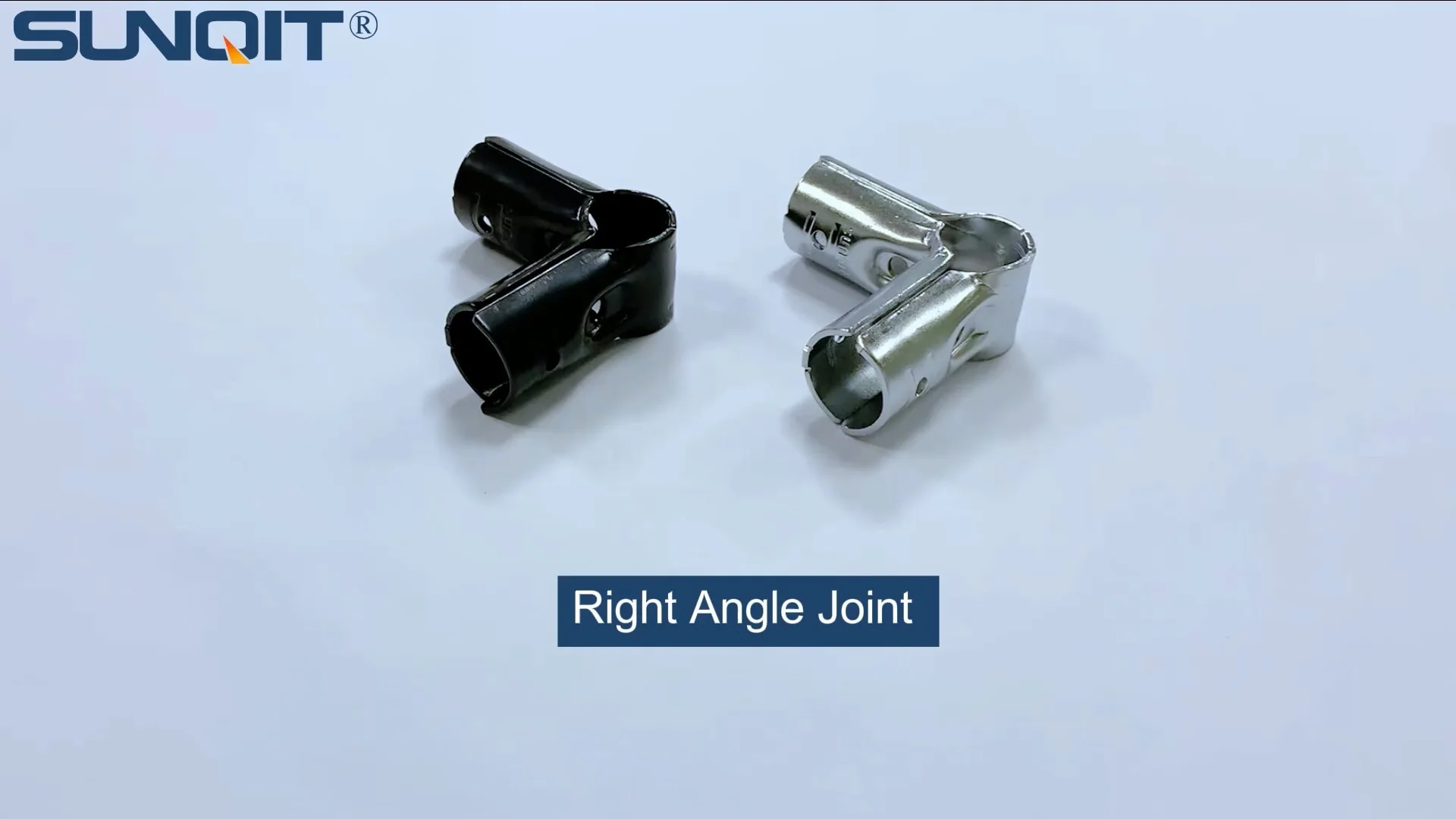
Three way lean pipe joint for 3 pcs 28MM lean pipe connection in straight angle, which used widely in workbench, flow rack, hand trolley frame connection.
In the high-stakes world of medical device production, precision isn't just a goal—it's a mandate. Every scalpel, pacemaker, and diagnostic tool must meet rigorous standards set by regulatory bodies like the FDA and ISO, all while being manufactured efficiently enough to keep up with global healthcare demands. This delicate balance of compliance, quality, and productivity has led many manufacturers to turn to lean manufacturing principles. At the heart of these lean systems lies a humble yet powerful component: the three way lean pipe joint. Far more than a simple connector, this unassuming part enables the flexibility, adaptability, and modularity that modern medical production floors crave. In this article, we'll explore how three way lean pipe joints are transforming medical device manufacturing through real-world use cases, from custom workbenches to dynamic material flow systems.
The Critical Role of Lean Systems in Medical Device Production
Before diving into the specifics of three way lean pipe joints, it's important to understand why lean systems have become indispensable in medical device manufacturing. Unlike mass-produced consumer goods, medical devices often require low-volume, high-mix production—think specialized surgical tools for niche procedures or custom implants tailored to individual patients. This variability demands production lines that can pivot quickly without sacrificing quality or incurring excessive waste.
Lean systems address this by focusing on five core principles: value, value stream, flow, pull, and perfection. In medical manufacturing, "value" translates to products that meet clinical needs while adhering to strict safety standards. "Flow" ensures that materials and assemblies move smoothly through production without bottlenecks, which is critical when even a minor delay can impact patient care. "Pull" systems, where production is triggered by demand, prevent overstocking of expensive, time-sensitive components (like sterile packaging or biocompatible materials).
But lean systems aren't just about efficiency—they're about compliance. Medical device production facilities are subject to frequent audits, and documentation of processes, material traceability, and contamination control are non-negotiable. Traditional rigid production setups, with fixed machinery and inflexible workstations, often struggle to adapt to new regulatory requirements or process improvements. Lean systems, built with modular components like lean pipes and joints, offer a solution: they're easy to reconfigure, clean, and document, making compliance audits less stressful and more successful.
Meet the Three Way Lean Pipe Joint: A Foundation for Flexibility
At the core of many lean systems is the lean pipe joint, a component designed to connect aluminum, stainless steel, or plastic-coated steel pipes (often called "lean pipes") into rigid yet adjustable structures. Among the various joint types—including 90-degree, 45-degree, and swivel joints—the three way lean pipe joint stands out for its versatility. As the name suggests, it allows three pipes to intersect at a single point, creating T-shaped or Y-shaped connections that form the backbone of modular structures.
Most three way lean pipe joints are made from durable materials like die-cast aluminum or stainless steel, chosen for their strength, corrosion resistance, and compatibility with sterile environments. They typically feature a clamping mechanism (either set screws or lever locks) that secures pipes firmly in place while still allowing for quick disassembly and reconfiguration. This combination of rigidity and flexibility is what makes them ideal for medical settings, where production needs can shift overnight—say, when a sudden surge in demand for a critical device requires a rapid line redesign.
Now, let's explore how these joints are put to work in four key areas of medical device production.
Use Case 1: Custom Workbenches for Precision Assembly
Assembly is where medical devices take shape, and the workbench is ground zero for this process. Unlike generic factory workstations, medical device assembly benches must accommodate highly specialized tasks: think soldering tiny electronics in a pacemaker, aligning micro-components in a diagnostic sensor, or packaging sterile tools with zero contamination risk. Traditional fixed workbenches, with their one-size-fits-all design, often fall short—forcing workers into awkward postures, limiting tool access, or failing to integrate essential equipment like ESD mats or HEPA filters.
Three way lean pipe joints solve this by enabling the creation of fully custom workbenches (keyword: workbench) tailored to specific assembly tasks. Let's take the example of a manufacturer producing minimally invasive surgical tools, where precision down to 0.01mm is required. Using three way joints, the production team can design a workbench with:
- Adjustable height: By varying the length of pipes connected via three way joints, the bench can be raised or lowered to suit workers of different heights, reducing ergonomic strain during long assembly shifts.
- Integrated tool storage: Sidearms built with three way joints can hold torque wrenches, magnifying glasses, and tweezers within arm's reach, eliminating time wasted searching for tools.
- Modular shelving: Overhead or under-bench shelves, connected via three way joints, provide space for component bins, instruction manuals, and quality checklists—all organized for quick access.
- ESD protection: For electronics-heavy devices like defibrillators, joints can secure ESD-safe mats to the bench surface and ground the structure to prevent static discharge that could damage sensitive components.
Perhaps the biggest advantage is adaptability. When the manufacturer shifts from assembling forceps to catheters, the same workbench can be reconfigured in hours: lower the height, remove tool holders, and add a small conveyor (keyword: conveyor) section to feed catheter tubes directly to the operator. This flexibility eliminates the need to invest in new workstations for each product line, cutting costs and reducing waste.
To illustrate the impact, consider a comparison between traditional and lean workbenches in a medical device facility:
| Feature | Traditional Fixed Workbench | Lean Workbench with Three Way Joints | Benefit in Medical Production |
|---|---|---|---|
| Customization | Limited to factory-set dimensions; no on-site adjustments | Height, width, and accessories adjustable via pipe joints | Adapts to product changes (e.g., from small tools to larger implants) |
| Cleanability | Fixed crevices and welds trap dust; hard to sanitize | Smooth, detachable joints and pipes; easy to wipe down with disinfectants | Meets ISO 13485 requirements for contamination control |
| Cost Over Time | High upfront cost; must be replaced when production needs change | Lower initial investment; reusable components for new configurations | Reduces capital expenditure by 30-40% over 5 years (per industry studies) |
| Ergonomics | One-size-fits-all design leads to worker fatigue | Adjustable to individual worker heights and task requirements | Reduces musculoskeletal injuries, lowering downtime and workers' comp claims |
Use Case 2: Flow Racks for Streamlined Material Handling
In medical device production, material handling is a high-stakes ballet. Components like titanium screws, biocompatible polymers, and sterile packaging must be stored in a way that ensures traceability (each batch tracked to its origin), FIFO (first-in, first-out) rotation to prevent expiration, and easy access for assembly line workers. Traditional static shelving often leads to chaos: expired components buried at the back, misplaced batches, and time wasted hunting for parts.
Enter flow racks (keyword: flow rack)—dynamic storage systems where materials "flow" forward as they're used, ensuring FIFO and visibility. Three way lean pipe joints are the unsung heroes of these systems, providing the structural flexibility to design racks that fit the unique needs of medical materials.
Consider a facility producing orthopedic implants, where components like femoral stems and acetabular cups come in multiple sizes and materials (stainless steel, ceramic, titanium). Using three way joints, the production team can build a flow rack with:
- Adjustable lane angles: By tilting sections of the rack (using three way joints to set the angle), gravity pulls components forward, so the oldest batch is always at the front—critical for avoiding expired inventory.
- Modular lane widths: Different component sizes require different lane widths. Three way joints allow workers to adjust pipe spacing, so small screws and large implant trays can coexist on the same rack without jamming.
- Integrated labeling: Vertical pipes, secured with three way joints, hold barcode scanners and digital displays that show batch numbers, expiration dates, and quantity remaining—ensuring full traceability for audits.
- Stainless steel construction: For sterile components, three way joints made from stainless steel (a common material in medical settings) resist corrosion and are compatible with autoclaving, making deep cleaning possible between batches.
But flow racks built with three way joints don't just organize materials—they integrate seamlessly with other lean systems. For example, a flow rack at the end of an assembly line can feed finished implants directly into a conveyor system (keyword: conveyor) that transports them to the sterilization room. The joints allow the rack to be angled to match the conveyor's height, creating a smooth handoff that eliminates manual lifting and reduces the risk of drops (and subsequent contamination).
One medical device manufacturer in Minnesota reported a 25% reduction in material handling errors after implementing lean flow racks with three way joints. "Before, we'd sometimes ship the wrong implant size because a batch was mislabeled or buried," said the facility's operations manager. "Now, everything rolls forward, and the labels are right at eye level. Auditors love it too—we can trace every component from arrival to shipment in minutes."
Use Case 3: Mobile Assembly Carts for Agile Production
Medical device production rarely happens in a single, fixed location. A pacemaker might start on an assembly line, move to a testing station for quality checks, and then be transported to a cleanroom for final packaging. This mobility is essential but can be logistically challenging—especially when dealing with delicate assemblies that can't withstand jostling or temperature fluctuations.
Mobile assembly carts, built with three way lean pipe joints and caster wheels (keyword: caster wheel), solve this problem by acting as "portable workstations." These carts are lightweight yet sturdy, thanks to the rigid connections provided by three way joints, and they can be customized to protect sensitive components during transport.
Take the example of a diagnostic device manufacturer producing point-of-care blood analyzers. These devices contain fragile optical sensors that must be calibrated in a temperature-controlled room before final assembly. Using three way joints, the team designed a mobile cart with:
- Enclosed shelving: Pipes connected via three way joints form a frame around the cart, with clear acrylic panels (secured to the frame) to shield sensors from dust and temperature swings during transport.
- Lockable casters: Heavy-duty caster wheels (keyword: caster wheel) with brakes ensure the cart stays stationary during calibration, then rolls smoothly to the assembly line without jolting the sensors.
- Tool integration: A fold-down work surface, supported by three way joints, provides space for calibration tools, while a side pouch holds calibration certificates for documentation.
- Weight distribution: Three way joints allow the cart's frame to be balanced, so even when loaded with 50+ pounds of sensors, it remains easy to maneuver through narrow cleanroom doors.
What makes these carts truly lean is their reusability. When the manufacturer shifts to producing a smaller analyzer model, the same cart can be disassembled, and the pipes and joints repurposed into a new design with shorter shelves and a lower profile. This adaptability reduces the need to purchase new carts, cutting costs and aligning with sustainability goals—a growing priority for healthcare companies.
Use Case 4: Modular Conveyor Systems for Seamless Production Flow
In large-scale medical device facilities, production flow is often the difference between meeting deadlines and falling behind. A single bottleneck—say, a delay in moving subassemblies from testing to packaging—can ripple through the entire line, delaying shipments to hospitals and clinics. Conveyor systems (keyword: conveyor) are critical for maintaining flow, but traditional fixed conveyors are expensive to install and impossible to reconfigure without major downtime.
Three way lean pipe joints offer a more agile alternative: modular conveyor frames that can be built, adjusted, and expanded as needed. These frames support roller tracks, belt conveyors, or even automated guided vehicle (AGV) pathways, all tailored to the facility's layout and production volume.
Consider a manufacturer of insulin pumps, where production involves multiple stages: circuit board assembly, battery installation, casing, and final testing. Using three way joints, the facility designed a modular conveyor system with:
- Adjustable angles: Three way joints allow conveyor sections to be tilted or curved, navigating around fixed equipment like testing machines or storage areas without disrupting flow.
- Quick-connect sections: Conveyor segments are linked via three way joints, so if a section needs repair, it can be swapped out in minutes (instead of hours, as with welded conveyors), minimizing downtime.
- Scalable design: During peak demand (e.g., flu season, when insulin pump orders surge), additional conveyor sections can be added using spare pipes and joints, increasing throughput without a complete system overhaul.
- Cleanroom compatibility: For pumps requiring sterile packaging, the frame can be built with stainless steel pipes and joints, which are easy to wipe down with disinfectants and compatible with HEPA-filtered air flow systems.
The result? A conveyor system that grows and changes with the business. When the manufacturer added a new testing station last year, they simply reconfigured the conveyor path using three way joints, avoiding the $100,000+ cost of installing a new fixed conveyor line.

Why Three Way Lean Pipe Joints Are a Game-Changer for Medical Manufacturing
Across these use cases, a pattern emerges: three way lean pipe joints enable medical device manufacturers to build systems that are responsive . In an industry where change is constant—new regulations, evolving clinical needs, shifting market demands—responsiveness isn't just a competitive advantage; it's survival. Traditional production setups, with their fixed machinery and one-time investments, can't keep up. Lean systems built with three way joints, by contrast, are designed to evolve.
But it's not just about flexibility. These joints also drive cost savings, reduce waste, and improve compliance—three pillars of success in medical manufacturing. By reusing components, facilities cut down on raw material waste. By streamlining material flow and assembly, they reduce labor costs and errors. And by making processes easy to reconfigure and document, they simplify audits and regulatory reporting.

Conclusion: Building the Future of Medical Manufacturing, One Joint at a Time
As medical device manufacturers continue to innovate—developing smaller, smarter, and more personalized tools—their production systems must keep pace. Three way lean pipe joints, though simple in design, are proving to be a cornerstone of this evolution. Whether they're supporting a custom workbench for assembling neural implants, a flow rack for sterile sutures, or a mobile cart for delicate sensors, these joints embody the lean principles that make modern medical manufacturing possible: flexibility, efficiency, and a relentless focus on value.
In the end, the impact of three way lean pipe joints extends far beyond the production floor. By enabling better, faster, and more reliable medical device manufacturing, they're helping ensure that the tools healthcare professionals depend on are there when patients need them most. And in healthcare, that's the greatest value of all.