- Company Articles
- Products and Technology
- Product knowledge
- Medical Device Production: Using 40 Steel Roller Track Black ESD Wheels for Static Control

Medical Device Production: Using 40 Steel Roller Track Black ESD Wheels for Static Control
Related Product
40 Steel Roller Track Black ESD Wheel
The roller track can be installed with multiple accessories to create different slopes and configurations of flow racks.All steel conveyor 40 roller track accessories are engineered to perfectly fit the sliding rail.
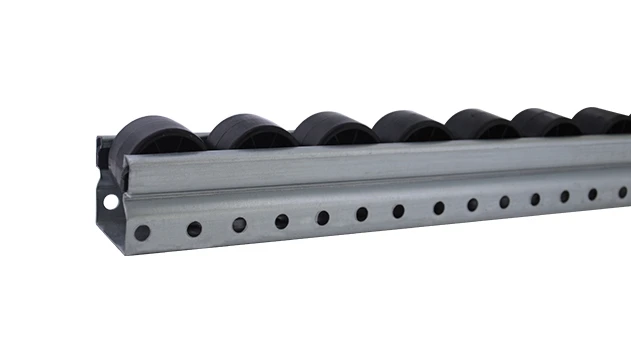
How precision engineering meets electrostatic safety in life-saving manufacturing
Why Static Control Matters in Medical Device Manufacturing
In the world of medical device production, there's no room for error. Every component—from tiny sensors in heart monitors to circuit boards in surgical robots—must perform flawlessly. But there's an invisible threat lurking in these high-tech factories: static electricity. You might not see it, but when electrostatic discharge (ESD) occurs, it can fry sensitive electronics, corrupt data, or even render a life-saving device useless. For medical manufacturers, this isn't just about product quality—it's about patient safety.
Imagine a scenario where a pacemaker's internal chip is damaged by static during assembly. The device might work in testing, but fail months later when a patient needs it most. That's why the medical industry sets some of the strictest standards for ESD protection. And today, we're diving into a critical tool that's changing the game: 40 Steel Roller Track Black ESD Wheels . These unassuming components are quietly becoming the backbone of safe, efficient medical device production lines.
The Hidden Danger of Static in Medical Production Lines
Static electricity builds up when materials rub against each other—think plastic trays sliding on metal conveyors, or operators moving across factory floors. In a typical manufacturing environment, this might be a minor annoyance. But in medical device production, where components like microchips, catheters, and diagnostic sensors are handled daily, ESD can cause two types of damage:
- Catastrophic failure : Immediate damage that renders a component useless, leading to costly rework and delays.
- Latent damage : Tiny, invisible flaws in semiconductors or circuits that weaken the device over time. These are the scariest—they slip past quality checks and only reveal themselves when the device is in use.
Traditional conveyor systems often make the problem worse. Standard plastic rollers generate static as they spin, acting like miniature lightning rods for sensitive parts. And with medical production lines running 24/7, the risk of ESD events adds up fast. That's where 40 Steel Roller Track Black ESD Wheels step in.
Did you know? According to the ESD Association, electrostatic discharges as low as 250 volts can damage some medical electronics—yet humans can't even feel a shock until it reaches 3,000 volts. By the time you notice static, the damage may already be done.

What Makes 40 Steel Roller Track Black ESD Wheels Unique?
At first glance, these wheels might look like any other conveyor component. But under the surface, they're engineered for the unique demands of medical manufacturing. Let's break down their key features:
1. Steel Core for Durability, ESD Coating for Safety
The "40 Steel" in the name refers to the robust steel roller track—built to handle the heavy loads of medical device components, from metal surgical tools to bulk packaging. But the real star is the black ESD coating . This specialized layer isn't just for aesthetics; it's designed to dissipate static charge safely, rather than letting it build up. The coating's surface resistance typically falls between 10⁶ to 10⁹ ohms, perfectly balancing conductivity (to bleed off static) and insulation (to avoid electrical interference with sensitive devices).
2. Precision Engineering for Cleanroom Compatibility
Medical device production often happens in ISO-certified cleanrooms, where even tiny particles can contaminate products. These wheels are designed with smooth, crevice-free surfaces to prevent dust buildup, and their materials are compatible with harsh cleaning agents like isopropyl alcohol—critical for maintaining sterile environments.
3. Modular Design for Lean Manufacturing
Medical manufacturers don't just need safety—they need efficiency. These wheels integrate seamlessly with lean systems , including flow racks and conveyors , to create smooth, continuous production flows. Their modular design means you can adjust track lengths, angles, and configurations without replacing entire systems—perfect for facilities that need to adapt to new device models or production scales.

From Conveyor to Workbench: A Complete ESD-Safe Ecosystem
40 Steel Roller Track Black ESD Wheels don't work alone. The best medical production lines pair them with complementary tools to create a fully static-controlled environment. Let's walk through a typical workflow:
Step 1: Material Handling with ESD Flow Racks
Raw components (like circuit boards or sensor modules) arrive at the facility in ESD-safe packaging. They're first loaded onto flow racks equipped with 40 Steel Roller Track Black ESD Wheels . As components glide down the rack, the ESD wheels ensure static charge is dissipated before they reach the assembly line. No more shocks, no more damaged parts—just a steady, safe flow of materials.
Step 2: Assembly on ESD Workstations
Next, components move to ESD workstations —custom-built lean pipe workbenches with static-dissipative surfaces and grounding straps for operators. These workbenches are often paired with smaller conveyor sections (again, using 40 Steel ESD Wheels) to pass partially assembled devices between stations. The result? A continuous, static-free assembly process where every touchpoint is protected.
Step 3: Final Testing and Packaging
After assembly, devices move to testing areas via ESD conveyors. Even here, the wheels play a role—ensuring no static buildup occurs during transportation, which could skew test results. Finally, finished products are packed into ESD-safe containers, ready for distribution. Every step, from start to finish, is shielded from static's invisible threat.
Real-World Impact: A Case Study
A mid-sized medical device manufacturer specializing in portable ultrasound machines was struggling with a 5% failure rate in final testing. Engineers traced the issue to latent ESD damage in their sensor arrays. After upgrading their production line with 40 Steel Roller Track Black ESD Wheels, flow racks , and ESD workstations , their failure rate dropped to 0.3%. Not only did this save them hundreds of thousands in rework costs, but it also reduced production time by 12%—proving that safety and efficiency can go hand in hand.
Technical Specs: Why These Wheels Meet Medical Standards
Not all ESD wheels are created equal. Medical manufacturers need to verify that components meet strict industry standards (like ANSI/ESD S20.20 or ISO 10605). Here's how 40 Steel Roller Track Black ESD Wheels stack up:
| Feature | Specification | Medical Industry Benefit |
|---|---|---|
| Surface Resistance | 10⁶–10⁹ ohms | Safe static dissipation without electrical interference |
| Wheel Diameter | 40mm standard (custom sizes available) | Balances load capacity (up to 50kg/roller) with smooth, low-friction movement |
| Material | Steel core + ESD polyurethane coating | Resists corrosion, compatible with cleanroom cleaners |
| Operating Temperature | -20°C to 60°C | Stable performance in controlled manufacturing environments |
| Compliance | RoHS, REACH, and ANSI/ESD S20.20 certified | Meets global medical device production requirements |
Beyond Safety: Lean Principles and Sustainability
Medical manufacturers aren't just focused on compliance—they're also embracing lean solutions to reduce waste and improve sustainability. 40 Steel Roller Track Black ESD Wheels align perfectly with these goals:
1. Reusability and Modularity
Unlike disposable plastic conveyors, these steel wheels are built to last. When production lines need to be reconfigured (for example, to produce a new device model), the wheels can be disassembled, cleaned, and reinstalled—cutting down on waste and reducing costs over time.
2. Energy Efficiency
Their low-friction design reduces the power needed to move components, lowering energy bills. And because they minimize ESD-related rework, they also reduce the carbon footprint associated with scrapped materials and repeated production runs.
3. Scalable Solutions
Whether you're a small startup producing specialized implants or a large manufacturer with multiple lines, these wheels scale to your needs. Pair them with lean pipe workbenches and modular flow racks , and you've got a system that grows with your business—no need for costly overhauls.
Choosing the Right Partner for ESD Solutions
Investing in ESD protection isn't just about buying components—it's about finding a partner who understands the unique challenges of medical manufacturing. Look for suppliers who offer:
- Customization : Every medical device is different, and your ESD system should be too. The best suppliers will design solutions tailored to your specific products, space, and workflow.
- Compliance expertise : They should be able to walk you through ANSI/ESD, ISO, and FDA requirements, ensuring your line meets all regulatory boxes.
- End-to-end support : From initial design to installation and maintenance, a reliable partner will be there to troubleshoot and optimize your system over time.
40 Steel Roller Track Black ESD Wheels are more than just parts—they're a commitment to patient safety, product quality, and manufacturing excellence. In an industry where every detail matters, these wheels are helping medical device manufacturers build a future where static-related failures are a thing of the past.
Final Thoughts: Static Control as a Foundation of Trust
At the end of the day, medical device manufacturing is about trust. Patients trust that the devices keeping them healthy are built to the highest standards. Manufacturers trust that their production lines can deliver on that promise. And 40 Steel Roller Track Black ESD Wheels are quietly earning that trust—one static-free conveyor roll at a time.
So the next time you walk through a medical device factory, take a closer look at those conveyor systems. The wheels turning beneath the products might not be glamorous, but they're the unsung heroes ensuring that the devices we rely on are safe, reliable, and ready to save lives.