
In the world of medical device manufacturing, precision isn't just a goal—it's a lifeline. Every instrument, implant, or diagnostic tool that leaves the production line must meet stringent standards for sterility, accuracy, and reliability. At the heart of this process lies the cleanroom, a controlled environment where even the smallest particle of dust or trace of bacteria can compromise product integrity. But maintaining such an environment while keeping production efficient and adaptable is no small feat. Traditional fixed workspaces, with their welded steel frames and hard-to-clean surfaces, often fall short, creating bottlenecks in workflow and raising compliance risks. That's where modular solutions come in—and at the center of these solutions are components like three way aluminum pipe joints, aluminum profiles, and lean systems that are redefining how cleanrooms operate.
Today, we're diving into how three way aluminum pipe joints are becoming indispensable in medical device cleanrooms. We'll explore why these unassuming components are critical for maintaining sterility, enhancing flexibility, and supporting lean manufacturing principles. Along the way, we'll touch on real-world applications, from customizable workbenches to efficient flow racks, and explain how they align with the unique demands of medical production environments.
The Cleanroom Conundrum: Why Traditional Setups Struggle
Let's start by breaking down what makes cleanrooms in medical device production so unique. These spaces are governed by strict ISO 14644 standards, which classify air cleanliness based on particle count. For example, an ISO 7 cleanroom (common in device assembly) allows no more than 352,000 particles of 0.5μm or larger per cubic meter—far cleaner than a typical hospital operating room. To maintain this, every surface, tool, and process must be designed to minimize contamination.
Traditional production setups often rely on fixed steel workbenches and rigid material racks. While steel is strong, it has significant drawbacks in cleanrooms. Welded joints create crevices where dust, moisture, and bacteria can hide, making thorough cleaning a nightmare. Over time, paint or coatings on steel can chip, exposing raw metal that may corrode or flake off as particles. What's more, these fixed structures are nearly impossible to reconfigure. If a manufacturer needs to adjust workflow for a new device model or scale production, they're forced to either modify existing setups (risking contamination during construction) or invest in entirely new equipment—costly and time-consuming.
Another issue is flexibility. Medical device production lines are rarely static. A facility might produce surgical scalpels one month and orthopedic implants the next, each with different tooling, material needs, and workflow requirements. Rigid workspaces can't adapt quickly, leading to inefficiencies, wasted space, and even compliance issues if processes are forced into suboptimal layouts.
Modular Aluminum Systems: A Lean, Clean Alternative
Enter modular aluminum systems—a game-changer for cleanroom design. These systems are built around aluminum profiles, lightweight yet durable extrusions with standardized T-slots that allow for easy attachment of accessories. Unlike steel, aluminum is naturally resistant to corrosion, non-porous, and smooth, making it simple to disinfect with harsh cleaners or even autoclaving in some cases. But what truly sets modular systems apart is their adaptability, thanks in large part to components like three way aluminum pipe joints.
At their core, these systems embody lean manufacturing principles—eliminating waste, streamlining workflow, and prioritizing continuous improvement. In medical production, "waste" can mean anything from excess movement of staff to inefficient use of space or downtime during reconfiguration. Modular setups address this by letting teams reconfigure workspaces on the fly, adding or removing shelves, adjusting heights, or repurposing racks without disrupting production.
Aluminum profiles are also lightweight compared to steel, which matters in cleanrooms where heavy equipment can damage flooring or require specialized installation. Yet despite their lightness, they're surprisingly strong: high-grade aluminum extrusions can support significant loads, making them suitable for everything from small part storage to heavy tool mounting. When combined with the right joints, they create structures that are both sturdy and versatile.
Three Way Aluminum Pipe Joints: The Unsung Heroes of Modularity
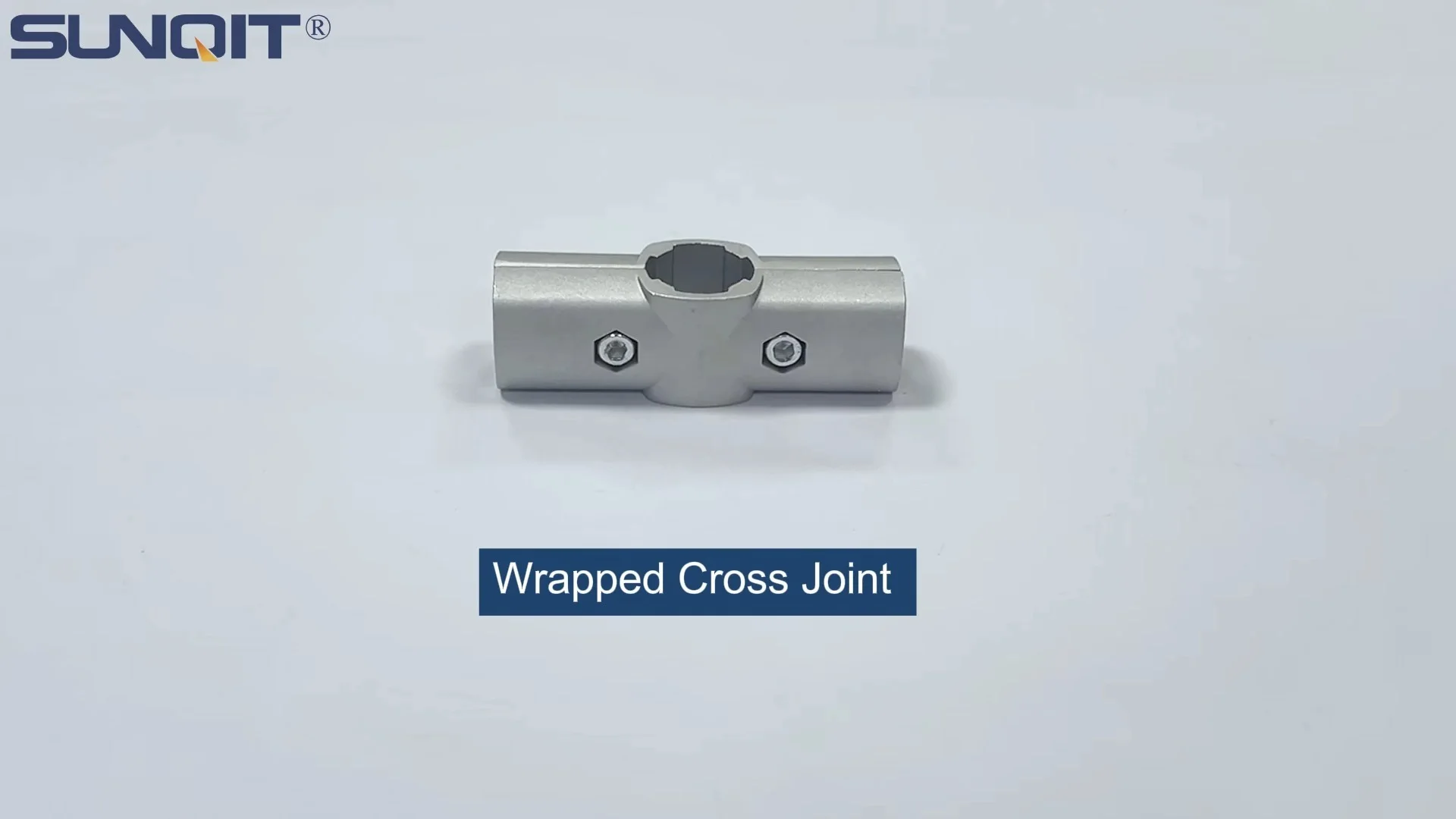
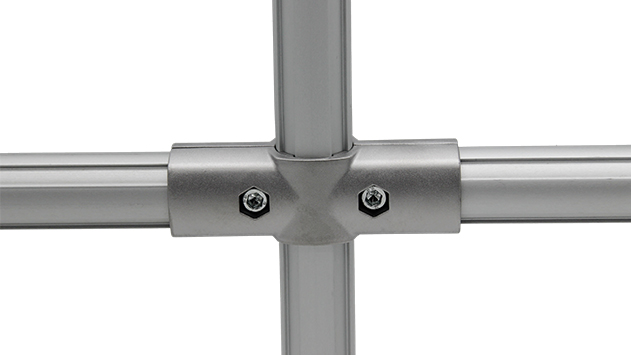
If aluminum profiles are the "bones" of modular systems, three way aluminum pipe joints are the "joints" that bring them to life. These small, precision-engineered components are designed to connect three aluminum pipes or profiles at once, enabling the creation of complex, multi-directional structures with minimal effort. But their value goes far beyond just holding pipes together—they're specifically engineered to meet the demands of cleanroom environments.
Let's unpack their key features. First, three way joints are typically made from high-grade aluminum or stainless steel, both of which are non-reactive and easy to sanitize. Their smooth, rounded edges eliminate sharp corners or crevices, leaving nowhere for particles to accumulate. Unlike threaded or welded connections, they assemble with simple bolts or friction-fit designs, meaning no messy adhesives or welding fumes that could contaminate the air.
What really makes these joints stand out is their versatility. A single three way joint can connect pipes at 90°, 45°, or even custom angles, depending on the design. This flexibility lets engineers create everything from L-shaped workbench corners to multi-tiered flow racks. And because they're reusable, teams can disassemble and reconfigure structures as needed—no need to buy new parts when workflows change. For example, a workbench used for assembling small catheters can be quickly modified with additional shelves or tool holders when switching to larger pacemakers.
Durability is another plus. Medical device production involves constant movement—technicians reaching for tools, materials sliding across surfaces, and occasional bumps from carts. Three way joints are built to withstand this wear and tear, with tight tolerances that prevent loosening over time. Some models even include internal locking mechanisms or rubber gaskets to further enhance stability and reduce vibration, which is critical for precision tasks like micro-assembly.

From Workbenches to Flow Racks: Real-World Applications
Now that we understand the "why" behind three way aluminum pipe joints, let's look at how they're used in practice. Two of the most common applications in medical device production are workbenches and flow racks—both of which benefit dramatically from modular design.
Customizable Workbenches: The Heart of Assembly
Workbenches are where the magic happens in device assembly. Whether it's soldering tiny wires onto a pacemaker or inspecting surgical scissors for defects, technicians need surfaces that are stable, cleanable, and tailored to their tasks. Modular workbenches built with aluminum profiles and three way joints deliver on all fronts.
Imagine a workbench for assembling insulin pumps. The base might consist of aluminum profiles connected by three way joints to form a sturdy frame. The top surface could be a non-porous aluminum honeycomb panel (lightweight but rigid), chosen for its ability to withstand frequent wipe-downs with isopropyl alcohol. Using additional three way joints, technicians can add side shelves for holding component trays, overhead lighting to reduce eye strain, or ESD-safe tool hooks to prevent static damage to sensitive electronics. Even accessories like footrests or anti-fatigue mats can be integrated by attaching brackets via the T-slots in the profiles.
What if the production line switches to assembling larger devices, like orthopedic screws? No problem. The three way joints allow the team to disassemble the side shelves, raise the workbench height by swapping out shorter profiles for longer ones, and add a heavier-duty top—all in a matter of hours, without disrupting the cleanroom's sterility. Compare that to a traditional steel workbench, which would require welding new parts or buying an entirely new unit, both of which risk contamination and downtime.
Flow Racks: Streamlining Material Handling
Material flow is another critical aspect of medical device production. Parts need to move from storage to assembly stations efficiently, without being dropped, damaged, or contaminated. Flow racks—tilted racks with roller tracks that let materials slide forward as they're used—are a staple here, and modular versions using three way joints are a game-changer.
A typical flow rack might use aluminum profiles as the frame, connected by three way joints to create vertical supports and horizontal shelves. Roller tracks (often made of plastic or aluminum) are then mounted to the shelves, allowing component bins to glide smoothly toward the assembly line. The beauty of using three way joints here is adjustability: if a new component bin is taller than previous ones, the shelves can be repositioned by loosening the joints and moving the profiles up or down. Need to add a new lane for a different part? Simply attach another section of profile with a three way joint and install additional roller tracks.
These racks also support lean principles by ensuring "first in, first out" (FIFO) material usage, reducing waste from expired or obsolete parts. And because they're built with lightweight aluminum, they can be easily moved with caster wheels (another modular accessory) if production lines need to be reorganized—no heavy machinery or permanent installation required.

Why Cleanrooms Love Modular Aluminum Systems
By now, it's clear that three way aluminum pipe joints and modular systems offer significant advantages over traditional setups. But let's distill their benefits into four key areas that matter most for medical device cleanrooms:
1. Sterility and Compliance
Cleanability is non-negotiable in medical production, and modular systems excel here. Aluminum profiles and three way joints have smooth, non-porous surfaces that can be wiped down with disinfectants like hydrogen peroxide or bleach without degradation. Unlike steel, there's no risk of rust or paint chipping, and no hidden crevices for bacteria to colonize. This makes it easier to pass regulatory inspections, as auditors can see that every surface is accessible for cleaning.
Some manufacturers even offer ESD-safe versions of aluminum profiles and joints, which are critical for handling sensitive electronic components (like those in diagnostic devices). These ESD properties prevent static electricity from damaging parts or attracting dust—another win for contamination control.
2. Flexibility and Adaptability
Medical device markets are constantly evolving, with new technologies and regulatory changes driving the need for agile production lines. Modular systems with three way joints let facilities adapt without major overhauls. Whether scaling up production for a new product launch or pivoting to meet sudden demand spikes, teams can reconfigure workbenches, flow racks, and carts in days (or even hours) instead of weeks. This agility reduces downtime and keeps production on track, which is critical in an industry where delays can have life-or-death consequences.
3. Cost-Efficiency
While modular systems may have a higher upfront cost than basic steel workbenches, they save money in the long run. Reusable components mean fewer new purchases when workflows change. Easy reconfiguration reduces labor costs associated with installing new equipment. And because aluminum is lightweight, shipping and installation costs are lower. Over time, these savings add up—especially for small to mid-sized manufacturers operating on tight budgets.
4. Worker Ergonomics
Happy, healthy technicians are more productive and less likely to make errors. Modular workbenches and racks can be tailored to individual ergonomic needs: adjusting height for standing vs. sitting work, adding footrests, or positioning tools at optimal reach distances. Three way joints make these adjustments simple—no need for custom fabrication. For example, a technician with a shoulder injury can have their workbench height lowered by swapping out a few profiles, ensuring they can still perform their job safely and comfortably.
Traditional vs. Modular: A Side-by-Side Comparison
| Feature | Traditional Steel Setups | Modular Aluminum Systems (with Three Way Joints) |
|---|---|---|
| Cleanability | Poor—welded joints and porous surfaces trap contaminants; paint chips over time. | Excellent—smooth, non-porous aluminum with no crevices; easy to sanitize with harsh chemicals. |
| Flexibility | Rigid—fixed dimensions; reconfiguration requires welding or new equipment. | Highly flexible—easily disassembled and reconfigured with reusable joints and profiles. |
| Durability | High, but prone to rust and corrosion in humid cleanrooms. | High—aluminum resists corrosion; joints maintain tight tolerances over time. |
| Cost Over Time | High—frequent replacement of worn parts; expensive reconfigurations. | Lower—reusable components; minimal new purchases needed for workflow changes. |
| Compliance Support | Risk of non-compliance due to hard-to-clean surfaces and chipping paint. | Supports compliance with ISO 14644 and FDA standards via easy cleaning and documentation. |
A Hypothetical Case Study: XYZ Medical Devices
To put this all in context, let's imagine a small medical device manufacturer, XYZ Medical, that specializes in surgical instruments. Before adopting modular systems, they used fixed steel workbenches and wooden material racks. Their cleanroom struggled with frequent contamination issues—auditors noted dust buildup in welded joints, and technicians complained about the difficulty of reconfiguring workspaces for new instrument models. Production downtime during retooling averaged 2-3 days per changeover, eating into tight deadlines.
XYZ decided to invest in modular aluminum systems, including three way aluminum pipe joints, aluminum profiles, and custom workbenches. Within six months, the results were clear: contamination incidents dropped by 40%, thanks to easier cleaning of smooth aluminum surfaces. Changeover time was reduced to just 4 hours, as teams could quickly disassemble and reconfigure workbenches using the joints. Technicians reported higher satisfaction, citing more comfortable ergonomics and better organization of tools. Perhaps most importantly, XYZ passed their next FDA inspection with zero observations related to workspace design—an outcome that would have been hard to achieve with their old setup.
While this is a hypothetical example, it reflects the real-world benefits many medical device manufacturers experience when switching to modular systems. The key takeaway? Three way aluminum pipe joints aren't just "parts"—they're enablers of safer, more efficient, and more adaptable production environments.
Looking Ahead: The Future of Cleanroom Design
As medical device technology advances, cleanrooms will only become more demanding. New materials, smaller components, and stricter regulations will require production setups that are not just clean, but also infinitely adaptable. Modular systems built around three way aluminum pipe joints are perfectly positioned to meet this challenge.
These systems offer a rare combination of sterility, flexibility, and durability that traditional setups can't match. They support lean manufacturing principles, reduce costs over time, and most importantly, help ensure that the medical devices produced are safe and reliable for patients. Whether it's a small startup or a large multinational manufacturer, investing in modular aluminum systems is an investment in quality, compliance, and future-proofing production.
So the next time you walk into a medical device cleanroom, take a closer look at the workbenches and racks. Chances are, you'll spot three way aluminum pipe joints holding it all together—quietly revolutionizing how life-saving devices are made.