- Company Articles
- Products and Technology
- Product knowledge
- Medical Equipment Racks: 4080B EU Standard Aluminum Profile for Sterile Environments

Medical Equipment Racks: 4080B EU Standard Aluminum Profile for Sterile Environments
Related Product
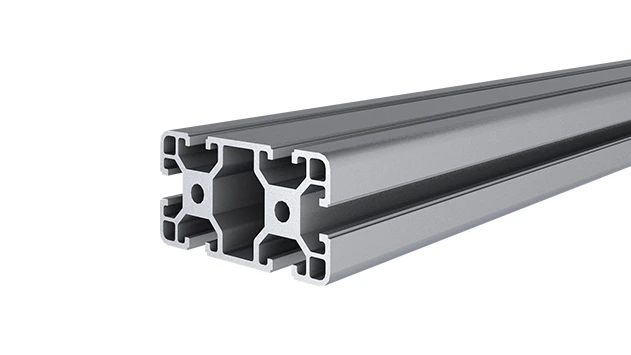
4080B EU Standard Aluminum Profile
4080B is a 4.00x8.00 CM fractional 40 series square extrusion T-slot profile with two side open T-slots, each side with 4.00cm face, two side with 8.00cm face. The profile has align-a-grooves to assist in aligning connecting profiles.
In the fast-paced world of healthcare, where every second counts and sterility can mean the difference between life and death, the tools and infrastructure that support daily operations are often overlooked—until they fail. Take, for example, the humble medical equipment rack. It's not just a shelf; it's a silent guardian of sterility, a facilitator of efficiency, and a cornerstone of safe patient care. Today, we're diving into a solution that's revolutionizing how healthcare facilities approach storage in sterile environments: racks built with 4080B EU Standard Aluminum Profile. Let's explore why this material is becoming the gold standard, how it addresses the unique challenges of sterile spaces, and why it might just be the upgrade your facility has been waiting for.
The High Stakes of Sterile Storage: Why "Good Enough" Isn't Enough
Sterile environments—think operating rooms, ICU stations, pharmaceutical labs, and cleanrooms—are unforgiving. A single speck of dust, a hidden crevice where bacteria can linger, or a rusted joint that flakes metal particles can compromise an entire procedure or batch of medication. Traditional storage solutions often fall short here. Heavy steel racks, while durable, are prone to corrosion if not meticulously maintained, and their welded joints create tiny gaps that become breeding grounds for pathogens. Wooden shelves, though cheap, absorb moisture and chemicals, making them impossible to fully sanitize. Even plastic, while lightweight, lacks the structural integrity to hold heavy medical equipment like ventilators, IV stands, or surgical tool kits.
Then there's the issue of adaptability. Healthcare needs evolve: new equipment arrives, workflows shift, and space constraints demand reconfiguration. A rigid storage system that can't keep up becomes a liability, forcing facilities to waste time and money on replacements. What sterile environments need is a storage solution that's both inherently cleanable and flexibly customizable. Enter 4080B EU Standard Aluminum Profile.
Aluminum Profiles: The Unsung Hero of Sterile Design
Aluminum has long been favored in industries where hygiene and durability collide—food processing, pharmaceuticals, and now, healthcare. Its secret lies in its molecular structure: non-porous, naturally resistant to corrosion, and incredibly easy to clean. Unlike steel, it doesn't rust when exposed to harsh disinfectants or frequent wipe-downs. Unlike wood, it doesn't absorb liquids or harbor mold. But not all aluminum is created equal. The 4080B EU Standard Aluminum Profile stands out for a reason: it's engineered specifically for precision, compliance, and performance in critical environments.
First, let's decode the "4080B" label. In the world of aluminum extrusion profiles (a manufacturing process that shapes aluminum into consistent, complex cross-sections), the numbers refer to dimensions: 40mm in width and 80mm in height. The "B" denotes a specific groove design—typically, T-slots that run along the length of the profile. These slots are game-changers. They allow for quick, tool-free attachment of accessories like shelves, dividers, or hooks without welding or drilling, which means no extra holes or crevices to trap contaminants. And because it's EU Standard, you can trust that the material meets strict regulations for safety, chemical resistance, and structural integrity—essential for environments where compliance with ISO 13485 or GMP standards is non-negotiable.

Key Features of 4080B Aluminum Profile Racks: Built for Sterility, Engineered for Efficiency
What makes 4080B-based racks so well-suited for sterile environments? Let's break down the features that matter most:
1. Seamless, Crevice-Free Surfaces
The extrusion process creates a smooth, uniform surface with no welds, screws, or joints that protrude. This means when you wipe down the rack with hospital-grade disinfectants (think bleach, alcohol, or hydrogen peroxide), there are no hidden spots for bacteria to hide. Even the T-slots, while functional, are designed with rounded edges that can be easily cleaned with a soft brush or cloth—no sharp corners where debris accumulates.
2. Modularity That Keeps Up with Change
Healthcare facilities are dynamic. One month, you might need a rack for storing surgical trays; the next, you're reorganizing to accommodate new imaging equipment. The T-slot design of 4080B profiles lets you reconfigure shelves, add dividers, or adjust heights in minutes using simple aluminum profile accessories like brackets, end caps, or sliding nuts. No need for a construction crew or downtime—your team can make changes on the fly, keeping workflows uninterrupted.
3. Strength Without the Weight
Don't let aluminum's lightweight nature fool you. 4080B profiles are surprisingly strong, with a load capacity of up to 200kg per linear meter (depending on the configuration). That's more than enough to hold heavy equipment like defibrillators, anesthesia machines, or stacks of sterile linen. And because they're lighter than steel, installation is easier, reducing the risk of injury during setup and making it simpler to relocate racks if needed.
4. Chemical and Corrosion Resistance
Sterile environments mean constant exposure to aggressive cleaning agents. 4080B aluminum profiles are anodized—a process that creates a protective oxide layer on the surface—making them resistant to scratches, stains, and chemical degradation. Unlike untreated steel, they won't pit, flake, or release harmful particles into the air, ensuring the integrity of your sterile field.
A Comparison: Traditional Materials vs. 4080B Aluminum Profiles
| Feature | Traditional Steel Racks | Wooden Shelving | 4080B Aluminum Profile Racks |
|---|---|---|---|
| Sterility Maintenance | High risk of corrosion; welded joints trap bacteria | Porous; absorbs liquids and chemicals | Non-porous, smooth surfaces; easy to disinfect |
| Durability | Strong but prone to rust without frequent maintenance | Weak; prone to warping and rot | Corrosion-resistant; anodized finish prevents scratches |
| Customization | Rigid; requires welding to modify | Fixed; cannot be reconfigured | Tool-free adjustments via T-slots and accessories |
| Weight | Heavy; difficult to install/relocate | Moderate; but weak load capacity | Lightweight yet high load capacity (up to 200kg/m) |
Beyond Racks: Integrating 4080B Profiles into the Wider Workspace
The versatility of 4080B EU Standard Aluminum Profile extends beyond just storage racks. Many healthcare facilities are now using the same profiles to build custom workbenches, mobile carts, and even equipment stands—creating a cohesive, standardized environment where every component works together. Imagine a surgical prep workbench built with 4080B profiles: the same smooth, cleanable surface as the storage rack, with integrated shelves for tools and a height-adjustable design to accommodate staff of all sizes. Because it uses the same T-slot system, you can add accessories like LED task lights or cable management clips without drilling new holes, keeping the surface free of clutter and easy to sanitize.
Mobile carts, too, benefit from aluminum's lightweight strength. A medication delivery cart built with 4080B profiles can be easily maneuvered through tight hospital corridors, while its anodized finish stands up to daily cleaning. And because the profiles are compatible with a wide range of casters and brakes (another type of aluminum profile accessory), you can customize the cart's mobility to suit your needs—whether you need it to lock securely during use or glide smoothly over uneven floors.
Choosing the Right Supplier: What to Look For
Not all 4080B aluminum profiles are created equal. To ensure you're getting a product that meets the demands of sterile environments, look for suppliers who:
- Certify EU Compliance: The "EU Standard" label isn't just a marketing term. Ask for documentation proving compliance with EN standards for aluminum extrusions, as well as safety certifications for medical or cleanroom use.
- Offer Anodized Finishes: Anodization is critical for corrosion resistance. Opt for profiles with a minimum 10-micron anodized layer to ensure durability.
- Provide a Range of Accessories: The best suppliers offer a full line of aluminum profile accessories—end caps, brackets, hinges, and connectors—to make customization easy. This ensures you won't have to mix and match parts from different brands, which can compromise fit and sterility.
- Understand Healthcare Needs: A supplier who specializes in medical or cleanroom solutions will be better equipped to help you design racks and workbenches that meet your specific workflow and compliance requirements.
Conclusion: Investing in Sterility, Efficiency, and Peace of Mind
In the world of healthcare, every decision impacts patient safety—and storage is no exception. 4080B EU Standard Aluminum Profile racks aren't just a storage solution; they're an investment in reducing contamination risks, streamlining workflows, and future-proofing your facility. By combining the natural benefits of aluminum—sterility, durability, and light weight—with the precision of EU-standard engineering and modular design, these racks offer a level of performance that traditional materials simply can't match.
Whether you're building a new sterile lab, upgrading an existing OR, or simply looking to improve storage in your pharmacy, 4080B aluminum profiles deserve a spot at the top of your list. After all, when it comes to sterility, there's no room for compromise—and with 4080B, you won't have to.