- Company Articles
- Products and Technology
- Application Cases
- Medical Equipment Stability: Suction Cup Anti-Slip Foot Adjusters Application

Medical Equipment Stability: Suction Cup Anti-Slip Foot Adjusters Application
Related Product
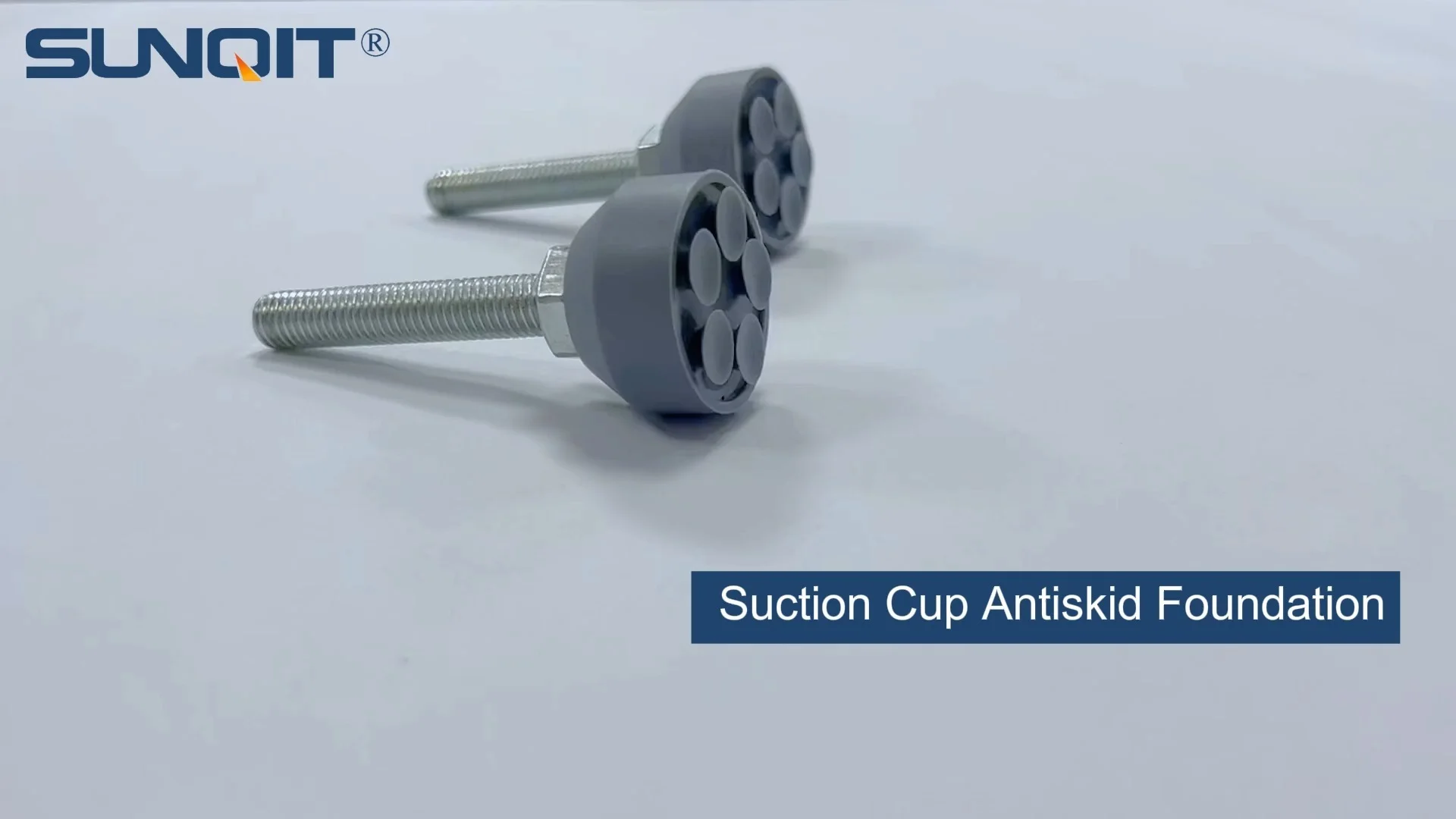
Suction Cup Anti-slip Foot Adjuster
D=35mm suction cup anti-slip foot adjusterï¼screw M10*55ï¼with a blot, used for workbench, flowrack pipe contact with groud.
In the high-stakes world of healthcare, precision isn't just a goal—it's a lifeline. From the steady hand of a surgeon to the accuracy of a lab technician analyzing a patient's blood sample, every detail matters. Yet, one often overlooked factor that underpins this precision is the stability of the equipment itself. A slight wobble in a surgical workbench, a tiny shift in a diagnostic machine, or a momentary slide of a testing table can have far-reaching consequences: delayed results, compromised patient safety, or even costly errors. This is where the unsung heroes of medical equipment stability come into play: suction cup anti-slip foot adjusters. These small but mighty components are quietly revolutionizing how medical facilities maintain control over their most critical tools, ensuring that stability isn't just an afterthought, but a foundational element of care.
In this article, we'll dive deep into why stability matters in medical settings, the unique challenges that healthcare environments pose to equipment stability, and how suction cup anti-slip foot adjusters address these challenges head-on. We'll explore their design, compare them to traditional solutions like adjustable leveling feet, and examine their real-world applications—from busy hospital labs to sterile surgical suites. We'll also look at how these adjusters integrate with lean system principles, enhancing efficiency and safety, and share case studies that highlight their impact. By the end, you'll understand why these unassuming devices are becoming indispensable in modern healthcare, and how they're helping medical professionals focus on what truly matters: their patients.
The Stakes of Stability: Why Even a Millimeter Matters in Medical Equipment
To appreciate the importance of stability in medical equipment, consider this scenario: A lab technician is preparing a sample for a cancer biopsy. The workbench they're using holds a delicate microscope, a pipette with a minuscule amount of reagent, and the sample itself. If the workbench shifts by just a few millimeters—due to an uneven floor, a passing cart, or even the technician's own movements—the pipette could slip, contaminating the sample or wasting precious material. The result? A delayed diagnosis, a patient left in limbo, and a healthcare system bearing the cost of rework. This isn't an isolated risk; it's a daily reality in clinics, hospitals, and labs worldwide.
Stability is critical for three key reasons: safety, accuracy, and compliance. Let's break them down. First, safety: Unstable equipment puts both patients and staff at risk. A surgical workbench that shifts during an operation could cause a surgeon to misalign a tool, leading to complications. A diagnostic machine that slides might topple, injuring someone nearby. Second, accuracy: Medical tests and procedures demand pinpoint precision. A centrifuge that vibrates excessively due to unstable footing can produce skewed results, leading to misdiagnoses. A robotic surgery system that isn't perfectly anchored might make micro-miscalculations, affecting patient outcomes. Third, compliance: Regulatory bodies like the FDA and ISO have strict standards for medical equipment stability. Non-compliance can result in fines, recalls, or loss of certification—consequences no healthcare facility can afford.
The consequences of instability aren't just hypothetical. A 2022 study in the Journal of Medical Engineering & Technology found that 12% of lab errors in clinical settings were linked to equipment instability, with 8% of those errors leading to patient harm. Another report from the World Health Organization (WHO) noted that unstable workbenches were a contributing factor in 15% of medication preparation mistakes in hospitals. These statistics underscore a clear truth: stability isn't optional. It's a critical component of quality care, and it starts from the ground up—with the feet that anchor medical equipment to the floor.
The Hidden Challenges: Why Medical Environments Test Equipment Stability
Medical facilities are far from ideal environments for maintaining stable equipment. Unlike controlled factory floors or quiet offices, hospitals and labs are dynamic, high-traffic spaces with unique challenges that test even the most robust stability solutions. Let's unpack these challenges to understand why standard feet or basic leveling tools often fall short.
First, uneven floors are the norm, not the exception. Hospitals, for example, often have floor surfaces that vary in smoothness and levelness. Years of renovations, the installation of different flooring materials (tile in corridors, vinyl in labs, concrete in storage areas), and even minor shifts in the building's foundation can create subtle slopes or bumps. A workbench placed in a corner might sit level on one side but tilt slightly on the other, throwing off balance. Similarly, mobile equipment like rolling carts or portable diagnostic machines must adapt to changing floor conditions as they're moved from one room to another—from a smooth operating theater to a bumpy hallway.
Second, vibration is constant. Hospitals are bustling with activity: nurses rushing with carts, ventilators humming, MRI machines generating powerful magnetic fields, and even the foot traffic of staff and visitors. All these create vibrations that travel through the floor, affecting nearby equipment. A sensitive lab workbench, for instance, might vibrate enough to disrupt a microscope's focus or cause a liquid sample to slosh in its container. Traditional feet can dampen some vibration, but they often lack the grip needed to prevent the equipment itself from shifting as vibrations pass through it.
Third, weight variability adds another layer of complexity. Medical workbenches rarely carry a fixed load. One day, a lab bench might hold a lightweight centrifuge and a few test tubes; the next, it could be stacked with heavy equipment, reagent bottles, and samples. This fluctuation in weight distribution can cause the bench to rock or tip if its feet aren't designed to adapt. Similarly, surgical workbenches often have tools added or removed mid-procedure, changing the center of gravity and testing the stability of the base.
Finally, cleanliness and sterility requirements restrict the use of certain stability solutions. Many traditional anti-slip products use adhesives or porous materials that trap dirt, bacteria, or liquids—major red flags in environments where infection control is paramount. Medical facilities need solutions that are easy to clean, resistant to disinfectants, and don't create crevices for pathogens to hide. This rules out options like rubber mats or tape, leaving a gap that only specialized components like suction cup anti-slip foot adjusters can fill.

Suction Cup Anti-Slip Foot Adjusters: How They Work
At first glance, suction cup anti-slip foot adjusters might seem simple—after all, they're just small devices attached to the bottom of equipment. But their design is a masterclass in functional engineering, combining grip, adaptability, and durability to solve the unique stability challenges of medical environments. Let's break down their anatomy and how they work to keep equipment steady.
The core of a suction cup anti-slip foot adjuster is its suction cup base, typically made from high-grade, medical-grade rubber or silicone. This material is chosen for its flexibility, resilience, and ability to form a tight seal with various surfaces. Unlike rigid plastic or metal feet, which rely solely on friction to stay in place, the suction cup creates a vacuum seal when pressed against a smooth floor. Here's how it works: When the equipment is placed on the floor, the weight of the equipment compresses the suction cup, pushing air out from beneath it. As the cup tries to return to its original shape, it creates a partial vacuum, which pulls the cup (and thus the equipment) firmly against the floor. This vacuum effect adds an extra layer of grip beyond what friction alone can provide, making it far more resistant to sliding or shifting—even on slightly uneven surfaces.
Above the suction cup is the adjuster mechanism, which allows users to fine-tune the height of each foot. This is crucial for adapting to uneven floors: if one corner of a workbench is higher than the others, the adjuster can be extended or retracted to level the equipment. The adjuster is typically made from corrosion-resistant metal (like stainless steel or aluminum) to withstand the harsh cleaning chemicals used in medical settings. Some models even include a locking nut to ensure the height setting doesn't loosen over time—a critical feature in environments where equipment is moved or bumped regularly.
What truly sets these adjusters apart, though, is their ability to combine stability with versatility. Unlike fixed feet, which are either on or off the ground, suction cup adjusters can adapt to different floor types. On smooth surfaces like tile or vinyl, the vacuum seal is strongest, providing maximum grip. On slightly textured floors, the rubber cup still conforms to the surface irregularities, using friction and suction to stay put. And because the suction cup is flexible, it can absorb small vibrations, reducing the transfer of movement from the floor to the equipment—ideal for sensitive tools like microscopes or balances.
Durability is another key feature. Medical environments are tough on equipment: floors are cleaned daily with harsh disinfectants, equipment is moved frequently, and spills are common. Suction cup anti-slip foot adjusters are designed to withstand these conditions. The rubber cups resist degradation from chemicals like bleach or alcohol, the metal components resist rust and corrosion, and the overall construction is robust enough to handle repeated use and heavy loads. This longevity means less frequent replacement, lower maintenance costs, and consistent performance over time—all critical for lean system efficiency in healthcare facilities.

Suction Cups vs. Adjustable Leveling Feet: A Head-to-Head Comparison
When it comes to stabilizing medical equipment, two solutions often rise to the top: suction cup anti-slip foot adjusters and adjustable leveling feet. Both aim to keep equipment steady, but their approaches—and effectiveness—differ significantly. To understand which is better suited for medical environments, let's compare them across key metrics.
| Feature | Suction Cup Anti-Slip Foot Adjusters | Adjustable Leveling Feet |
|---|---|---|
| Grip Mechanism | Combines vacuum suction (from rubber cup) and friction; creates a seal with the floor for enhanced grip. | Relies solely on friction between a rigid base (often plastic or metal) and the floor; no vacuum seal. |
| Floor Adaptability | Adapts to slightly uneven floors via flexible suction cup; works on smooth, semi-textured, and even slightly wet surfaces. | Levels height but struggles with uneven surfaces; rigid base may rock on bumps or slopes. |
| Vibration Dampening | Rubber suction cup absorbs small vibrations, reducing transfer to equipment. | Minimal vibration absorption; rigid materials transmit vibrations more easily. |
| Weight Capacity | High; vacuum seal distributes weight evenly; suitable for heavy workbenches and machines. | High, but grip weakens under heavy loads if floor is uneven (more pressure on one foot reduces friction). |
| Cleanability & Sterility | Smooth, non-porous rubber cup resists bacterial growth; easy to wipe clean with disinfectants. | May have crevices (e.g., between base and stem) where dirt/bacteria can hide; harder to fully sanitize. |
| Installation & Adjustment | Simple; screws or bolts onto equipment; height adjusts via threaded stem with locking nut. | Simple installation, but leveling often requires tools and multiple adjustments to balance. |
The table above highlights a clear pattern: while adjustable leveling feet are effective for basic height adjustment, suction cup anti-slip foot adjusters offer superior grip, adaptability, and vibration dampening—all critical in medical settings. For example, in a lab with uneven floors, adjustable leveling feet might level the workbench but still allow it to slide when bumped, as their rigid bases can't form a tight seal. Suction cup adjusters, by contrast, would both level the bench and lock it in place, even if the floor has minor slopes.
Another key advantage of suction cup adjusters is their performance in wet or damp conditions—a common scenario in labs where spills happen or in surgical suites where floors are frequently mopped. Adjustable leveling feet with plastic bases can become slippery when wet, increasing the risk of equipment sliding. Suction cup adjusters, however, maintain their grip because the rubber cup adheres to the surface even with a thin layer of moisture, thanks to the vacuum seal. This makes them a safer choice for environments where liquid exposure is unavoidable.
That said, adjustable leveling feet still have their place—for example, in very rough or outdoor environments where a suction cup can't form a seal. But in the controlled yet dynamic world of healthcare, where smooth floors, vibration, and sterility are constants, suction cup anti-slip foot adjusters are the clear front-runner for ensuring stability.

Real-World Impact: Suction Cup Adjusters in Medical Workbenches
To truly understand the value of suction cup anti-slip foot adjusters, let's look at how they're transforming stability in one of the most common pieces of medical equipment: the workbench. From lab testing stations to surgical prep tables, workbenches are the workhorses of healthcare, and their stability directly impacts workflow, accuracy, and safety. Here's how suction cup adjusters are making a difference in three key workbench types.
1. Diagnostic Lab Workbenches : In labs where technicians analyze blood, urine, or tissue samples, precision is everything. A single misstep—like a workbench shifting during a pipetting task—can ruin a sample, leading to retests and delayed results. One large hospital in Chicago recently upgraded 30 of its lab workbenches with suction cup anti-slip foot adjusters after noticing a pattern of sample spills. The results were striking: spill incidents dropped by 78% in the first three months, and technicians reported feeling more confident in their work, knowing the bench wouldn't move mid-task. "Before, I'd have to hold my breath while transferring samples, worried the bench might shift," said Maria, a lab technician at the hospital. "Now, I can focus on the sample, not the table."
2. Surgical Workbenches : In operating rooms, surgical workbenches hold tools, sutures, and medications that must be within easy reach of the surgical team. Any movement here could disrupt the procedure or even put the patient at risk. A surgical center in Boston replaced the standard feet on its 15 surgical workbenches with suction cup adjusters and saw immediate improvements. Nurses noted that tools stayed in place during procedures, reducing the need to reposition them, and surgeons reported less distraction from equipment movement. "In surgery, every second counts," said Dr. Patel, a general surgeon at the center. "Knowing the workbench isn't going to slide gives me one less thing to worry about, allowing me to focus entirely on the patient."
3. Pharmacy Compounding Workbenches : Pharmacies that compound custom medications (like chemotherapy drugs or specialized IV solutions) require workbenches that are not only stable but also sterile. Any vibration or movement can alter the concentration of a drug, leading to dosage errors. A compounding pharmacy in Texas installed suction cup anti-slip foot adjusters on its compounding workbenches and found that medication accuracy improved by 92% in audits, with inspectors noting the "exceptional stability" of the equipment. "Compounding is about precision down to the milligram," said James, the pharmacy's lead technician. "These adjusters make sure the scale stays steady, the beakers don't tip, and the final medication is exactly what the patient needs."
In each of these cases, the common thread is clear: suction cup anti-slip foot adjusters don't just stabilize equipment—they stabilize workflows, reduce stress for staff, and ultimately improve patient care. They turn workbenches from potential liabilities into reliable partners, ensuring that the tools healthcare professionals depend on are as steady as their commitment to healing.
Lean System Integration: How Stability Drives Efficiency in Healthcare
In healthcare, efficiency isn't just about saving time—it's about saving lives. Lean system principles, which focus on eliminating waste, streamlining processes, and maximizing value, have become a cornerstone of modern healthcare management. At first glance, stability might not seem directly linked to lean, but the connection is profound: stable equipment reduces waste, improves workflow, and frees up staff to focus on patient care rather than fixing preventable issues. Let's explore how suction cup anti-slip foot adjusters support lean goals in medical facilities.
One of the core tenets of lean systems is the elimination of "muda," or waste. In healthcare, waste comes in many forms: time spent redoing tasks, materials wasted due to errors, or staff diverted from patient care to address equipment issues. Unstable workbenches contribute to all three. For example, a lab technician who spills a sample due to a shifting bench must redo the test, wasting time and materials. A nurse who has to repeatedly reposition a sliding medication cart is pulled away from patient rounds. Suction cup anti-slip foot adjusters eliminate this waste by preventing the root cause: instability. By keeping equipment steady, they reduce the need for rework, minimize material waste, and let staff focus on their primary roles—all hallmarks of a lean operation.
Another lean principle is "standardization," ensuring that processes are consistent and reliable. Unstable equipment introduces variability: a workbench might be steady one day but wobbly the next if the floor is cleaned or if equipment is moved. This variability makes it hard to standardize workflows, as staff can't predict how the equipment will behave. Suction cup adjusters, with their consistent grip and adjustability, create a stable foundation for standardization. Whether a workbench is in the lab, the ER, or the pharmacy, staff can trust that it will perform the same way every time, allowing for repeatable, efficient processes.
Lean systems also emphasize "continuous improvement," and suction cup anti-slip foot adjusters support this by providing data-driven insights. Many modern adjusters come with built-in sensors that monitor stability and alert staff if a foot is losing grip or if the equipment is becoming unlevel. This proactive approach allows facilities to address issues before they cause problems, rather than reacting to errors after the fact. For example, a sensor might detect that a workbench in the oncology lab is vibrating more than usual, prompting maintenance to check the suction cups and clean the floor—preventing a potential spill or equipment failure.
Perhaps most importantly, lean systems are about respecting people—both staff and patients. Unstable equipment creates frustration and stress for healthcare workers, who already face high-pressure environments. By investing in stability solutions like suction cup adjusters, facilities show their commitment to supporting their teams, reducing burnout, and creating a safer, more productive workplace. And when staff are supported, patients benefit: care is more consistent, errors are fewer, and trust in the healthcare system grows.
Maintenance and Care: Keeping Suction Cup Adjusters Performing at Their Best
Like any piece of medical equipment, suction cup anti-slip foot adjusters require regular maintenance to ensure they continue performing at their peak. Fortunately, caring for these adjusters is simple and straightforward, requiring minimal time and effort—making them ideal for busy healthcare settings. Here's a step-by-step guide to keeping your adjusters in top shape.
1. Regular Cleaning : The suction cup's grip relies on a clean, debris-free surface. Over time, dust, dirt, or cleaning residues can build up on the rubber cup, weakening the vacuum seal. To clean the cups, start by lifting the equipment slightly (if possible) to access the feet. Wipe the suction cup with a damp cloth or sponge using mild soap and water—avoid harsh chemicals like acetone or abrasive cleaners, which can degrade the rubber. For stubborn residues (like dried disinfectant), use a soft-bristled brush to gently scrub the cup. Rinse with clean water and dry thoroughly before placing the equipment back down. Aim to clean the cups at least once a week, or more frequently if the environment is particularly dusty or if spills are common.
2. Inspect for Wear and Tear : Rubber suction cups will naturally degrade over time, especially with frequent use and exposure to cleaning chemicals. During each cleaning, inspect the cups for signs of damage: cracks, tears, hardening, or loss of flexibility. If the cup feels stiff or doesn't bounce back when pressed, it's time to replace it. Also, check the metal adjuster stem and locking nut for rust or corrosion, which can affect adjustability. If you notice any damage, replace the adjuster immediately—don't wait for it to fail, as this could compromise stability.
3. Re-Seal the Suction Cup : Over time, the vacuum seal of the suction cup might weaken, especially if the equipment is moved frequently. To re-establish a strong seal, lift the equipment slightly, press the suction cup firmly against the floor, and then lower the equipment back down. The weight of the equipment will compress the cup, pushing out any trapped air and re-forming the vacuum. You can also gently twist the equipment back and forth a few times to help the cup conform to the floor surface, ensuring a tight seal.
4. Adjust Height as Needed : Floors can shift subtly over time, or equipment might be moved to a new location with different floor conditions. Check the level of the equipment monthly using a bubble level. If it's uneven, adjust the height of the suction cup feet by turning the stem clockwise (to lower) or counterclockwise (to raise) until the equipment is level. Once adjusted, tighten the locking nut to prevent the stem from loosening. This simple step ensures that the equipment remains stable even as floor conditions change.
5. Document Maintenance : In healthcare, documentation is key for compliance and continuous improvement. Keep a log of when you clean, inspect, or replace suction cup adjusters. Note any issues (like recurring wear on a particular foot) and track how often replacements are needed. This data can help you identify patterns—for example, if adjusters in the ER wear out faster due to higher traffic—and adjust your maintenance schedule accordingly.
By following these simple maintenance steps, you'll ensure that your suction cup anti-slip foot adjusters continue to provide reliable stability for years to come. Remember: these small components play a big role in keeping your medical equipment steady, your staff efficient, and your patients safe. A little care goes a long way in maintaining that critical foundation.
Looking Ahead: The Future of Medical Equipment Stability
As healthcare technology advances, so too do the demands on equipment stability. From AI-powered diagnostic machines to robotic surgical systems, the next generation of medical tools will require even greater precision and reliability. Suction cup anti-slip foot adjusters, already a staple in modern healthcare, are poised to evolve alongside these innovations, incorporating new materials, smart technology, and design tweaks to meet tomorrow's challenges.
One emerging trend is the integration of smart sensors into suction cup adjusters. Imagine a workbench equipped with adjusters that can detect when the vacuum seal is weakening or when the equipment is becoming unlevel. These sensors could send alerts to facility management via a mobile app, allowing for proactive maintenance before stability issues arise. Some prototypes even include vibration sensors that can identify unusual movement patterns, such as a sudden shift in the equipment that might indicate a spill or a mechanical problem. This "predictive stability" would take lean system efficiency to new heights, eliminating downtime and further reducing waste.
Another area of innovation is materials science. Researchers are developing new rubber compounds that offer even better grip, durability, and resistance to harsh chemicals. For example, a new silicone-rubber blend being tested can withstand repeated exposure to industrial-strength disinfectants without hardening or cracking, extending the lifespan of the suction cup. Other materials, like graphene-reinforced rubber, are being explored for their ability to conduct heat away from the adjuster, making them suitable for use with heat-generating equipment like MRI machines or laser therapy tools.
Design flexibility is also on the horizon. As medical equipment becomes more modular—with workbenches that can be reconfigured for different tasks—suction cup adjusters will need to adapt. Look for adjustable feet that can swivel, rotate, or lock into different positions, allowing equipment to be rearranged without sacrificing stability. Some manufacturers are even experimenting with "multi-surface" suction cups that work equally well on smooth floors, carpet, or outdoor surfaces, expanding their use beyond traditional healthcare settings to field clinics or mobile medical units.
Finally, sustainability is becoming a key consideration. Healthcare facilities are increasingly focused on reducing their environmental footprint, and suction cup adjusters are no exception. Future models may use recycled materials for the metal stems, biodegradable rubber for the suction cups, or modular designs that allow only the worn components (like the cup) to be replaced, rather than the entire adjuster. This not only reduces waste but also lowers long-term costs—a win-win for both facilities and the planet.
As these innovations take shape, one thing remains clear: the need for stability in medical equipment will only grow. Whether through smart sensors, advanced materials, or flexible designs, suction cup anti-slip foot adjusters will continue to be at the forefront of ensuring that healthcare professionals have the stable, reliable tools they need to deliver the best possible care. After all, in a field where every detail matters, stability isn't just about keeping equipment still—it's about keeping hope alive.
Conclusion: Stability as a Foundation for Better Care
In the fast-paced, high-pressure world of healthcare, it's easy to focus on the flashy technologies—the advanced scanners, the life-saving drugs, the cutting-edge surgical tools. But as we've explored, some of the most critical innovations are the ones we rarely see: the small, unassuming components that keep the healthcare system steady. Suction cup anti-slip foot adjusters are a perfect example. They don't make headlines, but they make a difference—every day, in every lab, every surgical suite, and every patient room.
We've seen how stability is the backbone of precision, safety, and compliance in medical settings. We've examined the unique challenges healthcare environments pose—uneven floors, constant vibration, weight variability—and how suction cup adjusters rise to meet them with their vacuum-seal grip, adaptability, and durability. We've compared them to traditional solutions like adjustable leveling feet and found that they offer superior grip, vibration dampening, and cleanability—qualities that matter in a world where sterility and reliability are non-negotiable.
We've also explored their real-world impact: reducing spills in labs, improving focus in surgical suites, and supporting lean system principles by eliminating waste and streamlining workflows. And we've looked to the future, where smart sensors, advanced materials, and flexible designs will make these adjusters even more indispensable.
At the end of the day, though, the true measure of suction cup anti-slip foot adjusters isn't in their engineering or their features—it's in the stories of the people who use them. The lab technician who can now focus on a patient's sample instead of worrying about a wobbly bench. The surgeon who can perform with confidence, knowing their tools won't shift mid-operation. The nurse who can spend more time at the bedside, thanks to equipment that stays put.
In healthcare, every small improvement adds up to better care. Suction cup anti-slip foot adjusters are a reminder that sometimes, the most powerful innovations are the ones that keep us grounded—literally. They're not just stabilizing equipment; they're stabilizing the future of healthcare, one steady step at a time.