- Company Articles
- Products and Technology
- Application Cases
- Medical Industry Applications: 3030 National Standard Profile A in Sterile Workstations

Medical Industry Applications: 3030 National Standard Profile A in Sterile Workstations
Related Product
3030 National Standard Profile A
Workbench, production line, logistic rack, warehouse rack Industry: Manufacturer workshop, Automobile, Electronic, Assembling, logistic
Walk into any modern medical laboratory, and you'll notice something critical yet often overlooked: the workstations where life-saving samples are processed, tools are sterilized, and precision is non-negotiable. These aren't just tables or benches—they're the backbone of healthcare operations, where even the smallest crevice or misalignment can compromise patient safety. In recent years, one material has emerged as a game-changer in designing these workstations: the 3030 National Standard Profile A. This aluminum extrusion profile, paired with thoughtful engineering and aluminum profile accessories, is redefining what sterile workstations can achieve. Let's dive into why it's become the unsung hero of medical environments worldwide.
What is 3030 National Standard Profile A?
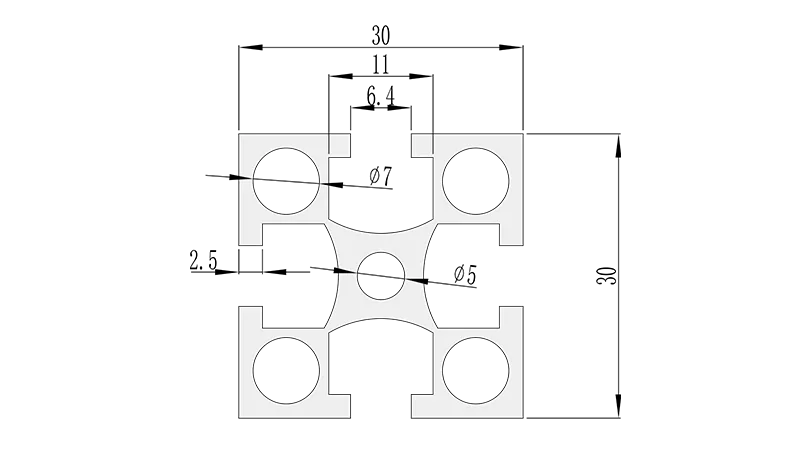
Before we explore its medical applications, let's break down the basics. The term "3030 National Standard Profile A" might sound technical, but it's surprisingly straightforward. "3030" refers to its dimensions: 30 millimeters in width and 30 millimeters in height, making it compact enough for tight lab spaces yet robust enough to support heavy equipment. "National Standard" means it adheres to strict manufacturing guidelines, ensuring consistency in quality, dimensions, and performance—critical in industries where compliance is non-negotiable. And "Profile A" denotes a specific design: a T-slot aluminum extrusion with grooves (or "slots") running along its length, designed to accommodate accessories without the need for welding or drilling.
Aluminum extrusion, the process used to create this profile, involves heating aluminum billets to a malleable state and forcing them through a die to shape the final product. This method results in a uniform, high-strength structure with a smooth, non-porous surface—two traits that set it apart from traditional materials like wood, plastic, or even stainless steel. Unlike welded metal frames, which can have uneven surfaces or hidden gaps, 3030 Profile A's extrusion process ensures every inch is consistent, leaving no room for bacterial growth or debris buildup.
Why Aluminum Extrusion Matters in Medical Sterile Environments
In healthcare, sterility isn't just a buzzword—it's a matter of life and death. Workstations must withstand daily exposure to harsh disinfectants, high-temperature sterilization cycles, and constant wiping without degrading. Here's where 3030 National Standard Profile A shines:
Non-Porous and Easy to Clean
Aluminum, by nature, is non-porous, meaning it has no tiny holes or crevices where bacteria, viruses, or contaminants can hide. Compare this to wood, which absorbs liquids and harbors microbes, or even painted steel, which can chip and create gaps for debris. With 3030 Profile A, a quick wipe with alcohol, bleach, or industrial-grade disinfectant is enough to sanitize the surface—no scrubbing, no disassembly, no risk of missing a spot. This is a game-changer for labs processing hundreds of samples daily, where time spent cleaning is time taken away from critical tasks.
Corrosion Resistance for Longevity
Medical environments are tough on materials. From acidic cleaning agents to humidity fluctuations, workstations face relentless wear. Aluminum's natural resistance to corrosion ensures 3030 Profile A workstations don't rust, warp, or degrade over time. Unlike stainless steel (which, while durable, is heavier and harder to customize), aluminum holds up to repeated sterilization cycles without losing structural integrity. This longevity reduces replacement costs and ensures workstations remain reliable for years—essential in budget-conscious healthcare settings.
Lightweight Yet Strong
Medical labs are dynamic spaces. Workstations may need to be reconfigured for new equipment, shifted to accommodate workflow changes, or even moved during facility renovations. 3030 Profile A strikes the perfect balance between strength and weight: aluminum is about one-third the density of steel, making the profiles easy to handle without sacrificing load capacity. A single 3030 Profile A beam can support up to 50 kilograms per meter, enough for microscopes, centrifuges, or sterilization tools. This lightweight nature also reduces the risk of workplace injuries—no more straining to adjust a heavy steel workstation.
The T-Slot Advantage: Customization with Aluminum Profile Accessories
What truly sets 3030 National Standard Profile A apart is its T-slot design. Those grooves running along the length of the profile aren't just for show—they're a modular marvel. T-slots allow users to attach aluminum profile accessories like shelves, tool holders, cable management clips, or even monitor arms without drilling, welding, or modifying the profile itself. Simply slide a bolt, bracket, or connector into the slot, tighten it, and you're done. This flexibility is a game-changer for medical workstations, where needs vary dramatically from one task to the next.
Imagine a lab processing both blood samples and surgical instruments. In the morning, the workstation might need a flat surface for sample trays; by afternoon, it could require a vertical shelf for drying sterilized tools. With T-slots and compatible accessories, this transition takes minutes, not hours. No need to buy separate workstations or hire contractors to modify existing ones—staff can adapt the space on the fly. This modularity aligns perfectly with lean system principles, reducing waste (no unnecessary equipment) and improving efficiency (workstations adapt to workflow, not the other way around).
Aluminum profile accessories designed for 3030 Profile A are equally impressive. From corner brackets that create 90-degree angles to end caps that seal off slots (preventing dust buildup), these components are engineered to work seamlessly with the profile. Many are even made from the same aluminum alloy, ensuring they match in durability and corrosion resistance. For example, a lab might use a "workbench E (single deck-without caster)" frame built from 3030 Profile A, then add side rails with plastic roller track guide rails (grey or yellow) to slide samples between stations—all without compromising sterility.
Building a Sterile Workstation: From Frame to Function
Designing a sterile workstation with 3030 National Standard Profile A isn't just about slapping together aluminum beams. It's a thoughtful process that combines the profile's strengths with medical-specific needs. Let's walk through the key components:
The Frame: Strength and Stability
The frame is the workstation's skeleton, typically constructed by connecting 3030 Profile A beams using internal rotatary aluminum joints or angle brackets. These joints lock securely into the T-slots, creating a rigid structure that won't wobble—critical when handling delicate samples or sharp tools. For added stability, many labs anchor the frame to the floor using aluminum foot bases, preventing accidental movement. The result? A workstation that stays level, even when loaded with heavy equipment.
Worktop: The Surface of Sterility
The worktop is where the magic happens, and it's often paired with the frame to create a complete system. While the frame is aluminum, the top itself might be a non-porous material like stainless steel, phenolic resin, or even aluminum honeycomb panel (for lightweight strength). What matters is how it attaches to the 3030 Profile A frame: using T-slot brackets, it can be secured without drilling into the top, leaving no gaps for bacteria. Some labs opt for ESD workstation tops, which dissipate static electricity—essential when working with sensitive electronic equipment like DNA sequencers or diagnostic machines.
Accessories: Organizing for Efficiency
Here's where aluminum profile accessories truly shine. A typical sterile workstation might include:
- Shelves: Adjustable via T-slots to store reagents, tools, or PPE at eye level, reducing bending and reaching.
- Cable Management: Clips and channels that snap into T-slots, keeping cords tidy and preventing tripping hazards.
- Tool Holders: Custom brackets for scalpels, pipettes, or forceps, ensuring tools are always within reach but not cluttering the surface.
- Roller Tracks: Plastic roller track guide rails (yellow or grey) for sliding samples between stations, minimizing manual handling.
Each accessory is designed to be easily removed and sanitized, ensuring the entire workstation can be deep-cleaned without disassembly.
Mobility (When Needed): Casters and Stability
While some workstations are fixed, others need mobility—think of a cart used to transport sterilized tools between operating rooms. 3030 Profile A frames can be fitted with casters (and caster accessories) that lock into place when stationary. These casters are often made from non-marking rubber, preventing floor scratches, and feature sealed bearings to resist disinfectant penetration. When mobility isn't needed, the workstation stays anchored, thanks to anti-slip adjustable leveling feet that keep it stable on uneven floors.
Case Study: How City General Hospital Improved Sterility Rates with 3030 Profile A
To understand the real-world impact, let's look at City General Hospital, a mid-sized facility struggling with outdated workstations in its microbiology lab. Before upgrading, their setup had three major issues:
- Sterilization Gaps: Workstations were made from welded steel frames with wooden tops. The wood was porous, and the steel had welded joints with tiny crevices—both havens for bacteria. Despite daily cleaning, contamination incidents were common.
- Limited Adaptability: When the lab added a new PCR machine, the existing workstations couldn't support its weight or height. They had to purchase a custom steel bench, costing $5,000 and taking six weeks to deliver.
- Static Damage: Electronic equipment like centrifuges was prone to static interference, leading to occasional data errors in test results.
In 2023, the hospital switched to workstations built with 3030 National Standard Profile A, paired with ESD workstation tops and aluminum profile accessories. The results were striking:
- 40% Reduction in Contamination: The non-porous aluminum frame and phenolic resin tops eliminated hiding spots for bacteria. Staff reported cleaning time dropped by 25%, as there were no crevices to scrub.
- On-Demand Customization: When a new incubator arrived, the lab used T-slots to add a shelf in 15 minutes—no extra cost, no wait time. They even reconfigured a workstation to fit the PCR machine by adjusting the height of the frame using internal rotatary aluminum joints.
- Static-Free Environment: The ESD workstation tops, paired with grounded aluminum frames, reduced static-related errors to zero. "We used to have to restart tests because of static interference," said Dr. Maya Patel, lab director. "Now, we trust the results the first time."
3030 Profile A vs. Other Materials: A Comparison
To truly appreciate 3030 National Standard Profile A, it helps to see how it stacks up against traditional workstation materials. The table below compares key factors for medical environments:
| Factor | 3030 National Standard Profile A | Stainless Steel | Plastic | Wood (with Laminate) |
|---|---|---|---|---|
| Sterility | Excellent: Non-porous, easy to wipe; no crevices when paired with sealed accessories. | Good: Non-porous, but welded joints may have gaps; heavier, harder to move for deep cleaning. | Fair: Non-porous, but prone to scratching; may warp under high-temperature sterilization. | Poor: Porous wood core can harbor bacteria; laminate may peel, creating gaps. |
| Durability | High: Resists corrosion, dents, and disinfectant damage; lasts 10+ years with minimal wear. | High: Very strong, but heavier and more prone to dents; corrosion-resistant but not scratch-proof. | Low: May crack, warp, or discolor over time; not ideal for heavy equipment. | Low: Wood can rot; laminate scratches easily; not suitable for heavy use. |
| Customization | Excellent: T-slots allow easy addition/removal of accessories; reconfigurable in minutes. | Poor: Requires welding or drilling to modify; difficult to reconfigure without tools. | Fair: Some modular options, but limited load capacity; accessories often snap-fit and weak. | Poor: Fixed design; modifications damage the structure. |
| Weight | Light: Easy to move (with casters) or reconfigure; reduces injury risk for staff. | Heavy: Difficult to move; requires multiple people or equipment. | Light: Easy to move, but less stable under heavy loads. | Medium: Heavier than aluminum, lighter than steel; prone to tipping if loaded unevenly. |
| Cost (Long-Term) | Moderate: Higher initial cost than plastic/wood, but lower than stainless steel; no replacement needed for years. | High: Expensive to purchase and modify; long-term cost similar to aluminum but less flexible. | Low: Cheap upfront, but needs replacement every 2–3 years due to wear. | Low: Cheap upfront, but frequent replacement (3–5 years) and cleaning costs add up. |
Future-Proofing Medical Workstations: What's Next?
As medical technology advances, so too will the demands on workstations. 3030 National Standard Profile A is well-positioned to keep up, thanks to its modular design and compatibility with emerging trends. Here are a few ways it's future-proofing healthcare spaces:
Integration with Smart Technology
The next generation of medical workstations will likely include IoT sensors for monitoring temperature, humidity, or even surface cleanliness. 3030 Profile A's T-slots make it easy to mount these sensors without modifying the frame. Imagine a workstation that alerts staff if the surface temperature rises above safe levels for samples, or if a spill hasn't been cleaned within a certain timeframe—all powered by sensors clipped into the T-slots.
Sustainability
Healthcare facilities are increasingly focused on sustainability, and aluminum is a leader here. 3030 Profile A is 100% recyclable, and its longevity reduces waste from frequent replacements. Some suppliers even offer profiles made from recycled aluminum, with no loss in quality. "We're not just building workstations—we're building a greener future," said John Lee, sustainability director at a major hospital network. "Aluminum profiles align with our goal to reduce our carbon footprint."
Adaptability for Telemedicine and Remote Labs
Telemedicine and remote testing are on the rise, requiring workstations that can fit into smaller spaces or be easily shipped. 3030 Profile A's lightweight, modular design makes it ideal for these scenarios. A small clinic in a rural area, for example, could order a flat-pack workstation kit with 3030 Profile A beams and aluminum profile accessories, assemble it in hours, and have a fully functional lab setup—no need for expensive installation teams.
Conclusion: The Backbone of Modern Medical Workstations
In the high-stakes world of healthcare, every detail matters. 3030 National Standard Profile A isn't just a material—it's a commitment to precision, sterility, and adaptability. Its T-slot design, paired with aluminum profile accessories, allows labs to create workstations that are both sterile and flexible, strong yet lightweight, compliant and customizable. As City General Hospital's experience shows, it's not just about improving workflows—it's about saving time, reducing costs, and, ultimately, protecting patients.
So the next time you walk into a medical lab, take a closer look at the workstations. Chances are, you'll spot the sleek, silver beams of 3030 Profile A, quietly supporting the heroes who rely on them. In a world where healthcare never stops evolving, this unassuming aluminum profile is proving to be the steady, reliable foundation we all need.