- Company Articles
- Products and Technology
- Application Cases
- Medical Industry Applications: Aluminum Workbench B for Sterile Production Environments

Medical Industry Applications: Aluminum Workbench B for Sterile Production Environments
Related Product
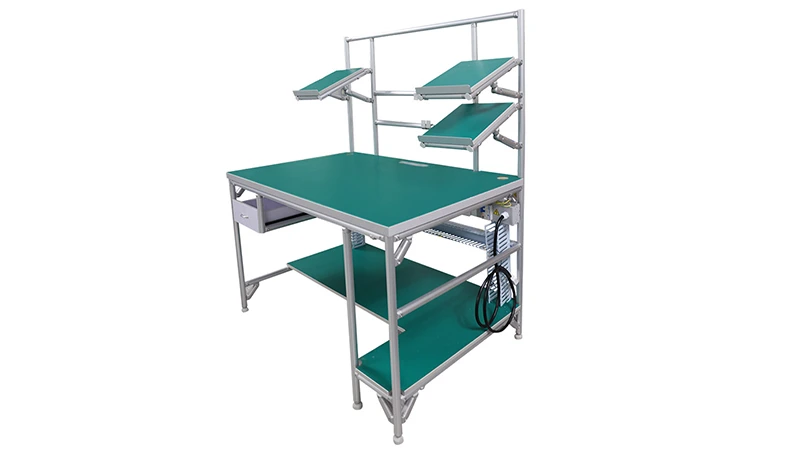
Aluminum Workbench B
Aluminum tube workbench is more flexible and durable, compared with traditional PE/ABS coated steel tube. It is easy to assemble, anti corrosion, rust protection, and recycle use after disassemble.
The Critical Role of Sterile Environments in Medical Manufacturing
In the high-stakes world of medical manufacturing, where the smallest contaminant can compromise patient safety or render an entire batch of life-saving products useless, sterility isn't just a goal—it's a mandate. From pharmaceutical labs compounding vaccines to assembly lines building precision surgical tools, every surface, every workflow, and every piece of equipment must be designed to minimize risk. Among these essential tools, workbenches stand as the unsung heroes: they're where technicians mix, assemble, test, and package products that directly impact human health. But not all workbenches are created equal. In environments where sterility, durability, and compliance are non-negotiable, aluminum workbench B has emerged as a game-changer, blending the strength of aluminum extrusion profile with thoughtful design to meet the unique demands of sterile medical production.
Consider a typical day in a medical device facility: technicians in head-to-toe protective gear carefully assemble components for pacemakers. The workbench beneath their hands must withstand hourly wipe-downs with industrial-grade disinfectants, resist corrosion from harsh chemicals, and provide a smooth, crevice-free surface where bacteria and particulates can't hide. Traditional workbenches—often made of wood, plastic, or even uncoated steel—fall short here. Wood absorbs moisture and harbors microbes; plastic scratches easily, creating tiny pockets for contamination; steel, while strong, can rust if not properly treated, leaving flaky residues that threaten product integrity. For manufacturers navigating strict regulations like ISO 13485 or FDA 21 CFR Part 820, these shortcomings aren't just inconveniences—they're compliance risks that could lead to fines, recalls, or worse.
The Challenges of Sterile Workspace Design
Designing a sterile workspace in medical manufacturing involves balancing multiple priorities: maintaining a contamination-free zone, ensuring ergonomic comfort for staff (who often work long shifts), optimizing workflow efficiency, and adhering to evolving regulatory standards. Each of these factors places unique demands on workbench design:
- Contamination Risk Mitigation: Surfaces must be non-porous, easy to sanitize, and free of seams, joints, or rough edges where bacteria, viruses, or particulates can accumulate. Even microscopic crevices can become breeding grounds for pathogens, making regular cleaning ineffective.
- Chemical Resistance: Daily cleaning protocols often involve aggressive agents like hydrogen peroxide, isopropyl alcohol, or quaternary ammonium compounds. Workbench materials must withstand these chemicals without degrading, discoloring, or leaching harmful substances into the environment.
- Durability Under Stress: Medical production lines operate around the clock, with tools, equipment, and heavy components frequently placed or moved on workbench surfaces. A flimsy workbench that warps, cracks, or dents under pressure can disrupt workflows and create new contamination risks.
- Ergonomics and Workflow Efficiency: An uncomfortable or poorly designed workbench can lead to staff fatigue, errors, and reduced productivity. Height adjustability, modular add-ons (like tool holders or shelving), and compatibility with adjacent equipment (such as conveyors or testing stations) are critical for maintaining a smooth, lean system that minimizes waste and maximizes output.
- Regulatory Compliance: Auditors from bodies like the FDA or ISO don't just inspect final products—they scrutinize the tools and environments used to make them. Workbenches must be documented, traceable, and demonstrably capable of meeting strict sterility and safety standards.
Against this backdrop, aluminum workbench B emerges as a solution tailored to these challenges. Built from high-quality aluminum extrusion profile —a material prized for its strength, lightness, and resistance to corrosion—this workbench isn't just a surface to work on; it's a strategic investment in compliance, efficiency, and patient safety.

Aluminum Workbench B: Design and Material Advantages
At the heart of aluminum workbench B's appeal is its construction from aluminum extrusion profile. Extrusion is a manufacturing process where aluminum alloy is forced through a die to create complex cross-sectional shapes with consistent dimensions. This process allows for the creation of workbench frames and surfaces with smooth, seamless edges, custom profiles, and integrated features (like T-slots for attaching accessories) without the need for welding or drilling—both of which can introduce weak points or crevices. Let's break down the key advantages of this design:
1. Sterility by Design: Smooth Surfaces and Minimal Crevices
Aluminum extrusion profiles are engineered to have tight tolerances and uniform surfaces, leaving little room for microbes to take hold. Unlike wood, which has natural pores, or plastic, which can develop micro-scratches over time, aluminum's non-porous, smooth finish resists bacterial adhesion. Even the joints of aluminum workbench B are designed with sterility in mind: many models use specialized connectors or T-slot fasteners that sit flush with the profile, eliminating gaps where dust, moisture, or pathogens could accumulate. This is critical in environments like pharmaceutical compounding labs, where a single bacterial colony could invalidate a batch of injectable medications.
2. Chemical and Corrosion Resistance
Aluminum naturally forms a thin, protective oxide layer when exposed to air, making it highly resistant to corrosion. This layer is self-healing—if scratched, it quickly reforms, preventing rust or degradation. For medical facilities using harsh disinfectants (like bleach or peracetic acid), this resistance is invaluable. Unlike steel, which requires regular painting or coating to prevent rust, aluminum workbench B maintains its integrity even after years of daily chemical exposure. This durability reduces the need for frequent replacements, lowering long-term costs while ensuring consistent performance.
3. Lightweight Strength for Flexibility and Safety
Aluminum extrusion profiles offer an impressive strength-to-weight ratio: they're strong enough to support heavy equipment (like microscopes, centrifuges, or assembly tools) but light enough to be reconfigured or moved if production needs change. This flexibility is a cornerstone of lean system principles, which emphasize adaptability and waste reduction. For example, a manufacturer producing both surgical instruments and diagnostic kits can adjust their aluminum workbench B setup—adding shelves, tool hooks, or side rails—without investing in entirely new furniture. Additionally, the lightweight nature of aluminum reduces the risk of workplace injuries during reconfiguration, a key consideration for OSHA compliance.
4. Modular Accessories for Customization
One of the most significant benefits of aluminum extrusion profiles is their compatibility with a wide range of modular accessories. Thanks to integrated T-slots (grooves running along the length of the profile), users can attach shelves, lighting, tool holders, ESD mats, or even small conveyors without drilling holes or welding. This modularity allows medical facilities to tailor their workbenches to specific tasks: a vaccine packaging station might add a sloped roller track for easy product movement, while a surgical tool assembly line could include a built-in bin for sorting small components. Importantly, these accessories are designed to fit seamlessly with the extrusion profile, maintaining the workbench's smooth, crevice-free design and ensuring sterility isn't compromised by add-ons.

Comparing Workbench Materials: Why Aluminum Extrusion Profile Stands Out
To truly appreciate the value of aluminum workbench B, it helps to compare it to other common workbench materials. Below is a breakdown of how aluminum extrusion profile stacks up against wood, plastic, and traditional steel in key areas relevant to sterile medical production:
| Material | Sterility (Ease of Cleaning/Crevices) | Chemical/Corrosion Resistance | Durability (Wear/Impact Resistance) | Weight/Flexibility | Regulatory Compliance (e.g., FDA/ISO) |
|---|---|---|---|---|---|
| Aluminum Extrusion Profile (Aluminum Workbench B) | Excellent: Smooth, non-porous surface; minimal crevices; T-slot accessories attach flush. | Excellent: Natural oxide layer resists corrosion; withstands harsh disinfectants (alcohol, peroxide, bleach). | Very Good: High strength-to-weight ratio; resists dents and scratches better than plastic. | Lightweight and flexible: Easy to reconfigure; compatible with modular accessories via T-slots. | High: Non-reactive material; meets ISO 13485, FDA 21 CFR Part 820 (when properly finished). |
| Wood | Poor: Porous surface harbors bacteria; joints/edges prone to splintering, creating crevices. | Poor: Absorbs moisture and chemicals; swells or warps with repeated cleaning. | Fair: Prone to scratches, dents, and rot; requires regular refinishing. | Heavy and rigid: Difficult to move; limited customization without permanent modifications. | Low: Not recommended for sterile environments due to microbial risks. |
| Plastic (e.g., HDPE, PVC) | Good: Non-porous, but prone to micro-scratches over time, creating contamination pockets. | Fair: Resists some chemicals, but may degrade with strong oxidizers (e.g., hydrogen peroxide). | Fair: Lightweight but easily scratched/dented; can warp under heat or heavy loads. | Lightweight but limited: Modular accessories often require adhesives or drilling, risking damage. | Moderate: Food-grade plastics may comply, but durability issues complicate long-term sterility. |
| Uncoated Steel | Fair: Smooth when new, but welds/joints create crevices; prone to rust if coating chips. | Poor: Rusts without protective coating; coatings may degrade with harsh chemicals. | Very Good: High impact resistance, but heavy and prone to dents if not reinforced. | Heavy and rigid: Difficult to move; customization requires welding/drilling, creating crevices. | Moderate: Requires specialized coatings (e.g., stainless steel) to meet compliance, increasing cost. |
The table above makes clear: aluminum extrusion profile outperforms traditional materials in sterility, durability, and flexibility—all critical for medical manufacturing. For example, in a medical device plant producing insulin pumps, aluminum workbench B's resistance to corrosion ensures that daily wipe-downs with isopropyl alcohol won't degrade the surface, while its lightweight design allows the facility to reconfigure workstations seasonally to meet fluctuating demand—all without sacrificing compliance.
Applications of Aluminum Workbench B in Medical Manufacturing
Aluminum workbench B isn't a one-size-fits-all solution—it's a versatile platform that can be customized to meet the needs of specific medical production environments. Let's explore how it's used in key sectors:
1. Pharmaceutical Production: Compounding, Packaging, and Quality Control
In pharmaceutical manufacturing, precision and purity are paramount. Aluminum workbench B shines in compounding labs, where technicians mix active pharmaceutical ingredients (APIs) into dosage forms like tablets, capsules, or injectables. Its smooth surface ensures that no residue is left behind during mixing, and its chemical resistance means it can be sanitized with VHP (vaporized hydrogen peroxide)—a common sterilization method in cleanrooms. For packaging lines, aluminum workbench B can be outfitted with roller tracks (via T-slots) to transport vials or blister packs, integrating seamlessly into a lean system that minimizes manual handling and reduces contamination risk. In quality control labs, where analysts test product purity, aluminum workbenches provide stable, vibration-resistant surfaces for sensitive equipment like HPLC machines or mass spectrometers—all while remaining easy to clean between samples.
2. Medical Device Assembly: From Syringes to Implants
Medical device assembly lines require workbenches that can withstand the rigors of repetitive motion, tool use, and frequent cleaning. Aluminum workbench B is ideal for assembling small, precision devices like syringes, catheters, or pacemaker components. Its ergonomic design (adjustable height options via T-slot legs) reduces strain on technicians, while modular accessories (tool holders, part bins, ESD wrist strap connections) keep workspaces organized and efficient. For larger devices, like surgical robots or imaging equipment, aluminum's strength supports heavy subassemblies without sagging, ensuring alignment accuracy during assembly. Additionally, aluminum's ESD (electrostatic discharge) compatibility—when paired with conductive finishes or accessories—makes it suitable for assembling sensitive electronic components (e.g., defibrillator circuits), where static electricity could damage microchips.
3. Laboratory Research and Development: Sterile Testing and Sample Prep
Research labs developing new vaccines or medical technologies rely on workbenches that can adapt to evolving experiments while maintaining sterility. Aluminum workbench B's modularity is a boon here: T-slots allow researchers to quickly add shelves, microscope mounts, or fume hood attachments as projects change. Its chemical resistance ensures it can handle spills of reagents like acids or solvents without degrading, and its smooth surface is compatible with UV sterilization—common in biosafety cabinets. For tissue culture labs, where even a single airborne particle can contaminate cell lines, aluminum workbench B's easy-to-sanitize design is critical, reducing the risk of costly experiment failures.
Lean System Integration: Optimizing Workflow with Aluminum Workbench B
In addition to sterility and durability, aluminum workbench B aligns with the principles of lean system management—a methodology focused on eliminating waste, streamlining workflows, and continuously improving efficiency. Lean systems in medical manufacturing aim to reduce non-value-added activities (like searching for tools, moving materials, or reworking contaminated products), freeing up time and resources to focus on quality and compliance. Aluminum workbench B supports these goals in several ways:
1. Modular Customization for Just-in-Time Workflows
Lean systems thrive on flexibility, and aluminum workbench B's T-slot design makes customization fast and tool-free. Technicians can add or remove shelves, bins, or tool holders in minutes, adapting the workspace to the specific task at hand. For example, a workbench used for morning syringe assembly might have part bins and label holders attached, while the same bench could be reconfigured in the afternoon with a testing fixture for quality checks. This "just-in-time" customization reduces clutter and ensures only necessary tools are within reach, minimizing distractions and errors.
2. Ergonomic Design to Reduce Waste (and Worker Fatigue)
Lean systems recognize that worker fatigue is a form of waste—tired employees are more prone to mistakes and slower to complete tasks. Aluminum workbench B often includes ergonomic features like adjustable-height legs (via T-slot extensions or crank mechanisms), allowing technicians to work at standing or seated heights that reduce strain on the back, neck, and shoulders. Some models also integrate footrests or anti-fatigue mats, further enhancing comfort. By reducing physical stress, aluminum workbench B helps maintain productivity and focus, lowering the risk of errors that could lead to rework or contamination.
3. Integration with Material Handling Systems
A key tenet of lean manufacturing is minimizing material movement, which reduces the risk of damage or contamination. Aluminum workbench B can be integrated with adjacent material handling systems—like roller conveyors or turnover trolleys—via T-slot connections, creating a seamless workflow from storage to assembly to packaging. For example, in a medical device plant, a workbench might be positioned between a roller track (to receive incoming components) and a conveyor (to send finished products to testing), eliminating the need for technicians to lift or carry heavy trays. This not only speeds up production but also reduces the risk of dropping or mishandling sensitive parts.
Regulatory Compliance: Meeting the Strictest Standards
For medical manufacturers, compliance with regulatory standards isn't optional—it's a prerequisite for operation. Aluminum workbench B is designed with these standards in mind, making it easier to pass audits and maintain certification. Here's how it supports key regulations:
ISO 13485: Medical Device Quality Management
ISO 13485 sets requirements for quality management systems in medical device manufacturing, emphasizing risk management, process control, and traceability. Aluminum workbench B supports compliance by providing consistent, documented performance: manufacturers of aluminum extrusion profiles often provide material certificates (e.g., mill test reports) verifying alloy composition and mechanical properties, which can be included in regulatory submissions. Additionally, the workbench's durability ensures that processes remain stable over time—critical for demonstrating consistent product quality to auditors.
FDA 21 CFR Part 820: Quality System Regulation
The FDA's 21 CFR Part 820 mandates that medical device manufacturers establish and maintain quality systems to ensure products are safe and effective. Aluminum workbench B aligns with this by offering surfaces that are easy to clean and validate (e.g., through microbial testing after sanitization). Its non-reactive nature also means it won't leach substances into products—a key concern for devices that contact bodily fluids. For example, a workbench used to assemble implantable devices (like hip replacements) must be free of coatings or treatments that could flake off and enter the body; aluminum's natural oxide layer eliminates this risk.
EU MDR (Medical Device Regulation): Post-Market Surveillance
The EU MDR requires manufacturers to monitor product performance throughout their lifecycle, including the tools used in production. Aluminum workbench B's long lifespan and resistance to degradation mean it requires fewer replacements, reducing the need for frequent revalidation of production processes. Its modular design also makes it easier to implement design changes (e.g., adding a new accessory to improve ergonomics) while maintaining traceability—a key requirement under MDR's post-market surveillance rules.
Real-World Impact: A Case Study in Medical Device Manufacturing
To illustrate the practical benefits of aluminum workbench B, consider a hypothetical case study of a mid-sized medical device manufacturer producing insulin delivery pens. Prior to adopting aluminum workbench B, the company used plastic workbenches that frequently scratched, harbored bacteria, and required replacement every 18–24 months. Audits often flagged these benches as "at risk" for contamination, and staff complained of discomfort due to fixed heights. After switching to aluminum workbench B with adjustable legs and T-slot accessories, the company saw the following improvements:
- 50% Reduction in Contamination Incidents: Post-implementation, microbial testing of workbench surfaces showed a significant drop in colony-forming units (CFUs), reducing the number of product batches rejected for contamination.
- 30% Faster Audit Preparation: The company's quality team reported spending less time documenting workbench maintenance, thanks to the aluminum profiles' durability and the availability of material certificates from the supplier.
- 25% Increase in Technician Satisfaction: Ergonomic adjustments (via height-adjustable legs) reduced reports of back pain, and modular tool holders cut down on time spent searching for equipment.
- Extended Lifespan: After three years, the aluminum workbenches showed minimal wear, with an estimated lifespan of 7–10 years—more than triple that of the plastic benches they replaced.
This case study highlights how aluminum workbench B isn't just a piece of furniture—it's a strategic investment that delivers tangible returns in compliance, efficiency, and employee well-being.
Future Trends: Aluminum Workbench B in the Era of Smart Manufacturing
As medical manufacturing evolves toward smart factories—powered by IoT (Internet of Things) sensors, AI-driven quality control, and automated workflows—aluminum workbench B is poised to adapt. Its T-slot design makes it easy to integrate smart accessories like:
- Environmental Sensors: Temperature, humidity, or particle counters mounted via T-slots to monitor cleanroom conditions in real time.
- RFID or Barcode Scanners: Attached to workbenches to track component usage, ensuring traceability in compliance with FDA regulations.
- Ergonomic Sensors: Pressure mats or motion detectors that alert managers if technicians are maintaining poor posture, reducing injury risk.
Even as these technologies are added, the core strength of aluminum extrusion profile—its sterility, durability, and flexibility—will remain the foundation of effective sterile workspace design. For medical manufacturers, this means aluminum workbench B will continue to be a cornerstone of safe, efficient production for years to come.
Conclusion: Investing in Sterility, Efficiency, and Patient Safety
In the world of medical manufacturing, where every decision impacts patient health, the choice of workbench is far more than a practical consideration—it's a commitment to quality, compliance, and innovation. Aluminum workbench B, with its aluminum extrusion profile construction, modular design, and focus on sterility, represents the gold standard for sterile production environments. It addresses the unique challenges of medical manufacturing head-on: minimizing contamination risk, withstanding harsh cleaning protocols, supporting lean system workflows, and meeting the strictest regulatory standards.
For manufacturers looking to stay ahead in a competitive, highly regulated industry, aluminum workbench B isn't just an upgrade—it's a necessity. It's a tool that empowers technicians to work safely, auditors to approve confidently, and patients to trust the products that reach them. In the end, that's the true measure of success: a workbench that doesn't just support production, but protects lives.