- Company Articles
- Products and Technology
- Application Cases
- Medical Industry Applications: Single Side Aluminum Pipe for Sterile Assembly Lines

Medical Industry Applications: Single Side Aluminum Pipe for Sterile Assembly Lines
Related Product
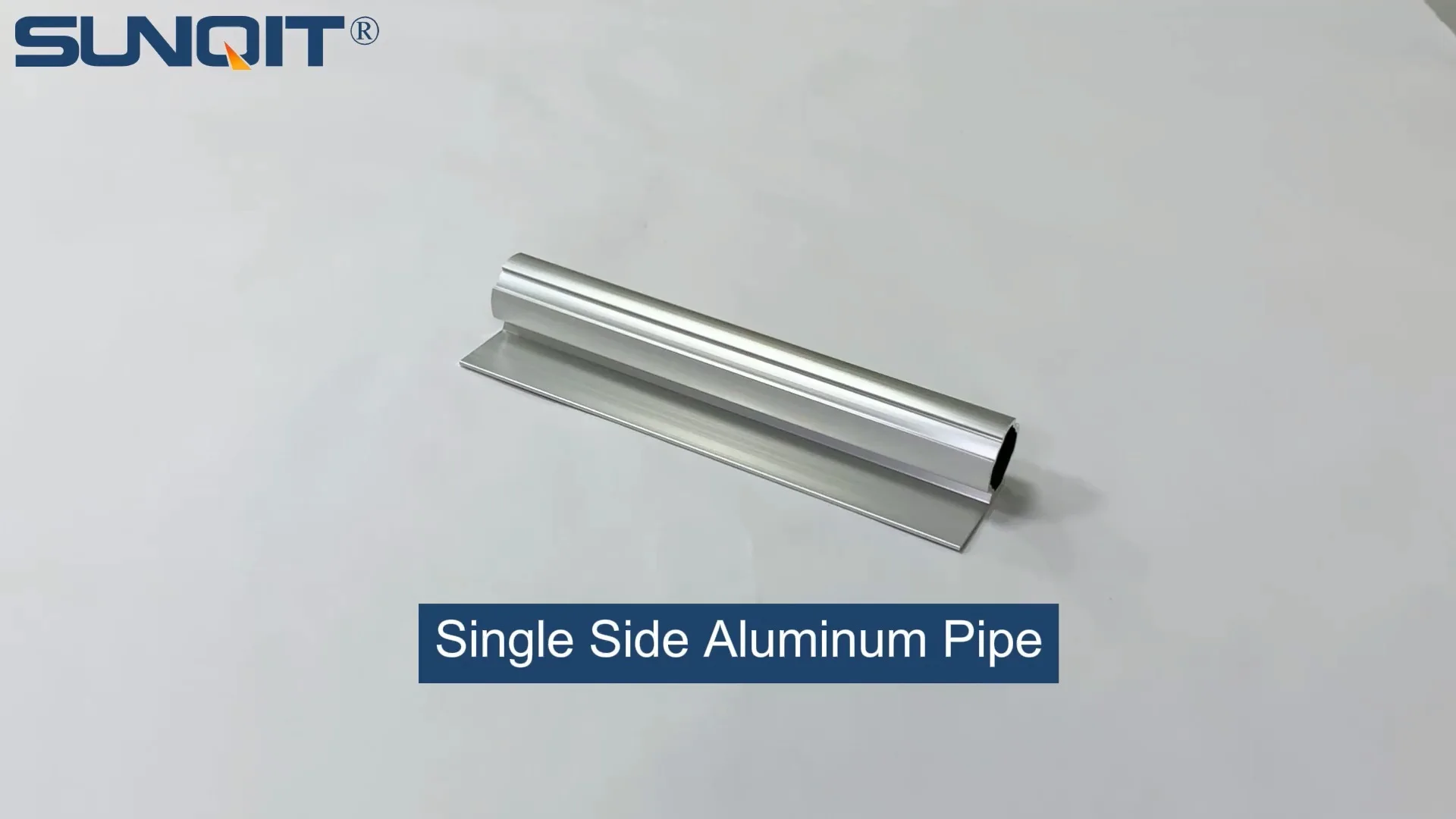
Single Side Aluminum Pipe
The single-sided plane can be installed with a back-mounted material box, and can also be used as a sidewall or partition.
In the medical manufacturing world, precision isn't just a goal—it's a lifeline. Every tool, implant, and device that leaves a production line carries the weight of patient safety, regulatory compliance, and the reputation of the brand behind it. Nowhere is this pressure more tangible than on sterile assembly lines, where even the smallest flaw or contamination risk can have devastating consequences. Over the years, manufacturers have searched for solutions that balance sterility, flexibility, and durability. Enter the single side aluminum pipe —a unassuming yet transformative component that's quietly revolutionizing how medical teams build, adapt, and maintain their critical workspaces.
This article dives into the unique role of single side aluminum pipe in sterile medical assembly lines. We'll explore why traditional materials often fall short, how this specialized aluminum solution addresses industry-specific challenges, and real-world ways it integrates with systems like lean system principles and esd workstation setups. By the end, you'll understand why forward-thinking medical manufacturers are making the switch—and how it could benefit your operations, too.
The High Stakes of Sterile Assembly Lines in Medical Manufacturing
Let's start with the basics: What makes sterile assembly lines in medical manufacturing so uniquely demanding? Unlike automotive or consumer goods production, where minor defects might lead to product returns, medical lines produce items that directly interact with the human body. A contaminated surgical instrument, a misaligned implant component, or static damage to a pacemaker's circuit board isn't just a quality issue—it's a potential threat to a patient's life.
Regulatory bodies like the FDA (Food and Drug Administration) and ISO (International Organization for Standardization) enforce strict guidelines to mitigate these risks. ISO 13485, for example, mandates comprehensive quality management systems for medical devices, including rigorous controls over production environments. Sterile lines must adhere to Class 7 or higher cleanroom standards, meaning fewer than 352,000 particles (0.5μm or larger) per cubic meter of air. Even the materials used in the assembly line itself must meet criteria for non-toxicity, corrosion resistance, and ease of decontamination.
Beyond sterility, medical manufacturers face another challenge: constant change. The industry is driven by innovation—new devices, updated regulations, and shifting market demands mean production lines must adapt quickly. A line that assembles syringe components today might need to reconfigure for a new catheter design next month. Traditional rigid setups, built with fixed steel frames or welded structures, struggle to keep up. Reconfiguring these systems often requires downtime, specialized labor, and additional costs—all of which eat into already tight production schedules.
Then there's the issue of esd workstation requirements. Many medical devices, from insulin pumps to neurostimulation implants, rely on sensitive electronics. Electrostatic discharge (ESD) can damage these components, even if the damage isn't immediately visible. Assembly lines must therefore incorporate materials that dissipate static charges, preventing buildup that could harm delicate parts. Traditional materials like untreated steel or plastic often fail here, either conducting too much electricity or trapping charges that suddenly release.
Add in the need for durability—lines must withstand daily cleaning with harsh disinfectants, repeated handling, and the weight of specialized equipment—and it's clear: medical sterile assembly lines need a material that does more than just "work." They need a material that performs under pressure.
Why Traditional Materials Struggle in Sterile Medical Environments
For decades, manufacturers turned to two main materials for assembly line structures: steel and standard plastic. Both have their merits, but in the high-stakes world of medical sterility, their flaws become glaring.
Steel, for instance, is strong and durable—qualities that make it a staple in industrial settings. But in sterile environments, its Achilles' heel is corrosion. Even stainless steel, when exposed to frequent cleaning with alcohol, hydrogen peroxide, or other disinfectants, can develop micro-pitting over time. These tiny crevices become breeding grounds for bacteria, violating cleanroom standards and risking cross-contamination. Worse, steel is heavy. Reconfiguring a steel-framed workstation or flow rack requires multiple workers and specialized tools, leading to costly downtime during transitions.
Plastic, on the other hand, is lightweight and resistant to corrosion—but it lacks the structural integrity needed for heavy-duty medical equipment. A plastic shelving unit might sag under the weight of metal tooling or glassware, compromising stability. Many plastics also degrade when exposed to UV light or harsh chemicals, leading to brittleness or discoloration over time. And when it comes to ESD protection, most plastics are insulators, meaning they trap static charges rather than dissipate them—a non-starter for electronics-heavy medical devices.
Wood, once used in older facilities, is now largely banned in sterile environments due to its porous nature. It absorbs moisture, harbors mold, and cannot withstand repeated sanitization. Even aluminum, a material praised for its lightness and corrosion resistance, has historically had limitations. Standard aluminum pipes often lack the modularity needed for quick reconfigurations, requiring custom cuts or welding that disrupts production schedules.
This is where the single side aluminum pipe emerges as a game-changer. By combining the best traits of aluminum—corrosion resistance, lightweight, ESD compatibility—with a design tailored for medical needs, it addresses the gaps left by traditional materials. Let's take a closer look at what makes this component so special.

Single Side Aluminum Pipe: Design and Benefits for Sterile Lines
At first glance, a single side aluminum pipe might look like any other metal tube. But its magic lies in the details. Unlike standard aluminum pipes, which are smooth and uniform, the single side variant features a specialized extrusion: one side is flat and smooth, while the other incorporates a T-slot channel running the length of the pipe. This T-slot isn't just a design quirk—it's the key to its versatility in medical settings.
The smooth side is intentional. In sterile environments, every surface must be easy to clean. The flat, non-porous aluminum finish resists chemical damage from disinfectants, and its lack of crevices or joints means there's nowhere for bacteria or debris to hide. A quick wipe with a sanitizing cloth or spray is all it takes to maintain compliance with ISO 13485 standards—a far cry from steel, which often requires scrubbing to dislodge contaminants from weld seams or rust spots.
The T-slot, on the other hand, is where flexibility comes into play. This channel allows for the quick attachment of accessories—brackets, shelves, tool holders, or even flow rack components—using simple bolts or clips. No welding, no custom machining, no downtime. Need to add a new shelf for incoming components? Slide a bracket into the T-slot, tighten a screw, and you're done. Want to reposition a tool holder to reduce worker strain? Loosen the bolt, adjust, and retighten. This modularity aligns perfectly with lean system principles, where minimizing waste (including time wasted on reconfigurations) is paramount.
But the benefits don't stop there. Aluminum itself is naturally ESD-friendly. When treated with a conductive coating (a standard option for medical-grade single side pipes), it dissipates static charges, protecting sensitive electronics from damage. This makes it an ideal choice for esd workstation setups, where maintaining a controlled electrostatic environment is critical. Unlike plastic, which can generate static as components slide across it, aluminum's conductivity ensures charges are safely grounded before they can harm devices like pacemakers or surgical sensors.
Durability is another standout feature. Medical assembly lines operate around the clock, with components being moved, adjusted, and cleaned daily. Single side aluminum pipes are made from high-grade aluminum alloys (often 6063-T5, known for its strength and corrosion resistance), ensuring they can withstand the rigors of constant use. They're also lightweight—about one-third the weight of steel—making them easy to handle during reconfigurations without sacrificing stability. A typical 1-meter length of 28mm single side aluminum pipe weighs just 0.5kg, compared to 1.5kg for a steel pipe of the same size. This lightness reduces the risk of worker injury during setup and lowers shipping costs for replacement parts.
To put it simply: single side aluminum pipe isn't just a material upgrade—it's a workflow upgrade. It turns static, hard-to-maintain assembly lines into dynamic, adaptable workspaces that keep pace with the medical industry's ever-changing demands.

Real-World Integration: How Single Side Aluminum Pipe Works in Medical Lines
Theory is one thing, but seeing how single side aluminum pipe functions in actual medical settings brings its value into sharp focus. Let's walk through three common applications where this component shines: building modular workstations, creating flexible flow racks, and supporting ESD-sensitive production zones.
1. Modular Sterile Workstations
Imagine a team assembling surgical staplers—a process that requires precise alignment of tiny springs, blades, and plastic casings. The workstation must hold tools at ergonomic heights, provide easy access to component bins, and allow for quick adjustments if the stapler design is updated. With single side aluminum pipe, this becomes straightforward.
The base of the workstation is built using aluminum pipes connected via lightweight, corrosion-resistant joints (often made from aluminum or medical-grade plastic). The T-slots on the pipes allow workers to attach adjustable shelves for tools, tilt bins for components, and even LED task lights—all without drilling or welding. When the stapler design changes, the team can reposition the shelves or add new holders in minutes, rather than waiting for a contractor to modify a steel frame. And at the end of each shift, the smooth aluminum surfaces wipe clean with isopropyl alcohol, ensuring no residue builds up between production runs.
2. Dynamic Flow Racks for Component Transport
In larger medical facilities, components often need to move between workstations—think IV catheter parts traveling from molding to assembly, or implant screws being transported to packaging. Flow rack systems, which use gravity to slide components along roller tracks, are a staple here. But traditional steel flow racks are heavy, hard to reconfigure, and prone to rust in humid cleanroom environments.
Single side aluminum pipe transforms this. By using aluminum pipes as the rack's vertical supports and horizontal beams, manufacturers create flow racks that are both lightweight and sturdy. The T-slots allow for easy adjustment of roller track heights and angles, so different component sizes (from small syringes to larger implant trays) can be accommodated. For example, a pharmaceutical company producing insulin pens might need a flow rack with 10cm spacing between rollers for pen bodies, but switch to 5cm spacing when transitioning to smaller insulin cartridges. With aluminum pipes, this adjustment takes 30 minutes instead of 3 days (the time it would take to modify a steel rack).
Plus, aluminum's corrosion resistance ensures the flow rack remains clean and functional even in the temperature-controlled, high-humidity environments required for storing sensitive pharmaceuticals. No more scrubbing rust spots or replacing steel components that degrade after repeated cleaning.
3. ESD-Safe Production Zones
For electronics-heavy medical devices—like cardiac monitors or neurostimulators—ESD protection is non-negotiable. A single static discharge can fry a circuit board, rendering the device useless (and costing thousands in wasted materials). Single side aluminum pipe plays a critical role here by forming the backbone of esd workstation zones.
The pipes are grounded via conductive joints and connected to the facility's ESD protection system, ensuring any static charge on the surface is safely dissipated. Workstations built with these pipes can include additional ESD features, such as conductive matting on work surfaces (attached via T-slot clips) and grounding wristband hooks. Even the roller tracks on adjacent flow racks can be made ESD-safe by using aluminum pipes and conductive rollers, preventing charges from building up as components slide along the track.
One medical device manufacturer in California reported a 40% reduction in ESD-related component failures after switching to aluminum pipe-based workstations—a statistic that directly translates to fewer production delays and lower scrap costs.

Comparing Materials: Single Side Aluminum Pipe vs. Traditional Options
To fully appreciate the advantages of single side aluminum pipe, it helps to see how it stacks up against the materials it's replacing. The table below compares key features relevant to medical sterile assembly lines:
| Feature | Traditional Steel Pipe | Standard Plastic Pipe | Single Side Aluminum Pipe | Benefit for Sterile Lines |
|---|---|---|---|---|
| Sterility Maintenance | Prone to rust and pitting; hard to clean crevices | Non-porous but may degrade with harsh chemicals | Smooth, non-porous surface; resistant to disinfectants | Easier compliance with ISO 13485 cleanroom standards |
| Reconfigurability | Requires welding or custom cutting; slow adjustments | Limited strength; cannot support heavy accessories | T-slot design allows tool-free accessory attachment | Reduce downtime during line changes by 60-80% |
| ESD Compatibility | Conductive but heavy; prone to corrosion | Insulative; traps static charges | Conductive (with coating); dissipates static safely | Protects sensitive electronics from damage |
| Weight (per meter) | 1.5-2.0kg | 0.3-0.5kg (but low strength) | 0.5-0.8kg (high strength) | Easier handling; reduces worker injury risk |
| Long-Term Durability | Corrodes over time; requires repainting | Degrades with UV light and chemicals | Resistant to corrosion and chemical damage; 10+ year lifespan | Lower replacement costs; consistent performance |
The data speaks for itself: single side aluminum pipe outperforms traditional materials across the board when it comes to the unique demands of medical sterile assembly lines. It's not just a "better" option—it's often the only option that truly aligns with the industry's need for sterility, flexibility, and reliability.
The Future of Medical Assembly: Why Single Side Aluminum Pipe is Here to Stay
As the medical industry continues to evolve—with faster product cycles, stricter regulations, and a growing focus on sustainability—single side aluminum pipe is poised to play an even larger role. Here's why this component isn't just a trend, but a long-term solution:
First, sustainability is becoming a priority for medical manufacturers. Aluminum is 100% recyclable, and recycling it requires just 5% of the energy needed to produce new aluminum. This aligns with corporate social responsibility goals and helps companies meet increasingly strict environmental regulations. Unlike steel, which often ends up in landfills after use, aluminum pipes can be melted down and repurposed, reducing waste and lowering the carbon footprint of production lines.
Second, the rise of personalized medicine is driving demand for smaller batch sizes and more frequent line changes. A facility that once produced 100,000 identical pacemakers might now produce 10,000 units of five different models, each tailored to specific patient needs. Single side aluminum pipe's modularity makes it easy to scale production up or down, ensuring manufacturers can pivot quickly without sacrificing quality.
Finally, advancements in aluminum extrusion technology are making single side pipes even more versatile. New designs now include integrated cable management channels (for routing wires in ESD zones) and antimicrobial coatings (to further reduce contamination risks). These innovations ensure the component will keep pace with emerging challenges, from new disinfectant protocols to the rise of AI-driven, sensor-equipped assembly lines.
In short, single side aluminum pipe isn't just solving today's problems—it's ready for tomorrow's, too.
Conclusion: Investing in the Future of Sterile Medical Manufacturing
The medical industry doesn't just build products—it builds trust. Every sterile assembly line, every workstation, and every component on that line contributes to the trust patients and healthcare providers place in medical devices. Single side aluminum pipe, with its focus on sterility, flexibility, and durability, is more than a tool for efficiency—it's a tool for upholding that trust.
Whether you're assembling life-saving implants, precision surgical tools, or cutting-edge diagnostic devices, the right materials matter. Traditional options like steel and plastic have served their time, but they can't keep up with the demands of modern medical manufacturing. Single side aluminum pipe, by contrast, is designed for the realities of today's cleanrooms: the need to adapt quickly, maintain strict sterility, and protect sensitive components.
So, if you're looking to upgrade your sterile assembly line, consider this: the best investments in medical manufacturing aren't just about the present—they're about ensuring you can meet tomorrow's challenges with confidence. Single side aluminum pipe isn't just a material choice; it's a commitment to patient safety, operational excellence, and long-term success.
In the end, that's the true measure of innovation in healthcare: solutions that make the complex simple, the static flexible, and the risky—safe.