- Company Articles
- Products and Technology
- Product knowledge
- Medical Lean Stations: Turning Angle Code 2020 for Ergonomic Design

Medical Lean Stations: Turning Angle Code 2020 for Ergonomic Design
Related Product
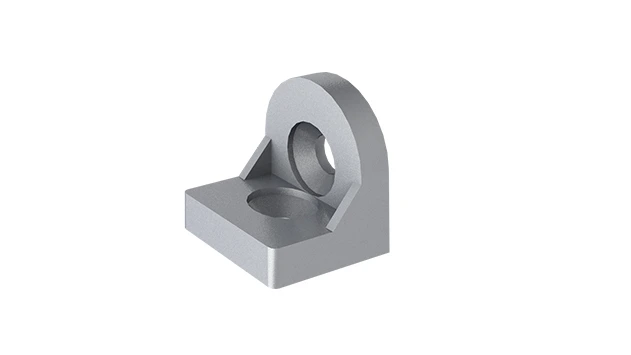
Urning Angle Code 2020
The turning angle aluminum profile connector provides a 90 degree hidden corner connection. 2020 it is means this size is used for 20 series aluminum profile.The corner code comes with set screws that allow for quick, easy connections.
Walk into any busy hospital or clinic, and you'll notice something critical: the people behind the scenes—nurses, lab technicians, pharmacists—spend hours standing, bending, reaching, and repeating precise movements. Their work isn't just about skill; it's about endurance. A poorly designed workspace can turn a manageable shift into a day of silent strain, leading to fatigue, errors, or even long-term injuries. That's where lean system principles meet ergonomics, and why components like the Turning Angle Code 2020 are becoming game-changers in medical facility design.
In healthcare, every second counts, but so does every movement. Lean systems, originally born from manufacturing, focus on eliminating waste—whether that's wasted time, space, or effort. When applied to medical workstations, this means creating setups that adapt to the human body, not the other way around. And at the heart of this adaptation? Modular, flexible components that let facilities build workspaces as unique as the tasks they support. Today, we're diving into how one such component—the Turning Angle Code 2020—paired with aluminum profile and smart workbench design, is redefining what "ergonomic" really means for medical professionals.
Why Lean Systems Matter in Healthcare (Yes, Even More Than You Think)
Let's start with the basics: What makes a "lean" medical workstation different from a standard one? In short, it's about intentionality. Traditional workstations are often one-size-fits-all—built to a generic height, with fixed shelves and little room for adjustment. But in healthcare, tasks vary wildly. A pharmacist filling prescriptions needs easy access to medications at eye level; a lab tech processing samples might need a surface that tilts to reduce neck strain; a nurse prepping injections needs storage that's within arm's reach, not a step away.
Lean systems solve this by prioritizing three things: flow , flexibility , and fit . Flow ensures tools and materials move seamlessly through the workspace, cutting down on unnecessary steps. Flexibility means the station can adapt as tasks change—maybe adding a shelf for new equipment or lowering a surface for a shorter staff member. Fit? That's where ergonomics takes center stage. A workstation that "fits" reduces physical stress, which in turn boosts focus, speed, and safety.
Here's the kicker: Studies show that ergonomic workstations in healthcare can reduce musculoskeletal disorders (MSDs) by up to 40% (source: National Institute for Occupational Safety and Health). For a field where MSDs are the leading cause of lost workdays, that's not just a nice-to-have—it's a necessity. And lean systems are the bridge between "we need to fix this" and "we can fix this, affordably and efficiently."
The Ergonomic Challenge: When "Good Enough" Hurts
Let's paint a common scenario. Imagine a lab workstation in a busy hospital. The countertop is 36 inches high—standard for most offices. But the tech using it is 5'2", so she spends her shift leaning forward, her elbows bent at an awkward angle, just to reach the centrifuge. The shelves above are packed with supplies, so she has to stretch on her tiptoes to grab reagents, straining her lower back. At the end of her 12-hour shift, her shoulders ache, her neck is stiff, and she's mentally drained—not because of the work itself, but because her body has been fighting the workstation all day.
This isn't an exaggeration; it's the reality for many healthcare workers. The problem isn't just height, either. It's the angle of the surface, the placement of tools, the rigidity of the structure. Even small issues add up. A 2021 survey by the American Nurses Association found that 78% of nurses reported physical discomfort related to their workstations, with 31% saying it affected their ability to care for patients.
So, what's the solution? We can't rebuild every hospital overnight, but we can rethink the building blocks of workstations. Enter modular components—like aluminum profiles, adjustable joints, and specialized connectors—that let facilities create custom setups without the custom price tag. And that's where the Turning Angle Code 2020 comes in.

Turning Angle Code 2020: The "Adjustable Joint" That Changes Everything
If aluminum profiles are the "bones" of a lean workstation, then connectors are the "joints." And the Turning Angle Code 2020 is a joint with a superpower: it bends, locks, and adapts. Let's break it down. Most traditional workstation joints are fixed—they connect two pieces at a 90-degree angle and stay there. But the Turning Angle Code 2020? It's a small, unassuming component that lets aluminum profiles pivot up to 180 degrees, locking into place at any angle. Think of it like a hinge with precision control.
Why does this matter in medical settings? Let's take a workbench as an example. A standard workbench has a flat surface, but what if a lab tech needs to write on a tilted surface to avoid hunching? With the Turning Angle Code 2020, the workbench top can pivot to a 15-degree angle, then lock. Or consider a medication cart: Nurses often have to reach across fixed shelves, twisting their torsos. With adjustable joints, shelves can angle slightly toward the user, bringing supplies closer without the stretch.
But the Turning Angle Code 2020 isn't just about movement—it's about stability. In healthcare, you can't have wobbly surfaces. This connector locks into place with a simple twist, ensuring the workstation stays rigid even when loaded with heavy equipment. It's durable too, made from high-grade aluminum that resists corrosion (critical in environments where cleaning with harsh disinfectants is daily routine).

Aluminum Profile: The Unsung Hero of Lean Medical Workstations
You can't talk about the Turning Angle Code 2020 without talking about its partner in crime: aluminum profile . Aluminum is everywhere in healthcare, but not all aluminum is created equal. The profiles used in lean systems are lightweight but strong, with a T-slot design that makes attaching connectors, shelves, or accessories a breeze—no welding or drilling required. That T-slot is key: It means you can add a new component in minutes, not days, as needs change.
Compare that to traditional steel workstations. Steel is heavy, hard to modify, and prone to rust if not properly coated. Aluminum? It's 30% lighter than steel, so even large workstations can be moved (with casters, of course) if the floor plan shifts. It's also naturally resistant to corrosion, which is a big win in areas like operating rooms or labs where spills are common. And because it's modular, you're not stuck with a workstation that becomes obsolete when new equipment arrives. Need to add a monitor arm? Screw a bracket into the T-slot. Want to lower a shelf? Loosen a few bolts, slide it down, and retighten. Done.
Another bonus: Aluminum profiles are customizable in length and color. That might seem trivial, but in healthcare, color-coding can reduce errors. A red profile could mark a workstation for infectious materials; a blue one for sterile supplies. It's a small detail, but small details add up to smoother, safer workflows.
From Concept to Clinic: What a Lean Medical Workstation Actually Looks Like
Let's put this all together with a real-world example. Meet Dr. Lina Patel, a clinical lab manager at a mid-sized hospital. A year ago, her lab's workstations were a mix of old wooden counters and metal shelving units—sturdy, but unforgiving. Techs complained about back pain from bending to use microscopes; supplies were scattered across multiple surfaces, leading to wasted time searching for reagents. Dr. Patel decided to invest in lean workstations, and here's what changed:
- Adjustable-height workbenches: Using aluminum profiles and the Turning Angle Code 2020, each workbench surface now lowers or raises between 30 and 40 inches. Techs adjust it to their height in seconds, cutting down on neck and shoulder strain.
- Tilted reagent shelves: Shelves under the workbench angle upward at 15 degrees (thanks to adjustable joints), so labels are easier to read without tilting the head down. "It sounds small," Dr. Patel says, "but we've had zero complaints about eye strain since."
- Mobile carts with rotating tops: Sample transport carts now have tops that swivel 360 degrees, so techs can pass samples to each other without turning the entire cart. The cart's frame? Aluminum profiles, so it's light enough for one person to move, even fully loaded.
The result? Dr. Patel's team reported a 25% drop in "task time" (the time it takes to complete a standard sample test) and a 30% reduction in self-reported discomfort. "We didn't just build workstations," she says. "We built spaces that respect how our bodies actually work."
Traditional vs. Lean: A Side-by-Side Comparison
| Feature | Traditional Medical Workstation | Lean Medical Workstation (with Aluminum Profile & Turning Angle Code 2020) |
|---|---|---|
| Adjustability | Fixed height and angle; no customization. | Height-adjustable surfaces; angles via Turning Angle Code 2020; modular shelves. |
| Durability | Steel or wood; prone to rust (steel) or water damage (wood). | Aluminum profile; corrosion-resistant, easy to disinfect. |
| Setup/Modification Time | Requires tools, welding, or professional installation; days to modify. | Tool-free assembly via T-slot; modifications take minutes (no welding). |
| Ergonomic Focus | Generic design; prioritizes cost over user fit. | Built for adaptability; reduces reaching, bending, and twisting. |
| Long-Term Value | Becomes obsolete as needs change; requires full replacement. | Modular components; update or repurpose instead of replacing. |
Beyond the Workbench: The Ripple Effects of Ergonomic Lean Systems
The benefits of lean medical workstations go beyond happier, healthier staff (though that's reason enough). They also impact patient care. When staff are less fatigued, they're more alert—meaning fewer mistakes in medication dosages, lab results, or treatment plans. When workflows are smoother, patients spend less time waiting. And when facilities can adapt workstations quickly, they can respond faster to crises—like adding extra workbenches during a flu surge or reconfiguring a lab to process COVID tests overnight.
There's also a financial angle. Lean systems might have a higher upfront cost than basic workstations, but they pay for themselves. Reduced staff turnover (since employees are less likely to leave due to injury), fewer workers' compensation claims, and lower replacement costs (thanks to modularity) add up. One study by the Healthcare Information and Management Systems Society (HIMSS) found that hospitals using lean ergonomic workstations saw a 19% return on investment within two years.
What's Next? The Future of Lean Medical Workstations
As technology advances, so will lean systems. We're already seeing smart features integrated into aluminum profile workstations—like sensors that track how often certain tools are used (to optimize shelf placement) or surfaces that adjust automatically based on a user's height (via facial recognition or ID scans). The Turning Angle Code 2020 might even get "smarter," with built-in memory settings that let staff save their preferred angles with the push of a button.
But at the core, the goal will stay the same: putting people first. Healthcare is a human-centered field, and its workspaces should be too. Whether it's a small clinic or a large hospital, the right lean system—with components like adjustable joints, aluminum profiles, and adaptable workbenches—can turn a stressful environment into one that supports, rather than hinders, the amazing work medical professionals do every day.
Final Thoughts: It's Time to Stop Compromising on Workspace Design
At the end of the day, a medical workstation isn't just a piece of furniture. It's a tool—one that can either empower staff to do their best work or silently chip away at their well-being. Lean systems, paired with components like the Turning Angle Code 2020 and aluminum profile, aren't about "trendy" design; they're about respect—for the bodies that heal, the minds that problem-solve, and the patients who depend on both.
So, to all the facility managers, hospital admins, and healthcare leaders reading this: The next time you walk through your lab, pharmacy, or nurse's station, take a closer look. Are the workstations built for the people using them, or are the people adapting to the workstations? If it's the latter, it might be time to explore lean. Your staff (and your patients) will thank you.