- Company Articles
- Products and Technology
- Product knowledge
- Medical Storage Racks: Stability with Five Way Straight Lean Pipe Joints

Medical Storage Racks: Stability with Five Way Straight Lean Pipe Joints
Related Product
Five Way Straight Lean Pipe Joint
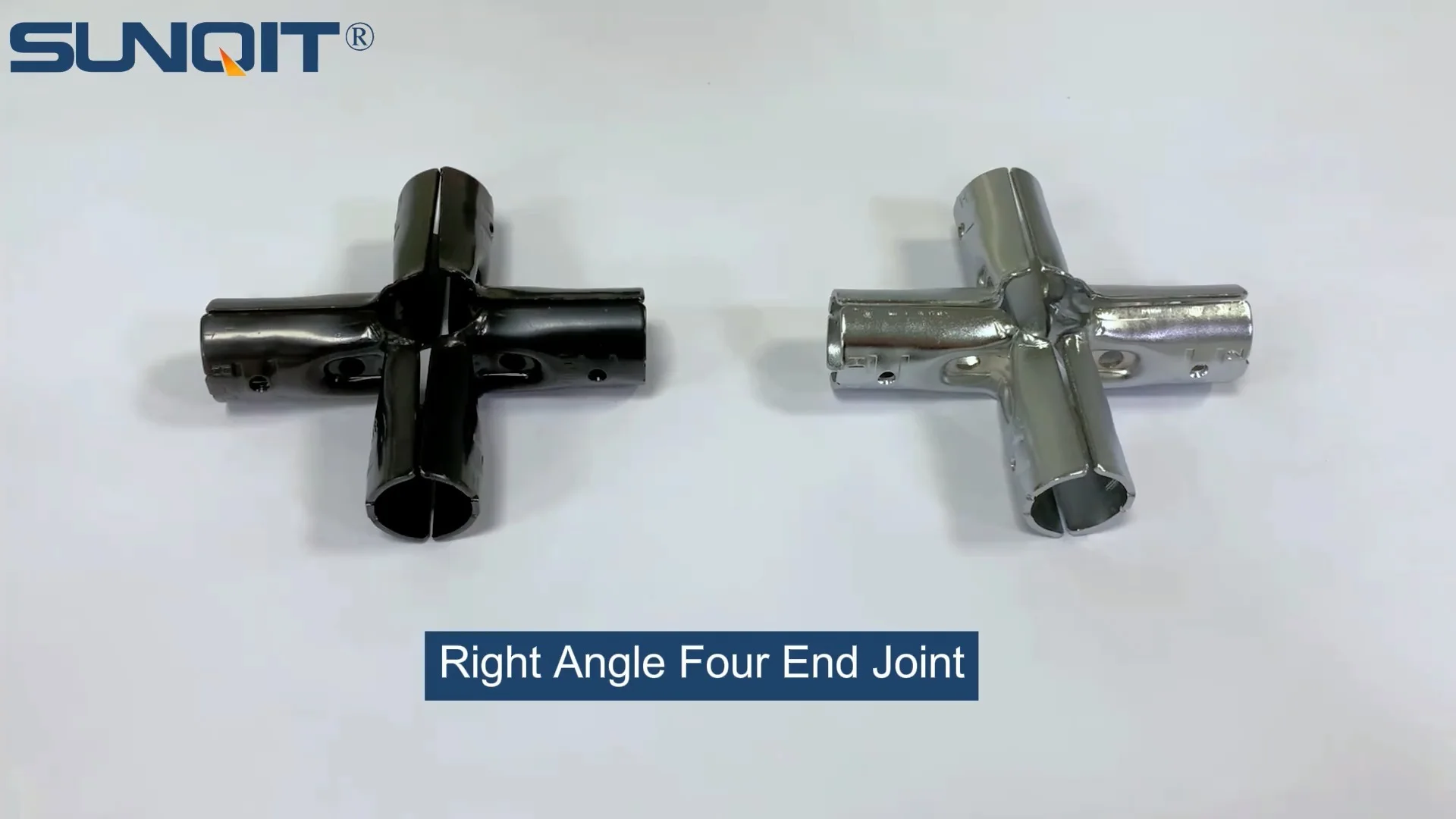
Five way straight lean pipe joint, for 5 pcs 28mm lean pipe connect in straight angle,which used widely in workbench, flow rack, hand trolley frame connection.
Introduction: The Unsung Heroes of Medical Supply Management
In the fast-paced world of healthcare, every second counts. Nurses rushing to retrieve surgical tools, technicians organizing lab samples, pharmacists restocking medications—none of these critical tasks would be possible without reliable storage systems. Medical storage racks aren't just metal and pipes; they're the backbone of operational efficiency, ensuring that life-saving supplies are accessible, secure, and in the right place when needed. But what makes a medical storage rack truly trustworthy? The answer lies in the details: the materials, the design, and most importantly, the connections that hold it all together. Today, we're diving into one such detail that's making waves in healthcare facilities worldwide: the five way straight lean pipe joint chrome, and how it's redefining stability in medical storage.
Walk into any hospital, clinic, or lab, and you'll notice a common challenge: space is limited, and demands are ever-changing. A storage system that worked for last month's flu season might not cut it during a vaccine rollout. That's where flexibility meets reliability. Lean pipe systems, originally born from manufacturing principles, have found their way into healthcare, offering modular solutions that adapt to shifting needs. And at the heart of these systems are the joints—the unsung heroes that turn simple pipes into robust structures. Among these, the five way straight lean pipe joint stands out for its ability to create multi-directional stability, a feature that's non-negotiable when storing fragile glass vials, heavy equipment, or temperature-sensitive medications.
The Critical Role of Stability in Medical Storage
Stability in medical storage isn't just about preventing a rack from tipping over—it's about protecting patient safety. Imagine a scenario where a storage rack holding sterile surgical instruments wobbles during a routine restock, causing tools to clatter to the floor. Not only does this delay procedures, but it also introduces contamination risks. Or consider a pharmacy shelf that sags under the weight of medication bottles, leading to expired drugs being misplaced or crushed. These aren't just inconveniences; they're potential threats to care quality.
Traditional storage systems often rely on fixed, welded frames that are sturdy but rigid. If a facility needs to add a shelf or reconfigure a rack, it means calling in contractors, downtime, and added costs. Lean pipe systems, however, solve this problem with modularity. Using pipes and joints, these systems can be assembled, disassembled, and reconfigured in hours, not days. But modularity without stability is a recipe for disaster. That's where the lean pipe joint becomes critical. A poorly designed joint can turn a flexible system into a shaky liability, compromising both safety and efficiency.
Medical environments also demand cleanliness. Stainless steel and chrome surfaces are preferred because they resist corrosion, are easy to sanitize, and stand up to frequent cleaning with harsh disinfectants. This is why the five way straight lean pipe joint chrome isn't just a technical choice—it's a practical one. The chrome coating adds a layer of protection against rust and bacteria, ensuring that the joints, which are often the hardest parts to clean, remain hygienic even in high-traffic areas.

Understanding Lean Pipe Systems: From Factory Floors to Hospital Wards
To appreciate the five way straight lean pipe joint, we first need to understand the basics of lean pipe systems. Also known as "Kanban racks" or "flexible pipe systems," these setups consist of pipes (often aluminum or steel) and joints that connect them, allowing users to build custom structures like racks, workbenches, and trolleys. The beauty lies in their simplicity: no welding, no specialized tools—just pipes, joints, and a few hand tools to tighten everything into place.
In manufacturing, lean pipe systems are used to create assembly lines that adapt to product changes. In healthcare, their application is similar but with higher stakes. A workbench in a lab might need to hold microscopes and centrifuges one day and be reconfigured into a mobile cart for specimen transport the next. A material rack in a storage room might start with three shelves and expand to five as supplies increase. This adaptability is why lean pipe systems have become a favorite among hospital administrators and facility managers.
At the core of every lean pipe system is the lean pipe joint. Joints come in various designs: two-way, three-way, four-way, and yes, five-way. Each serves a purpose. Two-way joints connect straight sections, three-way joints create corners, and four-way joints add crossbars. But when you need to build a structure that branches out in multiple directions—say, a multi-tiered rack with shelves extending left, right, and upward—the five way straight lean pipe joint becomes indispensable. It allows for five pipes to connect at a single point, distributing weight evenly and reducing stress on individual connections.

Five Way Straight Lean Pipe Joint Chrome: Engineering for Multi-Directional Strength
Let's get technical, but keep it simple: what makes the five way straight lean pipe joint chrome so special? Picture a standard three-way joint: it has three openings, each at 90-degree angles, allowing pipes to connect in the x, y, and z axes. Now, imagine adding two more openings along the straight axis—suddenly, you can connect pipes forward, backward, left, right, and upward from a single joint. This isn't just about adding more pipes; it's about creating a "hub" of stability. In medical storage racks, this means shelves can extend in multiple directions without compromising the structure's integrity.
The "chrome" in five way straight lean pipe joint chrome is more than a cosmetic choice. Chrome plating involves depositing a thin layer of chromium onto the joint's surface, which offers two key benefits: corrosion resistance and ease of cleaning. In medical settings, where racks are regularly wiped down with disinfectants containing alcohol or bleach, uncoated metal joints would quickly rust or degrade. Chrome acts as a barrier, ensuring the joint remains durable even after years of heavy use. Additionally, chrome has a smooth, non-porous surface that doesn't trap dirt or bacteria—critical for maintaining sterile environments like operating room supply closets or lab storage areas.
Another advantage of the five way joint is its load distribution. When you hang a shelf from a single three-way joint, the weight is concentrated on that one connection. With a five way joint, the weight is spread across five pipes, reducing the strain on any single point. This is especially important for medical storage, where racks often hold heavy items: think 50-pound boxes of gloves, stacks of surgical drapes, or cases of IV fluids. A joint that can't handle the load isn't just a failure of the rack—it's a safety hazard.
| Joint Type | Number of Connections | Best For | Stability Rating (1-5) | Common Use in Healthcare |
|---|---|---|---|---|
| Two Way Lean Pipe Joint | 2 | Straight sections (e.g., vertical supports) | 3 | Simple, single-shelf racks |
| Three Way Lean Pipe Joint | 3 | Corner connections (e.g., L-shaped shelves) | 4 | Basic multi-tiered racks |
| Five Way Straight Lean Pipe Joint Chrome | 5 | Multi-directional structures (e.g., multi-shelf racks with crossbars) | 5 | Heavy-duty medical storage, lab workbenches, flow racks |
As the table shows, the five way joint outperforms its counterparts in stability, making it ideal for the demanding needs of healthcare storage. But it's not just about strength—it's about versatility. A single five way joint can replace multiple smaller joints, reducing the number of connections in a structure and minimizing weak points. This simplicity also speeds up assembly; instead of fumbling with multiple three-way joints to create a crossbar, a five way joint does the job in one step.

Aluminum Profile: The Perfect Partner for Lean Pipe Joints
A joint is only as good as the pipe it connects. That's why many healthcare facilities are pairing five way straight lean pipe joints with aluminum profile—a material that offers the best of both worlds: strength and lightweight flexibility. Aluminum is corrosion-resistant by nature, making it a great fit for medical environments where moisture (from sterilization processes or spills) is a constant concern. Unlike steel, it doesn't rust, and it's significantly lighter, which makes assembling and reconfiguring racks easier for staff (no need for heavy lifting equipment).
Aluminum profile, often referred to as "extruded aluminum," comes in standardized shapes with grooves (called T-slots) along the sides. These T-slots allow for easy attachment of shelves, hooks, and accessories without drilling or welding. Imagine a storage rack where you can slide a new shelf into place and secure it with a simple bolt—no tools required beyond a wrench. That's the flexibility aluminum profile brings to lean pipe systems. When combined with five way joints, it creates a structure that's both rigid enough to hold heavy loads and adaptable enough to change with the facility's needs.
Another benefit of aluminum profile is its compatibility with other lean pipe accessories. From roller tracks (used in flow racks for easy supply movement) to caster wheels (for mobile carts), aluminum pipes work seamlessly with the same joints and connectors as traditional steel lean pipes. This means healthcare facilities don't have to overhaul their entire storage system to upgrade—they can mix and match aluminum and steel components as needed. For example, a lab might use aluminum profile for upper shelves (to reduce weight) and steel pipes for lower shelves (to handle heavier equipment), all connected with five way joints for uniform stability.
Flow Racks: Streamlining Supply Access with Stable Lean Pipe Systems
Let's shift from static storage to dynamic movement: flow racks. These are the sloped racks you've probably seen in pharmacies or hospital supply rooms, where boxes slide forward as the front one is removed—first in, first out (FIFO) at its finest. Flow racks are game-changers for inventory management, ensuring that older supplies are used before they expire. But for flow racks to work, they need a stable base that can handle constant motion: boxes sliding, staff pulling and pushing, and the occasional accidental bump.
This is where five way joints and aluminum profile shine. A typical flow rack has multiple levels, each with roller tracks (another key lean pipe accessory) that allow supplies to glide. The frame of the rack must support the weight of dozens of boxes while maintaining a consistent slope. Five way joints are used at the corners and intersections of the frame, distributing the weight of the roller tracks and supplies across the entire structure. Without a stable joint, the rack could warp over time, causing boxes to get stuck or, worse, the entire system to collapse.
Take a hospital pharmacy, for example. A flow rack holding oral medications might have 10 levels, each with 20 slots for different drug bottles. The total weight could easily exceed 300 pounds. With five way joints connecting the vertical supports to the horizontal crossbars, the weight is spread evenly, preventing any single section from buckling. Add aluminum profile into the mix, and the rack becomes lightweight enough to move (with casters) but strong enough to stay stable during use. It's a balance that's hard to achieve with traditional wooden or welded steel racks.
Roller tracks, often made of plastic or aluminum, are another critical component. They need to be securely attached to the rack's frame to prevent shifting. Here, the T-slots in aluminum profile come into play: roller track brackets slide into the slots and lock into place, creating a tight connection that won't loosen over time. When paired with five way joints, which keep the frame square and level, roller tracks maintain their slope, ensuring smooth, consistent movement of supplies. No more jamming, no more boxes getting stuck halfway—just reliable access when staff need it most.
Real-World Applications: How Hospitals Are Using Five Way Joints Today
Let's hear from the frontlines. Take City General Hospital, a 300-bed facility in the Midwest that recently upgraded its surgical supply storage room. Previously, they used fixed steel racks that were over 10 years old. The racks were sturdy but inflexible—adding a new shelf required a maintenance crew and a half-day of downtime. Worse, the welded joints were starting to rust in spots, despite regular cleaning. The hospital's materials manager, Sarah, knew they needed a change.
Sarah's team opted for a lean pipe system with five way straight lean pipe joint chrome and aluminum profile. The result? A storage room that can be reconfigured in under two hours. "We had a surge in orthopedic surgeries last quarter, so we needed more space for implants and tools," she explains. "With the old racks, we would've had to rent temporary storage. Now, we just added two new shelves using five way joints—no contractors, no downtime. And the chrome joints wipe clean so easily; our infection control team loves them."
Another example: Community Clinic, a small urgent care center with limited storage space. They needed a mobile workbench that could serve as both a supply cart and a medication prep station. Using aluminum profile, five way joints, and caster wheels, they built a cart with shelves on three sides (connected via five way joints for stability) and a flat work surface on top. "It's like having a rolling storage room," says head nurse Mike. "We take it to exam rooms during flu season, and when things slow down, we fold it up and tuck it away. The five way joints make sure it doesn't wobble, even when we're rolling it over uneven floors."
Maintenance and Longevity: Keeping Lean Pipe Systems Stable for Years
Even the best-designed systems need care. The good news is that lean pipe systems with five way joints are low-maintenance compared to traditional storage racks. Here's how healthcare facilities can ensure their systems stay stable for years:
- Regular Inspections: Check joints for tightness every few months. Over time, vibrations from daily use can loosen bolts. A quick tightening with a wrench is usually all it takes to prevent wobbling.
- Cleaning Protocols: Wipe chrome joints with a mild detergent and water; avoid abrasive cleaners that can scratch the plating. For aluminum profile, a damp cloth is usually sufficient—its natural oxide layer resists stains.
- Weight Limits: Even with five way joints, every rack has a maximum load capacity. Posting weight limits and training staff to respect them prevents overloading and structural stress.
- Accessory Care: Roller tracks can accumulate dust, which slows down supply movement. Vacuum or wipe them monthly to keep things sliding smoothly.
The longevity of lean pipe systems is another selling point. A well-maintained system with five way joints and aluminum profile can last 10+ years, compared to 5-7 years for traditional welded racks. When a component does wear out (say, a caster wheel or a roller track), it can be replaced individually—no need to buy a whole new rack. This not only saves money but also reduces waste, aligning with the sustainability goals many healthcare facilities are now prioritizing.
Conclusion: Stability That Supports Patient Care
At the end of the day, medical storage racks aren't just about holding supplies—they're about supporting the people who save lives. A nurse shouldn't have to worry if a shelf will hold when she grabs a defibrillator. A pharmacist shouldn't stress about expired medications because a flow rack jammed. These are the moments where stability, flexibility, and reliability matter most.
The five way straight lean pipe joint chrome, paired with aluminum profile and accessories like roller tracks, is more than a storage solution—it's a commitment to better care. It's the difference between a facility that reacts to chaos and one that thrives in it. As healthcare continues to evolve, with new technologies, new treatments, and new challenges, the storage systems that support it must evolve too. Lean pipe systems, with their focus on adaptability and stability, are leading that evolution.
So the next time you walk into a hospital supply room, take a closer look at the racks. Chances are, you'll spot those five way joints—small, unassuming, but working tirelessly to keep things running smoothly. Because in healthcare, the smallest details often make the biggest difference.