- Company Articles
- Products and Technology
- Application Cases
- Medical Supply Chains: 40 Steel Wheel Roller Track Applications

Medical Supply Chains: 40 Steel Wheel Roller Track Applications
Related Product
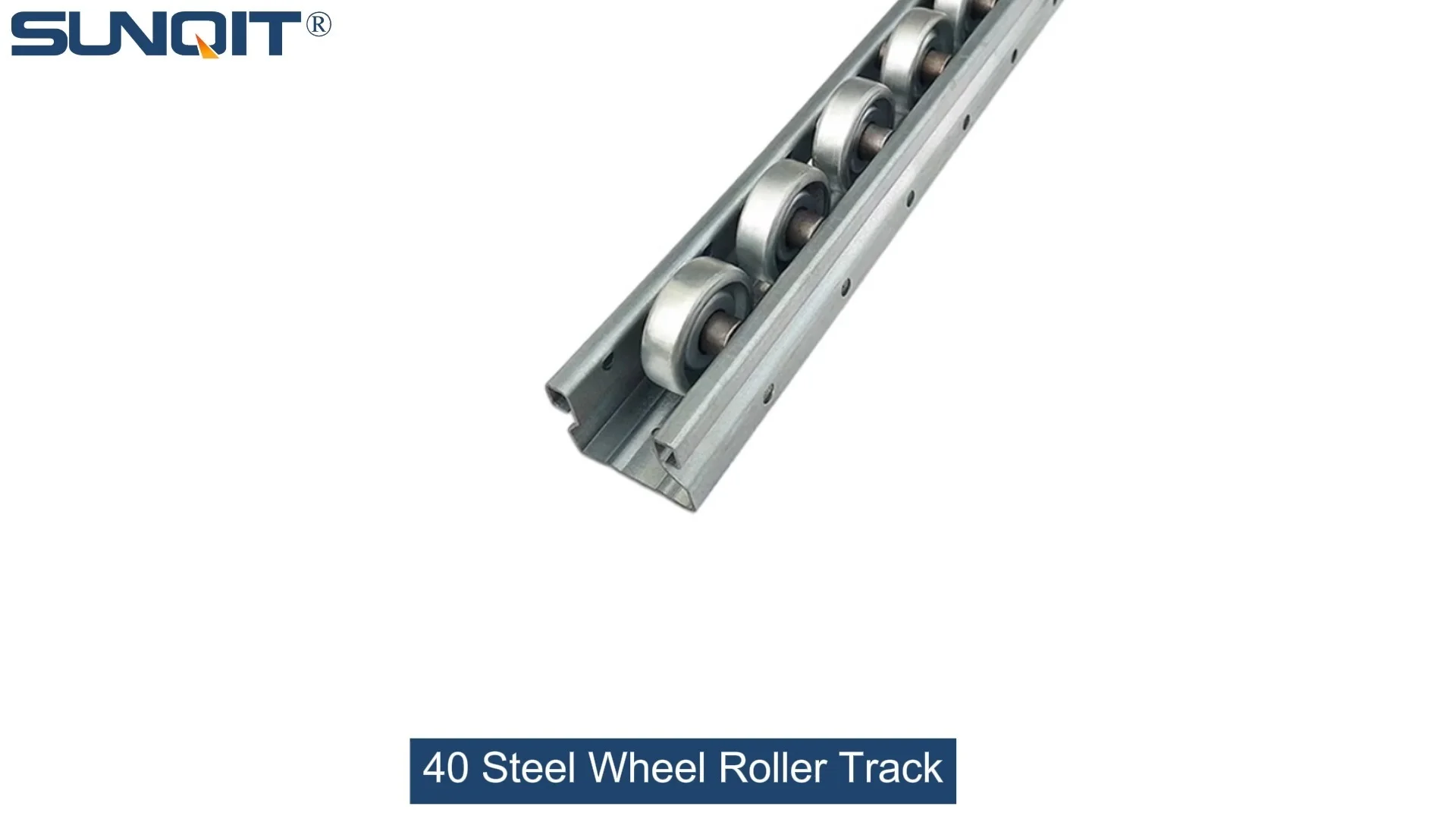
40 Steel Wheel Roller Track
Heavy duty steel wheel roller track with cylindrical steel rollers for use in processing, logistics and materials handling operations. Ideal for transporting goods quickly and easily as well as for installing on shelving to aid in picking operations.
How Flexible Conveyance Solutions Are Transforming Healthcare Logistics
The Critical Role of Medical Supply Chains
Every second counts in healthcare. Whether it's a hospital pharmacy rushing to fill a life-saving prescription, a surgical team prepping for an emergency procedure, or a lab technician transporting sensitive samples, the efficiency and reliability of medical supply chains directly impact patient outcomes. But behind the scenes, these supply chains face unique challenges: strict regulatory requirements, the need for contamination-free handling, precise inventory management, and the pressure to reduce errors—all while keeping costs in check.
In recent years, the demand for more agile, adaptable logistics solutions in healthcare has grown exponentially. Traditional rigid conveyor systems or manual cart transport often fall short, struggling with frequent layout changes, specialized equipment needs, or the inability to maintain sterile conditions. This is where flexible material handling solutions, like the 40 Steel Wheel Roller Track, step in—offering a blend of durability, adaptability, and precision that's tailor-made for the complexities of medical supply chains.
Meet the 40 Steel Wheel Roller Track: A Workhorse for Medical Logistics
At first glance, a roller track might seem like a simple piece of equipment, but the 40 Steel Wheel Roller Track is engineered with the unique demands of medical environments in mind. Let's break down what makes it stand out:
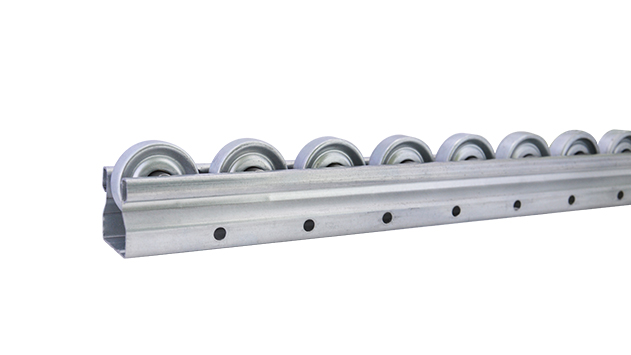
- Robust Construction: Built with high-grade steel wheels and aluminum pipe accessories, it's designed to withstand heavy loads—from bulk medication cartons to metal surgical instrument trays—without compromising on smooth movement.
- Flexible Design: Unlike fixed conveyor belts, this roller track uses modular aluminum pipe components that can be easily reconfigured. Need to adjust the path to accommodate a new storage rack? Add a curve to route supplies around a sterile zone? With simple connectors and lightweight aluminum pipes, rearranging the system takes hours, not days.
- Easy to Clean: Medical settings require strict hygiene standards. The 40 Steel Wheel Roller Track's smooth surfaces and minimal crevices prevent dust and debris buildup, making it compatible with regular sanitization protocols—critical for avoiding cross-contamination.
- Quiet Operation: In busy hospitals or labs, noise pollution can disrupt workflows and patient care. These roller tracks glide with minimal sound, ensuring operations stay efficient without adding to the chaos.
But how does this translate to real-world applications in medical supply chains? Let's dive into specific scenarios where the 40 Steel Wheel Roller Track is making a difference.
40 Steel Wheel Roller Track in Action: Key Applications
1. Pharmacy and Medication Distribution
Hospitals process hundreds of medication orders daily, and even a small delay can have serious consequences. Traditional methods—like pharmacy staff manually retrieving drugs from shelves and delivering them via carts—are prone to human error and inefficiencies. Enter the 40 Steel Wheel Roller Track.
By integrating roller tracks into pharmacy storage systems, medications can be routed directly from storage bins to packing stations with minimal manual intervention. For example, when a prescription is filled electronically, the corresponding medication bin is released onto the roller track, sliding smoothly to the pharmacist for verification. This not only cuts down on retrieval time but also reduces the risk of mix-ups, as each bin is barcoded and tracked throughout the process.
Plus, the track's gentle slope design ensures controlled movement—no more worrying about fragile vials or glass syringes tipping over during transport.
2. Sterile Processing Departments (SPDs)
Sterile Processing Departments are the backbone of infection control in healthcare. Here, used surgical instruments are cleaned, disinfected, sterilized, and repackaged before being sent back to operating rooms. The journey from "dirty" to "sterile" zones requires strict segregation, and the 40 Steel Wheel Roller Track is a game-changer for streamlining this workflow.
Imagine a typical SPD layout: contaminated instruments arrive at a decontamination station, are cleaned, then moved to sterilization autoclaves, and finally to a packaging area. With roller tracks connecting these zones, instruments can be transported on specialized trays that glide seamlessly from one station to the next. The track's aluminum pipe frame can be elevated to create separate levels—keeping clean and dirty trays apart—and its durability ensures it holds up to the weight of metal instruments without bending or warping.
One hospital in California reported a 30% reduction in instrument processing time after installing 40 Steel Wheel Roller Tracks, allowing their SPD team to handle 20% more instrument sets daily—critical during peak surgical seasons.
3. Laboratory Sample Transport
Clinical labs handle thousands of samples daily—blood, tissue, urine—each with strict time-sensitive testing windows. Delays or temperature fluctuations can render samples unusable, leading to retests and delayed diagnoses. The 40 Steel Wheel Roller Track addresses this by creating a controlled, efficient transport system between collection points and testing areas.
Lab technicians often use specialized coolers or insulated carriers for temperature-sensitive samples. Placing these carriers on roller tracks ensures they move quickly and steadily, reducing the risk of spills or temperature shifts caused by manual carrying. In larger labs, the track can be integrated with automated sorting systems, routing samples to the correct analyzer based on barcode scans—eliminating human error and speeding up turnaround times.
4. Medical Device Assembly Lines (with ESD Workstations)
Beyond logistics, medical supply chains also include the production of devices like pacemakers, MRI machines, and diagnostic tools. These products often contain sensitive electronic components that are vulnerable to electrostatic discharge (ESD), which can damage circuits and compromise functionality. This is where combining 40 Steel Wheel Roller Tracks with ESD workstations becomes invaluable.
An ESD workstation is designed to dissipate static electricity, protecting components during assembly. By connecting these workstations with 40 Steel Wheel Roller Tracks, manufacturers create a seamless workflow: components glide from storage via the roller track to the ESD workstation, where technicians assemble them, and the finished subassemblies move on to the next station—all without static buildup. The roller track's metal wheels and aluminum pipes are grounded as part of the ESD system, ensuring static charges are safely diverted away from sensitive parts.
This integration isn't just about protection; it's about efficiency. A leading medical device manufacturer in Texas noted a 15% decrease in component defects after implementing this setup, along with a 25% improvement in assembly line throughput—proving that lean solutions can enhance both quality and speed.
Case Study: How a Regional Hospital Optimized Their Supply Chain
Memorial Regional Hospital, a 500-bed facility in Florida, was struggling with inefficient medication distribution. Their pharmacy was located on the ground floor, while patient units spanned 10 floors, and manual cart deliveries often took 45 minutes or more—delaying critical medications for post-op patients.
The hospital's logistics team partnered with a lean solution provider to redesign their system. They installed 40 Steel Wheel Roller Tracks from the pharmacy to a central elevator, with branching tracks leading to packaging stations. Medication bins are now loaded onto the track, routed to the correct packaging station, and then sent to the elevator via the track—cutting delivery time to 15 minutes. The roller track's modular design also allowed them to add a dedicated lane for emergency "stat" orders, ensuring those medications bypass regular traffic and reach units in under 5 minutes.
"We used to have nurses chasing down pharmacy carts during morning rounds," said Sarah Lopez, Memorial's Director of Supply Chain. "Now, medications arrive consistently, and our staff can focus on patient care instead of logistics. The 40 Steel Wheel Roller Track was the backbone of this transformation."

Why 40 Steel Wheel Roller Track Over Other Conveyance Systems?
You might be wondering: Why choose roller tracks over belts, chains, or automated guided vehicles (AGVs)? Let's compare the options for medical environments:
| Conveyance System | Pros | Cons for Medical Settings | 40 Steel Wheel Roller Track Advantage |
|---|---|---|---|
| Belt Conveyors | Good for small, lightweight items | Hard to clean (belts trap debris); fixed paths; not ideal for heavy loads | Easy to sanitize; modular paths; handles heavy instrument trays |
| AGVs | Automated, reduces labor | Expensive; require floor sensors (can be disrupted by cleaning); limited to predefined routes | Lower cost; no floor modifications; easy to reconfigure routes |
| Manual Carts | Low upfront cost | Prone to human error; slow; risk of injury to staff; inconsistent delivery times | 24/7 operation; no labor fatigue; consistent, predictable movement |
For medical supply chains, the 40 Steel Wheel Roller Track strikes the perfect balance between cost, flexibility, and performance. It's not just a conveyor—it's a lean solution that grows with your needs.

The Role of Aluminum Pipe Accessories and Lean Solutions
What makes the 40 Steel Wheel Roller Track truly adaptable is its integration with aluminum pipe accessories. These components—connectors, brackets, joints—turn a basic track into a fully customized system. Need to add a side rail to prevent samples from sliding off? Use an aluminum bracket. Want to create a vertical lift to move supplies between floors? Attach aluminum pipe supports. This modularity aligns with core lean principles: "reusable, sustainable, and continuously improvable."
Lean solutions in healthcare aren't just about cutting costs—they're about eliminating waste in time, space, and resources. By using aluminum pipe accessories, hospitals and labs can avoid investing in custom-built conveyor systems that become obsolete when workflows change. Instead, they can repurpose components, add new sections, or reconfigure layouts as needs evolve—reducing long-term costs and minimizing environmental impact.
For example, a pediatric clinic that expanded its vaccine storage area was able to reuse 70% of its original 40 Steel Wheel Roller Track components by simply adding new aluminum pipes and connectors. What could have been a $50,000 renovation turned into a $15,000 upgrade—all while keeping the clinic operational during the process.
Looking Ahead: The Future of Medical Supply Chains
As healthcare continues to evolve—with telemedicine, personalized medicine, and rapid diagnostic technologies on the rise—medical supply chains will face even greater demands for speed, accuracy, and flexibility. The 40 Steel Wheel Roller Track is poised to play a central role in this evolution, especially as it integrates with new technologies like IoT sensors for real-time tracking and AI-driven predictive maintenance.
Imagine a roller track system that alerts staff when a wheel needs lubrication before it jams, or one that uses RFID tags to automatically log when a medication bin reaches its destination—providing end-to-end visibility for compliance audits. These innovations, paired with the track's existing flexibility and durability, will make it an indispensable tool for future-ready healthcare facilities.
At the end of the day, the goal of any medical supply chain is simple: get the right item to the right place at the right time. The 40 Steel Wheel Roller Track doesn't just move products—it moves healthcare forward, one smooth roll at a time.