- Company Articles
- Products and Technology
- Product knowledge
- Mini Aluminum Roller Track Black Load Limits: Safe Operating Guidelines

Mini Aluminum Roller Track Black Load Limits: Safe Operating Guidelines
Related Product
Mini Aluminum Roller Track Black
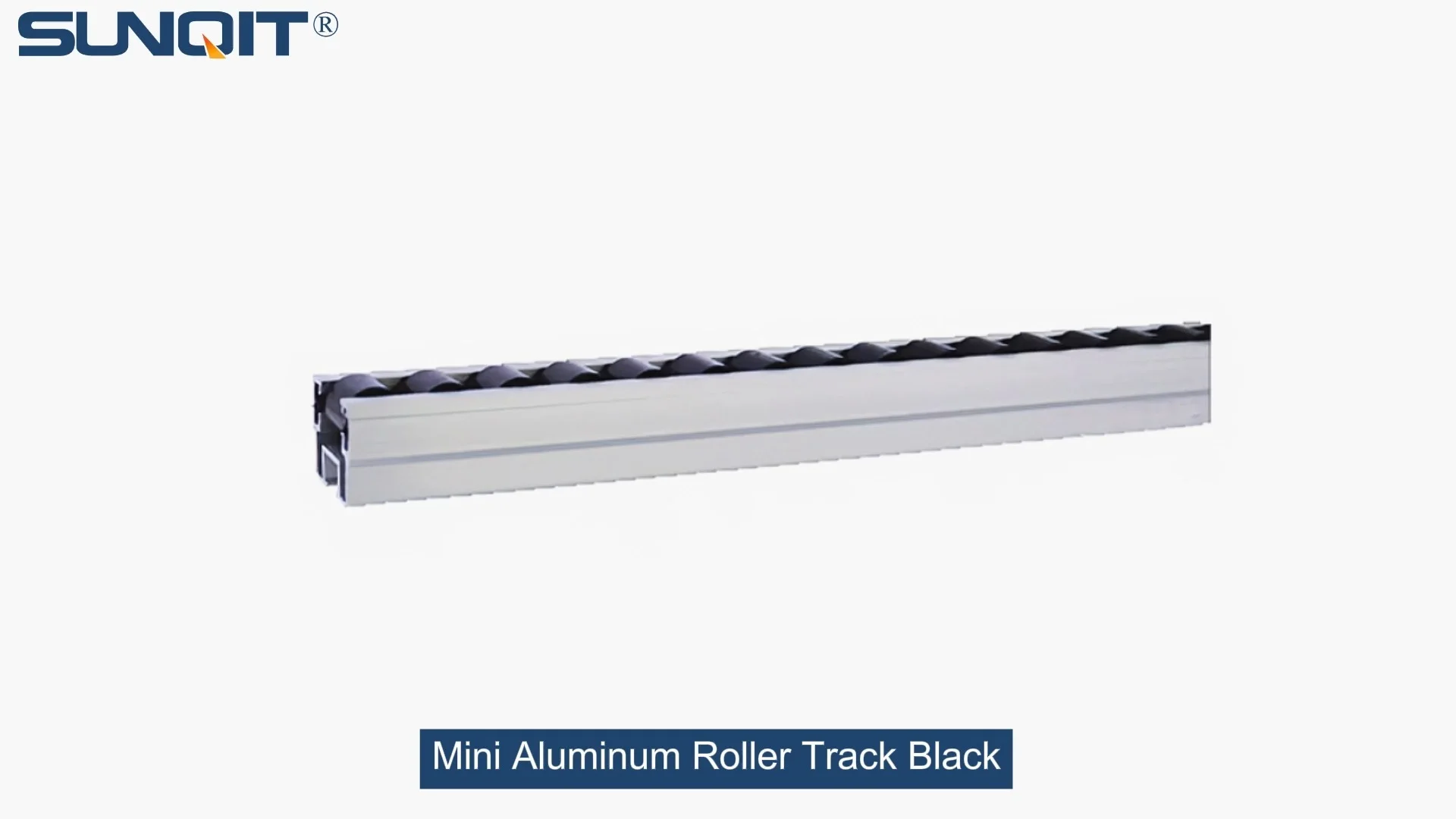
Mini aluminum roller track black for modular system, lean solution.Durable and smooth-running modular roller rails. The system is fully assembled. The roller rail profile contains plastic rollers mounted on steel axles.
Mini Aluminum Roller Track Black Load Limits: Safe Operating Guidelines
In the fast-paced world of manufacturing and warehousing—where every second counts and efficiency is king—small components often make the biggest difference. Take mini aluminum roller track black: it's a quiet workhorse that powers smooth movement in flow racks, lean pipe workbenches, and small conveyor systems. But to get the most out of this tool (and keep your operations safe), you need to understand its load limits and follow strict operating guidelines. Let's dive deep into everything you need to know.
What Is Mini Aluminum Roller Track Black?
First things first: let's define what this track is. Mini aluminum roller track black is a compact, durable component made from high-quality aluminum extrusion profile. Its black finish isn't just for looks—it adds corrosion resistance, making it ideal for use in damp or industrial environments. The track features small, smooth rollers that allow items to slide easily, whether by gravity or motorized power.
This track is versatile: you'll find it in 3C assembly lines (moving smartphone parts), medical device warehouses (sliding sterile kits), and small conveyor systems (transporting toy components). It's a key part of many lean solutions, as it reduces manual labor and helps create flexible, efficient workflows.
Critical: Load Limits Explained
Load limits aren't arbitrary numbers—they're based on the track's design and materials. Let's break down the factors that determine how much weight your mini aluminum roller track black can handle:
1. Material Thickness
The thickness of the aluminum profile directly affects strength. A 1.2mm thick track is perfect for lightweight items like small electronic parts, while a 1.5mm thick track can handle slightly heavier loads (like medical kits). Thicker profiles resist bending better, so they're a better choice for medium-weight items. Always check the material thickness specified by your supplier—reputable brands like szsunqit clearly list this info.
2. Roller Spacing
Roller spacing (distance between rollers) plays a big role in load distribution. If rollers are 50mm apart, weight spreads across more rollers, so each one bears less load. For example, a 500mm track with 50mm spacing has 10 rollers—each supporting a small part of the load. If spacing is 100mm, only 5 rollers are there, so each bears more weight. This means closer spacing = higher load capacity.
3. Installation Quality
Even the strongest track fails if installed wrong. Using the right roller track connector and tightening all fasteners is non-negotiable. Loose tracks shift under load, leading to items falling off or track deformation. Also, the frame (like a lean pipe workbench) must be sturdy enough to support both the track and its load. Szsunqit offers compatible connectors for their tracks, so you don't have to worry about mismatches.
4. Environmental Conditions
Humidity and corrosion weaken aluminum over time. The black finish on this track helps resist rust, but if used in damp areas (like coastal warehouses), you need extra care. Regular cleaning and corrosion-resistant sprays keep the track strong and maintain its load limits. Ignoring this leads to premature wear and lower capacity.
Safe Operating Guidelines
Following these guidelines ensures your track stays safe and functional:
Pre-Use Inspection
Before starting work each day, spend 2 minutes inspecting the track:
- Check for bent or stuck rollers—if a roller doesn't rotate freely, it causes jams or scratches.
- Verify all roller track connectors are tight (no loose screws).
- Look for signs of corrosion or wear (rust spots, dents).
Correct Loading Practices
Loading your track properly is key to safety:
- Distribute weight evenly—don't put all load on one spot (this bends the track).
- Ensure items are flat on rollers—uneven items tip over or get stuck.
- Don't let items hang off the track edges—extra stress damages ends.
- Never exceed the track's load limit (we'll share a reference table below).
Maintenance Routine
Regular maintenance extends track life:
- Clean weekly: Remove dust/debris with a soft cloth (avoid harsh chemicals).
- Lubricate rollers every 3-6 months: Use light oil or silicone spray for smooth rotation.
- Inspect for corrosion monthly: Apply rust-resistant spray if needed.
Handling Overloads
If you notice the track bending or rollers sticking under load:
- Stop immediately—remove the load.
- Check for damage (bent track, broken rollers).
- replace damaged parts before reuse.
Load Limit Reference Table
| Track Length (mm) | Roller Spacing (mm) | Material Thickness (mm) | Max Load Capacity (kg/m) | Recommended Application |
|---|---|---|---|---|
| 500 | 50 | 1.2 | 10 | 3C components (smartphone parts) |
| 500 | 50 | 1.5 | 15 | Medical device kits, small warehouse items |
| 1000 | 50 | 1.2 | 8 | Long tracks for toy parts, stationery |
| 1000 | 50 | 1.5 | 12 | Long tracks for electronic accessories, tools |
| 1500 | 50 | 1.2 | 6 | Extra-long tracks for craft supplies |
| 1500 | 50 | 1.5 | 10 | Extra-long tracks for packaged goods |
| 2000 | 50 | 1.5 | 8 | Very long tracks for textiles |
| 2000 | 50 | 2.0 | 12 | Very long tracks for industrial parts |
This table is a quick reference—always confirm with your supplier for exact specs.
Practical Applications
Let's see how this track works in real-world scenarios:
3C Assembly Line
In a smartphone factory, mini aluminum roller track black is part of a lean pipe workbench. It moves camera modules and battery packs between stations, reducing manual labor. A 1.2mm thick track with 50mm spacing (10kg/m capacity) is perfect—components are lightweight and need smooth movement.
Medical Warehouse Flow Rack
Flow racks in medical warehouses use this track to slide sterile kits to pickers. The FIFO system ensures kits don't expire. A 1.5mm thick track (15kg/m) handles the slightly heavier kits, and the black finish resists corrosion in clean environments.
Small Conveyor System
A toy factory uses this track in a conveyor system to move small parts to packaging. It's part of a lean solution that cuts manual work. The track's lightweight design makes installation easy, and its load capacity (8kg/m) is ideal for toy parts.
Common Mistakes to Avoid
Steer clear of these errors:
Overloading
Putting a 15kg box on a 10kg track is a recipe for disaster. It bends the track, damages rollers, and causes accidents. Always check the load limit before use.
Improper Installation
Using wrong connectors or loose screws leads to track shifting. Szsunqit's compatible connectors ensure a secure fit—use them!
Ignoring Wear
Rusted rollers or bent tracks are unsafe. Fix or replace parts early to avoid downtime.
Choosing the Right Supplier
A reliable supplier makes all the difference. Szsunqit offers high-quality mini aluminum roller track black with clear specs. They provide custom solutions (like integrating into flow racks or lean pipe workbenches) and wholesale options for large orders. Their team helps you pick the right track for your industry (3C, medical, etc.), so you get the best value.
Conclusion
Mini aluminum roller track black is a small but essential tool for lean manufacturing and warehousing. Understanding load limits and following safe guidelines keeps your operations efficient and safe. With the right supplier (like szsunqit) and proper care, this track will serve you well for years. Remember: safety first—never cut corners when it comes to load limits or maintenance.