- Company Articles
- Products and Technology
- Product knowledge
- Mini Aluminum Roller Track Black Maintenance Cost: Long-Term Savings Analysis

Mini Aluminum Roller Track Black Maintenance Cost: Long-Term Savings Analysis
Related Product
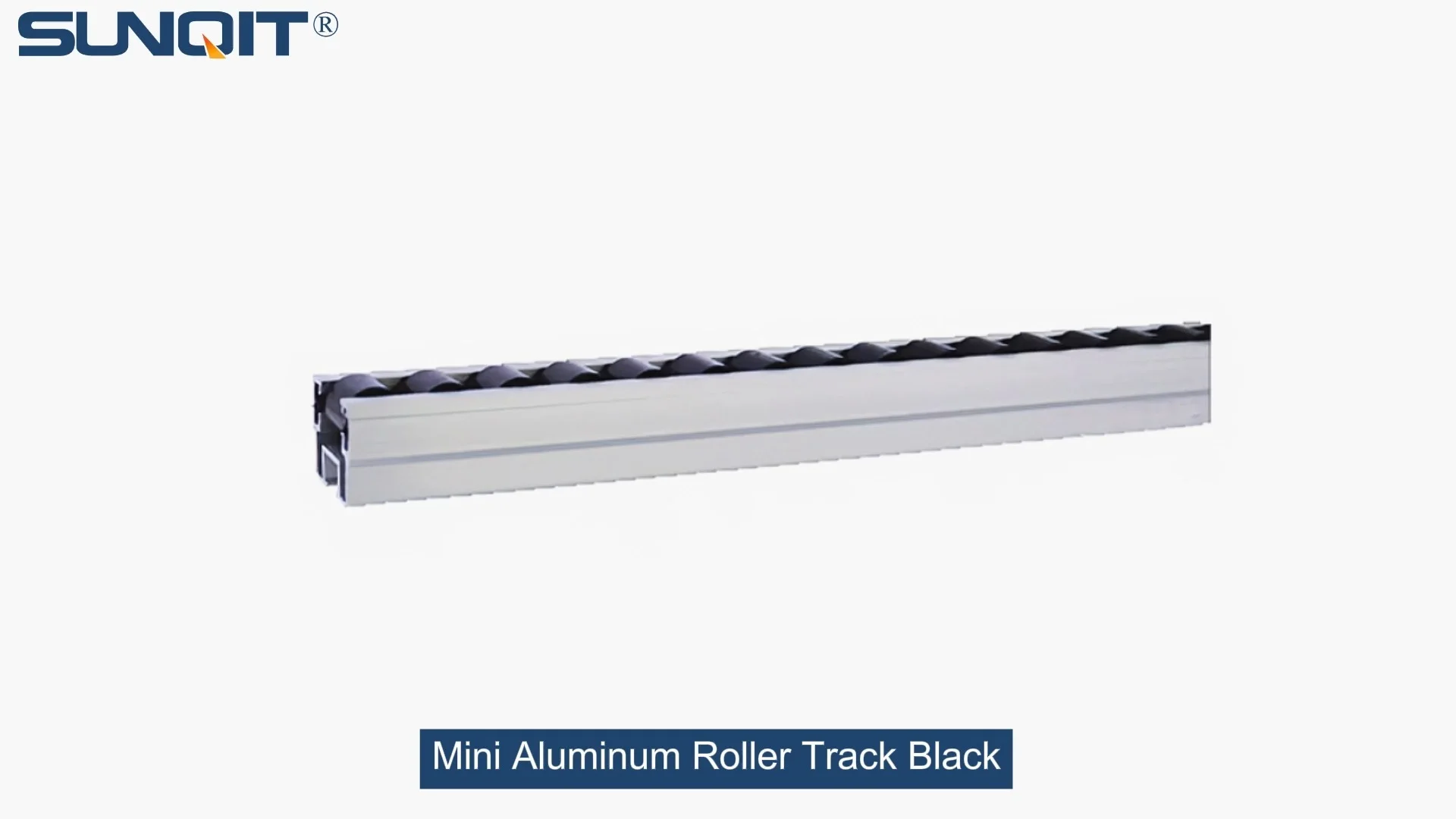
Mini Aluminum Roller Track Black
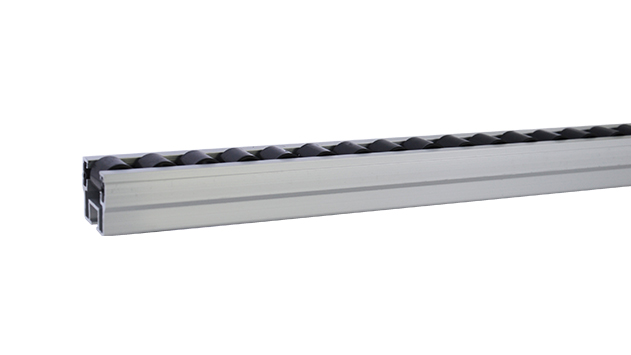
Mini aluminum roller track black for modular system, lean solution.Durable and smooth-running modular roller rails. The system is fully assembled. The roller rail profile contains plastic rollers mounted on steel axles.
Why Maintenance Costs Are a Hidden Drain on Your Profits
If you're a manufacturing manager or warehouse operator, you've probably stared at a budget report and wondered where all the money went. Unexpected maintenance bills—for things like broken roller tracks, rusted connectors, or worn-out parts—are often the culprit. Every hour your line stops for repairs, every dollar spent on replacement parts, every minute your team wastes fixing something that should have lasted: these are all forms of waste that lean manufacturing aims to eliminate. And that's exactly where the mini aluminum roller track black comes in—it's not just a component; it's a way to cut those hidden costs at the root.
Today, we're going to break down exactly how this track saves you money over time. We'll look at maintenance costs, compare it to other materials, and show you real-world examples of how it's helped businesses like yours boost their bottom line. Let's dive in.
What Is Mini Aluminum Roller Track Black?
Let's start with the basics. The mini aluminum roller track black is a compact, high-performance track system designed for moving small to medium-sized parts smoothly. It's made from premium aluminum profile—so it's lightweight but strong enough to handle heavy loads. The black finish isn't just for looks; it resists scratches and hides dirt, making it perfect for busy production lines. The rollers are precision-made to glide without friction, and the connectors are built to stay tight even after years of use.
But what makes it special? Unlike steel tracks that rust or plastic tracks that crack, this aluminum track is built to last. It's ideal for flow racks (where parts need to slide easily), small conveyors in 3C assembly lines, or medical device manufacturing. And since it's part of a lean pipe system ecosystem, you can mix and match it with other components like lean pipe workbenches or material racks to create a fully customized solution.
Maintenance Cost Breakdown: The Details That Matter
To understand the savings, we need to look at every cost associated with maintaining this track over a 10-year period. Let's use 10 meters of track as our baseline—enough to build a small flow rack or a section of conveyor.
1. Initial Purchase Cost
First, the upfront price. The mini aluminum track costs around $50 per meter, so 10 meters would be $500. That's higher than plastic ($30/meter = $300) or basic steel ($40/meter = $400). But don't let that stop you—this is where the long-term savings start.
2. Annual Cleaning Costs
Cleaning is non-negotiable, but some tracks are easier to clean than others. The mini aluminum track? Just wipe it down with a damp cloth once a month. No special chemicals, no rust treatments. For 10 meters, annual cleaning costs are about $20 (including labor). Compare that to steel tracks: they need rust-prevention oil every six months, costing $50 per year. Plastic tracks? They attract dust and grime, so you'll spend $30 per year cleaning them thoroughly.
3. Replacement Parts Costs
This is where the biggest savings happen. Let's break down the parts that wear out:
- Rollers: Only 10% of rollers need replacement every 5 years. For 10 meters, that's 2 rollers at $10 each—$20 every 5 years, or $4 per year.
- Connectors: Aluminum connectors are almost indestructible. You might replace one every 10 years ($5), so $0.5 per year.
- Frame: The aluminum profile frame never rusts or bends. No replacement needed.
Total annual replacement cost: $4.5. For steel tracks? Rollers rust every 3 years (20% replacement, $40/year) and connectors corrode ($10/year)—total $50/year. Plastic tracks? Rollers crack every 2 years (30% replacement, $60/year) and connectors break ($12/year)—total $72/year.
4. Labor Costs for Repairs
Time is money. The mini aluminum track needs almost no repairs: maybe 1 hour every 5 years to replace a few rollers ($20/hour = $4/year). Steel tracks? 5 hours per year fixing rusted parts ($100/year). Plastic tracks? 4 hours per year replacing cracked sections ($80/year).

Long-Term Savings: 10-Year Comparison Table
Let's put all these numbers into a table to see the big picture. We'll compare 10 meters of mini aluminum track with steel and plastic tracks over 10 years:
| Cost Component | Mini Aluminum Roller Track Black | Basic Steel Track | Plastic Track |
|---|---|---|---|
| Initial Purchase | $500 | $400 | $300 |
| 10-Year Cleaning | $200 | $500 | $300 |
| 10-Year Replacement Parts | $45 | $500 | $720 |
| 10-Year Labor | $40 | $1000 | $800 |
| Total 10-Year Cost | $785 | $2400 | $2120 |
The numbers speak for themselves. Over 10 years, the mini aluminum track saves you $1615 compared to steel and $1335 compared to plastic. That's money you can use to invest in other parts of your lean solution—like new conveyors or lean pipe workbenches.

How It Aligns With Lean Manufacturing Principles
Lean manufacturing is all about eliminating waste and continuous improvement. The mini aluminum roller track black fits perfectly into this framework:
- Reduced Downtime: Minimal maintenance means your line stays up and running. No more unexpected stops to fix broken tracks.
- Sustainability: The aluminum track is reusable and recyclable. You won't have to throw it away every few years like plastic tracks.
- Flexibility: It's part of a lean pipe system, so you can reconfigure your flow racks or conveyors as your needs change. This aligns with the lean principle of "just-in-time" production.
For example, a 3C assembly plant can use this track in their flow racks to move small components like phone screens. The smooth glide reduces damage, and the easy maintenance keeps the line moving. A medical device manufacturer can use it in their conveyors—since it's easy to sanitize, it meets strict cleanroom standards.
Real-World Savings Stories
Let's look at two businesses that have benefited from this track:
Story 1: 3C Assembly Plant in Shenzhen
A Shenzhen-based 3C assembly plant used to rely on plastic tracks in their flow racks. Every 2 years, they replaced 50% of their tracks—costing $10,000 each time. After switching to mini aluminum track, they haven't replaced any tracks in 5 years. Annual cleaning costs dropped from $500 to $200, and repair labor went from 20 hours/month to 1 hour/month. Over 5 years, they saved $25,000—money they used to upgrade their lean pipe workbenches.
Story 2: Medical Device Manufacturer in Guangzhou
A Guangzhou medical device maker needed a track system that was easy to sanitize. They chose the mini aluminum track for their conveyors. The track's smooth surface and rust resistance made it perfect for their cleanroom. They saved 15 hours/month in cleaning time (valued at $300/month) and $1,000/year in replacement parts. Over 10 years, that's $48,000 in savings.
Conclusion: Invest in Long-Term Savings
The mini aluminum roller track black isn't just a purchase—it's an investment. The initial cost might be higher, but the long-term savings in maintenance, parts, and labor are huge. It's durable, easy to use, and aligns with lean manufacturing principles.
Whether you're building new flow racks, upgrading your conveyors, or looking to cut maintenance costs, this track is a smart choice. It's designed to grow with your business and help you eliminate waste. So why wait? Start calculating your own savings today—and see how much you can put back into your bottom line.