- Company Articles
- Products and Technology
- Product knowledge
- Mini Aluminum Roller Track Black Sizing Guide: Choosing the Right Length

Mini Aluminum Roller Track Black Sizing Guide: Choosing the Right Length
Related Product
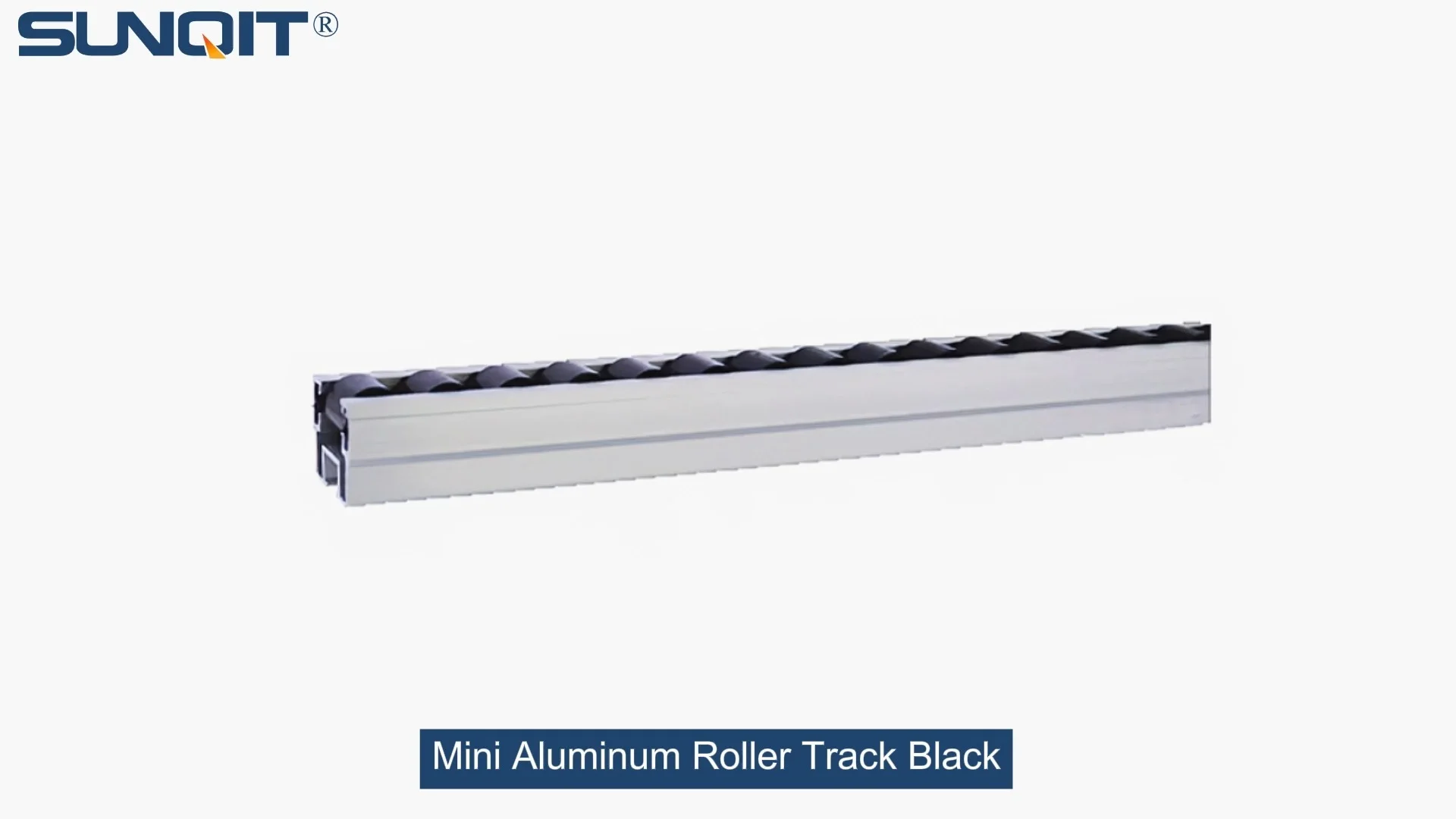
Mini Aluminum Roller Track Black
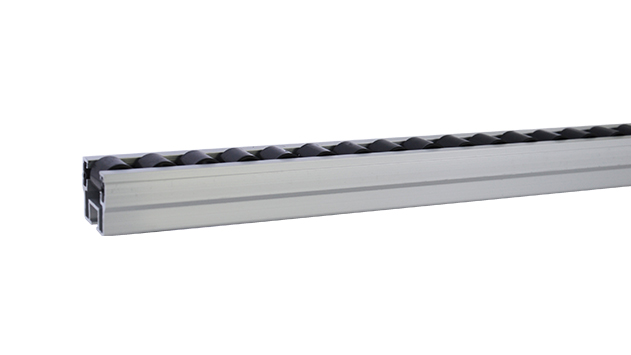
Mini aluminum roller track black for modular system, lean solution.Durable and smooth-running modular roller rails. The system is fully assembled. The roller rail profile contains plastic rollers mounted on steel axles.
Why Does the Right Length Matter for Mini Aluminum Roller Track Black?
If you've ever tried to fit a roller track into a shelf or conveyor only to find it's too long (or too short), you know how frustrating that can be. Mini aluminum roller track black isn't just a piece of metal with rollers—it's a key component in lean systems, flow racks, and conveyors that keep your operations running smoothly. Pick the wrong length, and you're looking at wasted time, extra costs, and even safety risks (like sagging tracks that cause items to get stuck).
This guide isn't about generic advice—it's about giving you practical, step-by-step tips to choose the perfect length for your specific needs. Whether you're building a flow rack for medical device parts, adding a track to a lean pipe system workstation, or setting up a small conveyor segment for 3C assembly, we've got you covered.
What Is Mini Aluminum Roller Track Black, Anyway?
Let's start with the basics. Mini aluminum roller track black is a compact, lightweight track made from aluminum with a black finish (often ESD-safe, which is crucial for sensitive electronics like phones or medical devices). It's designed to move small, light items from one place to another—think tiny screws, plastic components, or sterile medical tools.
What makes it so popular? First, it's durable. Aluminum resists rust and wear, so it lasts longer than plastic alternatives. Second, it's easy to install. You don't need special tools to attach it to aluminum profiles or lean pipes—just use the right aluminum profile accessories (like placon mounts or end supports). Third, it's modular. You can connect multiple tracks together to make longer segments, which fits perfectly with the lean of "sustainable improvement" (reusing and adapting components instead of replacing them).
Common uses include:
Key Factors to Consider Before Choosing Length
Before you pick a length, you need to answer a few questions about your use case. Let's break down each factor:
1. What Are You Using It For?
The purpose of your track will dictate its ideal length. For example:
- If you're building a flow rack (to hold small components), the length should match the width of your rack's shelves. A shelf that's 1000mm wide needs a track of the same length (or slightly shorter to fit between supports).
- If you're adding it to a lean pipe system workstation, the length should fit the space available on your workstation's surface—you don't want it sticking out and getting in the way of operators.
- If you're using it in a conveyor segment, the length should align with the distance between the two points you're connecting (like from a picking station to a packing station).
Pro Tip: Write down your exact use case before shopping. This will help you avoid choosing a length that's not right for your needs.
2. How Much Space Do You Have?
This sounds obvious, but it's easy to skip proper measurements. Let's say you have a shelf in your warehouse that's 800mm wide. If you buy a 1000mm track, you'll have to cut it—which not only takes time but can also damage the black finish (especially if it's ESD-coated). On the flip side, a 600mm track will leave gaps, which can cause items to fall off or get stuck.
To get the right measurement:
- Use a tape measure (not a guess) to get the exact inner width of your shelf or the length of your conveyor segment.
- Account for end supports: If you're using end supports (like the end support for roller track placon mount with stop), subtract a few millimeters from your measurement to make sure the track fits between them.
- Check for obstacles: Are there any bolts or brackets that will get in the way of the track? If yes, adjust your measurement to avoid them.
3. What's the Max Load You'll Be Putting On It?
Longer tracks can't support as much weight as shorter ones. Why? Because the longer the track, the more it sags in the middle—especially if there's no extra support. For example:
- A 500mm track can hold up to 10kg of small parts.
- A 1000mm track can hold up to 20kg, but only if you add a middle support.
- A 1500mm track needs two middle supports to hold 25kg.
4. Is It Compatible With Your Aluminum Profile Accessories?
Mini aluminum roller track black doesn't work alone—it needs accessories to hold it in place. These include:
- Roller track placon mount for aluminum profile flat (to attach the track to flat aluminum profiles)
- End support for roller track placon mount with stop (to keep the track from sliding off the ends)
- Roller track connector (to link multiple tracks together)
5. Do You Need to Extend It Later?
Lean systems are all about adaptability. Today, you might need a 500mm track for your workstation—but next month, you might want to extend it to 1000mm to add more storage. So it's smart to choose standard lengths (like 500mm,750mm,1000mm) instead of custom ones. Standard lengths are easier to find, cheaper to buy, and can be connected together with a roller track connector.
Custom lengths might seem like a good idea now, but they'll cost you more later if you need to extend. For example, if you buy a 650mm custom track, you can't add a 500mm track to it (since the lengths don't align). But if you buy a 500mm track, you can add another 500mm track to make 1000mm—easy!

Step-by-Step Sizing Guide for Mini Aluminum Roller Track Black
Now that you know the factors, let's walk through the process of choosing the right length. Follow these steps, and you'll get it right the first time.
Step 1: Define Your Exact Use Case
Start by writing down exactly what you'll use the track for. Be as specific as possible. For example:
- "I need a track for the top shelf of my flow rack (used for small medical device components). The shelf is 1000mm wide, and each component box weighs 500g."
- "I want to add a track to my lean pipe system workstation to slide phone parts to the operator. The workstation shelf is 750mm wide."
- "I need a short conveyor segment to connect two workstations in my 3C assembly line. The distance between the workstations is 500mm."
Step 2: Take Precise Measurements
Now, get your tape measure and take the exact measurements of the space where the track will go. Here's how:
- For flow racks: Measure the inner width of the shelf (from one beam to the other). Don't measure the outer width—you need the space where the track will actually sit.
- For workstations: Measure the width of the shelf or surface where the track will be installed. If you're using a lean pipe system, measure the distance between the two pipes that will hold the track.
- For conveyors: Measure the distance between the two points you want to connect. Add 10mm to account for the connector if you're linking multiple tracks.
Pro Tip: Measure twice, buy once. It's easy to make a mistake the first time—so take the measurement again to be sure.
Step3: Match Length to Load Capacity
Use this table to find the right length for your load:
Remember: These numbers are guidelines. Always check your supplier's specs for exact load capacities.
| Track Length (mm) | Max Load (kg) Without Extra Support | Max Load (kg) With Extra Support | Number of Extra Supports Needed |
|---|---|---|---|
| 500 | 10 | 15 | 0 |
| 750 | 12 | 20 | 1 |
| 1000 | 15 | 25 | 1 |
| 1250 | 18 | 30 | 2 |
| 1500 | 20 | 35 | 2 |
Step4: Check Compatibility With Accessories
Let's say you've chosen a 1000mm track for your flow rack. Now, you need to make sure it works with your accessories:
- You'll need two end supports (one at each end) to keep the track from sliding off.
- You'll need three placon mounts (one at each end and one in the middle) to hold the track in place.
- If you want to link it to another track, you'll need a roller track connector.
Step5: Plan for Modularity
As we mentioned earlier, modularity is key. Choose standard lengths so you can extend your track later. For example:
- If you need a 1500mm track now, buy three 500mm tracks (instead of one custom 1500mm track). This way, you can take one track off later if you need a shorter segment.
- If you need a 750mm track, buy one 750mm track (a standard length) so you can add another 750mm track later to make 1500mm.

Common Mistakes to Avoid
Even with the best guide, it's easy to make mistakes. Here are the most common ones (and how to avoid them):
Mistake1: Guessing Instead of Measuring
A customer once told us they guessed their track length was 1000mm—only to find it was 950mm. They tried to cut the track to fit, but the black ESD finish got damaged. The result? They had to buy a new track, which cost them extra money and delayed their project.
Solution: Always measure the space. Use a tape measure (not a ruler) for longer lengths, and write down the number so you don't forget.
Mistake2: Ignoring Load Capacity
Another customer bought a 1500mm track for their flow rack and tried to put 30kg of parts on it without any extra supports. The track sagged in the middle, and the parts got stuck. They had to replace the track and add supports—wasting both time and money. Solution: Use the load capacity table we provided earlier. If you're not sure, ask your supplier for help.Mistake3: Forgetting End Supports
A lot of people think end supports are optional—but they're not. Without end supports, your track will slide off the shelf or conveyor, and your parts will fall on the floor. This is especially dangerous in medical device assembly lines, where sterile parts can get contaminated if they fall. Solution: Always buy end supports for your track. They're cheap, easy to install, and save you from a lot of headaches.Mistake4: Not Considering Modularity
A customer bought a custom 650mm track for their workstation. A few months later, they wanted to extend it to 1300mm—but since 650mm isn't a standard length, they couldn't find another track to match. They had to buy a new 1300mm track and throw away the old one. Solution: Stick to standard lengths. They're more flexible and cost-effective in the long run.Real-World Examples of Right Length Choices
Let's look at three real-world cases where choosing the right length made a big difference:
Case1: 3C Assembly Workstation
A 3C assembly company wanted to add a mini aluminum roller track black to their lean pipe system workstation. The workstation shelf was 750mm wide, and they needed to slide small phone parts to the operator.
They chose a 750mm track. Why? Because it fit perfectly on the shelf, and it could hold up to 12kg (which was more than enough for their phone parts). They added one middle support to make sure it didn't sag, and used placon mounts to attach it to the lean pipe system.
The result? The operator could easily reach the parts without getting up, which increased their productivity by 15%.
Case2: Medical Device Flow Rack
A medical device company needed a flow rack for small sterile components. The shelf width was 1000mm, and each component box weighed 500g. They chose 1000mm tracks for each shelf. They added one middle support per track to hold up to 25kg (even though they only needed 10kg—better safe than sorry). They also used end supports with stops to keep the boxes from sliding off the end. The result? The components moved smoothly from the back of the shelf to the front, and the ESD finish kept the components safe from static damage.Case3: Small Conveyor Segment
A small manufacturing company wanted to connect two workstations with a conveyor. The distance between the workstations was 500mm, and they needed to move small plastic parts. They chose a 500mm track. They used placon mounts to attach it to aluminum profiles, and added end supports to keep it stable. Since it was a short track, they didn't need any extra supports. The result? The parts moved from one workstation to the other without any issues, and the conveyor was easy to move if they needed to rearrange their line.Maintenance Tips for Longevity
Once you've chosen the right length, you need to take care of your track to make it last. Here are some tips:
- Clean the track regularly: Use a soft cloth to wipe off dust and dirt. Don't use harsh chemicals—they can damage the black finish.
- Check for loose accessories: Every week, tighten the screws on your placon mounts and end supports. Loose accessories can cause the track to sag.
- Lubricate the rollers: Every month, put a small amount of lubricant on the rollers to keep them spinning smoothly. Don't use too much—excess lubricant can attract dust.
- Avoid overloading: Stick to the max load capacity. Overloading will bend the track and damage the rollers.
Final Thoughts
Choosing the right length for your mini aluminum roller track black isn't rocket science—but it does require some thought. By considering your use case, measuring carefully, matching length to load capacity, checking compatibility with accessories, and planning for modularity, you can make sure your track works perfectly for your needs.
Remember: The goal of lean systems is to make your operations more efficient. A well-chosen track will save you time, money, and frustration—so take the time to do it right.
If you're still not sure which length to choose, don't hesitate to reach out to your supplier. They have the expertise to help you find the perfect fit for your flow rack, lean pipe system, or conveyor.