- Company Articles
- Products and Technology
- Product knowledge
- Mini Aluminum Roller Track Black vs. Copper: Conductivity & Applications

Mini Aluminum Roller Track Black vs. Copper: Conductivity & Applications
Related Product
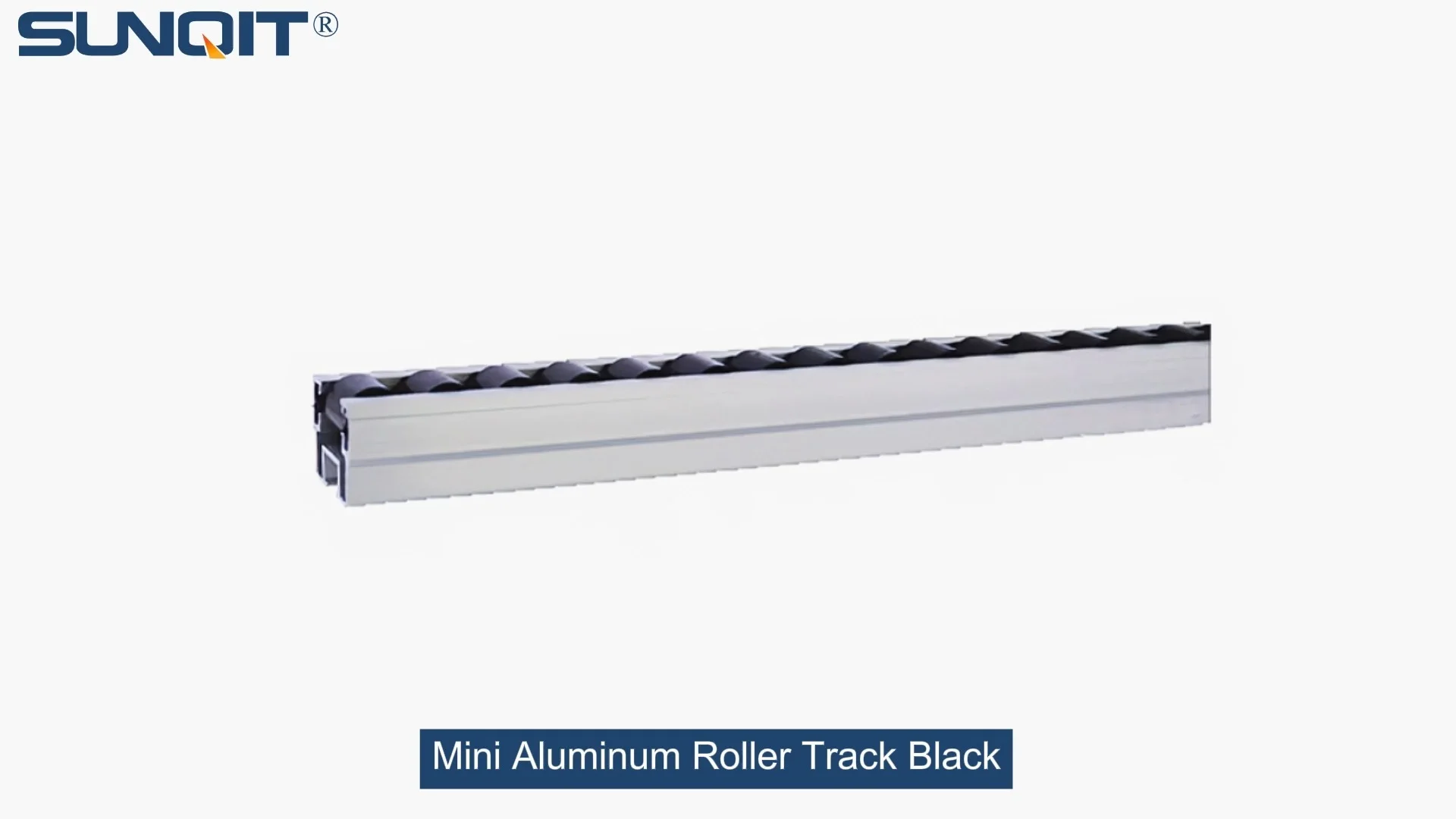
Mini Aluminum Roller Track Black
Mini aluminum roller track black for modular system, lean solution.Durable and smooth-running modular roller rails. The system is fully assembled. The roller rail profile contains plastic rollers mounted on steel axles.
Mini Aluminum Roller Track Black vs. Copper: Conductivity & Applications
In the fast-paced world of manufacturing and logistics, every small component plays a critical role in keeping operations running smoothly. Think about the roller tracks that glide parts along assembly lines, feed components into workstations, or organize inventory in flow racks—these tiny systems are the unsung heroes of efficiency. But when it comes to choosing between mini aluminum roller track black and copper options, the decision goes beyond just picking a material. It's about aligning with your team's needs for conductivity, weight, cost, and the lean principles of reusability and continuous improvement that companies like szsunqit prioritize.
Whether you're setting up a new 3C assembly line, optimizing a medical device production station, or upgrading your warehouse's flow racks, understanding the differences between these two materials will help you make a choice that boosts productivity, reduces waste, and stands the test of time. Let's dive deep into what makes each material unique, how they perform in real-world scenarios, and which one is the right fit for your operations.
1. What Are Mini Roller Tracks & Why Material Matters?
Mini roller tracks are compact, short-length tracks designed to fit into tight spaces—like the edges of workstations, small conveyors, or narrow flow racks. They're a core component of lean systems because they streamline material flow, eliminate bottlenecks, and make it easy to reconfigure lines as your production needs change. For example, szsunqit's mini aluminum roller track black is engineered to integrate seamlessly with flow racks and conveyors, supporting the company's focus on flexible, waste-free production.
The material of your roller track directly impacts its performance: conductivity affects static control (critical for sensitive electronics), weight influences ease of installation and reconfiguration, corrosion resistance determines durability in harsh environments, and cost impacts your bottom line. Choosing the wrong material can lead to frequent replacements, increased downtime, or even damage to sensitive components—so it's worth taking the time to get it right.
2. Mini Aluminum Roller Track Black: Properties & Benefits
Mini aluminum roller track black is a popular choice for most manufacturing and logistics applications, and for good reason. Let's break down its key properties and why it's a go-to for companies embracing lean principles:
Key Properties
- Lightweight: Aluminum is about one-third the weight of copper, making the tracks easy to carry, install, and adjust. This is a game-changer for teams that need to reconfigure their lines frequently (like when switching to a new product model).
- Corrosion Resistance: Aluminum forms a natural oxide layer when exposed to air, which protects it from rust and corrosion. This makes it ideal for use in damp environments (like warehouses with temperature fluctuations) or sterile settings (like medical device manufacturing).
- Conductivity: Aluminum has a conductivity rating of approximately 3.77 × 10⁷ Siemens per meter (S/m). While this is lower than copper, it's more than enough for most applications—especially when paired with an ESD coating (like the black finish on szsunqit's tracks) that enhances static dissipation.
- Cost-Effective: Aluminum is significantly cheaper than copper (often 2-3 times less expensive), which helps keep your project within budget without sacrificing quality.
Benefits for Lean Systems
Szsunqit's mini aluminum roller track black is designed with lean principles in mind:
- Reusable: The tracks are durable and easy to repurpose—you can disassemble them and use the components in new setups, reducing waste and aligning with sustainable practices.
- Flexible: They work seamlessly with other lean system components (like workstations, turnover trolleys, and material racks) to create custom solutions for your unique needs.
- ESD Compatible: The black ESD coating makes these tracks perfect for use on esd workbenches, where static control is critical to protecting sensitive electronics (like 3C components or medical devices).
Common Applications
Mini aluminum roller track black shines in a variety of industries:
- 3C Assembly: Used on workstations to move small components (like circuit boards or phone screens) along the line, reducing manual handling and speeding up production.
- Medical Device Manufacturing: Ideal for sterile environments where corrosion resistance and ESD control are necessary (e.g., moving surgical tools or diagnostic equipment parts).
- Warehouse Logistics: Integrated into flow racks to organize small parts, making picking faster and more efficient.
- Small Conveyors: Used in compact conveyors to move parts between workstations in tight spaces.
3. Copper Roller Tracks: When to Choose This Material?
Copper is known for its exceptional conductivity, but it's not the right fit for every application. Let's explore its properties and where it makes sense to use it:
Key Properties
- Ultra-High Conductivity: Copper has a conductivity rating of ~5.96 × 10⁷ S/m—almost 60% higher than aluminum. This makes it the top choice for applications where maximum static dissipation is required (like handling extremely sensitive electronics).
- Durability: Copper is a hard, dense material that can withstand heavy use—though it's prone to tarnishing over time.
- Weight: Copper is much heavier than aluminum (about 2.2 kg per meter vs. 0.8 kg for aluminum), which makes it harder to install and reconfigure.
- Cost: Copper is significantly more expensive than aluminum, which can add up quickly for large-scale projects.
Ideal Use Cases
Copper roller tracks are best suited for niche applications where conductivity is non-negotiable:
- Ultra-Sensitive ESD Processes: For handling components like microchips or sensors that are easily damaged by static electricity, copper's natural conductivity provides superior protection.
- High-Precision Electronics: In industries like aerospace or defense, where even minor static discharge can cause catastrophic failures, copper tracks are a safe bet.
- Custom Solutions: Some clients may require a hybrid setup—using copper tracks in critical areas and mini aluminum roller track black in others—to balance performance and cost. Szsunqit specializes in these custom solutions, tailoring setups to meet specific client needs.
Downsides to Copper
While copper has its strengths, it's not without drawbacks:
- Maintenance: Copper requires regular polishing to remove tarnish (which can reduce conductivity over time).
- Reusability: Its heavy weight makes it harder to repurpose—going against the lean principle of reusable components.
- Cost: The high price tag can be a barrier for small to medium-sized businesses.
4. Head-to-Head Comparison: Aluminum vs. Copper
To help you make an informed decision, let's compare the two materials side by side:
| Feature | Mini Aluminum Roller Track Black | Copper Roller Track |
|---|---|---|
| Material Composition | Aluminum alloy with black ESD coating | Pure copper or copper alloy |
| Electrical Conductivity | ~3.77 × 10⁷ S/m | ~5.96 × 10⁷ S/m |
| Weight (per meter) | ~0.8 kg | ~2.2 kg |
| Corrosion Resistance | Excellent (natural oxide layer) | Poor (prone to tarnish/rust) |
| Cost (Relative) | Low to Medium | High (2-3x aluminum) |
| ESD Compatibility | Yes (with coating) | Yes (natural conductivity) |
| Maintenance Needs | Minimal (wipe clean occasionally) | High (regular polishing) |
| Reusability Score | 5/5 (easy to repurpose) | 3/5 (heavier, harder to adjust) |
| Ideal Applications | 3C assembly, medical devices, flow racks, general logistics | Ultra-sensitive ESD processes, aerospace, defense electronics |
| Sustainability | High (reusable, recyclable) | Medium (recyclable but less reusable) |
5. Real-World Applications & Case Studies
Let's look at how these materials perform in actual scenarios—using examples from industries szsunqit serves:
Case Study 1: 3C Assembly Line Optimization
A leading smartphone manufacturer needed to upgrade their assembly line to handle a new model. They chose szsunqit's mini aluminum roller track black for their workstations and flow racks. The lightweight tracks allowed the team to reconfigure the line in just 2 hours (down from 6 hours with their old steel tracks). The ESD coating also prevented static damage to circuit boards, reducing defect rates by 15%. The company saved over 30% on material costs compared to using copper tracks.
Case Study 2: Medical Device Manufacturing
A medical equipment company required tracks for moving sterile parts (like syringe components) along their production line. They opted for szsunqit's mini aluminum roller track black because of its corrosion resistance and ESD compatibility. The tracks were easy to clean (critical for sterile environments) and integrated seamlessly with their esd workbenches. The company reported no corrosion issues after 12 months of use, and the tracks were reused in a new line for a different product.
Case Study 3: Warehouse Flow Rack Upgrade
A logistics firm needed to optimize their small parts storage. They installed szsunqit's mini aluminum roller track black in their flow racks to allow parts to slide smoothly to the picking area. The lightweight tracks reduced the weight of the racks, allowing them to hold 20% more parts without compromising stability. Picking time decreased by 22% because workers no longer had to reach for parts—they slid directly to them. The company also appreciated the reusability of the tracks, as they could adjust the racks when their inventory changed.
Case Study 4: Hybrid ESD Solution
A client in the aerospace industry needed tracks for their esd workbenches, where some areas required ultra-high conductivity. Szsunqit provided a hybrid solution: copper tracks for the critical microchip handling area and mini aluminum roller track black for the rest of the line. This balanced the client's need for high conductivity with their budget constraints. The client reported zero static-related defects in the critical area, and the aluminum tracks allowed for easy reconfiguration when adding new equipment.
6. How to Choose the Right Track for Your Needs
Choosing between mini aluminum roller track black and copper doesn't have to be complicated. Follow these steps to make the best decision:
Step 1: Evaluate Your Conductivity Needs
Do you handle extremely sensitive components (like microchips) that require maximum static dissipation? If yes, copper may be the right choice. For most other applications (including 3C assembly, medical devices, and logistics), mini aluminum roller track black (with ESD coating) is sufficient.
Step 2: Consider Reconfigurability
If your line needs frequent adjustments (a key lean principle), aluminum's lightweight is a must. Copper's heavy weight makes it harder to move and reconfigure, so it's better for static lines that rarely change.
Step 3: Check Your Environment
Is your line in a damp or corrosive area? Aluminum's corrosion resistance is superior to copper. For sterile environments (like medical manufacturing), aluminum's easy-to-clean surface is a plus.
Step 4: Budget & Sustainability
Aluminum is more cost-effective and sustainable (easier to reuse) than copper. If you're working with a tight budget or embracing lean principles, aluminum is the way to go.
Step 5: Consult a Lean System Expert
Szsunqit is a trusted lean pipe supplier and flow rack supplier with years of experience in custom solutions. Their team can help you assess your needs and recommend the best material for your project—whether it's mini aluminum roller track black, copper, or a hybrid setup.
7. Why Szsunqit's Mini Roller Tracks Stand Out
Szsunqit's mini aluminum roller track black is more than just a component—it's a tool designed to help you achieve your lean goals. Here's why their tracks are a top choice for manufacturers and logistics firms:
- Quality & Durability: Szsunqit uses high-grade aluminum alloy and a premium ESD coating to ensure their tracks are durable and long-lasting.
- Customization: They offer a wide range of accessories (like connectors and brackets) to help you create a setup that fits your exact needs. Whether you need tracks for a small workstation or a large flow rack, szsunqit has you covered.
- Lean Focus: All their products are designed with reusability and continuous improvement in mind—aligning with the lean principles that drive modern manufacturing.
- Industry Expertise: Szsunqit serves a wide range of industries (including 3C assembly, medical devices, and logistics) and understands the unique challenges each one faces.
Whether you're looking to upgrade your flow racks, optimize your assembly line, or create a custom ESD solution, szsunqit's mini aluminum roller track black is a reliable, cost-effective choice that will help you boost efficiency and reduce waste.
Conclusion
Mini aluminum roller track black and copper each have their strengths, but for most manufacturers and logistics firms, aluminum is the clear winner. It's lightweight, cost-effective, corrosion-resistant, and compatible with lean systems—making it perfect for 3C assembly, medical devices, flow racks, and more. Copper is ideal for niche applications where ultra-high conductivity is required, but it comes with higher costs and maintenance needs.
At the end of the day, the best choice depends on your specific needs. But if you're looking for a material that balances performance, cost, and sustainability, szsunqit's mini aluminum roller track black is an excellent option. It's designed to help you streamline your operations, reduce waste, and keep up with the fast-paced world of modern manufacturing.