- Company Articles
- Products and Technology
- Product knowledge
- Mini Aluminum Roller Track Yellow vs. Standard Sizes: What Makes It "Mini"?

Mini Aluminum Roller Track Yellow vs. Standard Sizes: What Makes It "Mini"?
Related Product
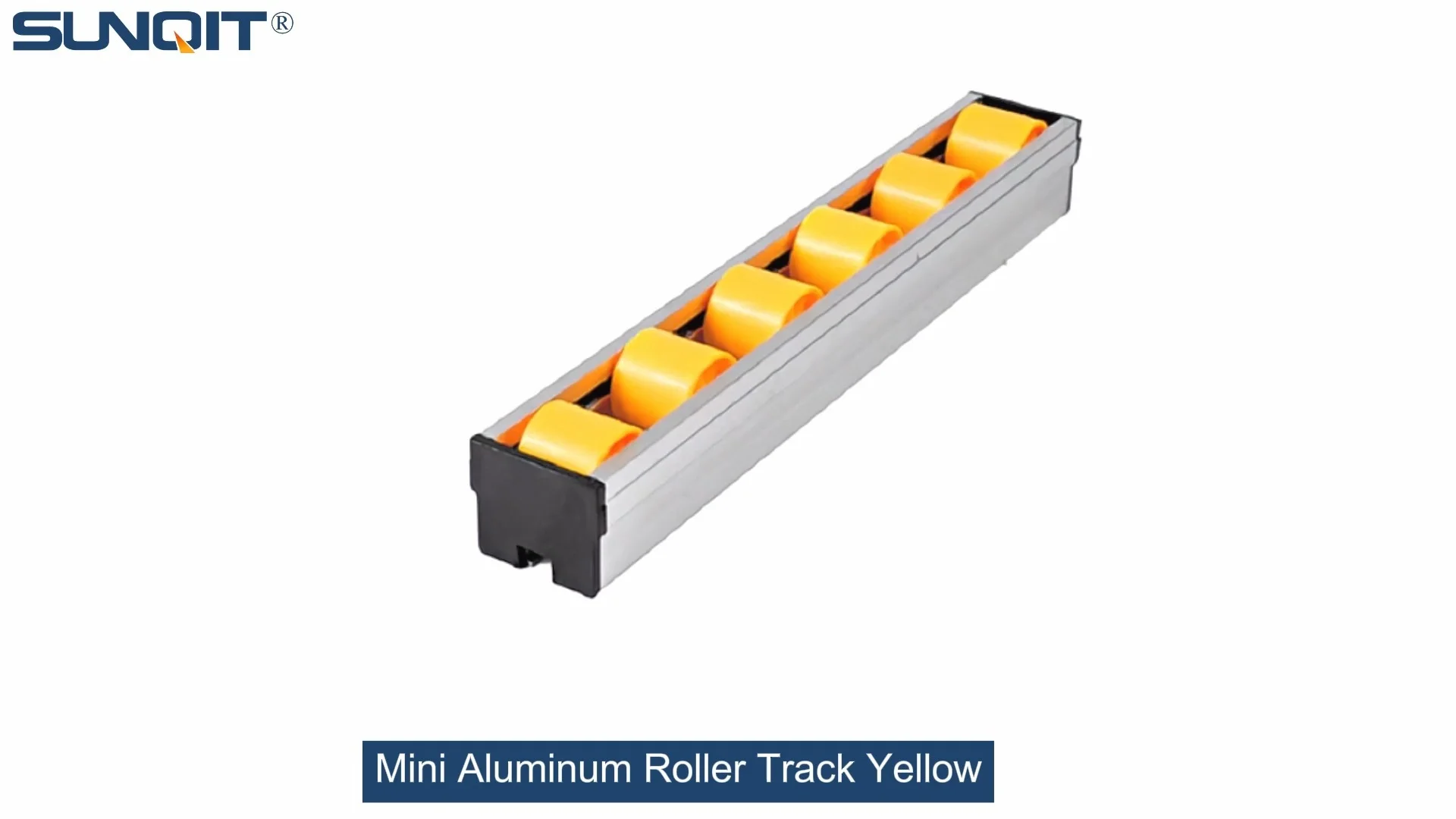
Mini Aluminum Roller Track Yellow
Mini aluminum roller track black for modular system, lean solution.Durable and smooth-running modular roller rails. The system is fully assembled. The roller rail profile contains plastic rollers mounted on steel axles.
In the world of lean manufacturing and efficient material handling, every component plays a crucial role in streamlining processes and boosting productivity. Roller tracks are one such unsung hero—they facilitate smooth movement of parts and products across workstations, warehouses, and assembly lines. Among the diverse range of roller tracks available today, the Mini Aluminum Roller Track Yellow stands out for its compact design and specialized utility. But what exactly sets it apart from standard-sized roller tracks? Let's dive deep into its features, comparisons, applications, and benefits to find out.
What Is Mini Aluminum Roller Track Yellow?
Before we compare it to standard sizes, let's first understand what the Mini Aluminum Roller Track Yellow is. As the name suggests, it's a compact version of aluminum roller tracks, characterized by its smaller dimensions and vibrant yellow color. Produced by suppliers like szsunqit, this roller track is part of a broader lean system ecosystem that includes lean pipe workbenches, flow racks, and conveyors. Its aluminum construction ensures durability while keeping it lightweight, making it ideal for applications where space and weight are critical factors.
The yellow color isn't just for aesthetics—it serves a functional purpose too. It enhances visibility in busy work environments, helping workers quickly identify the track's path and avoid collisions. For example, in a crowded assembly line with multiple tracks, the yellow mini track stands out, making it easier for workers to focus on the parts moving along it. Additionally, the mini size means it can fit into tight spaces where larger tracks would be impractical, such as between narrow workstations or on small shelves. This versatility makes it a popular choice across various industries, from electronics manufacturing to medical device production.
Mini vs. Standard Roller Tracks: A Detailed Comparison
To truly grasp what makes the Mini Aluminum Roller Track Yellow "mini," let's compare it side by side with some common standard-sized roller tracks. The table below highlights key differences in dimensions, capacity, material, and use cases, providing a clear picture of where the mini track fits in the material handling landscape:
| Parameter | Mini Aluminum Roller Track Yellow | 38mm Aluminum Roller Track | 40mm Steel Roller Track Yellow Wheel | 60mm Aluminum Roller Track |
|---|---|---|---|---|
| Track Width | 15mm (approx.) | 38mm | 40mm | 60mm |
| Roller Diameter | 8mm (approx.) | 12mm | 15mm | 20mm |
| Material | Aluminum frame + High-density plastic rollers | Aluminum frame + Anodized aluminum rollers | Steel frame + Impact-resistant plastic rollers | Aluminum frame + Heavy-duty aluminum rollers |
| Weight Capacity | Up to 5kg per linear meter | Up to 20kg per linear meter | Up to 30kg per linear meter | Up to 50kg per linear meter |
| Length Options | 300mm, 500mm, 800mm, Customizable | 1000mm, 1500mm, 2000mm, Customizable | 1000mm, 1500mm, 2000mm, Customizable | 1500mm, 2000mm, 3000mm, Customizable |
| Installation Flexibility | Easy to mount on small surfaces, uses lightweight connectors | Requires standard mounting brackets, compatible with most profiles | Needs heavy-duty brackets, suitable for industrial setups | Requires robust supports, ideal for large-scale systems |
| Typical Use Cases | Small parts handling, 3C assembly, medical device manufacturing, compact workstations | Medium parts, general assembly lines, flow racks, warehouse picking stations | Heavy parts, industrial conveyors, automotive component handling, large storage systems | Very heavy loads, large product assembly, high-volume production lines, heavy-duty warehouses |
From the table, it's clear that the mini version is designed for lighter loads and smaller spaces. Its narrow width and small roller diameter make it perfect for moving tiny components like screws, connectors, or small electronic parts—tasks where larger tracks would be overkill and take up unnecessary space. For example, if you need to transport small screws from a storage bin to an assembly station, a standard 38mm track would be too wide and heavy, whereas the mini track fits perfectly and moves the screws efficiently.
Another key difference is the material of the rollers. The mini track uses high-density plastic rollers, which are gentle on delicate parts and reduce noise during operation. This is especially important in environments where quiet operation is desired, such as medical device manufacturing facilities. In contrast, standard tracks often use metal rollers, which are more durable but can be noisy and may scratch delicate surfaces.

Key Features That Define "Mini"
Several distinct features contribute to the mini identity of this roller track. Let's break them down in detail to understand why it's a unique solution:
1. Compact Dimensions
The most obvious feature is its size. With a track width of around 15mm and roller diameter of 8mm, it's significantly smaller than standard tracks. This compactness allows it to fit into tight gaps between workstations or on small lean pipe workbenches where every inch counts. For example, in a crowded assembly line, the mini track can be installed along the edge of a workstation, providing a dedicated path for small parts without taking up valuable workspace.
2. Lightweight Construction
Made from aluminum, the mini track is lightweight yet sturdy. Aluminum is known for its high strength-to-weight ratio, which means the track can handle its intended loads without being heavy. This makes it easy to install, reposition, and integrate into existing systems without adding unnecessary weight. For instance, attaching it to a mobile turnover trolley is a breeze, thanks to its low weight—workers can move the trolley around the facility without straining themselves.
3. Low Weight Capacity
While standard tracks can handle heavy loads, the mini version is optimized for lighter items (up to 5kg per linear meter). This specialization means it's more efficient for its intended use cases—you won't waste resources on a heavy-duty track when you only need to move small parts. Additionally, the low weight capacity ensures that the track is not overloaded, which extends its lifespan and reduces maintenance costs.
4. Flexible Integration
The mini track is designed to work seamlessly with other lean system components. It can be easily connected to aluminum profiles, lean pipe connectors, and flow racks, allowing you to create custom material handling solutions tailored to your specific needs. For example, you can use roller track connectors to join multiple sections of mini track, creating a longer path for parts to travel. Or, you can mount the track on aluminum profiles to create a curved conveyor, which is useful in tight spaces. This flexibility makes the mini track a versatile addition to any lean system.
5. Vibrant Yellow Color
The yellow color of the track is not just for show—it serves a practical purpose. Yellow is a highly visible color, which helps workers quickly identify the track's path and avoid collisions. In busy manufacturing environments, where multiple tracks and conveyor systems are in operation, the yellow color stands out, reducing the risk of accidents. Additionally, the color can be used to organize different types of parts—for example, yellow tracks can be dedicated to moving electrical components, while other colors are used for mechanical parts.

Where Does the Mini Aluminum Roller Track Yellow Excel?
The mini track isn't a one-size-fits-all solution, but it shines in specific scenarios where space, precision, and gentle handling are key. Let's explore some of its best applications in detail:
1. 3C Assembly Lines
In the 3C (Computer, Communication, Consumer Electronics) industry, precision and space efficiency are paramount. The mini track is perfect for moving small components like microchips, capacitors, or phone screens across assembly stations. For instance, in a smartphone assembly line, each station handles a specific task—attaching the battery, installing the camera, or fitting the screen. The mini track can be installed between these stations to transport the partially assembled phones, ensuring that each component moves smoothly and quickly to the next stage. Its compact size fits well on the narrow work surfaces of 3C assembly lines, and its lightweight design ensures that delicate parts are handled gently. Moreover, the yellow color of the track helps workers easily identify the path of the components, reducing the risk of errors and improving overall productivity. Many 3C manufacturers choose the mini track as part of their lean system because it allows them to optimize their workflow without sacrificing space or precision.
2. Medical Device Manufacturing
Medical devices often consist of tiny, sensitive parts. The mini track's smooth rollers and low weight capacity make it ideal for transporting these components without causing damage. Whether it's moving surgical instruments, small diagnostic tools, or implantable devices, the mini track ensures a safe and efficient flow of materials. For example, in a facility producing insulin pumps, the mini track can be used to move the small pump components from the storage area to the assembly station. The gentle movement of the rollers prevents the components from being scratched or broken, which is critical in the medical industry where precision is life-saving. Additionally, the aluminum construction of the track is easy to clean and sanitize, which is essential for maintaining a sterile environment.
3. Compact Warehouses and Storage Areas
In warehouses with limited space, every square foot matters. The mini track can be installed in narrow aisles or on small shelves to move small items like bolts, nuts, or packaging materials. It's also great for pick-and-pack stations where workers need quick access to small parts. For instance, in an e-commerce warehouse that handles small electronics, the mini track can be used to transport items from the storage bins to the packing station. This reduces the time workers spend walking back and forth, improving efficiency and reducing fatigue. The mini track can also be used in vertical storage systems, where space is at a premium—its compact size allows it to fit in tight vertical spaces, maximizing storage capacity.
4. Educational and Prototyping Labs
Labs and prototyping facilities often require flexible, small-scale material handling solutions. The mini track is easy to set up and reconfigure, making it perfect for testing new assembly processes or creating temporary workstations. Its vibrant yellow color also helps in organizing different parts of the lab—for example, the track can be used to separate different types of components or to mark the path of materials during experiments. Additionally, the mini track is affordable, which is important for educational institutions with limited budgets. Students can use it to learn about lean manufacturing principles and material handling without investing in expensive equipment.

Why Choose Mini Aluminum Roller Track Yellow?
Beyond its compact size, there are several compelling reasons to opt for this mini track. Let's explore some of the key benefits:
1. Cost-Effective
Since it uses less material than standard tracks, the mini version is more affordable. This makes it a great choice for small businesses or projects with tight budgets. You get all the benefits of a high-quality roller track without breaking the bank. Additionally, the low maintenance costs of the mini track (due to its aluminum construction and plastic rollers) mean that you'll save money in the long run. Unlike standard tracks, which may require frequent lubrication or replacement of metal rollers, the mini track is designed to be low-maintenance.
2. Space-Saving
In crowded work environments, space is a premium. The mini track's narrow width and small footprint allow you to maximize your available space, enabling you to fit more workstations or storage units in the same area. For example, if you have a small assembly line, you can install the mini track along the edges of the workstations, freeing up the center for workers to operate. This not only improves efficiency but also makes the workspace more organized and safer.
3. Easy to Maintain
Aluminum is resistant to rust and corrosion, so the mini track requires minimal maintenance. The plastic rollers are also durable and don't need frequent lubrication. This means less downtime and lower maintenance costs over time. To keep the track in good condition, you only need to clean it regularly with a damp cloth and check the rollers for wear and tear. If a roller needs to be replaced, it's easy to do so—you don't need special tools or expertise.
4. Versatile
Despite its small size, the mini track is highly versatile. It can be used in a variety of settings, from manufacturing lines to labs, and can be combined with other components to create custom solutions. Whether you need a simple conveyor for small parts or a complex material handling system, the mini track can adapt to your needs. For example, you can use it to create a gravity-fed conveyor for small parts, or you can add motors to make it a powered conveyor. This versatility makes the mini track a valuable asset for any business.
5. Improved Safety
The mini track's design prioritizes safety. Its smooth rollers reduce the risk of parts getting stuck or falling off, which can cause accidents. The vibrant yellow color also enhances visibility, making it easier for workers to see the track and avoid collisions. Additionally, the lightweight construction of the track means that it's less likely to cause injury if it's accidentally knocked over. All these features contribute to a safer work environment, which is a top priority for any business.
Integrating Mini Roller Track into Your Lean System
To get the most out of your Mini Aluminum Roller Track Yellow, here are some tips on integrating it into your lean system:
1. Pair with Lean Pipe Workbenches
Install the mini track on a lean pipe workbench to create a smooth flow of parts directly to the worker. For example, a worker assembling small electronic devices can have the mini track mounted on their workbench, with components sliding down the track to their hands. This reduces the time spent reaching for materials and improves overall efficiency. The track can be positioned at an angle to allow gravity to move the parts, eliminating the need for manual handling. Additionally, the track can be easily adjusted or removed if the workstation needs to be reconfigured for a different task. This flexibility is a key advantage of lean systems, and the mini track fits perfectly into this philosophy.
2. Combine with Flow Racks
Flow racks are a staple in lean manufacturing, and the mini track fits perfectly into them. Use it to create small lanes for tiny parts, ensuring that they are always available and easy to access. This is especially useful in warehouses where space is limited and small items need to be stored efficiently. For example, in a warehouse that stocks small hardware components, the mini track can be used in flow racks to organize screws, nuts, and bolts. Workers can easily pick the parts they need from the front of the rack, and new parts slide down the track to replace them. This reduces the time spent searching for parts and improves inventory management.
3. Use with Aluminum Profiles
Aluminum profiles are versatile building blocks for lean systems. The mini track can be mounted on these profiles to create custom conveyors or material handling systems. Whether you need a straight line or a curved path, the mini track and aluminum profiles work together to create the perfect solution. For instance, you can use aluminum profiles to build a frame for the mini track, creating a conveyor that follows a specific path around the facility. The profiles are easy to cut and assemble, so you can create a custom system that fits your exact needs.
4. Customize with Connectors
There are various connectors available to link the mini track to other components. Use roller track connectors to join multiple sections of track, or caster accessories to make the system mobile. This flexibility allows you to adapt the system as your needs change. For example, if you need to extend the length of the track, you can use connectors to add more sections. If you need to move the track to a different location, you can attach casters to the frame, making it easy to roll around. The wide range of connectors available ensures that you can create a system that is tailored to your specific requirements.
5. Add Accessories for Enhanced Functionality
You can enhance the functionality of the mini track by adding accessories like end stops, guides, or sensors. End stops prevent parts from falling off the end of the track, while guides ensure that parts stay on the track. Sensors can be used to detect when parts reach a certain point, triggering an action like stopping the track or alerting a worker. These accessories make the mini track more versatile and efficient, allowing you to create a fully automated material handling system if needed.
Final Thoughts
The Mini Aluminum Roller Track Yellow is more than just a smaller version of standard roller tracks—it's a specialized tool designed for specific use cases where space and precision are key. Its compact dimensions, lightweight construction, and vibrant color make it an excellent choice for 3C assembly, medical device manufacturing, and compact storage areas. When compared to standard sizes, it's clear that the mini track fills a unique niche in the lean manufacturing ecosystem. It offers cost savings, space efficiency, and easy integration with other lean components like lean pipe workbenches and flow racks.
Whether you're looking to optimize your assembly line or improve your warehouse storage, the Mini Aluminum Roller Track Yellow is a solution worth considering. Its versatility and affordability make it accessible to businesses of all sizes, from small startups to large corporations. By integrating the mini track into your lean system, you can streamline your processes, reduce waste, and improve overall productivity.
At the end of the day, the best roller track depends on your specific needs. If you're dealing with small parts and limited space, the mini track is the way to go. For heavier loads and larger areas, standard sizes are more appropriate. But no matter what you choose, investing in high-quality roller tracks from a reliable supplier like szsunqit will help you achieve your lean manufacturing goals. The Mini Aluminum Roller Track Yellow is a testament to the fact that sometimes, smaller is better—especially when it comes to efficiency and precision.
In the world of lean manufacturing and efficient material handling, every component plays a crucial role in streamlining processes and boosting productivity. Roller tracks are one such unsung hero—they facilitate smooth movement of parts and products across workstations, warehouses, and assembly lines. Among the diverse range of roller tracks available today, the Mini Aluminum Roller Track Yellow stands out for its compact design and specialized utility. But what exactly sets it apart from standard-sized roller tracks? Let's dive deep into its features, comparisons, applications, and benefits to find out.
What Is Mini Aluminum Roller Track Yellow?
Before we compare it to standard sizes, let's first understand what the Mini Aluminum Roller Track Yellow is. As the name suggests, it's a compact version of aluminum roller tracks, characterized by its smaller dimensions and vibrant yellow color. Produced by suppliers like szsunqit, this roller track is part of a broader lean system ecosystem that includes lean pipe workbenches, flow racks, and conveyors. Its aluminum construction ensures durability while keeping it lightweight, making it ideal for applications where space and weight are critical factors.
The yellow color isn't just for aesthetics—it serves a functional purpose too. It enhances visibility in busy work environments, helping workers quickly identify the track's path and avoid collisions. For example, in a crowded assembly line with multiple tracks, the yellow mini track stands out, making it easier for workers to focus on the parts moving along it. Additionally, the mini size means it can fit into tight spaces where larger tracks would be impractical, such as between narrow workstations or on small shelves. This versatility makes it a popular choice across various industries, from electronics manufacturing to medical device production.
Mini vs. Standard Roller Tracks: A Detailed Comparison
To truly grasp what makes the Mini Aluminum Roller Track Yellow "mini," let's compare it side by side with some common standard-sized roller tracks. The table below highlights key differences in dimensions, capacity, material, and use cases, providing a clear picture of where the mini track fits in the material handling landscape:
| Parameter | Mini Aluminum Roller Track Yellow | 38mm Aluminum Roller Track | 40mm Steel Roller Track Yellow Wheel | 60mm Aluminum Roller Track |
|---|---|---|---|---|
| Track Width | 15mm (approx.) | 38mm | 40mm | 60mm |
| Roller Diameter | 8mm (approx.) | 12mm | 15mm | 20mm |
| Material | Aluminum frame + High-density plastic rollers | Aluminum frame + Anodized aluminum rollers | Steel frame + Impact-resistant plastic rollers | Aluminum frame + Heavy-duty aluminum rollers |
| Weight Capacity | Up to 5kg per linear meter | Up to 20kg per linear meter | Up to 30kg per linear meter | Up to 50kg per linear meter |
| Length Options | 300mm, 500mm, 800mm, Customizable | 1000mm, 1500mm, 2000mm, Customizable | 1000mm, 1500mm, 2000mm, Customizable | 1500mm, 2000mm, 3000mm, Customizable |
| Installation Flexibility | Easy to mount on small surfaces, uses lightweight connectors | Requires standard mounting brackets, compatible with most profiles | Needs heavy-duty brackets, suitable for industrial setups | Requires robust supports, ideal for large-scale systems |
| Typical Use Cases | Small parts handling, 3C assembly, medical device manufacturing, compact workstations | Medium parts, general assembly lines, flow racks, warehouse picking stations | Heavy parts, industrial conveyors, automotive component handling, large storage systems | Very heavy loads, large product assembly, high-volume production lines, heavy-duty warehouses |
From the table, it's clear that the mini version is designed for lighter loads and smaller spaces. Its narrow width and small roller diameter make it perfect for moving tiny components like screws, connectors, or small electronic parts—tasks where larger tracks would be overkill and take up unnecessary space. For example, if you need to transport small screws from a storage bin to an assembly station, a standard 38mm track would be too wide and heavy, whereas the mini track fits perfectly and moves the screws efficiently.
Another key difference is the material of the rollers. The mini track uses high-density plastic rollers, which are gentle on delicate parts and reduce noise during operation. This is especially important in environments where quiet operation is desired, such as medical device manufacturing facilities. In contrast, standard tracks often use metal rollers, which are more durable but can be noisy and may scratch delicate surfaces.
Key Features That Define "Mini"
Several distinct features contribute to the mini identity of this roller track. Let's break them down in detail to understand why it's a unique solution:
1. Compact Dimensions
The most obvious feature is its size. With a track width of around 15mm and roller diameter of 8mm, it's significantly smaller than standard tracks. This compactness allows it to fit into tight gaps between workstations or on small lean pipe workbenches where every inch counts. For example, in a crowded assembly line, the mini track can be installed along the edge of a workstation, providing a dedicated path for small parts without taking up valuable workspace.
2. Lightweight Construction
Made from aluminum, the mini track is lightweight yet sturdy. Aluminum is known for its high strength-to-weight ratio, which means the track can handle its intended loads without being heavy. This makes it easy to install, reposition, and integrate into existing systems without adding unnecessary weight. For instance, attaching it to a mobile turnover trolley is a breeze, thanks to its low weight—workers can move the trolley around the facility without straining themselves.
3. Low Weight Capacity
While standard tracks can handle heavy loads, the mini version is optimized for lighter items (up to 5kg per linear meter). This specialization means it's more efficient for its intended use cases—you won't waste resources on a heavy-duty track when you only need to move small parts. Additionally, the low weight capacity ensures that the track is not overloaded, which extends its lifespan and reduces maintenance costs.
4. Flexible Integration
The mini track is designed to work seamlessly with other lean system components. It can be easily connected to aluminum profiles, lean pipe connectors, and flow racks, allowing you to create custom material handling solutions tailored to your specific needs. For example, you can use roller track connectors to join multiple sections of mini track, creating a longer path for parts to travel. Or, you can mount the track on aluminum profiles to create a curved conveyor, which is useful in tight spaces. This flexibility makes the mini track a versatile addition to any lean system.
5. Vibrant Yellow Color
The yellow color of the track is not just for show—it serves a practical purpose. Yellow is a highly visible color, which helps workers quickly identify the track's path and avoid collisions. In busy manufacturing environments, where multiple tracks and conveyor systems are in operation, the yellow color stands out, reducing the risk of accidents. Additionally, the color can be used to organize different types of parts—for example, yellow tracks can be dedicated to moving electrical components, while other colors are used for mechanical parts.
Where Does the Mini Aluminum Roller Track Yellow Excel?
The mini track isn't a one-size-fits-all solution, but it shines in specific scenarios where space, precision, and gentle handling are key. Let's explore some of its best applications in detail:
1. 3C Assembly Lines
In the 3C (Computer, Communication, Consumer Electronics) industry, precision and space efficiency are paramount. The mini track is perfect for moving small components like microchips, capacitors, or phone screens across assembly stations. For instance, in a smartphone assembly line, each station handles a specific task—attaching the battery, installing the camera, or fitting the screen. The mini track can be installed between these stations to transport the partially assembled phones, ensuring that each component moves smoothly and quickly to the next stage. Its compact size fits well on the narrow work surfaces of 3C assembly lines, and its lightweight design ensures that delicate parts are handled gently. Moreover, the yellow color of the track helps workers easily identify the path of the components, reducing the risk of errors and improving overall productivity. Many 3C manufacturers choose the mini track as part of their lean system because it allows them to optimize their workflow without sacrificing space or precision.
2. Medical Device Manufacturing
Medical devices often consist of tiny, sensitive parts. The mini track's smooth rollers and low weight capacity make it ideal for transporting these components without causing damage. Whether it's moving surgical instruments, small diagnostic tools, or implantable devices, the mini track ensures a safe and efficient flow of materials. For example, in a facility producing insulin pumps, the mini track can be used to move the small pump components from the storage area to the assembly station. The gentle movement of the rollers prevents the components from being scratched or broken, which is critical in the medical industry where precision is life-saving. Additionally, the aluminum construction of the track is easy to clean and sanitize, which is essential for maintaining a sterile environment.
3. Compact Warehouses and Storage Areas
In warehouses with limited space, every square foot matters. The mini track can be installed in narrow aisles or on small shelves to move small items like bolts, nuts, or packaging materials. It's also great for pick-and-pack stations where workers need quick access to small parts. For instance, in an e-commerce warehouse that handles small electronics, the mini track can be used to transport items from the storage bins to the packing station. This reduces the time workers spend walking back and forth, improving efficiency and reducing fatigue. The mini track can also be used in vertical storage systems, where space is at a premium—its compact size allows it to fit in tight vertical spaces, maximizing storage capacity.
4. Educational and Prototyping Labs
Labs and prototyping facilities often require flexible, small-scale material handling solutions. The mini track is easy to set up and reconfigure, making it perfect for testing new assembly processes or creating temporary workstations. Its vibrant yellow color also helps in organizing different parts of the lab—for example, the track can be used to separate different types of components or to mark the path of materials during experiments. Additionally, the mini track is affordable, which is important for educational institutions with limited budgets. Students can use it to learn about lean manufacturing principles and material handling without investing in expensive equipment.
Why Choose Mini Aluminum Roller Track Yellow?
Beyond its compact size, there are several compelling reasons to opt for this mini track. Let's explore some of the key benefits:
1. Cost-Effective
Since it uses less material than standard tracks, the mini version is more affordable. This makes it a great choice for small businesses or projects with tight budgets. You get all the benefits of a high-quality roller track without breaking the bank. Additionally, the low maintenance costs of the mini track (due to its aluminum construction and plastic rollers) mean that you'll save money in the long run. Unlike standard tracks, which may require frequent lubrication or replacement of metal rollers, the mini track is designed to be low-maintenance.
2. Space-Saving
In crowded work environments, space is a premium. The mini track's narrow width and small footprint allow you to maximize your available space, enabling you to fit more workstations or storage units in the same area. For example, if you have a small assembly line, you can install the mini track along the edges of the workstations, freeing up the center for workers to operate. This not only improves efficiency but also makes the workspace more organized and safer.
3. Easy to Maintain
Aluminum is resistant to rust and corrosion, so the mini track requires minimal maintenance. The plastic rollers are also durable and don't need frequent lubrication. This means less downtime and lower maintenance costs over time. To keep the track in good condition, you only need to clean it regularly with a damp cloth and check the rollers for wear and tear. If a roller needs to be replaced, it's easy to do so—you don't need special tools or expertise.
4. Versatile
Despite its small size, the mini track is highly versatile. It can be used in a variety of settings, from manufacturing lines to labs, and can be combined with other components to create custom solutions. Whether you need a simple conveyor for small parts or a complex material handling system, the mini track can adapt to your needs. For example, you can use it to create a gravity-fed conveyor for small parts, or you can add motors to make it a powered conveyor. This versatility makes the mini track a valuable asset for any business.
5. Improved Safety
The mini track's design prioritizes safety. Its smooth rollers reduce the risk of parts getting stuck or falling off, which can cause accidents. The vibrant yellow color also enhances visibility, making it easier for workers to see the track and avoid collisions. Additionally, the lightweight construction of the track means that it's less likely to cause injury if it's accidentally knocked over. All these features contribute to a safer work environment, which is a top priority for any business.
Integrating Mini Roller Track into Your Lean System
To get the most out of your Mini Aluminum Roller Track Yellow, here are some tips on integrating it into your lean system:
1. Pair with Lean Pipe Workbenches
Install the mini track on a lean pipe workbench to create a smooth flow of parts directly to the worker. For example, a worker assembling small electronic devices can have the mini track mounted on their workbench, with components sliding down the track to their hands. This reduces the time spent reaching for materials and improves overall efficiency. The track can be positioned at an angle to allow gravity to move the parts, eliminating the need for manual handling. Additionally, the track can be easily adjusted or removed if the workstation needs to be reconfigured for a different task. This flexibility is a key advantage of lean systems, and the mini track fits perfectly into this philosophy.
2. Combine with Flow Racks
Flow racks are a staple in lean manufacturing, and the mini track fits perfectly into them. Use it to create small lanes for tiny parts, ensuring that they are always available and easy to access. This is especially useful in warehouses where space is limited and small items need to be stored efficiently. For example, in a warehouse that stocks small hardware components, the mini track can be used in flow racks to organize screws, nuts, and bolts. Workers can easily pick the parts they need from the front of the rack, and new parts slide down the track to replace them. This reduces the time spent searching for parts and improves inventory management.
3. Use with Aluminum Profiles
Aluminum profiles are versatile building blocks for lean systems. The mini track can be mounted on these profiles to create custom conveyors or material handling systems. Whether you need a straight line or a curved path, the mini track and aluminum profiles work together to create the perfect solution. For instance, you can use aluminum profiles to build a frame for the mini track, creating a conveyor that follows a specific path around the facility. The profiles are easy to cut and assemble, so you can create a custom system that fits your exact needs.
4. Customize with Connectors
There are various connectors available to link the mini track to other components. Use roller track connectors to join multiple sections of track, or caster accessories to make the system mobile. This flexibility allows you to adapt the system as your needs change. For example, if you need to extend the length of the track, you can use connectors to add more sections. If you need to move the track to a different location, you can attach casters to the frame, making it easy to roll around. The wide range of connectors available ensures that you can create a system that is tailored to your specific requirements.
5. Add Accessories for Enhanced Functionality
You can enhance the functionality of the mini track by adding accessories like end stops, guides, or sensors. End stops prevent parts from falling off the end of the track, while guides ensure that parts stay on the track. Sensors can be used to detect when parts reach a certain point, triggering an action like stopping the track or alerting a worker. These accessories make the mini track more versatile and efficient, allowing you to create a fully automated material handling system if needed.
Final Thoughts
The Mini Aluminum Roller Track Yellow is more than just a smaller version of standard roller tracks—it's a specialized tool designed for specific use cases where space and precision are key. Its compact dimensions, lightweight construction, and vibrant color make it an excellent choice for 3C assembly, medical device manufacturing, and compact storage areas. When compared to standard sizes, it's clear that the mini track fills a unique niche in the lean manufacturing ecosystem. It offers cost savings, space efficiency, and easy integration with other lean components like lean pipe workbenches and flow racks.
Whether you're looking to optimize your assembly line or improve your warehouse storage, the Mini Aluminum Roller Track Yellow is a solution worth considering. Its versatility and affordability make it accessible to businesses of all sizes, from small startups to large corporations. By integrating the mini track into your lean system, you can streamline your processes, reduce waste, and improve overall productivity.
At the end of the day, the best roller track depends on your specific needs. If you're dealing with small parts and limited space, the mini track is the way to go. For heavier loads and larger areas, standard sizes are more appropriate. But no matter what you choose, investing in high-quality roller tracks from a reliable supplier will help you achieve your lean manufacturing goals. The Mini Aluminum Roller Track Yellow is a testament to the fact that sometimes, smaller is better—especially when it comes to efficiency and precision.