- Company Articles
- Products and Technology
- Technology Sharing
- Miniaturized Gusset Alp 3030: Trends in Compact Electronics Assembly

Miniaturized Gusset Alp 3030: Trends in Compact Electronics Assembly
Related Product
Gusset ALP 3030
The 3030 bracket/Gusset is an external fastening method that creates a 90 degree connection. 3030 means this size is used for 30 series aluminum profile with a quick connection by bolt and nut.
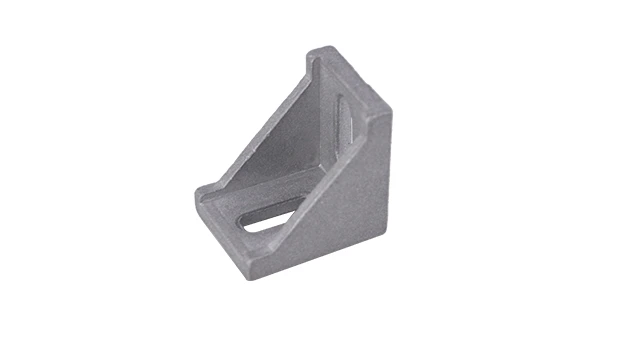
Walk into any modern electronics manufacturing facility today, and you'll notice a quiet revolution unfolding. The smartphones, wearables, and IoT devices rolling off production lines are getting smaller, smarter, and more complex—but the tools and setups used to assemble them? They're finally starting to catch up. For years, technicians and engineers have grappled with a frustrating reality: bulky, one-size-fits-all assembly components that take up precious workspace, slow down reconfiguration, and make precision work with tiny parts far more difficult than it needs to be. Enter the Miniaturized Gusset Alp 3030 —a yet game-changing component that's quietly reshaping how compact electronics are built. Let's dive into why this small but mighty part is becoming a cornerstone of modern assembly lines, and how it's aligning with the industry's shift toward leaner, more flexible systems.
The Growing Pain of Compact Electronics: Why Size Matters
Let's start with the obvious: electronics aren't getting bigger. A decade ago, assembling a smartphone might have involved handling components the size of a fingernail; today, we're talking about parts smaller than a grain of rice. Take, for example, the microprocessors in smartwatches or the sensors in fitness trackers—these require not just steady hands but also workspaces designed to minimize distractions and maximize precision. The problem? Traditional assembly setups were built for a different era. Heavy steel frames, clunky brackets, and rigid workbenches made sense when assembling desktop computers or large appliances, but they're overkill (and often counterproductive) for today's tiny tech.
Consider a typical workbench in a mid-sized electronics plant. It's likely built with thick steel profiles, bolted together with large brackets, and weighs hundreds of pounds. While sturdy, it's a nightmare to reconfigure when a new product line launches. Want to add a shelf for tools? You'll need a wrench, maybe even a drill. Need to adjust the height to accommodate a new type of testing equipment? Good luck—those bolts are rusted tight from years of use. And let's not forget about space: in a facility cranking out 10,000 units a day, every square inch counts. A bulky workbench that juts out six inches too far might mean the difference between fitting an extra assembly line or not.
This is where the Miniaturized Gusset Alp 3030 comes into play. Think of it as the "Swiss Army knife" of assembly components—small, lightweight, and incredibly versatile. But before we get into its specifics, let's clarify what a gusset even is. In manufacturing terms, a gusset is a bracket used to reinforce joints, adding stability to structures like workbenches, racks, or material handlers. Traditionally, these brackets were large and made of heavy steel, designed to support massive loads. But in the world of compact electronics, the loads are lighter, but the need for precision and adaptability is higher. The Miniaturized Gusset Alp 3030 reimagines this basic component for the 21st century.
Inside the Miniaturized Gusset Alp 3030: Design That Thinks Small
At first glance, the Miniaturized Gusset Alp 3030 might not look like much—a small, angular piece of aluminum with pre-drilled holes and a sleek finish. But its design is a masterclass in functional minimalism. Let's break down its key features:
- Material: Aluminum Profile at Its Finest – Unlike traditional steel gussets, this model is crafted from high-grade aluminum extrusion profile. Aluminum was a deliberate choice: it's 60% lighter than steel but still boasts impressive strength (we're talking a tensile strength of 300 MPa, enough to support the weight of a small car, though you'll never need that in an electronics lab). Its natural resistance to corrosion also means it holds up well in factory environments where humidity or cleaning agents might otherwise take a toll.
- Size: Compact Without Compromise – Measuring just 30mm x 30mm (hence the "3030" in its name), this gusset is less than half the size of traditional steel brackets. That might not sound like a lot, but when you're building a workbench with dozens of joints, those millimeters add up. A standard 6-foot workbench might use 12 gussets; switching to the Miniaturized Alp 3030 could shave off 10-15 pounds from the total weight, making it easier to move and reconfigure.
- Modular Design: T-Slot Compatibility – Here's where it gets clever: the gusset is designed to work seamlessly with aluminum profile accessories, specifically T-slot aluminum extrusion profiles. T-slot profiles have grooves (or "slots") running along their length, allowing components like gussets, shelves, or tool holders to be attached without drilling. The Miniaturized Gusset Alp 3030 slides into these slots and locks in place with a simple hex key, meaning reconfiguring a workbench takes minutes, not hours. Need to add a shelf? Slide the gusset into the slot, tighten the bolt, and you're done. Want to move it six inches to the left? Loosen the bolt, slide, retighten. No more wrestling with nuts and bolts or worrying about stripped threads.
- Precision Engineering: Tight Tolerances for Tight Spaces – In compact assembly, even a 1mm misalignment can throw off an entire process. The Miniaturized Gusset Alp 3030 is machined to tolerances of ±0.1mm, ensuring that when you attach it to an aluminum profile, the joint is rock-solid. This precision is crucial for tasks like soldering tiny circuit boards or aligning optical sensors, where vibrations or wobbles could ruin a component worth hundreds of dollars.
To put this in perspective, let's compare it to a traditional steel gusset. A standard 50mm steel gusset weighs about 200 grams and requires two 10mm bolts for installation. The Miniaturized Alp 3030? It weighs just 60 grams and uses two 6mm bolts. Over the course of a 20-workbench assembly line, that's a weight savings of 28 kilograms (about 62 pounds) and a reduction in hardware size that makes the entire structure feel less like a tank and more like a finely tuned instrument.
Traditional vs. Miniaturized: A Side-by-Side Comparison
| Feature | Traditional Steel Gusset | Miniaturized Gusset Alp 3030 |
|---|---|---|
| Material | Mild steel | Aluminum extrusion profile |
| Dimensions | 50mm x 50mm x 5mm | 30mm x 30mm x 3mm |
| Weight per Unit | 200g | 60g |
| Installation Time | 10-15 minutes (requires drilling) | 2-3 minutes (T-slot compatible) |
| Load Capacity | 500kg (overkill for small electronics) | 150kg (optimal for compact setups) |
| Corrosion Resistance | Low (prone to rust without coating) | High (natural aluminum oxide layer) |

Aligning with Lean Systems: Efficiency Beyond Size
If you've spent any time in manufacturing, you've probably heard of "lean systems"—the philosophy of minimizing waste while maximizing value. Lean is all about asking: "Does this component, process, or tool add value to the final product?" If the answer is no, it's time to rethink it. The Miniaturized Gusset Alp 3030 isn't just a smaller bracket; it's a lean system in action. Here's how:
1. Waste Reduction: Less Material, More Value
Lean manufacturing identifies seven types of waste, and "overprocessing" (using more resources than necessary) is high on the list. Traditional steel gussets are overkill for compact electronics assembly—they're built to support loads that simply don't exist in this context. By switching to a smaller, aluminum-based design, manufacturers reduce material waste (less aluminum is used than steel, and aluminum is easier to recycle) and cut down on shipping costs (lighter components mean lower fuel consumption). It's a small change, but multiplied across thousands of components, it adds up to significant savings.
2. Flexibility: Adapting to Change (Fast)
In electronics, product lifecycles are shorter than ever. A smartphone model might be obsolete in 18 months, and a new wearable could hit the market before the old one even ships. This means assembly lines need to pivot quickly. A lean system demands "changeover flexibility"—the ability to reconfigure a workstation from producing Product A to Product B in minutes, not days. The Miniaturized Gusset Alp 3030 excels here. Thanks to its T-slot compatibility with aluminum profiles, technicians can disassemble and reassemble workbenches, roller tracks, and material racks on the fly. No more waiting for the maintenance team to bring in power tools; a single technician with a hex key can reconfigure a workstation in under 30 minutes.
Case in point: A contract manufacturer in Shenzhen, China, recently switched to aluminum profile workbenches using the Miniaturized Gusset Alp 3030. They reported that changeover time between product lines dropped from 4 hours to 45 minutes—a 75% reduction. That's not just time saved; it's more production runs per day, which translates directly to higher revenue.
3. Ergonomics: Putting People First
Lean systems aren't just about machines—they're about people. A workstation that's uncomfortable or hard to use leads to fatigue, errors, and high turnover. Traditional steel workbenches are heavy and fixed, meaning technicians often have to hunch, stretch, or twist to reach components. The Miniaturized Gusset Alp 3030, paired with lightweight aluminum profiles, makes workstations adjustable. Want to raise the height by 10cm to accommodate a taller technician? No problem. Need to angle the work surface slightly to reduce eye strain? Just loosen a few gussets, adjust, and retighten. This focus on ergonomics isn't just "nice to have"—it's proven to reduce errors by up to 20% in precision tasks, according to a 2024 study by the International Society of Automation.

From the Factory Floor: Real-World Applications
Enough theory—let's talk about how the Miniaturized Gusset Alp 3030 is actually being used. Walk into any electronics manufacturing plant that's embraced lean principles, and you'll find it hard at work in three key areas:
Workbenches: The Heart of the Assembly Line
The assembly workbench is where the magic happens, and it's where the Miniaturized Gusset Alp 3030 shines brightest. Take the "Workbench E (Single Deck-Without Caster)" from leading suppliers—a compact, lightweight workstation designed for precision tasks like circuit board assembly. Traditional versions of this workbench used steel gussets and weighed around 80kg. With the Miniaturized Gusset Alp 3030 and aluminum profiles, the weight drops to 45kg, and the frame is modular. Technicians can add tool holders, ESD mats (critical for preventing static damage to sensitive components), or overhead lighting by simply slotting accessories into the T-slots. It's like building with Lego bricks, but for grown-ups who build iPhones.
One technician at a California-based drone manufacturer put it this way: "Before, our workbench felt like a prison—fixed, heavy, and unforgiving. Now? I can move my tools closer, adjust the height when my back starts to ache, and even add a small shelf for my magnifying glass. It sounds silly, but it makes the job feel less like work and more like… well, building something cool."
Roller Tracks: Smooth Material Flow
In any assembly line, materials need to flow—from the warehouse to the workstation, and from one station to the next. Roller tracks are the unsung heroes here, moving PCBs, components, and subassemblies along the line. But traditional roller tracks are often rigid and hard to adjust. Enter the Miniaturized Gusset Alp 3030, which makes it easy to build custom roller track setups. For example, "Plastic Roller Track Guide Rail Yellow" or "Aluminum Guide Rail A" can be mounted to aluminum profiles using the gussets, allowing for gentle slopes, curves, or even vertical adjustments. This is critical for "just-in-time" production, where materials arrive exactly when they're needed, reducing inventory waste.
A semiconductor plant in Taiwan recently used the gussets to build a roller track system for transporting wafer carriers. The old system was a single, fixed track that often jammed when carriers shifted slightly. The new setup, with adjustable gussets, allows the track to "flex" slightly, reducing jams by 90%. Plus, when they introduced a new, smaller wafer carrier, they simply repositioned the gussets to narrow the track—no need to buy a whole new system.
Turnover Trolleys and Racks: Moving Materials Without the Hassle
Even the humble turnover trolley gets a upgrade with the Miniaturized Gusset Alp 3030. Traditional steel trolleys are heavy and hard to maneuver, especially in tight spaces. But by using aluminum profiles and miniaturized gussets, suppliers like "Material Rack B (3 Row and 3 Floor)" can now offer trolleys that weigh 30% less while still supporting full loads of components. This makes it easier for workers to move materials between stations, reducing the risk of strain injuries and speeding up material handling.
Looking Ahead: The Future of Compact Assembly
The Miniaturized Gusset Alp 3030 is just the beginning. As electronics continue to shrink, we'll see even more innovations in compact assembly components. Here are three trends to watch:
1. Smart Components: Sensors Built In
Imagine a gusset with a built-in sensor that monitors vibration, temperature, or even weight. If a workstation is becoming unstable, or if a component bin is getting too heavy, the sensor could alert technicians via a mobile app. This "predictive maintenance" would reduce downtime and prevent errors before they happen. Some suppliers are already experimenting with embedding RFID tags in aluminum profiles, allowing for real-time tracking of components as they move through the assembly line.
2. Sustainable Materials: Greener Than Ever
Aluminum is already more sustainable than steel (it's 100% recyclable and requires 95% less energy to recycle than to produce from raw ore), but we'll see even more focus on eco-friendly materials. Expect to see gussets and profiles made from recycled aluminum, or even bioplastics for non-load-bearing components. Lean systems and sustainability go hand in hand, and manufacturers are starting to prioritize both.
3. Customization at Scale
Thanks to 3D printing and advanced machining, even small-batch manufacturers will be able to customize components like the Miniaturized Gusset Alp 3030 for specific tasks. Need a gusset with a unique angle for a custom drone assembly line? Upload the design to a supplier, and it'll be printed and shipped in days. This "mass customization" will make lean systems accessible to smaller shops, not just giant factories.
Small Part, Big Impact
At the end of the day, the Miniaturized Gusset Alp 3030 is more than just a bracket. It's a symbol of how manufacturing is evolving—away from brute force and toward precision, flexibility, and human-centered design. In a world where the next big tech breakthrough might be smaller than your thumbnail, the tools we use to build it matter. They need to be as smart, adaptable, and efficient as the products themselves.
So the next time you pick up your smartphone or strap on your smartwatch, take a moment to appreciate the invisible heroes of its creation: the technicians hunched over workbenches, the roller tracks moving components with care, and yes, the tiny aluminum gussets holding it all together. They might be small, but their impact? Nothing short of enormous.