- Company Articles
- Products and Technology
- Product knowledge
- Mobile Warehouse Racks: Flat Swivel Castor Wheel with Brake for Dynamic Storage Solutions

Mobile Warehouse Racks: Flat Swivel Castor Wheel with Brake for Dynamic Storage Solutions
Related Product
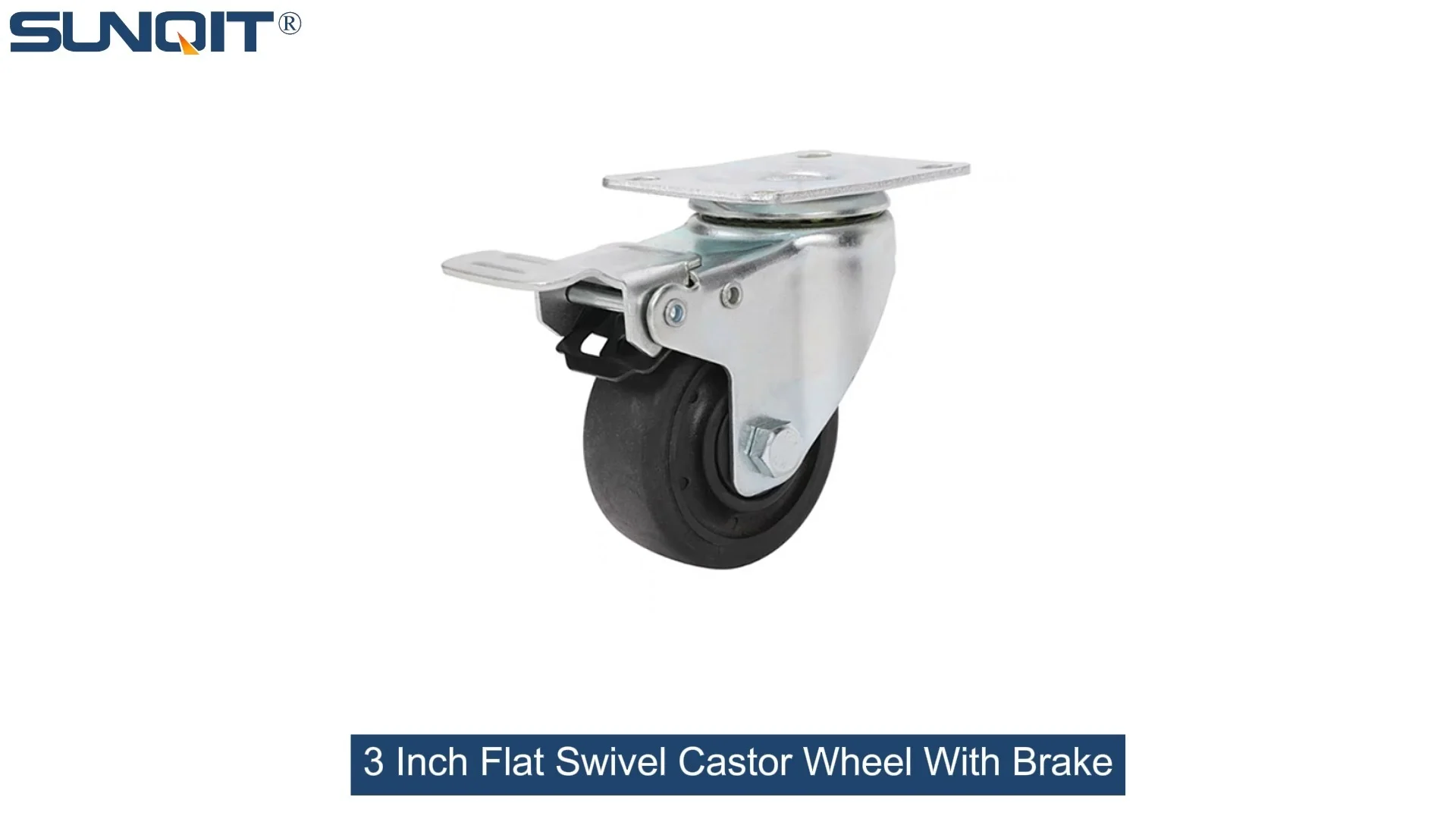
Flat Swivel Castor Wheel With Brake
Chair Casters Ball Bearing Wheels Rubber Base with brake design. Resistant to abrasion, impact and corrosion. Heavy payload can hold 70Kgs per pcs,which can make it works at a stable and smooth status.
Let's start with a scenario we've all seen (or lived through) in warehouses, factories, or distribution centers: A team of workers straining to move a heavy pallet of goods from one corner of the facility to another, navigating around static metal racks that haven't budged an inch in years. The clock's ticking, orders are piling up, and that immovable rack? It's not just taking up space—it's slowing everything down. Sound familiar? If you're nodding, you're not alone. In today's fast-paced world of manufacturing and logistics, the ability to adapt, reconfigure, and keep materials flowing smoothly isn't just a "nice-to-have"—it's the backbone of staying competitive.
That's where mobile warehouse racks come in. But here's the thing: A mobile rack is only as good as its ability to move easily and safely . And at the heart of that mobility? The often-overlooked hero: the flat swivel castor wheel with brake . These small but mighty components are changing the game for warehouses everywhere, turning rigid storage systems into dynamic, flexible tools that keep up with the chaos of modern operations. Let's dive into how these casters, paired with solutions like lean systems and flow racks, are transforming static spaces into hubs of efficiency.
Why "Static" Storage is No Longer Cutting It
For decades, warehouses relied on fixed metal racks bolted to the floor. They were sturdy, they held a lot of stuff, and… that was about it. But here's the problem: The world of manufacturing and logistics doesn't stand still. Product lines change. Order volumes spike (hello, holiday seasons). New machinery gets added. Suddenly, that "sturdy" rack is blocking a new production line. Or that "efficient" layout is now a maze of detours because a new product requires more storage space. Static racks lock you into a single layout, and in an industry where adaptability is key, that's a recipe for bottlenecks, wasted time, and frustrated teams.
Enter mobile storage solutions. By adding wheels to racks, workbenches, and material handlers, warehouses gain the power to reconfigure on the fly. Need to shift a row of racks to make space for a new assembly station? Done. Want to move a flow rack closer to the packaging line during peak hours? Easy. But not all mobile solutions are created equal. The difference between a rack that glides smoothly across the floor and one that feels like dragging a boulder? The casters. And when it comes to combining flexibility, safety, and durability, the flat swivel castor wheel with brake stands out from the crowd.
The Unsung Hero: Flat Swivel Castor Wheel with Brake
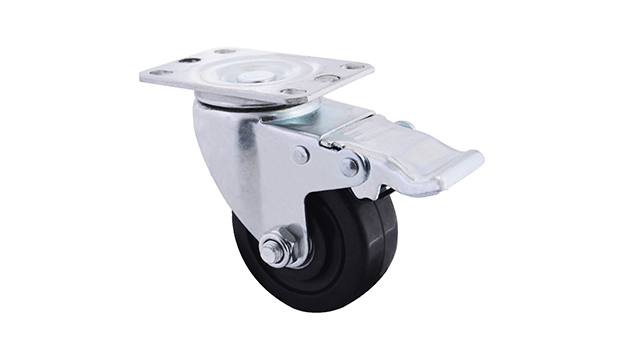
Let's talk about casters for a minute. You might think, "They're just wheels—how complicated can they be?" But if you've ever pushed a cart that wobbles, gets stuck on cracks, or refuses to turn, you know better. A good caster isn't just a wheel on a stick; it's a precision tool designed to balance three critical needs: mobility , stability , and control . And the flat swivel castor wheel with brake nails all three.
First, the "swivel" part. These casters rotate 360 degrees, which means you can maneuver even heavy racks around tight corners, through doorways, or into tight spaces without breaking a sweat. No more backtracking or awkward pivoting—just smooth, effortless movement. Then there's the "flat" design. Unlike bulky, protruding casters that can catch on uneven floors or debris, flat casters sit close to the base of the rack, lowering the center of gravity and reducing the risk of tipping. That's a big deal when you're hauling heavy loads of raw materials or finished products.
But the real game-changer? The brake . Imagine moving a loaded flow rack into position, only to have it roll away while you're loading or unloading. Not only is that dangerous, but it's a huge waste of time. The brake mechanism on these casters solves that problem in an instant. Step on the brake pedal, and the wheel locks into place—firmly, securely, and without any wiggle room. Some models even have a "total lock" feature that locks both the wheel and the swivel, ensuring the rack stays exactly where you put it, even on sloped floors or in high-traffic areas.
Fun fact: A single flat swivel castor wheel with brake can typically support anywhere from 150 to 500 pounds, depending on the model. That means a standard 4-caster rack can handle 600 to 2,000 pounds—more than enough for most warehouse materials, from small parts bins to heavy pallets of electronics.
From "Good" to "Lean": How Casters Support Lean Systems
If you're familiar with lean systems , you know the goal is simple: eliminate waste. Waste of time. Waste of space. Waste of effort. But here's the catch: Lean isn't just about cutting costs—it's about creating flow . Materials should move from point A to point B without unnecessary stops. Workers should have tools and parts right where they need them, when they need them. And the layout of the workspace should adapt to the workflow, not the other way around.
Static racks? They're the opposite of flow. They force materials to take detours. They trap workers in fixed positions. They turn "continuous improvement" into "continuous frustration." But add a set of flat swivel casters with brakes to those racks, and suddenly, you've got a lean-friendly solution. Let's break it down:
- Reduced transportation waste: Instead of moving materials to the rack, move the rack to the materials. Need parts for the morning shift on Line 1? Roll the flow rack to the assembly area. Afternoon shift on Line 3? Wheel it over there. No more double-handling, no more wasted steps.
- Space optimization: Lean systems thrive on "5S" (Sort, Set in Order, Shine, Standardize, Sustain). Mobile racks make "Set in Order" a breeze. At the end of the shift, roll racks back to a central storage area, freeing up floor space for cleaning or reconfiguration. During peak hours, expand storage by bringing racks out—no construction, no tools, no downtime.
- Flexible workstations: Pair a mobile rack with a workbench , and you've got a workstation that moves with the job. Assembling a large product? Roll the workbench and materials right to the production line. Testing components? Move the setup to a quiet corner. It's like having a portable office, but for manufacturing.
One warehouse in Ohio I worked with a few years back is a perfect example. They'd been using fixed racks for over a decade, and their "lean initiatives" were stuck in neutral—until they swapped out 20% of their static racks for mobile versions with flat swivel casters. Within three months, they reduced material transportation time by 35%, freed up 1,200 square feet of floor space, and even cut down on workplace injuries from heavy lifting. All because they stopped fighting against their layout and started moving with it.

Flow Racks: From "Stagnant" to "Smooth" with Mobile Power
Flow racks are already a staple in lean warehouses. They use gravity (or rollers) to move materials from the back to the front, ensuring first-in, first-out (FIFO) inventory and easy access. But traditional flow racks are still fixed to the floor. That means if your production line shifts, or you need to prioritize a rush order, the flow rack stays put—leaving workers to carry heavy bins of parts across the warehouse.
Mobile flow racks? Game. Changer. By adding flat swivel casters with brakes to the base of a flow rack, you turn it into a self-contained material delivery system. Let's say you're running a small electronics assembly line, and you need capacitors, resistors, and diodes at each station. Instead of having workers walk to a central flow rack, you roll three smaller mobile flow racks—one for each part—to the line. Workers pick what they need, and when the bins are empty, you roll the rack back to the stockroom to reload. It's like having a conveyor belt that goes wherever you need it, whenever you need it.
And here's the best part: These casters work with just about any flow rack design. Whether you're using steel roller tracks, plastic guide rails, or ball transfer tables, adding casters is a simple upgrade. Most flow rack manufacturers even offer caster-ready bases, so you don't have to modify existing equipment. Just bolt on the casters, test the brakes, and you're good to go.

Beyond Racks: Turnover Trolleys, Workbenches, and the "Anywhere, Anytime" Workspace
Mobile storage isn't just about racks. Think about turnover trolley and rack systems—those handy carts used to transport materials between departments. A turnover trolley with cheap, flimsy casters is a nightmare: it wobbles, it gets stuck, and half the time, the wheels fall off under heavy loads. But swap in flat swivel casters with brakes, and suddenly, that trolley becomes a workhorse. It glides over concrete, tile, or even uneven warehouse floors. It stops on a dime when you need to load it. And it lasts for years, even with daily use.
Workbenches are another area where casters shine. A fixed workbench ties you to one spot, but a mobile workbench? It's a workstation that adapts. Need to inspect incoming shipments? Roll the bench to the receiving dock. Assemble a custom order? Move it to a quiet corner. Clean the floor? Wheel it out of the way. Add a pegboard for tools, a power strip for equipment, and you've got a fully functional, portable workspace that goes wherever the job takes you.
| Static Storage | Mobile Storage (with Flat Swivel Casters) |
|---|---|
| Fixed layout; hard to reconfigure | Adapts to workflow changes in minutes |
| Requires material to move to the rack | Rack moves to the material, reducing waste |
| Limited to one location; underutilizes space | Can be stored when not in use; maximizes space |
| Risk of bottlenecks during peak demand | Scales with demand by adding/relocating racks |
| Workers tied to fixed positions | Workstations move with the job, boosting morale |
Choosing the Right Caster: It's Not One-Size-Fits-All
So, you're sold on mobile storage. Now what? Not all flat swivel casters with brakes are created equal, and choosing the wrong one can turn your "efficiency upgrade" into a headache. Here are the key factors to consider:
1. Load Capacity
Start with the basics: How much weight will the rack or trolley need to carry? If you're storing small parts, a 150-pound caster might be enough. If you're hauling pallets of metal components, opt for 300-500 pound capacity. Remember: It's better to overestimate than underestimate—overloading a caster leads to premature wear, wobbly movement, and safety risks.
2. Floor Type
Concrete floors? Rubber wheels are a good bet—they absorb shock and reduce noise. Smooth tile or epoxy floors? Polyurethane wheels offer better grip and won't leave marks. Rough or uneven surfaces? Look for casters with larger wheels (4-6 inches) and treaded tires to avoid getting stuck.
3. Brake Type
Do you need a "wheel lock" (only locks the wheel) or a "total lock" (locks wheel and swivel)? For most warehouse applications, total lock is safer, especially if the rack might be bumped or jostled. Also, check the brake pedal—it should be easy to engage with a foot, even when wearing work boots.
4. Environment
Wet or corrosive environments (like food processing or chemical plants)? Go for stainless steel casters to prevent rust. ESD-sensitive areas (electronics manufacturing)? Look for ESD-rated wheels that dissipate static electricity. Cleanrooms? Non-marking, low-particulate wheels are a must.
The Future of Warehousing: Mobility as a Standard, Not an Upgrade
As warehouses and factories continue to adapt to shorter product cycles, higher order volumes, and the rise of automation, mobility will stop being a "nice upgrade" and start being a requirement. And at the center of that mobility revolution? The flat swivel castor wheel with brake. These small, unassuming components are proving that sometimes, the biggest changes in efficiency come from the smallest parts.
Imagine a warehouse where racks move like water—flowing around obstacles, adjusting to demand, and supporting workers instead of hindering them. A warehouse where a single worker can reconfigure a production line in 10 minutes, not 10 hours. A warehouse where "waste" is a thing of the past, and "flow" is the norm. That's not a pipe dream—it's the reality for warehouses already embracing mobile storage solutions.
So, the next time you walk through your facility, take a look at those static racks. Ask yourself: Are they working for you, or against you? If the answer is "against," maybe it's time to give them a set of wheels. After all, in a world that never stops moving, your storage system shouldn't either.
*Note: Always consult with a material handling expert to ensure your mobile storage solutions comply with OSHA regulations and safety standards for your specific industry.