- Company Articles
- Products and Technology
- Product knowledge
- Modern Warehousing: Why Flat Swivel Castor Wheel with Brake Is a Logistics Must-Have

Modern Warehousing: Why Flat Swivel Castor Wheel with Brake Is a Logistics Must-Have
Related Product
Flat Swivel Castor Wheel With Brake
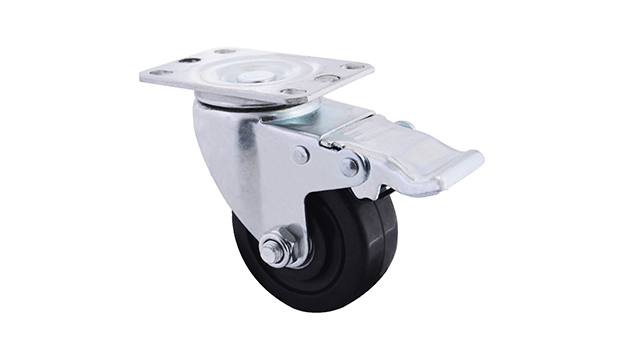
Chair Casters Ball Bearing Wheels Rubber Base with brake design. Resistant to abrasion, impact and corrosion. Heavy payload can hold 70Kgs per pcs,which can make it works at a stable and smooth status.
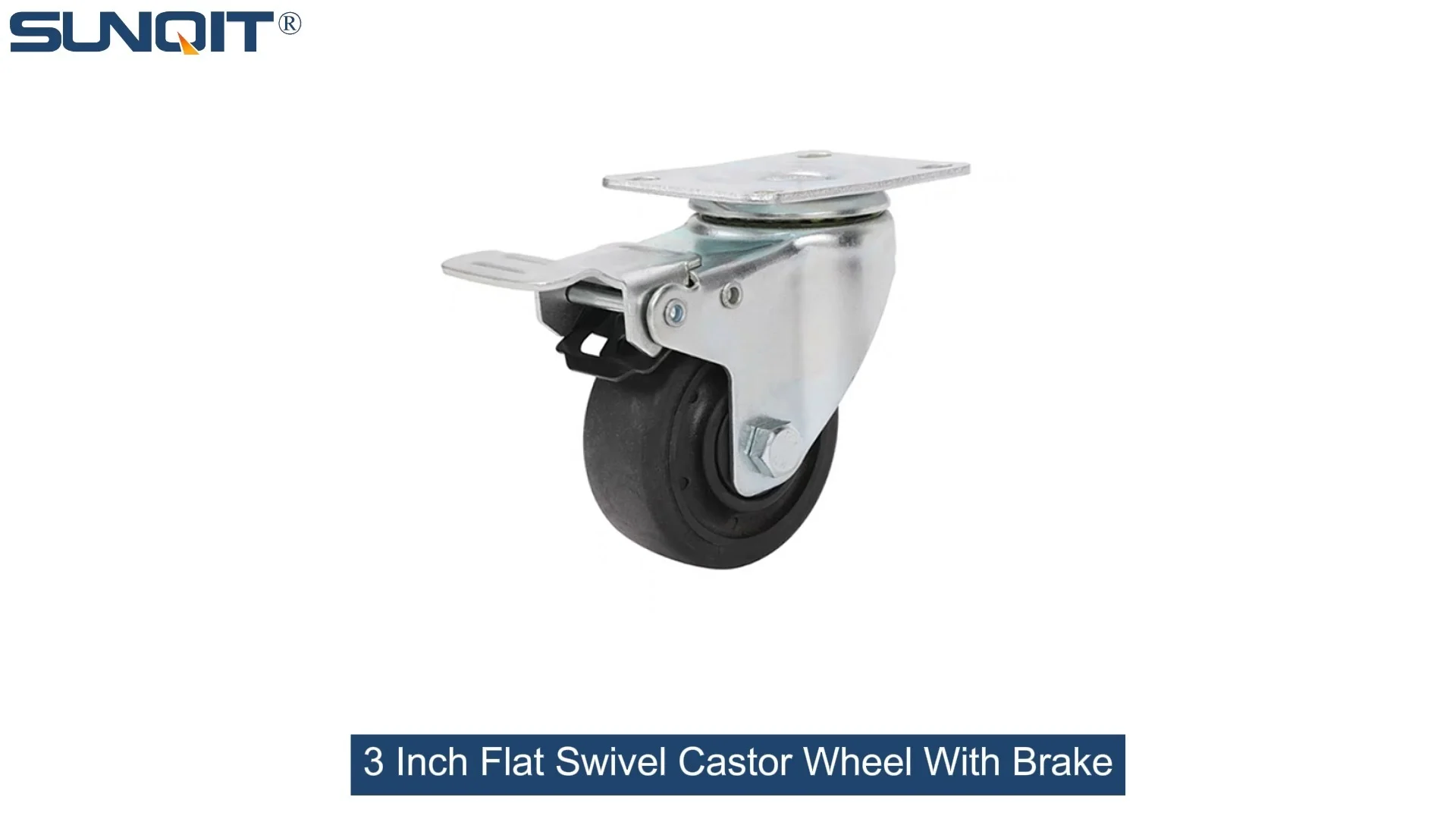
Walk into any high-performing warehouse today, and you'll quickly realize that success isn't just about big machinery or cutting-edge software. It's often the smallest, most unassuming components that keep operations running like clockwork. Among these unsung heroes? The flat swivel castor wheel with brake. In an industry where every second counts, where safety and efficiency are non-negotiable, and where adaptability can make or break a day's output, this humble wheel has quietly become a cornerstone of modern logistics. Let's dive into why it's more than just a "part"—it's a must-have for any warehouse looking to thrive in today's fast-paced supply chain.
The Hidden Cost of Static Warehousing: Why Mobility Matters
Gone are the days of warehouses as static, rigid spaces where shelves and workbenches stay bolted to the floor for decades. Today's logistics landscape demands flexibility. Seasonal spikes, shifting consumer demands, and rapid product turnover mean warehouses need to reconfigure on the fly. A workbench that's fixed in one spot might work for a week, but when a new assembly line is added or a shipment of oversized goods arrives, that same workbench becomes a bottleneck. This is where mobility steps in—and at the heart of that mobility? Castor wheels.
Consider this: A typical warehouse employee spends up to 20% of their shift simply moving materials from point A to B. If the tools and equipment they need are stuck in one place, that percentage skyrockets. A workbench mounted on reliable castors, though? It can be wheeled directly to the assembly line, cutting down on wasted steps. A turnover trolley and rack that glides smoothly? It transforms how quickly inventory is restocked. Mobility isn't just about convenience—it's about reclaiming time, reducing fatigue, and boosting overall productivity.
Think about it:
If your team spends less time pushing heavy carts or walking back and forth, they have more time to focus on high-value tasks—like quality checks, order fulfillment, or process improvements. That's the power of smart mobility.
What Makes "Flat Swivel Castor Wheel with Brake" the Gold Standard?
Not all castor wheels are created equal. Fixed castors only roll forward and backward, limiting maneuverability. Swivel castors without brakes might save time on the move but become hazards when loaded—imagine a fully stocked turnover trolley sliding away mid-unloading. The flat swivel castor wheel with brake, though, solves both problems. Let's break down its standout features:
| Castor Type | Maneuverability | Safety | Adaptability | Best For |
|---|---|---|---|---|
| Fixed Castor | Low (only linear movement) | Medium (no sudden shifts, but hard to reposition) | Low (stuck in one trajectory) | Heavy, rarely moved equipment |
| Swivel Castor (No Brake) | High (360° rotation) | Low (risk of unintended movement when loaded) | Medium (mobile but unstable when stationary) | Light, temporary tasks (e.g., quick tool transport) |
| Flat Swivel Castor with Brake | High (360° rotation + tight turning) | High (instant lock to prevent sliding) | High (moves easily, stays put when needed) | Daily-use equipment (workbenches, turnover trolleys, flow racks) |
The "flat" design is another unsung advantage. Unlike bulky, curved castors that can catch on uneven floors or debris, flat castors distribute weight evenly, gliding smoothly over warehouse surfaces—whether concrete, tile, or even slightly cracked flooring. This reduces wear and tear on both the wheel and the floor, cutting down on maintenance costs over time.
Then there's the brake. A high-quality brake mechanism—often a simple foot pedal—locks the wheel in place with a firm, reliable grip. This isn't just about preventing accidents (though that's critical). It's about stability during use. A workbench with a locked castor won't wobble during precision assembly. A flow rack with braked castors stays steady while workers load or unload products, reducing errors and damage. In short, the brake turns a "mobile tool" into a "stationary asset" in seconds.
Real-World Impact: Where This Castor Shines Brightest
To truly understand the value of the flat swivel castor wheel with brake, let's look at three common warehouse workhorses that rely on it daily:
1. Workbenches: From Static to Super Flexible
A workbench is the heart of any assembly or packing station. But a fixed workbench limits how teams collaborate. With flat swivel castors and brakes, that same workbench becomes a chameleon. Need to group three workbenches for a large order? Unlock the brakes, wheel them together, and lock again—suddenly, you have a seamless workspace. Finished? Break them apart and return to individual stations. Even better, if a worker has mobility needs or prefers standing vs. sitting, the workbench can be adjusted and repositioned in minutes. This flexibility transforms static workstations into dynamic hubs that adapt to people , not the other way around.
2. Turnover Trolley and Rack: The Unsung Heroes of Inventory Flow
Turnover trolleys and racks are the backbone of inventory movement—shuttling parts from storage to assembly lines, or finished goods to shipping. A trolley without reliable castors becomes a liability: stuck wheels cause strain, uneven rolling damages floors, and no brakes mean goods might shift or fall. But with flat swivel castors and brakes? These trolleys glide around corners, navigate tight aisles, and lock securely when loading. Imagine a trolley loaded with fragile electronics: the swivel allows the operator to pivot smoothly around a pallet, while the brake ensures the trolley stays put when unloading—no more fumbling with wedges or worrying about slips. It's not just about speed; it's about protecting your products (and your bottom line).
3. Flow Racks: Keeping Products Moving, Safely
Flow racks are designed for "first in, first out" (FIFO) inventory management, using gravity to slide products forward as items are removed. But what if your flow rack is in the wrong spot? Maybe a new product line requires it closer to the packing area, or a seasonal rush demands reconfiguring the warehouse layout. A flow rack mounted on flat swivel castors with brakes can be moved without dismantling it—saving hours of labor. Once in place, the brakes lock it down, ensuring the rack stays level (critical for gravity flow) and stable. Even better, if maintenance is needed, the rack can be wheeled to a service area instead of bringing tools to a fixed, hard-to-reach spot.

Beyond the Wheel: Why Caster Accessories Matter
A castor is only as good as its accessories. The flat swivel castor wheel with brake might be the star, but components like brake pedals, mounting plates, and bearings play supporting roles that can't be ignored. For example, a brake that sticks or a mounting plate that bends under load turns a reliable tool into a frustration. That's why smart warehouse managers don't just buy "wheels"—they invest in caster accessories designed to last.
High-quality brake mechanisms, for instance, use durable springs and corrosion-resistant materials to ensure they engage smoothly, even after thousands of uses. Heavy-duty mounting plates distribute weight evenly, preventing cracks or warping. Sealed bearings keep dirt and debris out, reducing friction and extending the castor's lifespan. These details might seem minor, but they add up: fewer breakdowns, less downtime, and lower replacement costs over time. When choosing castors, ask about the accessories—they're the difference between a "good enough" solution and one that stands up to the daily grind of a busy warehouse.

Aligning with Lean Systems: Less Waste, More Flow
Modern warehouses don't just aim for efficiency—they strive for lean efficiency . Lean systems focus on eliminating waste (whether time, space, or effort) and creating smooth, uninterrupted workflows. The flat swivel castor wheel with brake fits this philosophy perfectly. Here's how:
- Reduced Motion Waste: In lean terms, "motion waste" is any unnecessary movement by workers. A workbench that can be wheeled to the assembly line eliminates the need to carry parts back and forth. A turnover trolley that glides with minimal effort reduces strain and speeds up tasks.
- Space Optimization: Fixed equipment takes up permanent floor space, even when unused. Mobile equipment with braked castors can be stored compactly when not needed, freeing up room for other tasks. This is especially valuable in smaller warehouses where space is at a premium.
- Continuous Improvement: Lean thrives on adaptability. If a new process is tested and fails, mobile workstations or racks can be quickly repositioned to try again. If it succeeds, the layout can be locked in place with the flip of a brake. This flexibility makes it easier to experiment and refine workflows over time.
A lean system supplier will often emphasize these connections—because they know that the right tools (like reliable castors) aren't just add-ons; they're integral to making lean principles work on the ground. When your equipment moves as efficiently as your processes, you're not just "doing lean"—you're living it.
Choosing the Right Partner: Why Supplier Matters
Not all flat swivel castor wheels with brakes are created equal, and neither are their suppliers. When shopping for these critical components, look for a partner who understands more than just "selling parts"—someone who gets your warehouse. A great supplier will ask questions: What's your average load weight? What type of flooring do you have? How often do you reconfigure your space? They'll recommend castors with the right wheel material (rubber for concrete, polyurethane for sensitive floors), the appropriate brake type (foot-operated vs. hand-operated), and accessories that match your unique needs.
Avoid suppliers who push one-size-fits-all solutions. A warehouse handling heavy automotive parts needs sturdier castors than one shipping small electronics. A facility with cold storage might require corrosion-resistant materials. The best suppliers don't just sell—they collaborate, ensuring you get castors that grow with your operations, not hold them back.
The Bottom Line: Small Wheel, Big Impact
In the grand scheme of warehousing, the flat swivel castor wheel with brake might seem. But as we've explored, its impact is anything but small. It turns static workbenches into flexible hubs, transforms clunky trolleys into efficient carriers, and helps flow racks adapt to shifting demands. It aligns with lean principles, reduces waste, and keeps workers safe. It's a testament to the idea that in logistics, success lies in the details.
So the next time you walk through your warehouse, take a moment to notice those wheels. The ones that glide smoothly, lock securely, and make the impossible feel routine. They're not just parts—they're the reason your operations keep moving forward. And in a world where logistics never stops, that's the ultimate must-have.