- Company Articles
- Products and Technology
- Product knowledge
- Modular Castor Install Base Systems: Adapting to Changing Production Needs

Modular Castor Install Base Systems: Adapting to Changing Production Needs
Related Product
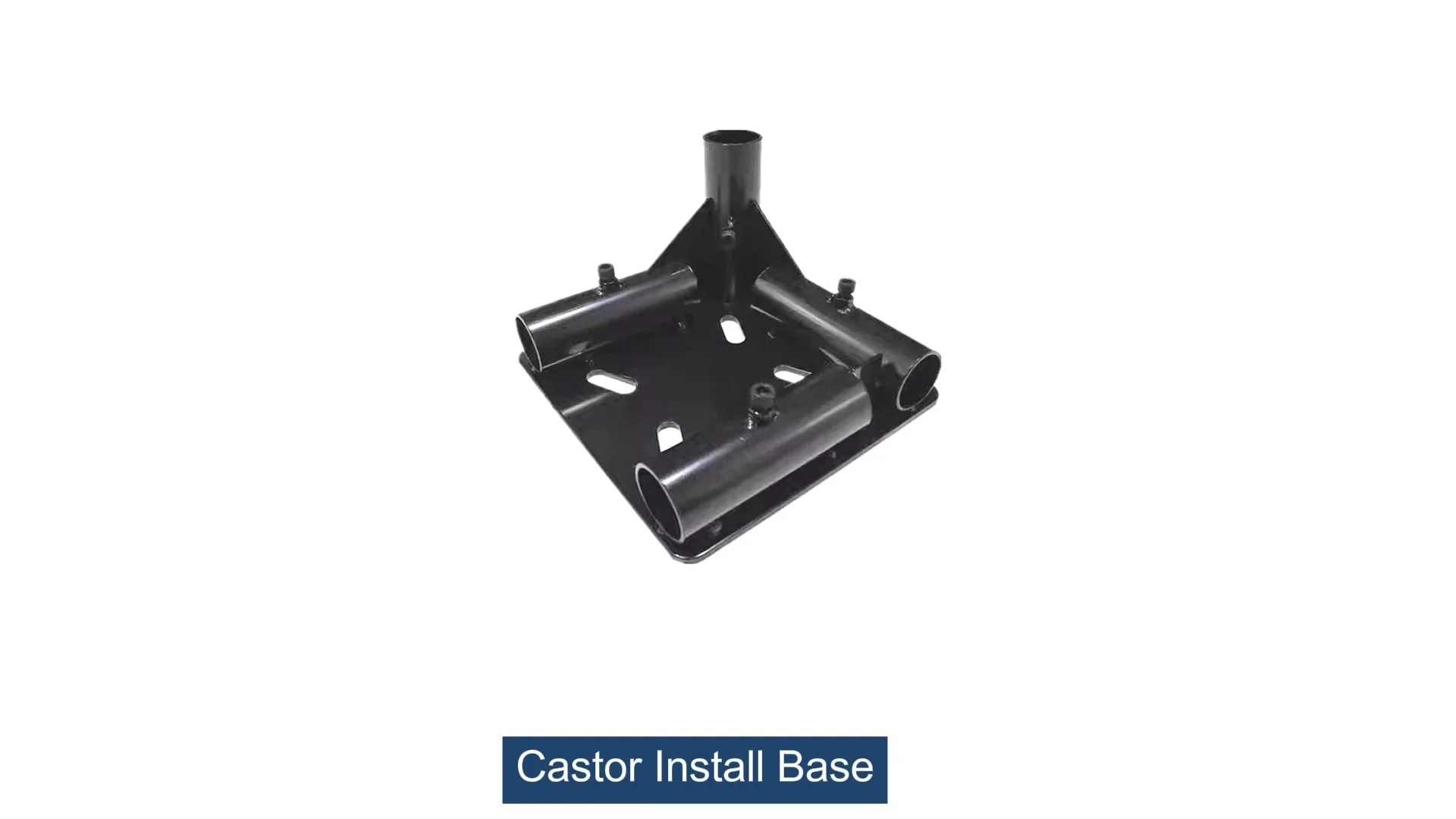
Castor Install Base
Castor install base, used for connection between pipe and castor, it can connect 4 pcs pipe by 1 pcs castor base, to make the structure strong and stable.
In today's manufacturing landscape, where production lines must pivot rapidly to meet shifting consumer demands, seasonal trends, and evolving industry standards, adaptability isn't just an advantage—it's a survival skill. Traditional fixed setups, with their bolted-down workbenches, immovable racks, and static material handlers, are becoming relics of a bygone era. They slow reconfiguration, extend downtime during line changes, and limit a facility's ability to scale or diversify. Enter modular castor install base systems: the unassuming yet transformative solution that's quietly redefining how factories, warehouses, and assembly plants stay agile. These systems serve as the backbone of modern production equipment, turning rigid workbenches into mobile workstations and static racks into flexible material transporters. In this article, we'll explore how these systems work, their critical role in lean manufacturing, and why they're essential for businesses aiming to thrive in an era of constant change.
What Are Modular Castor Install Base Systems?
At their core, modular castor install base systems are the bridge between stationary equipment and the mobility modern production demands. Imagine the "feet" of your workbench or turnover trolley—but instead of being fixed, these feet are engineered to be versatile, durable, and customizable. Unlike traditional bases welded or bolted in place, modular castor bases are designed to be detachable, adjustable, and compatible with a range of caster wheels and accessories. This modularity lets them adapt to specific equipment, load capacities, and floor conditions while enabling quick reconfiguration when needs shift.
These systems typically include a base plate (attaching to equipment like workbenches or trolleys), casters (wheels) for mobility, and adjustable components like leveling feet. Their genius lies in balance: they let a loaded turnover trolley glide across a warehouse yet lock into place as a stable workbench. Whether you need to reposition a production line, reorganize a warehouse, or adapt to a new product model, these bases turn once-static equipment into tools that evolve with your business.
Key Components: The Building Blocks of Adaptability
To appreciate their adaptability, let's break down the key components of modular castor install base systems. Each part contributes to balancing mobility, stability, and durability, ensuring equipment can keep pace with dynamic production environments:
| Component | Function | Role in Adaptability |
|---|---|---|
| Castor Install Base Plate | Metal/composite plate attaching to equipment bottoms (e.g., workbenches, trolleys). | Interfaces between equipment and casters; pre-drilled holes enable quick caster swaps for different mobility needs. |
| Caster and Accessories | Wheels (swivel, locking, heavy-duty) and hardware (brakes, bearings, axles). | Dictate mobility type (e.g., swivel for tight spaces, locking brakes for stability); accessories like shock-absorbing bearings enhance performance. |
| Adjustable Leveling Feet | Threaded feet screwing into the base plate to stabilize equipment on uneven floors. | Ensure stability when stationary; critical for precision tasks on workbenches or ESD stations. |
| Connectors & Fasteners | Bolts, nuts, and brackets securing the base plate to equipment and casters. | Standardized sizing allows easy upgrades (e.g., switching to heavy-duty casters for increased loads). |
Take caster and accessories, for example: a light-duty swivel caster might suit a mobile workbench in an electronics lab, while a heavy-duty locking caster is better for a loaded turnover trolley in a warehouse. Adjustable leveling feet, meanwhile, let operators stabilize equipment on uneven concrete floors—no shims or floor repairs needed. This mix of components ensures the system adapts not just to equipment, but to the unique challenges of each workspace.

Why Lean Systems Depend on Modular Castor Bases
In lean manufacturing—centered on eliminating waste and optimizing workflow—modular castor install bases are more than tools; they're strategic assets. Lean systems thrive on efficiency, and these bases deliver by addressing key pain points:
Reducing Motion Waste: One of lean's seven wastes, motion waste (unnecessary movement of workers or materials), is minimized when equipment moves to the worker. A mobile workbench with a modular base can be positioned steps from an assembly line, cutting walk time and boosting productivity.
Enabling Quick Changeovers: In industries like automotive or electronics, where production runs shrink, reconfiguring lines fast is critical. Modular bases let teams reposition workbenches or turnover trolleys in minutes, slashing downtime from hours to minutes.
Supporting Just-In-Time (JIT) Delivery: JIT relies on delivering materials exactly when needed. Mobile turnover trolleys with modular bases transport parts directly to the line, eliminating excess inventory storage and streamlining workflows.
By integrating with lean system principles, these bases turn static production lines into dynamic ecosystems where waste is minimized, and efficiency is maximized.

Real-World Applications: Workbenches to Turnover Trolleys
Modular castor install base systems shine across industries, adapting to diverse equipment and tasks. Let's explore their most impactful applications:
Workbenches: From Fixed to Flexible
Workbenches are the backbone of assembly lines, labs, and repair shops. Traditional fixed workbenches limit flexibility—if a production line shifts, they stay put or require disassembly. Modular castor bases transform them into mobile workstations. For example, an electronics manufacturer using an ESD workbench (to protect sensitive components) can wheel it to a new line in minutes. When stationary, adjustable leveling feet lock it in place, ensuring stability for delicate soldering or testing.
Even specialized workbenches benefit: a heavy-duty aluminum profile workbench in a mechanic's shop can be repositioned to access different vehicles, while a cleanroom workbench in pharmaceuticals can be moved for deep cleaning—all without compromising precision or safety.
Turnover Trolley and Rack Systems: Material Handling, Reimagined
Turnover trolleys and racks move materials, finished goods, and tools—but traditional designs are often single-purpose. A trolley with fixed shelves works for boxes but not for bulky items. Modular castor bases change this by letting teams reconfigure on the fly. A logistics firm might use a turnover trolley with a modular base to transport packages by day, then swap in heavy-duty casters and remove shelves to haul large equipment by night. Racks, too, become adaptable: a material rack with a modular base can be shifted to block a spill, create more floor space, or support a temporary production line.
Case Study: How a Manufacturer Cut Downtime by 40% with Modular Bases
A mid-sized automotive parts manufacturer struggled with fixed workbenches and racks, spending 8 hours reconfiguring lines between product models. After retrofitting workbenches and turnover trolleys with modular castor bases, changeover time dropped to 3 hours—a 40% reduction. Workers repositioned equipment by hand, eliminating forklift use, and adjustable leveling feet stabilized workbenches on uneven floors. Over six months, the company saved 200+ downtime hours, improved on-time deliveries by 15%, and reduced workplace injuries from heavy lifting.

Trends Shaping the Future of Modular Castor Systems
As manufacturing evolves, modular castor install base systems are keeping pace with innovations like:
Smart Integration: Sensors in casters or bases track movement, load, and wear, sending alerts for maintenance—predicting issues before they cause downtime.
Sustainability: Bases made from recycled aluminum or composite materials align with eco-friendly goals, while their reusability reduces waste from equipment replacement.
Niche Customization: Specialized bases for cleanrooms (anti-microbial casters), outdoor use (corrosion-resistant materials), or medical settings (non-marking wheels) cater to industry-specific needs.
Conclusion: Building a Foundation for Change
Modular castor install base systems may not grab headlines, but they're the foundation of adaptable manufacturing. By turning workbenches into mobile stations, turnover trolleys into versatile transporters, and static lines into dynamic ecosystems, they empower businesses to thrive in a changing world. For manufacturers aiming to reduce waste, cut downtime, and stay competitive, these systems aren't just an investment—they're a necessity. After all, in manufacturing, the ability to move forward often starts with the ability to move your equipment.