- Company Articles
- Products and Technology
- Product knowledge
- Modular Conveyors Built with 4080A EU Standard Aluminum Profile: Flexibility & Efficiency

Modular Conveyors Built with 4080A EU Standard Aluminum Profile: Flexibility & Efficiency
Related Product
4080A EU Standard Aluminum Profile
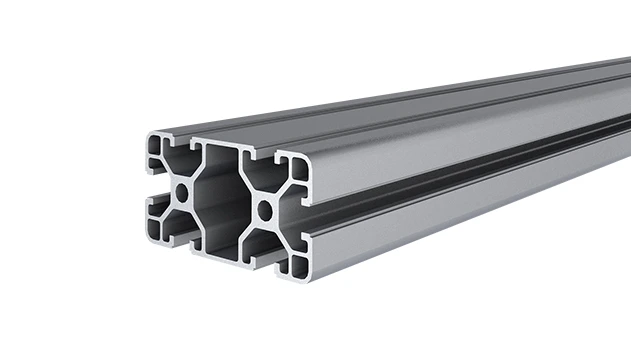
4080A is a 4.00x8.00 CM fractional 40 series square extrusion T-slot profile with two side open T-slots, each side with 4.00cm face, two side with 8.00cm face. The profile has align-a-grooves to assist in aligning connecting profiles.
Modular Conveyors Built with 4080A EU Standard Aluminum Profile: Flexibility & Efficiency
Walk into any modern factory, warehouse, or assembly plant, and you'll hear it—the steady hum of materials moving, the rhythm of products gliding from one workstation to the next. Conveyors aren't just machines; they're the circulatory system of production, keeping the lifeblood of materials flowing where they need to be, when they need to be there. But for too long, many teams have been stuck with rigid, one-and-done conveyor systems that fight against the very adaptability modern manufacturing demands. Today, we're diving into a solution that changes the game: modular conveyors built on the backbone of 4080A EU Standard Aluminum Profile. This isn't just about moving parts—it's about building a production line that bends, grows, and evolves with your business.
The Hidden Cost of "Set It and Forget It" Conveyors
Let's start with the pain points we all know too well. Imagine (oops, scratch that—let's recall ) that time your company launched a new product line. The old conveyor system, designed for last year's bestseller, couldn't handle the new component sizes. You had two choices: invest in a brand-new conveyor (and write off the old one) or cobble together a patchwork of extensions and workarounds that slowed down production and increased errors. Or maybe it was a seasonal rush—suddenly, you needed to double output, but your fixed conveyor layout created bottlenecks because you couldn't add a parallel line without major construction. Sound familiar?
Traditional conveyors, often made with welded steel or heavy, inflexible materials, are built for a single purpose. They're reliable—until your needs change. And in today's manufacturing landscape, needs change fast. Market demands shift, product designs evolve, and facility layouts get reimagined to boost workflow. A conveyor that can't keep up isn't just a tool—it's a liability.
Enter 4080A EU Standard Aluminum Profile: The Foundation of Flexibility
So, what's different about modular conveyors built with 4080A EU Standard Aluminum Profile? Let's break it down. First, the 4080A itself. This isn't just any aluminum extrusion profile—it's a precision-engineered component designed to meet strict EU standards for quality, durability, and compatibility. The "4080" refers to its dimensions: 40mm by 80mm, a sweet spot that balances strength and versatility. The "A" denotes its specific groove design, which plays nice with a wide range of aluminum profile accessories, from brackets to connectors to roller track mounts.
Aluminum extrusion profile has long been a favorite in industrial design for good reason. It's lightweight—about a third the weight of steel—so you can reconfigure sections without heavy machinery or a team of lifters. But don't let the weight fool you: 4080A is tough. Its hollow, ribbed structure gives it impressive load-bearing capacity, handling everything from small electronic components to heavier mechanical parts. And unlike steel, it resists corrosion, so it holds up in dusty warehouses, humid assembly areas, or even cleanrooms where hygiene matters.
But the real magic? It's modular. Instead of welding or bolting components into place permanently, 4080A-based systems use T-slot connections and aluminum profile accessories that let you assemble, disassemble, and reassemble the conveyor like a high-stakes Lego set—only sturdier. Need to add a 90-degree turn? Swap out a straight section for a curved one using a few connectors. Want to raise the height to align with a new workstation? Adjust the legs with height-adjustable brackets. It's not just a conveyor; it's a system that adapts to you .
Roller Track: The Smooth Operator of Modular Conveyors
A conveyor is only as good as its ability to move materials smoothly. That's where roller track comes in—and when paired with 4080A aluminum profile, it becomes a match made in efficiency heaven. Roller track, whether steel, aluminum, or plastic, is the surface that carries your products, reducing friction so items glide instead of grind. But in modular systems, roller track isn't just a passive component; it's a flexible one.
Let's say you need to switch from moving small, lightweight boxes to heavier, bulkier parts. With traditional conveyors, you might need to replace the entire track. With 4080A-based modular conveyors, you simply swap out the roller track sections. Need more grip? Install rubber-coated rollers. Moving delicate electronics? Switch to plastic roller track guide rails (yellow or grey—your call) to prevent static buildup. And because the 4080A profile's T-slots are standardized, these swaps take minutes, not days. No welding, no drilling, no downtime.
Even better, roller track accessories like placon mounts (those handy brackets that secure the track to the aluminum profile) come in multiple styles: flat mounts for straight runs, high mounts for elevation changes, center support brackets for longer spans. This means your roller track can climb, descend, curve, or split—all while staying securely attached to the 4080A frame. It's like having a conveyor system that speaks the same language as your changing needs.
From Blueprint to Reality: How Modular Conveyors Solve Real Problems
Let's ground this in a real-world scenario. Meet Maria, a production manager at a mid-sized automotive parts plant. Her team was struggling with a conveyor system that handled two main components: small sensors and large engine brackets. The sensors moved quickly but needed gentle handling, while the brackets were heavy and required stable transport. The old steel conveyor had a single track speed, so the sensors often backed up waiting for the brackets, and the brackets sometimes jostled the sensors when they shared the line.
Maria's solution? A modular conveyor built with 4080A EU Standard Aluminum Profile. She split the line into two parallel tracks using aluminum profile accessories: one with aluminum roller track (lightweight, smooth for sensors) and another with heavier steel roller track (sturdy for brackets). The 4080A frames made it easy to add a merge point downstream, where a sensor and bracket would pair up before moving to assembly. Best of all, when the plant added a third component—a medium-sized gasket—Maria's team simply added a third track in a weekend, using leftover 4080A sections and a few new roller track placon mounts. No shutdown, no contractors, no budget overruns.
This isn't an isolated case. Modular conveyors built with 4080A are solving similar problems in electronics manufacturing (where ESD-safe components need specialized tracks), food processing (where corrosion-resistant aluminum is a must), and even e-commerce fulfillment (where seasonal peaks demand quick layout changes).
Traditional vs. Modular: The Numbers Speak for Themselves
| Feature | Traditional Steel Conveyors | Modular Conveyors (4080A Aluminum Profile) |
|---|---|---|
| Installation Time | 1-2 weeks (requires welding, anchoring) | 1-3 days (bolt-together, no special tools) |
| Reconfiguration Cost | 50-80% of original cost (often requires new parts) | 10-20% of original cost (reuse existing 4080A and accessories) |
| Downtime During Changes | 3-5 days (construction, testing) | 4-8 hours (swap parts, test, resume) |
| Weight (per meter) | 25-30 kg | 8-10 kg (easier to handle, lower floor load) |
| Compatibility with Accessories | Limited (custom parts often needed) | Extensive (works with standard aluminum profile accessories: brackets, stops, guides) |
Why 4080A EU Standard? Quality You Can Trust
You might be thinking, "Aluminum is great, but why specifically 4080A EU Standard?" Here's the thing: not all aluminum extrusion profiles are created equal. EU standards (EN 755, for example) ensure that 4080A profiles are consistent in dimensions, material composition, and mechanical properties. That means when you order a 4080A profile from one supplier and aluminum profile accessories from another, they'll fit together perfectly. No guesswork, no "close enough" connections that loosen over time.
This standardization also means durability. 4080A is made from high-grade aluminum alloy (typically 6063-T5), which offers excellent strength-to-weight ratio and resistance to wear. It's not just about today's production needs—it's about a system that will still be reliable five years from now, even after multiple reconfigurations. And because aluminum is 100% recyclable, if you ever do need to retire a section, it's not waste—it's raw material for tomorrow's projects.
Getting Started: Your First Modular Conveyor
Ready to make the switch? The beauty of modular conveyors is that you don't have to overhaul your entire system at once. Start small: a single workstation feeding into your existing line, or a test section for a new product. Here's how to begin:
1. Map Your Needs: What materials are you moving? How heavy are they? Do you need inclines, declines, or curves? This will help you choose the right roller track (steel vs. aluminum, wheel type) and 4080A accessories.
2. Start with the Frame: 4080A aluminum extrusion profile is the backbone. Order a few meters, along with basic connectors (90-degree brackets, T-joints) to build a simple straight section.
3. Add Roller Track: Mount roller track to the 4080A frame using placon mounts—start with a flat, straight run to test flow. You can always add curves or switches later.
4. Test and Tweak: Run materials through the section, note any bottlenecks, and adjust. Maybe you need a side guide to keep items centered, or a brake to slow down fast-moving parts. Aluminum profile accessories make these tweaks easy.
Most importantly, work with a supplier who specializes in 4080A and modular systems. They can help you select the right components and even share design templates based on similar setups. Remember: modularity is about flexibility, so don't over-engineer upfront. Build what you need now, and expand later.
The Future of Conveying is Here—And It's Modular
Manufacturing isn't slowing down, and neither should your conveyor system. The days of rigid, one-use conveyors are fading, replaced by systems that adapt as quickly as your ideas do. 4080A EU Standard Aluminum Profile isn't just a material—it's a tool for innovation. It lets you turn your production floor into a canvas, where every conveyor section, roller track, and accessory works together to keep your operation efficient, agile, and ready for whatever comes next.
So, the next time you look at your current conveyor system, ask yourself: Is it holding you back, or helping you move forward? With modular conveyors built on 4080A aluminum extrusion profile, the answer can be the latter—today, tomorrow, and for years to come.