- Company Articles
- Products and Technology
- Product knowledge
- Modular Design Benefits: Easy System Adjustments with Lean Pipe Clamp B

Modular Design Benefits: Easy System Adjustments with Lean Pipe Clamp B
Related Product
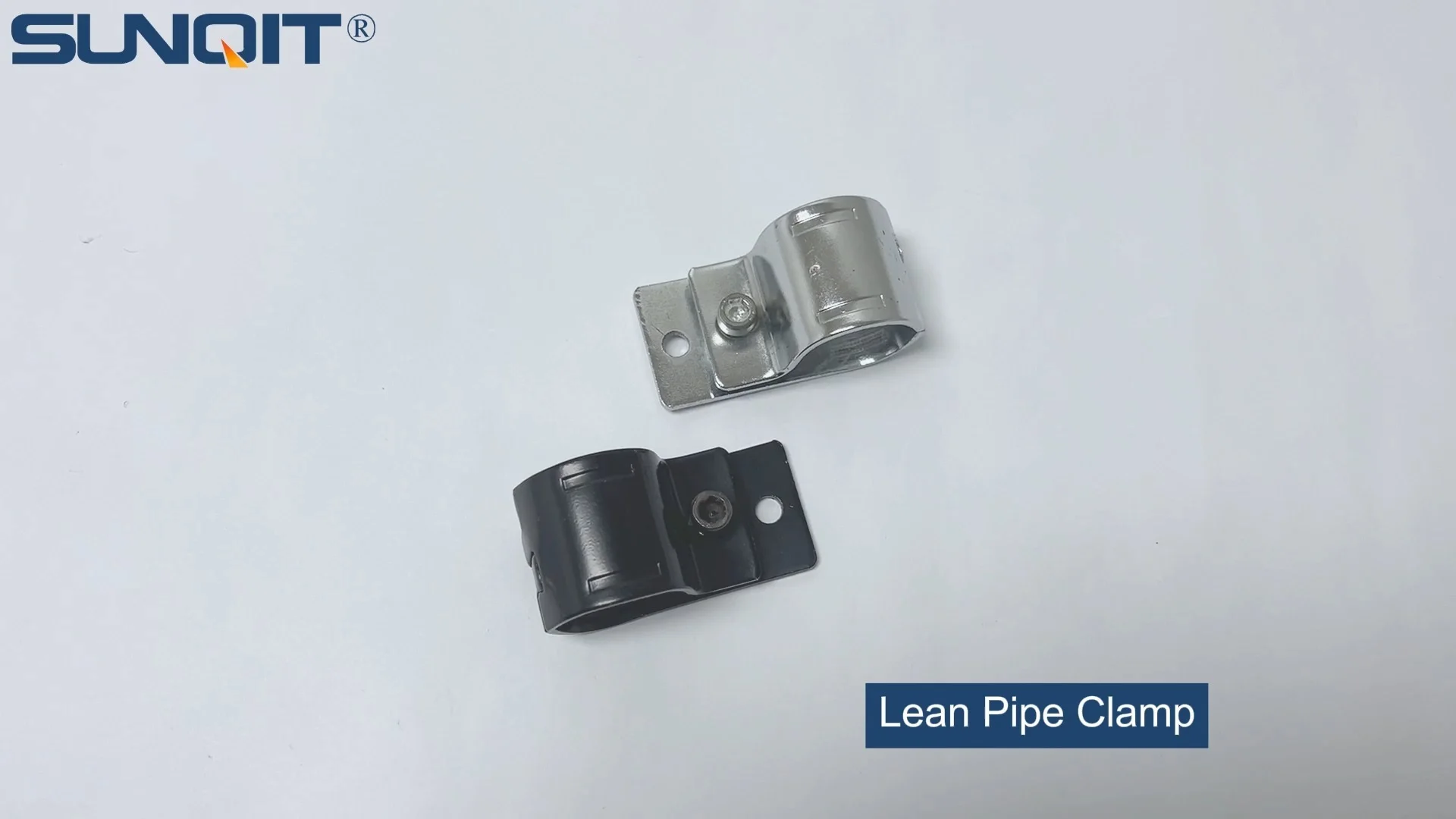
Lean Pipe Clamp
Lean pipe clamp is used for rack system hang monitor or other panel for workbenck, flowrack in production daily use.
The Manufacturing Floor: A Place That Never Stands Still
Walk into any modern manufacturing facility, and you'll notice one thing right away: change is constant. New product lines launch, customer demands shift, and production volumes ebb and flow with the seasons. For shop floor managers and production teams, this reality used to mean one thing: stress. Stress from rigid, fixed workstations that couldn't keep up. Stress from downtime when reconfiguring systems to fit new needs. Stress from watching competitors adapt faster because their setups were more flexible. But what if there was a way to make those adjustments feel less like a headache and more like a quick, seamless shift—something you could do in an afternoon instead of a week? That's where modular design comes in, and at the heart of that design, there's a small but mighty component: the lean pipe clamp B.
What Is Modular Design, Anyway? And Why Does It Matter?
Let's start with the basics. Modular design in manufacturing is exactly what it sounds like: building production systems—think workbenches, flow racks, and assembly lines—using interchangeable "modules" that can be easily connected, disconnected, and rearranged. It's the difference between building a house with bricks that can be taken apart and rebuilt versus pouring a single concrete slab that's stuck in place forever. Traditional fixed systems might work when production needs stay the same for years, but in today's fast-paced world, that's rarely the case. Modular systems, on the other hand, are built for change. They're the Swiss Army knife of the manufacturing floor: adaptable, versatile, and ready for whatever comes next.
At the core of many modular systems is lean pipe—a durable, lightweight tube (often made of steel with a plastic coating) that's designed to be combined with various joints and clamps to create custom structures. But if lean pipe is the "bones" of the system, then the lean pipe clamp B is the "muscle" that holds it all together—and makes adjustments possible. This small but critical accessory is what turns a static setup into a dynamic one, allowing teams to reconfigure workbenches, flow racks, and more with minimal effort.
At the core of many modular systems is lean pipe—a durable, lightweight tube (often made of steel with a plastic coating) that's designed to be combined with various joints and clamps to create custom structures. But if lean pipe is the "bones" of the system, then the lean pipe clamp B is the "muscle" that holds it all together—and makes adjustments possible. This small but critical accessory is what turns a static setup into a dynamic one, allowing teams to reconfigure workbenches, flow racks, and more with minimal effort.

Meet Lean Pipe Clamp B: The Unsung Hero of Modular Adjustments
You might be thinking, "A clamp? How exciting can that be?" But anyone who's spent hours wrestling with bolts, welds, or permanent fasteners to modify a workstation will tell you: the right clamp is a game-changer. Lean pipe clamp B is designed with one goal in mind: to make connecting and disconnecting lean pipes fast, tool-free (or with minimal tools), and secure. Unlike traditional clamps that require wrenches or screwdrivers—and often loosen over time—lean pipe clamp B uses a simple lever or twist mechanism that locks pipes in place tightly, yet releases easily when you need to make a change.
Let's break down why this matters. Imagine you run a small electronics assembly line. One week, you're building smartphones, which require a compact workbench with specific tool holders and a flow rack for small components. The next week, you land a contract for tablet assembly, which needs more surface area on the workbench and a taller flow rack to accommodate larger parts. With a fixed workstation, this would mean ordering a whole new setup—or spending a day (or more) drilling new holes, welding extensions, and hoping everything lines up. With lean pipe and lean pipe clamp B? You simply loosen the clamps, adjust the height and width of the workbench, reposition the flow rack's shelves, retighten the clamps, and you're back to production. It's that straightforward.
The secret to lean pipe clamp B's success lies in its design. Most models are made from high-quality plastic or metal, ensuring they can withstand the wear and tear of daily manufacturing use without cracking or bending. The clamping mechanism is engineered to grip lean pipes firmly, preventing wobbling or shifting during operation—so you never have to worry about stability, even when the workstation is loaded with tools or materials. And because they're standardized, you can mix and match clamps across different structures, making it easy to expand or modify systems over time without compatibility issues.
Let's break down why this matters. Imagine you run a small electronics assembly line. One week, you're building smartphones, which require a compact workbench with specific tool holders and a flow rack for small components. The next week, you land a contract for tablet assembly, which needs more surface area on the workbench and a taller flow rack to accommodate larger parts. With a fixed workstation, this would mean ordering a whole new setup—or spending a day (or more) drilling new holes, welding extensions, and hoping everything lines up. With lean pipe and lean pipe clamp B? You simply loosen the clamps, adjust the height and width of the workbench, reposition the flow rack's shelves, retighten the clamps, and you're back to production. It's that straightforward.
The secret to lean pipe clamp B's success lies in its design. Most models are made from high-quality plastic or metal, ensuring they can withstand the wear and tear of daily manufacturing use without cracking or bending. The clamping mechanism is engineered to grip lean pipes firmly, preventing wobbling or shifting during operation—so you never have to worry about stability, even when the workstation is loaded with tools or materials. And because they're standardized, you can mix and match clamps across different structures, making it easy to expand or modify systems over time without compatibility issues.

From Workbench to Flow Rack: Real-World Adjustments Made Easy
To really understand the power of lean pipe clamp B, let's walk through two common scenarios where easy system adjustments save the day: reconfiguring a workbench and modifying a flow rack.
Scenario 1: The Shifting Workbench
Maria is a production supervisor at a medical device plant. Her team builds small, precision tools, and their workbench is customized with a shelf for tools, a bin for screws, and a monitor arm for digital work instructions. One morning, she gets a memo: the next batch of tools will be 50% larger, requiring more space on the workbench surface. With a traditional wooden or metal workbench, Maria would need to either replace the entire top (costly) or try to jury-rig an extension (risky for precision work). But her workbench is built with lean pipe and lean pipe clamp B. Here's how she handles it:
1. Loosen the clamps: Using a simple hex key (or even by hand, depending on the clamp model), Maria loosens the lean pipe clamp B that holds the side rails of the workbench.
2. Adjust the width: She slides the rails outward to increase the workbench surface by 18 inches—no drilling, no cutting, just smooth movement along the lean pipes.
3. Add a new top panel: The workbench's top is a lightweight aluminum panel (another modular material that pairs well with lean pipe) that's easy to swap out. Maria replaces the smaller panel with a larger one, securing it to the rails with—you guessed it—more lean pipe clamp Bs.
4. Reposition accessories: The tool shelf and bin holder are also mounted on lean pipes. Maria adjusts their height and position to fit the new layout, tightening the clamps once everything is aligned.
Total time? Less than an hour. The team is back to work by mid-morning, with a workbench that fits the new product perfectly. No downtime, no extra costs, just a quick adjustment made possible by lean pipe clamp B.
Scenario 2: The Seasonal Flow Rack
Raj manages a warehouse for a toy manufacturer. Every fall, demand spikes for holiday toys, and his team needs to expand their flow racks to handle more inventory. In the spring, demand drops, and the racks take up too much space. For years, this meant disassembling half the racks in spring (storing parts that often got lost) and rebuilding them in fall (wasting hours tracking down missing pieces). Then Raj switched to a modular flow rack system using lean pipe and lean pipe clamp B. Now, the process is entirely different:
1. Spring downsizing: Instead of disassembling the racks, Raj's team loosens the lean pipe clamp Bs that connect the rack's vertical supports and horizontal shelves. They remove every other shelf and collapse the vertical supports inward, reducing the rack's width by half. The excess shelves and pipes are stored compactly (since they're just lean pipes and clamps, they take up minimal space).
2. Fall expansion: When demand picks up, they retrieve the stored pipes and shelves, reattach them using the clamps, and the rack is back to full size in under two hours. No missing parts, no guesswork—just clamps that lock everything into place securely.
For Raj, the biggest win isn't just the time saved—it's the peace of mind. He no longer worries about lost components or uneven shelves (a common issue with disassembled/rebuilt fixed racks). Lean pipe clamp B ensures every shelf is level and stable, even when loaded with heavy toy boxes.
Scenario 1: The Shifting Workbench
Maria is a production supervisor at a medical device plant. Her team builds small, precision tools, and their workbench is customized with a shelf for tools, a bin for screws, and a monitor arm for digital work instructions. One morning, she gets a memo: the next batch of tools will be 50% larger, requiring more space on the workbench surface. With a traditional wooden or metal workbench, Maria would need to either replace the entire top (costly) or try to jury-rig an extension (risky for precision work). But her workbench is built with lean pipe and lean pipe clamp B. Here's how she handles it:
1. Loosen the clamps: Using a simple hex key (or even by hand, depending on the clamp model), Maria loosens the lean pipe clamp B that holds the side rails of the workbench.
2. Adjust the width: She slides the rails outward to increase the workbench surface by 18 inches—no drilling, no cutting, just smooth movement along the lean pipes.
3. Add a new top panel: The workbench's top is a lightweight aluminum panel (another modular material that pairs well with lean pipe) that's easy to swap out. Maria replaces the smaller panel with a larger one, securing it to the rails with—you guessed it—more lean pipe clamp Bs.
4. Reposition accessories: The tool shelf and bin holder are also mounted on lean pipes. Maria adjusts their height and position to fit the new layout, tightening the clamps once everything is aligned.
Total time? Less than an hour. The team is back to work by mid-morning, with a workbench that fits the new product perfectly. No downtime, no extra costs, just a quick adjustment made possible by lean pipe clamp B.
Scenario 2: The Seasonal Flow Rack
Raj manages a warehouse for a toy manufacturer. Every fall, demand spikes for holiday toys, and his team needs to expand their flow racks to handle more inventory. In the spring, demand drops, and the racks take up too much space. For years, this meant disassembling half the racks in spring (storing parts that often got lost) and rebuilding them in fall (wasting hours tracking down missing pieces). Then Raj switched to a modular flow rack system using lean pipe and lean pipe clamp B. Now, the process is entirely different:
1. Spring downsizing: Instead of disassembling the racks, Raj's team loosens the lean pipe clamp Bs that connect the rack's vertical supports and horizontal shelves. They remove every other shelf and collapse the vertical supports inward, reducing the rack's width by half. The excess shelves and pipes are stored compactly (since they're just lean pipes and clamps, they take up minimal space).
2. Fall expansion: When demand picks up, they retrieve the stored pipes and shelves, reattach them using the clamps, and the rack is back to full size in under two hours. No missing parts, no guesswork—just clamps that lock everything into place securely.
For Raj, the biggest win isn't just the time saved—it's the peace of mind. He no longer worries about lost components or uneven shelves (a common issue with disassembled/rebuilt fixed racks). Lean pipe clamp B ensures every shelf is level and stable, even when loaded with heavy toy boxes.

Beyond Adjustments: The Hidden Benefits of Lean Pipe Clamp B
Easy adjustments are the most obvious benefit of lean pipe clamp B, but they're just the tip of the iceberg. Let's explore a few more ways this small accessory adds value to manufacturing operations:
Cost Savings: Traditional fixed systems require you to buy new equipment every time your needs change. With modular systems and lean pipe clamp B, you reuse existing components, reducing capital expenses. Plus, the time saved on adjustments means less downtime, which translates to more production and higher revenue.
Scalability: As your business grows, you don't need to overhaul your entire setup. Just add more lean pipes and clamps to expand workbenches, flow racks, or assembly lines. This makes modular systems ideal for startups and small businesses that need to scale gradually.
Ergonomics: Employee comfort and safety are critical in manufacturing. With lean pipe clamp B, you can easily adjust the height of workbenches or the angle of flow rack shelves to fit individual workers, reducing strain and injury risk. A taller employee can raise their workstation; a shorter one can lower it—all in minutes.
Compatibility with Other Materials: Lean pipe doesn't work alone. It pairs seamlessly with aluminum profile, a lightweight, durable material often used for more heavy-duty or precision applications. For example, you might use lean pipe for the frame of a workbench and aluminum profile for the tabletop, creating a setup that's both flexible (thanks to lean pipe clamp B) and sturdy (thanks to aluminum's strength). This compatibility means you're not locked into one material—you can mix and match to fit your needs.
Cost Savings: Traditional fixed systems require you to buy new equipment every time your needs change. With modular systems and lean pipe clamp B, you reuse existing components, reducing capital expenses. Plus, the time saved on adjustments means less downtime, which translates to more production and higher revenue.
Scalability: As your business grows, you don't need to overhaul your entire setup. Just add more lean pipes and clamps to expand workbenches, flow racks, or assembly lines. This makes modular systems ideal for startups and small businesses that need to scale gradually.
Ergonomics: Employee comfort and safety are critical in manufacturing. With lean pipe clamp B, you can easily adjust the height of workbenches or the angle of flow rack shelves to fit individual workers, reducing strain and injury risk. A taller employee can raise their workstation; a shorter one can lower it—all in minutes.
Compatibility with Other Materials: Lean pipe doesn't work alone. It pairs seamlessly with aluminum profile, a lightweight, durable material often used for more heavy-duty or precision applications. For example, you might use lean pipe for the frame of a workbench and aluminum profile for the tabletop, creating a setup that's both flexible (thanks to lean pipe clamp B) and sturdy (thanks to aluminum's strength). This compatibility means you're not locked into one material—you can mix and match to fit your needs.
Traditional vs. Modular: A Quick Comparison
Still not convinced that lean pipe clamp B and modular design are worth the switch? Let's put it side by side with traditional fixed systems:
The difference is clear: modular systems with lean pipe clamp B are designed for the way manufacturing actually works—fast, flexible, and focused on minimizing disruption.
| Feature | Traditional Fixed Systems | Modular Systems with Lean Pipe Clamp B |
|---|---|---|
| Time to adjust | 1–3 days (requires tools, drilling, welding) | 30 minutes–1 hour (tool-free or minimal tools) |
| Cost to modify | High (often requires new parts or custom fabrication) | Low (reuses existing components) |
| Stability after adjustment | Variable (risk of uneven surfaces or loose connections) | High (clamps lock securely; consistent alignment) |
| Scalability | Limited (difficult to expand without full replacement) | Unlimited (easily add pipes and clamps to grow) |
| Downtime during changes | Significant (production stops for days) | Minimal (adjustments done during breaks or shifts) |
The difference is clear: modular systems with lean pipe clamp B are designed for the way manufacturing actually works—fast, flexible, and focused on minimizing disruption.
The Future of Manufacturing: Built on Flexibility
As manufacturing continues to evolve—with shorter product lifecycles, higher customization demands, and the rise of small-batch production—flexibility isn't just a nice-to-have; it's a competitive advantage. Companies that can adjust their systems quickly will be the ones that thrive, adapting to new opportunities and meeting customer needs faster than their rivals.
Lean pipe clamp B might seem like a small part of this equation, but it's a critical one. It's the component that turns "we can't do that" into "we can do that tomorrow." It's the reason shop floor managers no longer dread change orders. It's the tool that empowers production teams to take ownership of their workspaces, making adjustments that improve efficiency and morale.
So, the next time you walk through a manufacturing facility, take a closer look at the workbenches and flow racks. If they're built with lean pipe and lean pipe clamp B, chances are that's a team that's ready for whatever the future throws at them. And if you're still using fixed systems? Maybe it's time to ask: What could your team accomplish with a little more flexibility—and a few well-placed clamps?
Lean pipe clamp B might seem like a small part of this equation, but it's a critical one. It's the component that turns "we can't do that" into "we can do that tomorrow." It's the reason shop floor managers no longer dread change orders. It's the tool that empowers production teams to take ownership of their workspaces, making adjustments that improve efficiency and morale.
So, the next time you walk through a manufacturing facility, take a closer look at the workbenches and flow racks. If they're built with lean pipe and lean pipe clamp B, chances are that's a team that's ready for whatever the future throws at them. And if you're still using fixed systems? Maybe it's time to ask: What could your team accomplish with a little more flexibility—and a few well-placed clamps?