- Company Articles
- Products and Technology
- Product knowledge
- Modular Design: How Roller Track Placon Mount Brackets Enable Flexible Production Layouts

Modular Design: How Roller Track Placon Mount Brackets Enable Flexible Production Layouts
Related Product
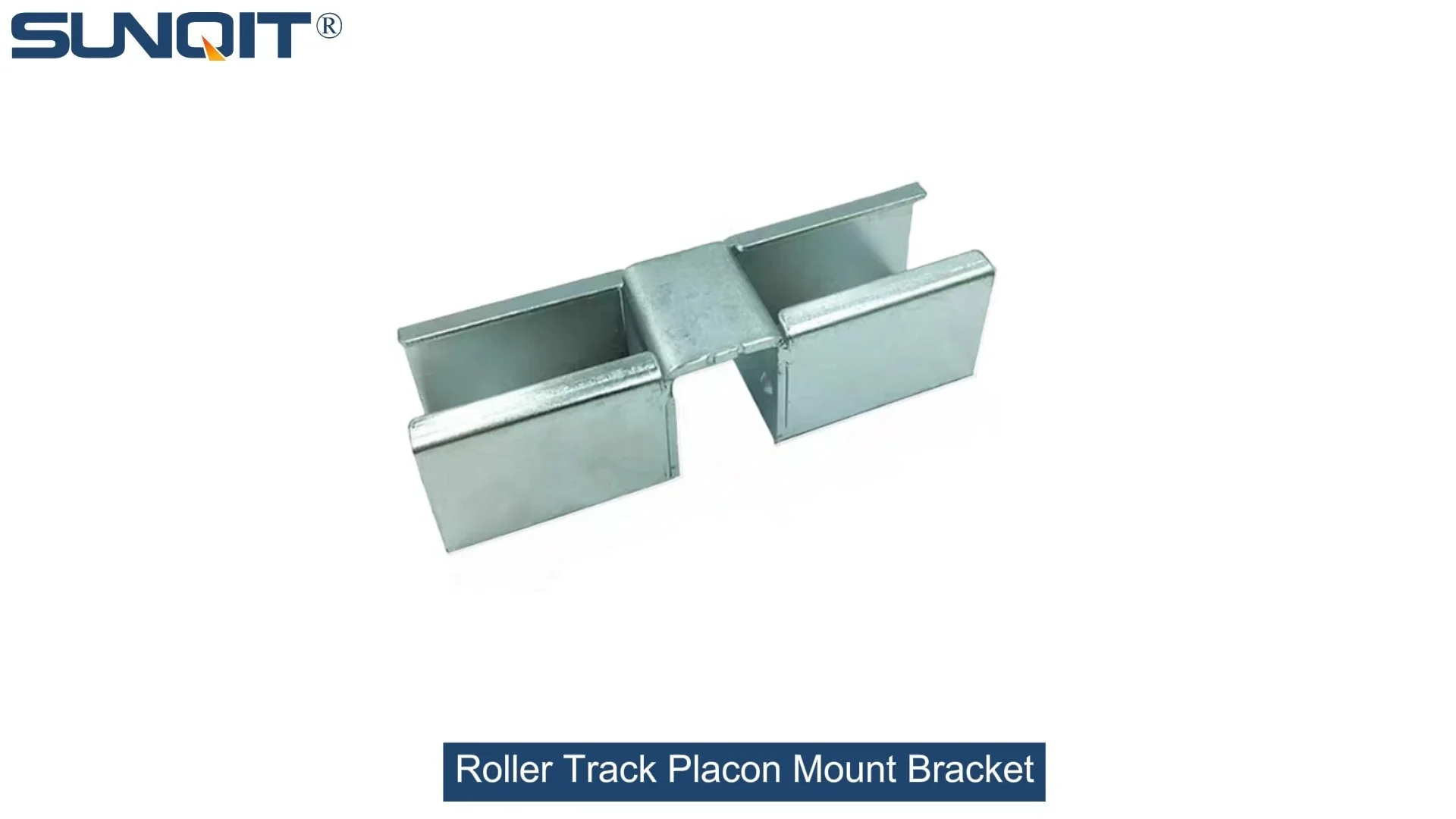
Roller Track Placon Mount Bracket
Roller track placon mount work as a connector for roller track and pipe or aluminum profile in rack syetem, it is a necessary parts in rack system which widely used in industrial plant and logistic,warehouse storage.
In today's fast-paced manufacturing landscape, adaptability isn't just an advantage—it's a necessity. Factories worldwide grapple with shrinking product lifecycles, fluctuating demand, and the constant pressure to launch new products faster than ever. Traditional rigid production lines, once the backbone of manufacturing, now struggle to keep up. They're time-consuming to reconfigure, expensive to modify, and often lead to downtime that eats into profitability. This is where modular design steps in, and at the heart of this revolution lies a seemingly unassuming yet critical component: the roller track placon mount bracket. These small but mighty parts are the unsung heroes enabling factories to transform from static workspaces into dynamic, responsive ecosystems.
This article explores how roller track placon mount brackets serve as the cornerstone of modular production systems, working in harmony with lean pipe, aluminum profile, and other components to create layouts that adapt, evolve, and grow with your business needs. We'll dive into their design benefits, real-world applications across industries like 3C assembly and medical device manufacturing, and why they're becoming indispensable for companies aiming to stay competitive in an era of constant change.
The Case for Modular Manufacturing: Beyond Rigidity
Before delving into the specifics of roller track placon mount brackets, let's first understand why modular design has become a buzzword in modern manufacturing. Consider a mid-sized electronics manufacturer producing smart home devices. Six months ago, their bestseller was a smart speaker; today, it's a Wi-Fi-enabled thermostat. Each product requires different assembly steps, tooling, and workflow configurations. A traditional fixed production line would force them to either invest in separate lines (increasing capital costs) or halt production for days to reconfigure existing ones (losing revenue). Modular systems eliminate this dilemma by allowing quick, tool-free adjustments that minimize downtime and maximize resource utilization.
The core principles of modular design align perfectly with lean manufacturing: eliminating waste, optimizing flow, and continuous improvement. By using standardized, interchangeable components, factories can repurpose existing infrastructure instead of replacing it entirely. This not only reduces costs but also supports sustainability—a key priority for today's consumers and regulators. Imagine a production floor where workstations, conveyor lines, and material racks can be disassembled, rearranged, and reassembled in hours, not weeks. That's the promise of modular design, and roller track placon mount brackets are the linchpin holding this vision together.
| Traditional Fixed Layouts | Modular Layouts with Placon Mount Brackets |
|---|---|
| Reconfiguration takes days/weeks | Adjustments completed in hours |
| High costs for redesigns or expansions | Up to 40% lower modification costs |
| Permanent infrastructure limits future changes | Components reused across multiple projects |
| Downtime during retooling impacts deadlines | Minimal disruption to ongoing production |
| Static workflows reduce adaptability | Dynamic layouts adapt to new products/processes |
Roller Track Placon Mount Brackets: Small Parts, Big Impact
At first glance, roller track placon mount brackets might seem like simple hardware. But their design is a masterclass in functional engineering. These brackets serve as the connective tissue between roller tracks, aluminum profiles, and other structural components, enabling quick assembly and disassembly without welding or complex tools. Let's break down their key features and why they matter:
1. Versatile Design for Diverse Applications
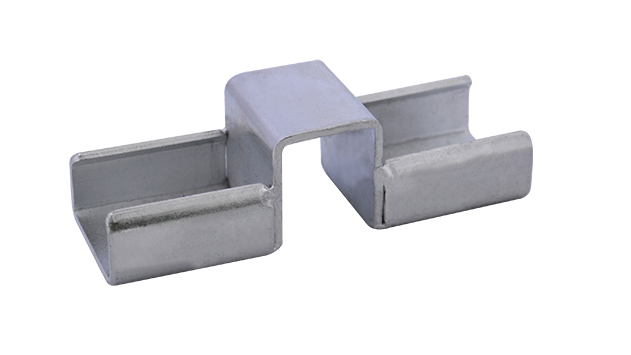
Roller track placon mount brackets come in a variety of configurations to suit different needs. Take the roller track placon mount center support bracket , for example. It's designed to stabilize long roller track sections, preventing sagging under heavy loads—critical for material handling in automotive or appliance manufacturing. Then there's the roller track placon mount connector , which allows seamless joining of track segments, creating custom-length conveyors that adapt to unique workspace dimensions. For applications requiring precise alignment, the roller track placon mount for aluminum profile flat ensures a secure fit with standard aluminum extrusion profiles, a staple in lean pipe systems.
This versatility means one bracket type can serve multiple purposes across different production lines. A factory producing medical devices might use the same placon mount bracket for a small parts conveyor as it does for a larger assembly workstation—simplifying inventory management and reducing the need for specialized components.
2. Tool-Free Adjustments for Rapid Changeovers
Time is money in manufacturing, and every minute spent on reconfiguration is a minute lost to production. Roller track placon mount brackets address this with tool-free installation and adjustment mechanisms. Most models use quick-release levers or hand-tightened knobs, allowing operators to reposition roller tracks or reattach them to aluminum profiles in minutes. This is a game-changer for industries like 3C assembly, where product models change monthly, if not weekly. Instead of waiting for maintenance teams with welding equipment, line supervisors can make on-the-fly adjustments to optimize workflow or accommodate new product specs.
3.Strength Without Sacrificing Flexibility
A common misconception about modular systems is that they lack the durability of fixed infrastructure. Roller track placon mount brackets defy this myth. Constructed from high-grade steel or aluminum alloys, they withstand the rigors of daily manufacturing—vibrations, heavy loads, and repeated adjustments. The end support for roller track placon mount with stop , for instance, not only anchors the track but also includes a built-in stopper to prevent materials from sliding off, enhancing safety and efficiency. Even in high-throughput environments like distribution centers, these brackets maintain their integrity, ensuring consistent performance over years of use.
Working in Harmony: Placon Brackets, Lean Pipe, and Aluminum Profile
Modular design thrives on synergy—components working together to create a system greater than the sum of its parts. Roller track placon mount brackets don't operate in isolation; they're integral to a ecosystem that includes lean pipe, aluminum profile, flow racks, and other modular elements. Let's explore how these components collaborate to build flexible production layouts:
Lean Pipe and Aluminum Profile: The Backbone of Modular Structures
Lean pipe (or lean tube) has long been a staple in lean manufacturing for its lightweight yet sturdy properties. When combined with aluminum extrusion profiles—known for their strength and precision—they form the framework for workstations, material racks, and conveyor supports. Roller track placon mount brackets attach directly to these structures, creating stable, adjustable pathways for materials. For example, a lean pipe workbench can be outfitted with a roller track using placon mount brackets, transforming it into a dynamic assembly station where parts glide smoothly from one workstation to the next. The beauty of this combination is that the same lean pipe and aluminum profile components can be repurposed to build new structures when needs change—no need to purchase new materials.
Flow Racks: Optimizing Material Flow with Placon-Mounted Tracks
Flow racks are essential for just-in-time (JIT) production, ensuring materials are delivered exactly where and when they're needed. Roller track placon mount brackets play a key role here by enabling the customization of flow rack configurations. By adjusting bracket positions, operators can change the angle of roller tracks to control material speed, add dividers for different part types, or extend tracks to reach adjacent workstations. In warehousing applications, this means faster picking times and reduced ergonomic strain, as workers no longer need to bend or stretch to access items.
A Case Study in Synergy: The Flexible Workstation
Consider a typical lean solution for a 3C assembly line: a modular workstation built with aluminum profiles, lean pipe, and roller tracks mounted via placon brackets. The workstation includes a flow rack section for incoming components, a conveyor segment for moving partially assembled products, and adjustable shelving for tools. If the product design changes, the operator can: 1) Reposition the placon mount brackets to alter the roller track angle, 2) Add new aluminum profile sections to extend the workstation, or 3) Swap out the roller track for a different type (e.g., from steel wheel to ESD-safe plastic) to meet electrostatic discharge requirements. This level of adaptability ensures the workstation remains useful for years, even as products and processes evolve.

Real-World Impact: Transforming Industries Through Modular Design
The true test of any manufacturing component is how it performs on the factory floor. Roller track placon mount brackets have proven their value across diverse industries, solving unique challenges and delivering measurable results. Let's explore some standout examples:
1. 3C Assembly: Adapting to Rapid Product Cycles
The consumer electronics industry moves at breakneck speed. A smartphone manufacturer might release 2-3 new models annually, each with different components and assembly steps. Traditional lines struggle with this pace, but modular systems with roller track placon mount brackets thrive. One leading 3C manufacturer reported reducing changeover time from 8 hours to just 90 minutes after implementing placon-mounted roller tracks. By repositioning brackets and swapping track sections, they could reconfigure their assembly line to handle new phone models without halting production for a full shift. This agility not only improved time-to-market but also reduced labor costs associated with retooling.
2. Medical Device Manufacturing: Precision and Compliance
Medical device production demands strict adherence to cleanliness and precision standards. Roller track placon mount brackets, often made from stainless steel or anodized aluminum, resist corrosion and are easy to sanitize—critical for FDA-regulated environments. A medical equipment producer specializing in surgical tools used placon mount brackets to build modular cleanroom workstations. The brackets allowed them to adjust roller track heights to align with sterile packaging lines, reducing contamination risks from manual material handling. Additionally, the ability to quickly disassemble and sanitize components between production runs ensured compliance with stringent protocols.
3. Automotive Parts: Handling Heavy Loads with Ease
Automotive manufacturing involves moving heavy components like engines and transmissions. Roller track placon mount brackets, paired with robust steel roller tracks, provide the strength needed for these applications. A Tier 1 auto supplier used roller track placon mount high brackets to elevate conveyor lines, creating under-rack storage space and improving workflow. The brackets' reinforced design supported loads up to 500kg per linear meter, while their tool-free adjustment made it easy to realign tracks when switching between different vehicle part models. This resulted in a 25% increase in floor space utilization and a 15% reduction in material handling errors.
4. Warehousing and Logistics: Streamlining Order Fulfillment
In warehousing, efficiency hinges on how quickly and accurately items are picked and shipped. Flow racks equipped with placon-mounted roller tracks have revolutionized this process. A large e-commerce fulfillment center implemented these systems in their picking zones, using roller track placon mount connectors to create custom-length flow lanes for different product sizes. Workers reported a 30% faster picking rate, as items glided smoothly to the front of the rack, eliminating the need to reach deep into shelves. The modular design also allowed the warehouse to reconfigure lanes seasonally, expanding capacity during peak shopping periods without major renovations.

Looking Ahead: Modular Design in the Age of Smart Manufacturing
As Industry 4.0 transforms manufacturing with IoT, automation, and data-driven insights, modular design will only grow in importance. Roller track placon mount brackets are poised to play a key role in this evolution, adapting to new technologies and changing sustainability demands.
One emerging trend is the integration of smart sensors into modular systems. Imagine roller tracks equipped with sensors that monitor load levels, track material flow, and alert operators to jams—all while being supported by placon mount brackets that maintain stability and alignment. This data can optimize workflows further, predicting bottlenecks before they occur. Additionally, as sustainability becomes a core business goal, the reusability of modular components like placon brackets will reduce manufacturing waste, aligning with circular economy principles.
Another shift is the move toward "lights-out" manufacturing, where automated systems operate with minimal human intervention. Modular layouts with tool-free adjustments will be essential here, allowing robots and automated guided vehicles (AGVs) to adapt to new tasks without human reconfiguration. Roller track placon mount brackets, with their precise alignment and secure connections, will ensure these automated systems operate safely and efficiently.
The Bottom Line: Flexibility as a Competitive Advantage
In a manufacturing landscape defined by change, flexibility isn't just a nice-to-have—it's a strategic imperative. Roller track placon mount brackets embody this principle, enabling factories to adapt quickly, reduce costs, and stay ahead of the competition. They may be small components, but their impact is transformative: turning static production lines into dynamic ecosystems that grow with your business, support sustainability goals, and deliver consistent value year after year.
Whether you're producing smartphones, medical devices, or automotive parts, the message is clear: modular design isn't the future of manufacturing—it's the present. And at the heart of that design, you'll find roller track placon mount brackets, quietly but powerfully enabling the factories of tomorrow, today.