- Company Articles
- Products and Technology
- Product knowledge
- Modular Design of Aluminum Workbench C: Explaining Its Reusable Features

Modular Design of Aluminum Workbench C: Explaining Its Reusable Features
Related Product
Aluminum Workbench C
aluminum-tube-workbench-is-more-flexible-and-durable,-compared-with-traditional-pe/abs-coated-steel-tube.-it-is-easy-to-assemble,-anti-corrosion,-rust-protection,-and-recycle-use-after-disassemble.
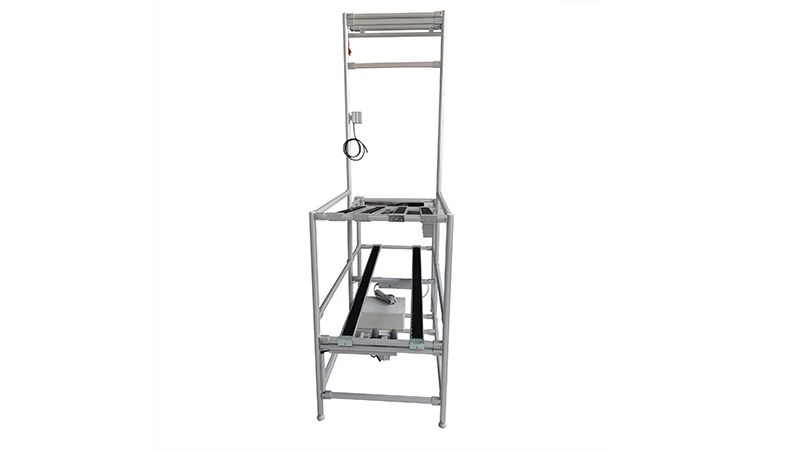
Walk into any modern manufacturing facility, electronics workshop, or even a busy lab, and you'll likely spot a common frustration: workbenches that feel like relics of a bygone era. Built for a single task, they sit rigidly as workflows evolve, production needs shift, and teams grow. Maybe it's too short for the new operator, too narrow to accommodate larger components, or simply too cumbersome to rearrange when the floor plan changes. The result? Wasted time, strained budgets, and a workspace that feels more like a barrier than a tool. But what if your workbench could keep up? What if it could adapt, reconfigure, and even transform alongside your business? That's the promise of Aluminum Workbench C—a modular solution designed from the ground up to prioritize reusability, flexibility, and long-term value. Let's dive into how its clever design, centered on aluminum profiles and adaptable accessories, is changing the game for workspaces everywhere.
What is Aluminum Workbench C, Anyway?
First things first: Aluminum Workbench C isn't your average workbench. It's not a hunk of wood nailed to a frame or a metal slab welded into place. Instead, it's a system—one built on the idea that your workspace should serve you, not the other way around. At its core, it's a lightweight yet durable workbench constructed using aluminum profiles, which are connected via a range of aluminum profile accessories. Think of it as a set of building blocks: the profiles form the skeleton, while accessories like connectors, end caps, and fasteners let you snap, bolt, or adjust components to fit your exact needs. And unlike fixed workbenches, which are essentially "one and done," Aluminum Workbench C is designed to be taken apart, reconfigured, and repurposed repeatedly. Need a taller surface for assembly? Add an extra aluminum profile section. Want to add a shelf for tools? Screw in a connector and slide on a panel. Moving to a new location? Disassemble it, pack it in a box, and rebuild it in minutes. It's workbench as puzzle—one where you're always in control of the final picture.
But why aluminum? Why not stick with wood, steel, or plastic? Aluminum checks three critical boxes: strength, lightness, and versatility. It's strong enough to support heavy equipment (we're talking hundreds of pounds) without bending, yet light enough that even one person can carry a section of profile. It resists rust and corrosion, which means it holds up in damp labs or dusty factories. And perhaps most importantly, aluminum profiles—especially the T-slot variety used in Aluminum Workbench C—are designed to play well with accessories. Those slots running along the length of the profiles? They're like built-in highways for connectors, allowing you to attach shelves, hooks, or even custom tool holders anywhere you need them. No drilling, no welding, no permanent modifications. Just slide, lock, and go. That's the magic of modularity, and it's why aluminum is the star here.
The Backbone: Aluminum Profiles and Their Role in Reusability
If Aluminum Workbench C is a system, then aluminum profiles are its backbone. These are the long, extruded pieces of aluminum that form the frame—think of them as the legs, rails, and supports that hold everything together. But not all aluminum profiles are created equal, and the ones chosen for Workbench C are specifically selected for their ability to enable reusability. Let's break down what makes them special.
First, there's the material itself: 6063 aluminum alloy. This isn't just any aluminum; it's a heat-treated alloy known for its excellent strength-to-weight ratio and corrosion resistance. That means even after years of disassembly, reassembly, and heavy use, the profiles won't warp, crack, or rust. Compare that to wooden workbenches, which can split or warp with humidity, or steel ones that rust if not constantly painted. Aluminum profiles are built to last, which is the first step in making a workbench reusable—if the core components degrade, the whole system falls apart.
Then there's the design: T-slot profiles. Look closely at an aluminum profile, and you'll notice long, narrow slots running along its length (the "T-slots"). These slots are genius. They allow aluminum profile accessories—like connectors, brackets, or even custom attachments—to slide into place and lock securely with bolts or screws. Need to move a shelf up by 6 inches? Loosen the bolts, slide the bracket to the new position, and tighten. Want to add a tool rail on the side? Slide a connector into the T-slot, bolt it down, and attach the rail. There's no need to drill new holes or weld parts; the slots turn the profile into a customizable canvas. This design is why Aluminum Workbench C isn't limited to one configuration. The same set of profiles that form a 4-foot workbench today can be rearranged into a 6-foot bench tomorrow, or even a shelf unit next month—all without cutting or altering the profiles themselves.
Workbench C also uses a range of profile sizes to balance flexibility and strength. For lighter tasks—say, assembling small electronics—thinner profiles (like 2020 or 3030, referring to their width and height in millimeters) might suffice. For heavier-duty work, like testing machinery or storing bulky parts, thicker 4040 profiles add extra stability. And since all these profiles use the same T-slot design, they're interchangeable. You can mix and match sizes depending on the job, ensuring you're never stuck with more (or less) bench than you need. It's this adaptability that makes the profiles not just components, but investments. They're not tied to one workbench; they're building blocks you can reuse across projects, departments, or even years.

The Glue That Holds It All Together: Aluminum Profile Accessories
If aluminum profiles are the backbone of Aluminum Workbench C, then aluminum profile accessories are the joints, muscles, and ligaments that let it move and adapt. Without these small but mighty components, the profiles would just be pieces of metal—useful, but not exactly modular. Accessories turn the system into something dynamic, allowing you to connect, adjust, and customize with ease. Let's take a closer look at the key players here.
Connectors are perhaps the most critical. These small, often L-shaped or T-shaped pieces of aluminum (or sometimes high-strength plastic) fit into the T-slots of the profiles, linking them together at angles. Want to connect two profiles at a 90° angle for the corner of your bench? Use a 90° aluminum profile connector. Need to split a single profile into three directions (like adding a shelf support)? Grab a three-way connector. The beauty? These connectors don't require welding or glue. Most use bolts or set screws that tighten into the T-slots, creating a secure hold that can be loosened later if you need to reposition. It's like using Legos for adults—strong enough to stay put, but easy enough to take apart when you want to build something new. And since connectors are standardized (meaning they work with any T-slot profile of the same size), you can mix and match them across different projects. A 90° connector used in your workbench today might end up in a turnover trolley next year—no waste, no extra cost.
Then there are end caps and edge protectors. These small, often rubber or plastic pieces snap onto the ends of aluminum profiles, covering sharp edges and preventing debris from getting stuck in the T-slots. They might seem like minor details, but they're essential for reusability. By protecting the profiles from dents, scratches, or gunk buildup, they ensure the T-slots stay clean and functional over time. Imagine trying to slide a connector into a profile that's filled with sawdust or rust—end caps prevent that. Plus, they make the workbench safer, eliminating sharp corners that could snag gloves or scratch tools. And if an end cap gets damaged? Just pop it off and replace it—no need to replace the entire profile.
Fasteners and brackets round out the accessory lineup. These include things like T-nuts (which slide into T-slots to create a secure anchor point for bolts), wing screws (for quick adjustments without tools), and angle brackets (for reinforcing joints). Together, they let you attach almost anything to the workbench: shelves, tool hooks, monitor arms, even custom fixtures. For example, if you need a place to hang your screwdrivers, you could use a bracket to mount a tool rail to the side of the bench. A few months later, if you switch to a cordless drill setup, you can remove the rail, repurpose the bracket for a drill holder, and keep going. The accessories don't lock you into one use case—they adapt to how you work.

Reusability in Action: How Aluminum Workbench C Adapts to Change
Enough about components—let's talk real-world use. How does all this modularity actually translate to a workbench that you can reuse, reconfigure, and repurpose? Let's walk through a few scenarios where Aluminum Workbench C shines, showing off its chameleon-like ability to adapt.
Scenario 1: The Growing Workshop. Picture a small electronics startup with 5 employees. They start with two Aluminum Workbench C units: one for assembly, one for testing. Both are basic single-deck setups (similar to "Workbench E (single deck-without caster)" but customized as Workbench C) with a simple flat surface. A year later, the team doubles in size, and they need more workspace. Instead of buying two new workbenches, they disassemble one of the existing units, add a few extra aluminum profiles (purchased affordably from their supplier), and rebuild it as a double-deck bench—adding a shelf below for storage. Now they have three workbenches: the original single-deck, the new double-deck, and the second original (which they rearranged to fit the new floor plan). Cost saved? Thousands. Waste avoided? A whole workbench's worth of materials.
Scenario 2: The Shifting Task. Let's say a manufacturing team uses Aluminum Workbench C for assembling small parts. After a few months, they shift to testing larger machinery, which requires a taller work surface and a sturdier frame. With a fixed workbench, they'd be out of luck. But with Aluminum Workbench C, they simply adjust the height: they loosen the connectors holding the legs, swap in longer aluminum profiles (or stack existing ones with a coupler), and tighten everything back up. To add stability, they attach diagonal braces using angle brackets. An hour later, the same bench that once held tiny circuit boards is now supporting heavy equipment. Later, when the project ends, they can shorten the legs again and use the bench for packaging. No new bench, no hassle—just a quick reconfiguration.
Scenario 3: The Office Move. Businesses move, and moving fixed workbenches is a nightmare. They're heavy, awkward, and often get damaged in transit. Aluminum Workbench C? It disassembles into manageable pieces. The aluminum profiles are lightweight enough for one person to carry, and the accessories fit into a toolbox. When the team arrives at the new space, they rebuild the workbench in the new layout—maybe wider, maybe with a different shelf arrangement to fit the room. Even better, if the new space is smaller, they can downsize the bench by removing a section of profile, or split it into two smaller benches. It's like having furniture that packs flat but unfolds into exactly what you need.
These scenarios all boil down to one idea: Aluminum Workbench C isn't tied to a single moment in time. It's built to evolve with your needs, which means you'll rarely, if ever, need to replace it. And that reusability isn't just convenient—it's sustainable. Every time you repurpose the bench instead of buying new, you're reducing waste, cutting down on raw materials, and lowering your carbon footprint. It's a win for your budget and a win for the planet.

Aligning with Lean Systems: Efficiency Beyond the Bench
If you've spent any time in manufacturing or operations, you've probably heard of "lean systems"—the philosophy of minimizing waste (muda) while maximizing value. Lean is all about continuous improvement: streamlining workflows, optimizing space, and ensuring every tool and process serves a clear purpose. Aluminum Workbench C doesn't just support lean systems; it embodies them. Its modular, reusable design aligns perfectly with lean principles, turning your workspace into a tool for efficiency.
Let's start with waste reduction. In lean terms, "waste" includes everything from excess inventory to unnecessary movement to, yes, unused or discarded equipment. Fixed workbenches are a classic example of waste: they're often overbuilt for their initial purpose, and when needs change, they become clutter or end up in a landfill. Aluminum Workbench C eliminates that waste by being perpetually useful. It's not "wasted" when your workflow shifts because it can shift with you. Even better, the aluminum profiles and accessories are designed to be reused across multiple systems. A profile from your workbench might end up in a material rack, a connector could go into a trolley, and so on. This circularity is lean at its core—making the most of every resource.
Then there's space optimization (a key part of 5S, a lean methodology for workplace organization). In a lean environment, every square foot counts. A rigid workbench that takes up too much space or blocks a workflow can slow down teams and create bottlenecks. Aluminum Workbench C, with its adjustable size and layout, lets you tailor your workspace to the task. Need to free up floor space for a new machine? Shrink the bench. Want to create a U-shaped workflow for faster assembly? Rearrange the bench into a curve using flexible connectors. It's about making the workspace fit the process, not forcing the process to fit the workspace. And since the bench is lightweight, you can even move it temporarily if needed—no heavy lifting or expensive equipment required.
Continuous improvement (kaizen) is another lean principle that Aluminum Workbench C supports. Lean teams are always looking for ways to work better, and that often means tweaking their environment. Maybe a team realizes they'd be faster if tools were stored at eye level instead of on the bench surface. With a fixed workbench, they might jury-rig a solution with duct tape or a shaky shelf. With Aluminum Workbench C? They can add a tool rail using T-slot brackets, positioning it exactly where it's needed. A week later, if they decide the rail is better on the other side, they can move it. This ability to experiment and adapt without major investments encourages teams to keep improving—because changing the workspace is as easy as changing their minds.
| Feature | Traditional Fixed Workbench | Aluminum Workbench C |
|---|---|---|
| Adaptability | Fixed size, height, and layout; cannot be reconfigured. | Adjustable height, size, and layout via aluminum profiles and accessories. |
| Cost Over Time | Requires replacement when needs change; higher long-term cost. | Reusable and reconfigurable; lower long-term cost (no replacement needed). |
| Waste Production | Often discarded when obsolete; contributes to landfill waste. | Disassembled and repurposed; minimal waste. |
| Lean Alignment | Static; can hinder workflow optimization and continuous improvement. | Dynamic; supports space optimization, waste reduction, and kaizen. |
Durability and Maintenance: Keeping It Reusable for Years
Reusability only matters if the product lasts, and Aluminum Workbench C is built to go the distance. Let's face it: if a workbench falls apart after a few reconfigurations, it's not really reusable—it's just temporary. That's why durability is baked into every component, from the aluminum profiles to the smallest accessory. And when maintenance is simple, you're more likely to keep using and reusing the bench, rather than replacing it at the first sign of wear.
Aluminum profiles are naturally resistant to corrosion, which is a big plus in humid or dusty environments. Unlike steel, which rusts if the paint chips, aluminum forms a thin layer of oxide when exposed to air, protecting the metal underneath. That means even if you leave the bench in a garage or a factory with moisture in the air, it won't degrade. And since the profiles are anodized (a process that adds a protective layer to the surface), they're scratch-resistant too. Spills? Wipe them off with a damp cloth. Dents? Aluminum's malleability means minor dings can often be bent back into shape. Compare that to wooden workbenches, which stain, warp, or rot, or particleboard ones that swell with moisture—Aluminum Workbench C is built to handle the chaos of a real workspace.
Accessories are equally tough. Connectors are made from high-grade aluminum or reinforced plastic, designed to withstand repeated tightening and loosening without stripping threads. End caps are often made from durable rubber or PVC, which can take a hit without cracking. Even the bolts and screws are usually stainless steel, so they won't rust or seize up. And if an accessory does wear out? They're cheap and easy to replace. A new connector costs a fraction of what a new workbench would, so you can keep the system going for years with minimal investment.
Maintenance is refreshingly simple. To clean the bench, just wipe down the aluminum profiles with mild soap and water—no harsh chemicals needed. If the T-slots get dusty, use a small brush or compressed air to clear them out. Check the connectors periodically to make sure they're tight (a quick turn with a hex key is usually enough). If a shelf starts to sag, add a support bracket. That's it. No sanding, no repainting, no major repairs. This low-maintenance design ensures that even busy teams can keep their workbench in top shape, making it easy to justify reusing it again and again.
Who Benefits Most from Aluminum Workbench C?
Aluminum Workbench C isn't a niche product—it's a solution for anyone who wants a workspace that grows with them. But some industries and teams stand to gain the most. Let's take a look at a few:
Small to Medium Manufacturers: These businesses often operate on tight budgets and need to pivot quickly. A modular workbench lets them scale up (or down) without overspending, and adapt to new products or projects.
Electronics Workshops: From assembling circuit boards to testing devices, electronics work requires precision and flexibility. Aluminum Workbench C's adjustable height and customizable shelves keep tools and components within reach, while its static-dissipative options (if needed) protect sensitive equipment.
Labs and R&D Facilities: Research projects change constantly, and lab spaces need to evolve with them. A workbench that can be reconfigured for experiments, then broken down for storage, is a game-changer for space-strapped labs.
Educational Institutions: Schools and training centers often have limited budgets and need furniture that can serve multiple classes. A single Aluminum Workbench C might be used for woodworking one semester, robotics the next, and then as a storage unit over the summer.
Startups: Startups are all about growth and change. A modular workbench grows with the team, adapts to new office spaces, and avoids the waste of buying furniture that'll be outgrown in a year.
Wrapping It Up: Workbench as Investment, Not Expense
At the end of the day, Aluminum Workbench C is more than a piece of equipment. It's an investment in adaptability—a way to future-proof your workspace against the inevitable changes that come with running a business. By centering its design on aluminum profiles and aluminum profile accessories, it turns the idea of a "workbench" from a static object into a dynamic system. It's reusable not just because it can be taken apart, but because it's built to last, easy to maintain, and endlessly customizable.
In a world where waste is costly (both financially and environmentally), and flexibility is key, Aluminum Workbench C stands out as a smarter choice. It's for the team that doesn't want to be stuck with yesterday's workspace tomorrow. For the business that wants to save money without sacrificing quality. For anyone who believes their tools should work as hard as they do. So the next time you're in the market for a workbench, ask yourself: Do I want something that'll need replacing in a year? Or something that'll grow, adapt, and serve me for years to come? The answer, we think, is clear.