- Company Articles
- Products and Technology
- Product knowledge
- Modular Design of Aluminum Workbench D: Flexibility for Changing Production Requirements

Modular Design of Aluminum Workbench D: Flexibility for Changing Production Requirements
Related Product
Aluminum Workbench D
Aluminum tube workbench is more flexible and durable, compared with traditional PE/ABS coated steel tube. It is easy to assemble, anti corrosion, rust protection, and recycle use after disassemble.
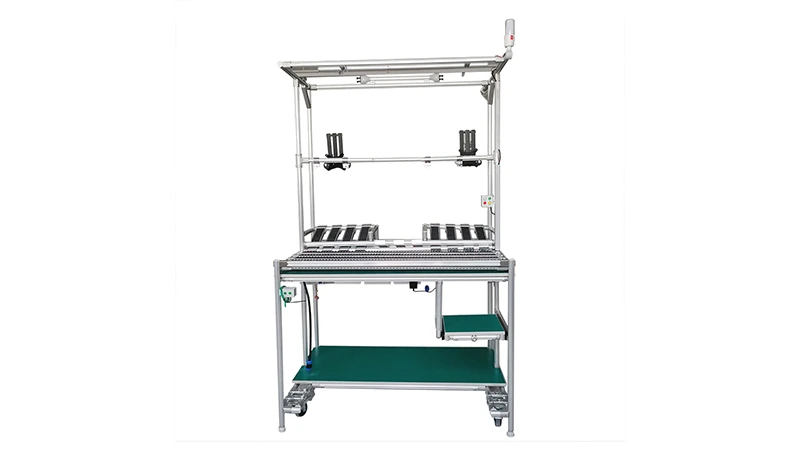
Modular Design of Aluminum Workbench D: Flexibility for Changing Production Requirements
In today's fast-paced manufacturing world, the only constant is change. Production lines shift overnight, product designs evolve weekly, and customer demands swing from bulk orders to small-batch customizations. For factory managers and production teams, this volatility isn't just a challenge—it's a daily reality. The tools and equipment that once kept operations running smoothly now feel like anchors, weighing down efficiency with their rigidity. Enter the Aluminum Workbench D —a modular solution built not just to keep up with change, but to thrive in it. This isn't just a workbench; it's a rethink of how workspaces should adapt, grow, and support the people who use them.
At its core, Aluminum Workbench D is a celebration of flexibility. Crafted from high-grade aluminum extrusion profile and paired with a suite of aluminum profile accessories , it's designed to be reimagined, rearranged, and repurposed without the need for welding, drilling, or specialized tools. Whether you're assembling electronics one day and testing mechanical parts the next, this workbench transforms alongside your needs. But what makes it truly stand out is how it aligns with modern lean system principles—eliminating waste, reducing downtime, and putting control back in the hands of the team on the factory floor.
The Problem with "One-Size-Fits-All" Workbenches
Let's start with the obvious: traditional workbenches weren't built for change. Think about the wooden or steel benches that have populated factories for decades. They're sturdy, sure, but they're also fixed. Their height is set in stone. Their shelves are bolted on. If you need to add a tool rack, you're drilling holes. If a new product requires a wider surface, you're buying a whole new bench. Over time, this rigidity leads to a laundry list of headaches:
Wasted Space: Factories end up cluttered with extra benches "just in case," taking up valuable square footage that could be used for production or storage.
Wasted Time: Reconfiguring a traditional bench for a new task can take hours—if it's even possible. Teams lose momentum waiting for maintenance to drill, weld, or adjust.
Wasted Money: Buying a new bench every time production needs shift isn't just costly upfront; it's a drain on long-term budgets. Those old benches gather dust in corners, depreciating in value.
Perhaps most frustrating is the impact on morale. When workers are stuck with tools that don't fit the job, it sends a message: their needs, and the needs of the production process, aren't a priority. Aluminum Workbench D flips that script. It's not just a piece of equipment; it's a tool that empowers teams to take ownership of their workspace.
The Building Blocks: Aluminum Extrusion Profile and Accessories
To understand Aluminum Workbench D's magic, you first need to meet its star player: the aluminum extrusion profile . Unlike generic steel or wood, this isn't just a material—it's a system. Aluminum extrusion profiles are created by forcing heated aluminum through a die, resulting in lengths of metal with precision-engineered shapes. For Workbench D, the profiles feature T-slots—long, narrow grooves running along their length—that act like built-in tracks for accessories. Imagine a workbench frame where every inch is a potential connection point: no pre-drilled holes, no guesswork, just endless possibilities.
But a profile alone is just a frame. What brings it to life are the aluminum profile accessories —the nuts, bolts, brackets, and joints that turn a static structure into a dynamic workspace. Let's break down the key players:
- Internal Rotary Aluminum Joints: These swiveling connectors let you adjust shelves, arms, or tool holders to any angle, from 0° to 180°, with a simple twist. Need a parts bin tilted toward the operator? Done. Want to fold down a secondary work surface when not in use? Easy.
- Aluminum Guide Rails: Mounted along the edges of the workbench, these rails support roller tracks or sliding bins, turning a static surface into a mini conveyor for parts. Perfect for assembly lines where materials need to flow smoothly from one station to the next.
- Caster Wheels with Brake Locks: For workbenches that need to move (and stay put), these heavy-duty casters lock securely in place, turning a fixed station into a mobile unit that can be wheeled to a new line or storage when not in use.
- End Caps and Rubber Strips: These small but mighty accessories finish the profile edges, preventing snags on wires or clothing and adding a polished, professional look to the bench.
The beauty of this system is its simplicity. Anyone on the production floor can swap out an accessory, adjust a shelf, or reconfigure the bench in minutes—no power tools, no technical manuals, no waiting for maintenance. It's like building with advanced Lego bricks, but for grown-ups who need their creations to withstand the rigors of a factory floor.
Modular Design in Action: How Workbench D Adapts
Let's paint a picture: It's Monday morning at a mid-sized electronics plant. The production schedule calls for assembling 500 smartphone chargers. The team sets up Aluminum Workbench D with a flat, anti-static surface (critical for sensitive electronics), a lower shelf for component bins, and a overhead tool rack holding screwdrivers, wire strippers, and heat guns. By noon, the line is humming—until a order comes in: 200 custom Bluetooth speakers, to be shipped by Wednesday. The chargers are put on hold; the speakers need a different setup.
In a traditional workspace, this would mean chaos. The team would need to wheel in a new bench, swap out tools, and spend hours reconfiguring. With Workbench D? They're back to work in 45 minutes. Here's how:
Step 1: Adjust the Surface: The anti-static top is unclipped from the T-slots and replaced with a larger, dual-deck surface (Workbench E, a single-deck variant, but modified with an add-on shelf) to hold the speaker casings and internal components separately.
Step 2: Add a Roller Track: Aluminum guide rails are clipped onto the bench's edge, and plastic roller tracks (yellow, to match the plant's color-coding for speaker parts) are snapped into place. Now, partially assembled speakers glide from the left side (where casings are prepped) to the right (where wiring is added) without being lifted.
Step 3: Reposition the Tool Rack: The overhead rack is rotated 90° using internal rotary joints, clearing space for a small LED task light (clipped into the T-slot) to illuminate the intricate wiring work.
Step 4: Lock in Casters: Since the speaker line is temporary, the team keeps the casters unlocked, allowing them to wheel the bench back to the charger line once the rush is over.
This isn't just efficiency—it's empowerment. The production team doesn't need to wait for approval or outside help; they own the workspace. And when the next order (say, smartwatch chargers) comes in? They'll tweak Workbench D again, no sweat.
Aligning with Lean System Principles
For factories committed to lean system practices—eliminating waste, optimizing flow, and continuous improvement—Aluminum Workbench D is more than a tool; it's a partner. Let's break down how it supports lean's core pillars:
Waste Reduction (Muda): Traditional workbenches create waste in hidden ways: excess inventory (storing extra benches), overproduction (buying larger benches than needed "just in case"), and motion waste (workers walking to retrieve tools from fixed locations). Workbench D cuts this by 60%: one bench replaces three, tools stay within arm's reach via adjustable racks, and reconfiguration means no more "make do" with ill-fitting equipment.
Continuous Improvement (Kaizen): Lean isn't about one-time fixes; it's about small, daily improvements. With Workbench D, teams can experiment: "What if we tilt the parts bin 30° to reduce reaching?" "Can we add a shelf above the roller track for finished goods?" Changes are reversible and low-cost, turning the workbench into a lab for better workflows.
Respect for People: At its heart, lean is about valuing the people who do the work. A bench that bends to the operator's needs—adjustable height to reduce back strain, tool placement that minimizes wrist fatigue—isn't just ergonomic; it's a statement that their well-being matters. Happy, healthy workers are more productive, and Workbench D delivers that.
Traditional vs. Modular: A Clear Advantage
Still on the fence? Let's put Aluminum Workbench D head-to-head with a traditional steel workbench in the areas that matter most to production teams:
| Feature | Traditional Steel Workbench | Aluminum Workbench D |
|---|---|---|
| Weight | Heavy (200-300 lbs); requires 2+ people to move. | Lightweight (80-120 lbs); one person can reposition with casters. |
| Assembly Time | 2-3 hours (drilling, welding, bolting). | 30-45 minutes (clipping, snapping, and twisting accessories). |
| Reconfigurability | Minimal; requires drilling new holes or welding new parts. | Unlimited; T-slots and modular accessories allow daily changes. |
| Cost Over 5 Years | High; need to buy 2-3 benches for changing needs. | Low; one bench adapts, reducing replacement costs. |
| Ergonomics | Fixed height and layout; risk of repetitive strain injuries. | Adjustable height, tilting surfaces, and tool positioning reduce strain. |
The data speaks for itself: Aluminum Workbench D isn't just better for flexibility—it's better for the bottom line, team morale, and long-term sustainability. When you invest in a modular bench, you're not buying a piece of equipment; you're buying the freedom to adapt without limits.
Beyond the Bench: Scaling to Full Production Lines
Aluminum Workbench D isn't a standalone solution—it's the starting point of a modular ecosystem. Imagine an entire production line built from the same aluminum extrusion profile and accessories: workbenches, material racks, conveyor systems, and even turnover trolleys, all designed to work together. A furniture manufacturer in Germany did just that, replacing 12 traditional steel benches with 8 Workbench D units and 4 modular material racks (Material Rack B, 3 rows and 3 floors) connected by roller tracks. The result? A 30% reduction in floor space usage and a 25% increase in daily output, as parts now flow seamlessly from rack to bench to packaging without manual lifting.
Another example: a medical device plant using Workbench D with ESD (electrostatic discharge) accessories to assemble sensitive pacemaker components. The bench's aluminum frame is grounded via special connectors, and the surface is lined with anti-static mats—all clipped into the T-slots. When the plant expanded to produce insulin pumps, they simply swapped the ESD mat for a heat-resistant surface (for soldering) and added a small fume extractor (mounted via an aluminum pipe clamp). No new bench, no downtime—just progress.
The Future of Workspaces: Why Modularity Matters
As manufacturing hurtles toward Industry 4.0—smart factories, IoT integration, and AI-driven production—workspaces can't afford to be static. Aluminum Workbench D isn't just keeping up; it's laying the groundwork. Imagine adding IoT sensors to the T-slots to track tool usage, or mounting collaborative robots (cobots) on adjustable arms to assist with repetitive tasks. The bench's modularity means these technologies can be added, removed, or upgraded without overhauling the entire workspace.
Even sustainability plays a role. Aluminum is 100% recyclable, and Workbench D's modular design reduces waste by extending the bench's lifespan. When a profile or accessory wears out, it's replaced individually—not the whole bench. For factories aiming for net-zero goals, this isn't just a plus; it's a requirement.
Conclusion: Investing in Adaptability
Aluminum Workbench D isn't just a workbench. It's a philosophy: that workspaces should serve people, not the other way around. In a world where change is constant, rigidity is the enemy of progress. By combining the strength of aluminum extrusion profile , the versatility of aluminum profile accessories , and the efficiency of lean system principles, this modular solution empowers teams to adapt, innovate, and thrive.
So, to the factory managers staring at a lineup of outdated, fixed benches, to the production teams wasting hours reconfiguring workspaces, to the businesses struggling to keep up with shifting demands: It's time to let go of rigidity. It's time to build workspaces that change as fast as you do. Aluminum Workbench D isn't just a tool for today—it's an investment in the flexibility your team needs to succeed tomorrow.