- Company Articles
- Products and Technology
- Solution
- Modular Design with Gusset ALP 4040: Building Scalable Production Systems

Modular Design with Gusset ALP 4040: Building Scalable Production Systems
Related Product
Gusset ALP 4040
The 4040 bracket/Gusset is an external fastening method that creates a 90 degree connection. 4040 means this size is used for 40 series aluminum profile with a quick connection by bolt and nut. It is a lightweight bracket that requires no machining servic
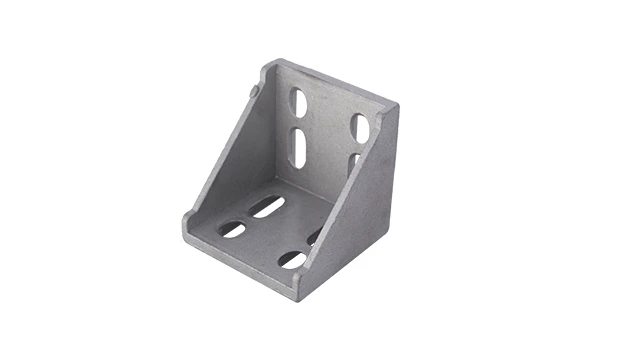
How a small but mighty component is transforming factory floors, one flexible system at a time
The Headache of Rigid Factories: When Your Production Line Refuses to Grow
Let's start with a story we've all heard (or lived). Picture a mid-sized electronics manufacturer—let's call them "TechFlow"—that's been steadily growing for five years. Their factory floor is a maze of fixed workbenches, bolted-down material racks, and conveyor belts that haven't moved since installation. For years, this setup worked: same products, same volume, same workflow. But then came the big order: a new client wants 50% more units, and they need a custom circuit board added to the line. Suddenly, TechFlow's "efficient" layout feels like a straightjacket.
The old workbenches? Too small for the new assembly steps. The material racks? Not enough space for the extra components. The conveyors? They can't reroute to accommodate the new station without days of downtime and a pricey contractor bill. Sound familiar? Rigid production systems don't just slow growth—they block it. And in today's fast-paced market, where consumer demands shift overnight and product lifecycles shrink by the quarter, that's a death sentence.
But what if there was a way to build production systems that adapt instead of resist? Systems that grow when you need more space, shrink when you downsize, and reconfigure in hours instead of weeks? That's where modular design comes in—and at the heart of that design is a small but critical component: the Gusset ALP 4040.
Modular Design: The "Lego Set" Approach to Factory Floors
Modular design isn't new, but it's finally breaking into mainstream manufacturing—and for good reason. Think of it like building with Legos: instead of gluing all your blocks together into a single, unchangeable castle, you connect them with reusable, sturdy pieces that let you take apart, rearrange, and add on as needed. On a factory floor, that means workbenches that can expand, material racks that can stack, and conveyor systems that can bend—all without welding, drilling, or hiring a crew of engineers.
The benefits are clear: cost savings (no more ripping out and rebuilding fixed structures), downtime reduction (reconfigure in a weekend instead of a month), and scalability (grow incrementally, testing new workflows without overcommitting). But modular systems are only as strong as their weakest link. And for years, that weak link was the connectors—the pieces that hold everything together. Too flimsy, and the system wobbles under weight. Too rigid, and you lose the "modular" part. Enter the Gusset ALP 4040: the unsung hero of flexible production.

Gusset ALP 4040: The "Glue" That Holds Modular Systems Together (Without the Glue)
Let's get technical—but not too technical. The Gusset ALP 4040 is a bracket, plain and simple. But not just any bracket. Made from high-grade aluminum (lightweight, rust-resistant, and surprisingly tough), it's designed to connect aluminum profiles—the long, T-slot extrusions that form the "bones" of modular systems. What makes it special? That "gusset" in the name. A gusset is a triangular reinforcement that adds strength at stress points, like how a corner brace strengthens a bookshelf. In the Gusset ALP 4040, that gusset design means it can handle heavy loads—think fully loaded workbenches, stacked material racks, or even mobile trolleys bouncing over factory floors—without bending or breaking.
But strength is just part of the story. The real magic is compatibility. Gusset ALP 4040 is engineered to work seamlessly with standard aluminum profiles, like the 4040 EU standard aluminum profile—a workhorse in factories worldwide. These profiles have T-shaped slots along their length, which let you slide in bolts, nuts, or accessories (like casters, roller tracks, or shelf brackets) without drilling. The Gusset ALP 4040 fits right into these slots, acting as a bridge between profiles. Want to build a 90-degree corner for a workbench? Attach two 4040 profiles with Gusset ALP 4040 brackets. Need to stack a second level on a material rack? Add vertical profiles, secure them with Gusset ALP 4040, and you're done. No special tools, no custom parts, just a bracket that works as hard as your team does.
Fun fact: Aluminum profiles and Gusset ALP 4040 brackets are so lightweight that a single worker can carry and assemble a basic workbench frame in under an hour. Compare that to traditional steel workbenches, which often require two people and a forklift. Time is money, and modular systems hand you both back.

Building Blocks: Aluminum Profiles, Accessories, and the Gusset ALP 4040 Ecosystem
Gusset ALP 4040 doesn't work alone. It's part of a larger ecosystem of aluminum profiles, joints, and accessories that turn a pile of parts into a fully functional production system. Let's break down the key players:
Aluminum Profiles: The "Bones" of the System
Aluminum profiles are the backbone—literally. Most factories opt for 4040 EU standard profiles (40mm x 40mm), but there are smaller (2020) and larger (8080) options for different needs. These profiles are extruded, meaning they're shaped by forcing aluminum through a die, resulting in consistent, high-strength pieces. Their T-slot design is genius: instead of drilling holes in specific spots, you can attach components anywhere along the slot. Need to move a shelf up by 2 inches? Loosen the bolts, slide, retighten. Done.
Gusset ALP 4040: The "Joints" That Strengthen
As we've covered, Gusset ALP 4040 brackets connect profiles at corners, intersections, or straight runs. Their gusseted design adds rigidity, which is crucial for systems that need to support weight (like a workbench holding 50kg of tools) or move (like a mobile trolley). Unlike some flimsy plastic brackets, these aluminum workhorses won't crack under pressure, even in high-vibration environments.
Accessories: The "Muscles" That Add Functionality
What good is a frame without the extras? Modular systems shine because of accessories, and Gusset ALP 4040 plays nice with all of them:
- Casters and Wheels: Add mobility to workbenches or trolleys. Caster mounting plates bolt right into aluminum profiles, secured with Gusset ALP 4040 for stability.
- Roller Tracks: For flow racks or conveyors. Plastic or steel rollers mount to aluminum guide rails, which are then attached to frames using—you guessed it—Gusset ALP 4040.
- Workbench Tops: From basic plywood to anti-static ESD tops (critical for electronics), these bolt onto the aluminum frame, with Gusset ALP 4040 reinforcing the corners to prevent sagging.
- Turnover Trolleys: These mobile racks carry materials between stations. Gusset ALP 4040 ensures the frame can handle heavy loads without tipping, even when navigating tight factory aisles.
Real Talk: How Gusset ALP 4040 Solved TechFlow's Growth Problem
Remember TechFlow, the electronics manufacturer stuck with a rigid layout? Let's circle back. After their big order, they turned to a modular solution built around aluminum profiles and Gusset ALP 4040. Here's what happened:
- Workbenches: Their old fixed workbenches were replaced with modular ones. Using 4040 profiles and Gusset ALP 4040 brackets, they started with 10 single-deck workbenches. When they needed more space, they added double-deck shelves (secured with Gusset ALP 4040) and even casters for mobility. Total setup time? 2 days, not 2 weeks.
- Material Racks: The old 3-row, 3-floor racks were limiting. With modular flow racks—built with aluminum roller tracks and Gusset ALP 4040-reinforced frames—they expanded to 4 rows and added a 4th floor. Now, components flow smoothly to the line, and the racks can be extended again if the next big order comes in.
- Cost Savings: Instead of spending $50,000 on new fixed racks and workbenches, they spent $25,000 on modular components—and they can reuse those components if they reconfigure again next year.
Today, TechFlow's factory floor is unrecognizable. It's not perfect, but it's flexible . When a new product line launches next quarter, they'll add a few more profiles, bolt on some Gusset ALP 4040 brackets, and be ready to go. No stress, no downtime, just growth.
Why Scalability Matters (It's Not Just About Getting Bigger)
Scalability isn't just for companies exploding in size. It's for the small manufacturer that needs to pivot to a new product. It's for the factory that wants to test a new workflow without overhauling everything. It's for the team that needs to shrink a line temporarily during slow seasons, then ramp back up when orders pick up. Modular systems with Gusset ALP 4040 make all of this possible—and they do it while saving money, time, and sanity.
Let's talk numbers. A 2023 study by the Manufacturing Technology Insights found that factories using modular production systems reported:
- 40% faster reconfiguration time when launching new products
- 30% lower costs for facility upgrades
- 25% reduction in downtime during system changes
These aren't just stats—they're real impacts on a company's bottom line. When you can reconfigure a workbench in an hour instead of a week, you're not just saving time; you're getting products to market faster. When you can reuse components instead of buying new ones, you're cutting waste and boosting profitability.
Myth Buster: "Modular systems are flimsy." Not with Gusset ALP 4040. One manufacturer we worked with uses a modular flow rack built with aluminum profiles and Gusset ALP 4040 to store steel parts weighing 20kg each. That's 60kg per shelf, 3 shelves high—and the system hasn't budged in 3 years. Rigidity? Check. Flexibility? Double check.
Beyond the Factory Floor: Sustainability and the Gusset ALP 4040 Advantage
Here's a bonus most people don't consider: modular systems are good for the planet. Traditional fixed systems often end up in landfills when they're no longer needed. Modular systems? They're built to be reused. Aluminum profiles and Gusset ALP 4040 brackets are 100% recyclable, and since they're designed to be reconfigured, they rarely get thrown away. Even when a company outgrows a specific setup, the components can be sold, repurposed, or recycled—reducing waste and lowering your carbon footprint.
Take it from GreenBuild, a sustainable packaging manufacturer that switched to modular systems last year. They estimate they've cut factory waste by 35% by reusing old aluminum profiles and Gusset ALP 4040 brackets in new setups. "We used to demo workbenches and send them to scrap," says their operations manager. "Now, we just take them apart and rebuild. It's not just good for the budget—it's good for our sustainability goals."
How to Start: Building Your First Modular System with Gusset ALP 4040
Ready to ditch rigidity and embrace scalability? Here's how to start small and grow:
- Assess Your Pain Points: What's not working? Is it workbench space? Material flow? Mobility? Start there.
- Pick a Pilot Project: Don't overhaul everything at once. Try a single modular workbench or flow rack. Use 4040 aluminum profiles and Gusset ALP 4040 brackets—they're the most versatile.
- Work with a Reputable Supplier: Not all aluminum profiles or brackets are created equal. Look for suppliers that specialize in lean system components—they'll help you choose the right parts (like Gusset ALP 4040) for your needs.
- Train Your Team: Modular systems are easy to assemble, but a quick training session on T-slot bolts and Gusset ALP 4040 installation will save time. Most teams pick it up in an hour—no engineers required.
- Test and Iterate: Launch your pilot, get feedback from workers, then tweak. Maybe the workbench needs casters, or the flow rack needs an extra shelf. With modular design, changes are fast and cheap.
Remember, scalability isn't about building something huge on day one. It's about building something that can grow. And with Gusset ALP 4040, that growth is limited only by your imagination (and maybe the size of your factory—but even then, you can always rearrange).
The Bottom Line: Gusset ALP 4040 Isn't Just a Bracket—It's a Growth Partner
At the end of the day, manufacturing is about adaptability. Markets change, orders fluctuate, and new technologies emerge. Your production system shouldn't be the thing holding you back. Modular design, with Gusset ALP 4040 as its backbone, gives you the freedom to evolve—without breaking the bank or halting production.
So, to all the TechFlows, GreenBuilds, and small manufacturers dreaming of growth: The future of factory floors isn't rigid. It's modular. It's flexible. And it starts with a small but mighty bracket called Gusset ALP 4040.
Ready to build a system that grows with you? Your factory floor (and your bottom line) will thank you.
Comparing Rigid vs. Modular Systems: The Numbers Speak for Themselves
| Feature | Rigid Fixed Systems | Modular Systems (with Gusset ALP 4040) |
|---|---|---|
| Initial Setup Cost | High (custom fabrication, installation) | Lower (off-the-shelf components, DIY assembly) |
| Reconfiguration Time | Weeks (demolition, rewelding, reinstallation) | Hours to days (bolt-on components, no special tools) |
| Scalability | Limited (requires full rebuilds) | Unlimited (add/remove components as needed) |
| Durability | High (but permanent) | High (aluminum resists rust; gusset design adds strength) |
| Waste Production | High (old systems end up in landfills) | Low (components reused/recycled) |
| Worker Satisfaction | Low (frustration with fixed, inefficient layouts) | High (customizable workspaces, easier workflows) |