- Company Articles
- Products and Technology
- Solution
- Modular Lean Solutions: Lean Pipe Clamp B Chrome as a Core Component

Modular Lean Solutions: Lean Pipe Clamp B Chrome as a Core Component
Related Product
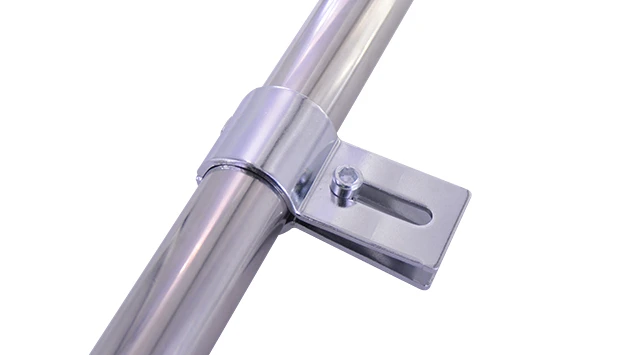
Lean Pipe Clamp B Chrome
Lean pipe clamp is used for turnover trolley, workbench, flowrack adjust the frame or fix some accessory.
In the fast-paced world of manufacturing and production, efficiency isn't just a buzzword—it's the backbone of success. Every minute wasted, every unnecessary step, every rigid setup that can't adapt to new demands eats into profits and slows growth. This is where modular lean solutions step in, offering a flexible, cost-effective way to streamline workflows, reduce waste, and keep operations agile. At the heart of these systems lies a small but mighty component: the Lean Pipe Clamp B Chrome. Often overlooked, this unassuming clamp is the linchpin that holds together the adaptability and functionality of modern lean manufacturing setups. Let's dive into how modular lean solutions transform workspaces, and why the Lean Pipe Clamp B Chrome deserves the spotlight as a core component.
What Are Modular Lean Solutions, Anyway?
Before we zoom in on the star of the show, let's make sure we're all on the same page about modular lean solutions. Simply put, these are systems built from interchangeable parts that can be easily assembled, disassembled, and reconfigured to meet changing needs. Think of them as the ultimate DIY kit for manufacturing—no permanent structures, no expensive custom builds, just components that snap together (or clamp together, as we'll see) to create exactly what you need, when you need it.
The "lean" in modular lean solutions comes from the principles of lean manufacturing, which focus on minimizing waste (whether that's time, space, or materials) while maximizing value. Traditional production setups often rely on fixed workstations, rigid material racks, and one-size-fits-all conveyor systems. But in today's dynamic market, where product lines change, order volumes fluctuate, and new technologies emerge, rigidity is a liability. Modular lean solutions solve this by being inherently flexible—they grow with your business, adapt to new product requirements, and can be repurposed in hours instead of weeks.
The Heart of the System: Lean Pipe Clamp B Chrome
If modular lean solutions are the body, then the Lean Pipe Clamp B Chrome is the joint that lets everything move. This small but critical component is what holds the system together, literally and figuratively. Let's break down why it's so essential.
First, let's talk about what it is. The Lean Pipe Clamp B Chrome is a durable, chrome-plated connector designed to fasten lean pipes (the cylindrical tubes that form the skeleton of most modular systems) to each other or to other components like workbench frames, flow rack sides, or aluminum profiles. Unlike fixed welds or one-time-use adhesives, these clamps are reusable, adjustable, and require no special tools to install or remove. That means if you need to shorten a workbench, add a shelf to a flow rack, or reconfigure a material trolley, you can do it in minutes with a simple wrench—no need for a professional installer or downtime that grinds production to a halt.
But what sets the "B Chrome" variant apart? The "B" likely refers to its design—maybe a specific shape or size that makes it compatible with standard lean pipe diameters (often 28mm or 30mm). The "Chrome" is a key detail: chrome plating adds a layer of corrosion resistance, making these clamps ideal for environments where moisture, oils, or chemicals are present (think automotive workshops, food processing plants, or electronics assembly lines where cleanliness is critical). Chrome also gives the clamps a smooth, professional finish that holds up against daily wear and tear, so your system looks as good as it performs for years.
Another standout feature is the clamp's grip. A poorly designed clamp might slip or loosen over time, compromising the stability of the entire structure. But Lean Pipe Clamp B Chrome is engineered with precision: its inner surface often has serrations or a textured pattern that bites into the lean pipe when tightened, creating a secure hold that won't budge, even under heavy loads. Whether you're supporting a workbench stacked with tools or a flow rack loaded with heavy components, you can trust these clamps to keep everything in place.
Complementary Components: Building a Complete System
Of course, even the best clamp can't do it alone. Modular lean solutions thrive because of the synergy between components, and Lean Pipe Clamp B Chrome works hand-in-hand with several key players to create functional, adaptable systems. Let's explore a few of the most important ones:
Lean Pipe: The Backbone
At the core of every modular lean setup is the lean pipe itself. Typically made of steel with a plastic coating (like PE) or stainless steel, lean pipes are lightweight yet strong, designed to be cut to custom lengths and connected with clamps and joints. The plastic coating adds a protective layer, preventing scratches on delicate components (like circuit boards in electronics manufacturing) and reducing noise when parts are moved around. When paired with Lean Pipe Clamp B Chrome, lean pipes become the building blocks of almost anything: workbenches, material racks, trolleys, or even temporary storage structures. The beauty is that the same pipe can be reused in different configurations—today it's part of a workbench, tomorrow it's part of a flow rack, and next month it might be repurposed into a shipping trolley. That kind of versatility is gold for businesses that need to pivot quickly.
Lean Pipe Joint: The Connectors
While clamps like Lean Pipe Clamp B Chrome handle straight connections, lean pipe joints are the unsung heroes for angles and intersections. These come in all shapes—90-degree elbows, T-joints, 45-degree bends, even multi-way joints that connect three or four pipes at once. Think of them as the "elbows" and "knees" of the system, allowing you to build structures that turn corners, branch off, or stand vertically. Like the clamps, lean pipe joints are designed for quick assembly: most use a setscrew or bolt that tightens against the pipe, creating a secure fit without drilling or welding. When combined with Lean Pipe Clamp B Chrome, joints let you create complex structures with minimal effort. For example, a workbench might use straight clamps to connect the horizontal pipes of the frame, while 90-degree joints connect the vertical legs to the top shelf. It's a modular puzzle where every piece fits, and you're the designer.
Workbench: The Workhorse
One of the most common applications of modular lean solutions is the workbench—and for good reason. Traditional workbenches are often heavy, fixed, and expensive; if you need to adjust the height, add a shelf, or move it to a new location, you're out of luck. Modular workbenches, built with lean pipes, Lean Pipe Clamp B Chrome, and a sturdy tabletop (like plywood, MDF, or aluminum), solve all these problems. Need a taller workbench for a taller operator? Swap out the vertical lean pipes for longer ones and reattach with clamps. Want to add a tool rack above the bench? Connect a few horizontal pipes with joints and clamps, and you're done. Even the casters (wheels) can be added or removed using clamps, turning a stationary bench into a mobile workstation that can be rolled to where it's needed most.
In electronics manufacturing, for example, ESD (Electrostatic Discharge) workbenches are critical to protect sensitive components from static electricity. These workbenches use ESD-safe materials for the tabletop and often incorporate grounding wires connected via lean pipes and clamps. With Lean Pipe Clamp B Chrome, adding or adjusting grounding points is a breeze—simply attach a new clamp with a grounding lug, and you're compliant with safety standards. It's this level of customization that makes modular workbenches indispensable.
Flow Rack: Streamlining Material Handling
Material handling is a huge part of manufacturing efficiency, and flow racks are designed to make it easier. A flow rack uses gravity to move materials from the back to the front, so operators can access components without bending, reaching, or searching—reducing fatigue and errors. Flow racks are built with sloped shelves, often lined with roller tracks (another key component!) that let boxes or bins glide smoothly. Here's where Lean Pipe Clamp B Chrome shines: the frame of the flow rack is typically made of lean pipes connected with clamps, allowing you to adjust the height of the shelves, the angle of the slope, or even the number of lanes to match the size of your materials. For example, a small parts supplier might use a flow rack with narrow lanes for tiny components, while a automotive parts manufacturer might need wider lanes for larger bins. With clamps, reconfiguring the rack takes minutes, not days.
Aluminum Profile: Modern, Lightweight, and Sleek
While lean pipes are a classic choice, many manufacturers today are turning to aluminum profiles for a more modern, lightweight alternative. Aluminum extrusion profiles are rigid, corrosion-resistant, and come in a variety of shapes (like T-slots) that make them easy to connect with specialized brackets and clamps—including, you guessed it, Lean Pipe Clamp B Chrome (with adapters if needed). Aluminum profiles are particularly popular in cleanroom environments or industries where aesthetics matter (like medical device manufacturing), as they have a sleek, professional look and are easy to clean. They're also lighter than steel lean pipes, making them ideal for mobile structures like trolleys that need to be moved frequently. When paired with chrome clamps, aluminum profiles create systems that are both strong and stylish, proving that modular lean solutions can be as functional as they are visually appealing.
| Component | Function | Key Benefit with Lean Pipe Clamp B Chrome |
| Lean Pipe | Main structural element; cut to custom lengths | Easily cut and connected; reusable in multiple configurations |
| Lean Pipe Joint | Connects pipes at angles (90°, 45°, T-joints, etc.) | Enables complex, multi-angle structures with secure, tool-free assembly |
| Workbench | Station for assembly, testing, or storage | Adjustable height, shelves, and accessories; ESD-compatible options |
| Flow Rack | Gravity-fed material storage for easy access | Adjustable shelf heights and slopes to fit material sizes |
| Aluminum Profile | Lightweight, modern alternative to lean pipe | Sleek, corrosion-resistant, and compatible with clamps for easy adjustments |
Real-World Applications: How Businesses Are Using These Solutions
To truly understand the impact of Lean Pipe Clamp B Chrome and modular lean solutions, let's look at a few real-world examples of businesses that have transformed their operations with these tools.
Case Study 1: Small Electronics Workshop
A small electronics repair shop with just 5 employees was struggling with limited space and disorganized workbenches. Their old, fixed workbenches were cluttered with tools, and materials were stored in random bins on the floor, leading to wasted time searching for parts. The owner decided to invest in a modular lean system, starting with two workbenches built from lean pipes, Lean Pipe Clamp B Chrome, and ESD-safe tabletops. They added overhead tool racks (connected with clamps) and a small flow rack for storing common components. Within a week, the shop saw a noticeable difference: employees could find parts faster, workbenches stayed organized, and they even had room to add a third workstation by reconfiguring the existing pipes and clamps. Best of all, when they expanded to phone repairs, they simply adjusted the workbench height and added a new shelf with clamps—no need to buy a whole new setup.
Case Study 2: Automotive Parts Manufacturer
A mid-sized automotive parts manufacturer was dealing with frequent changes in production runs—one month they'd be making brake components, the next suspension parts. Their old fixed material racks couldn't keep up; they often had to leave materials on the floor, creating tripping hazards and slowing down assembly. They switched to modular flow racks built with lean pipes, Lean Pipe Clamp B Chrome, and roller tracks. Now, when a new production run starts, they reconfigure the flow racks in a few hours: adjusting shelf heights with clamps, adding or removing lanes, and even moving the racks closer to the assembly line. The result? A 30% reduction in time spent retrieving materials and a safer workspace with fewer accidents. The chrome clamps have held up perfectly in the oily, dusty environment, requiring minimal maintenance beyond an occasional wipe-down.
Case Study 3: Medical Device Assembly Plant
A medical device manufacturer needed to comply with strict cleanroom standards while maintaining flexibility for new product launches. They chose aluminum profiles for their workbenches and material racks, paired with Lean Pipe Clamp B Chrome (with adapters) for secure connections. The aluminum profiles are easy to sanitize, and the clamps allow them to quickly add or remove fixtures like microscope mounts or ESD grounding points. When they introduced a new line of surgical tools, they reconfigured three workbenches in a day by loosening the clamps, adjusting the aluminum profiles, and retightening—no downtime, no extra costs, and full compliance with cleanroom regulations.
Installation and Adaptability: It's Easier Than You Think
One of the biggest myths about modular lean solutions is that they're complicated to install. But in reality, anyone with basic tools can assemble a functional system—no prior experience required. Here's a quick overview of how it works:
- Plan Your Design: Start by sketching what you need—a workbench, flow rack, etc. Measure the space and materials to determine pipe lengths and component types.
- Cut Lean Pipes (if needed): Most suppliers sell lean pipes in standard lengths, but you can cut them to size with a hacksaw or pipe cutter for a perfect fit.
- Assemble the Frame: Connect the pipes using Lean Pipe Clamp B Chrome and lean pipe joints. Tighten the clamps with a wrench until they're secure but not over-tightened (you want to be able to loosen them later if needed).
- Add Accessories: Attach roller tracks, shelves, casters, or tool holders using additional clamps or brackets.
- Test and Adjust: Check that the structure is stable and level. If something isn't right, simply loosen the clamps, adjust the pipes, and retighten.
The best part? This process is reversible. If your needs change next month, you can disassemble the entire structure and start over with the same components. No waste, no extra cost—just pure adaptability.
Why Chrome? The Material Advantage
We've mentioned the chrome plating a few times, but it's worth diving deeper into why this material choice matters. Chrome plating (also known as chromium plating) is a process where a thin layer of chromium is applied to a metal surface (usually steel) via electroplating. This layer offers several key benefits for Lean Pipe Clamp B Chrome:
- Corrosion Resistance: Chromium is highly resistant to rust and corrosion, making these clamps ideal for humid, wet, or chemical-exposed environments. In food processing plants, for example, where water and cleaning chemicals are used daily, chrome clamps won't degrade or leave rust stains on products.
- Durability: Chrome is hard and scratch-resistant, so the clamps hold up against the daily wear and tear of manufacturing—tightening, loosening, and general handling won't wear off the finish.
- Easy to Clean: Chrome has a smooth, non-porous surface that's easy to wipe clean with a damp cloth. This is critical in cleanrooms or medical settings where hygiene is a priority.
- Aesthetic Appeal: Let's not forget looks—chrome has a bright, professional finish that makes modular systems look polished and well-maintained, which can boost morale in the workplace.
While there are other clamp finishes available (like zinc-plated or plastic-coated), chrome stands out for its balance of durability, functionality, and appearance—making it the top choice for businesses that want their systems to perform and look good for years.
The Future of Modular Lean Systems
As manufacturing continues to evolve—with trends like automation, customization, and sustainability taking center stage—modular lean solutions are poised to play an even bigger role. Here's what we might see in the future:
Integration with Automation
More and more factories are adding collaborative robots (cobots) to their workflows, and modular systems will need to adapt. Imagine a workbench built with Lean Pipe Clamp B Chrome that can be quickly reconfigured to accommodate a cobot arm—adding a shelf for the robot's controller or adjusting the height to match its reach. Clamps will make it easy to mount sensors, cameras, or other automation tools directly to the frame, creating flexible, human-robot workstations.
Sustainability Focus
With businesses under pressure to reduce waste, modular systems will become even more attractive. Lean Pipe Clamp B Chrome and reusable components mean less scrap metal from fixed structures, and aluminum profiles (which are 100% recyclable) will grow in popularity. We might also see more eco-friendly coatings for lean pipes, like plant-based plastics, to further reduce environmental impact.
Smart Systems
What if your flow rack could tell you when it's running low on materials? Future modular systems might incorporate IoT (Internet of Things) sensors mounted with clamps, sending real-time data to a dashboard so managers can track inventory and prevent stockouts. Chrome clamps could even have built-in RFID tags to track components and ensure they're used in the right configurations.
Conclusion: The Clamp That Connects It All
Modular lean solutions are more than just a trend—they're a smarter way to build, adapt, and grow in today's fast-changing manufacturing landscape. And at the center of it all is the humble Lean Pipe Clamp B Chrome: a small component with a big impact. Its durability, ease of use, and compatibility with other parts like lean pipes, workbenches, flow racks, and aluminum profiles make it the glue that holds flexible systems together.
Whether you're a small workshop looking to organize your space or a large manufacturer needing to adapt to frequent production changes, investing in modular lean solutions with quality components like Lean Pipe Clamp B Chrome is a decision that pays off in efficiency, safety, and long-term savings. So the next time you walk through a well-organized factory or a tidy workshop, take a closer look—chances are, there's a chrome clamp hard at work, keeping everything connected and ready for whatever comes next.