- Company Articles
- Products and Technology
- Product knowledge
- Modular Suction Cup Anti-Slip Foot Adjusters for Custom Equipment Solutions

Modular Suction Cup Anti-Slip Foot Adjusters for Custom Equipment Solutions
Related Product
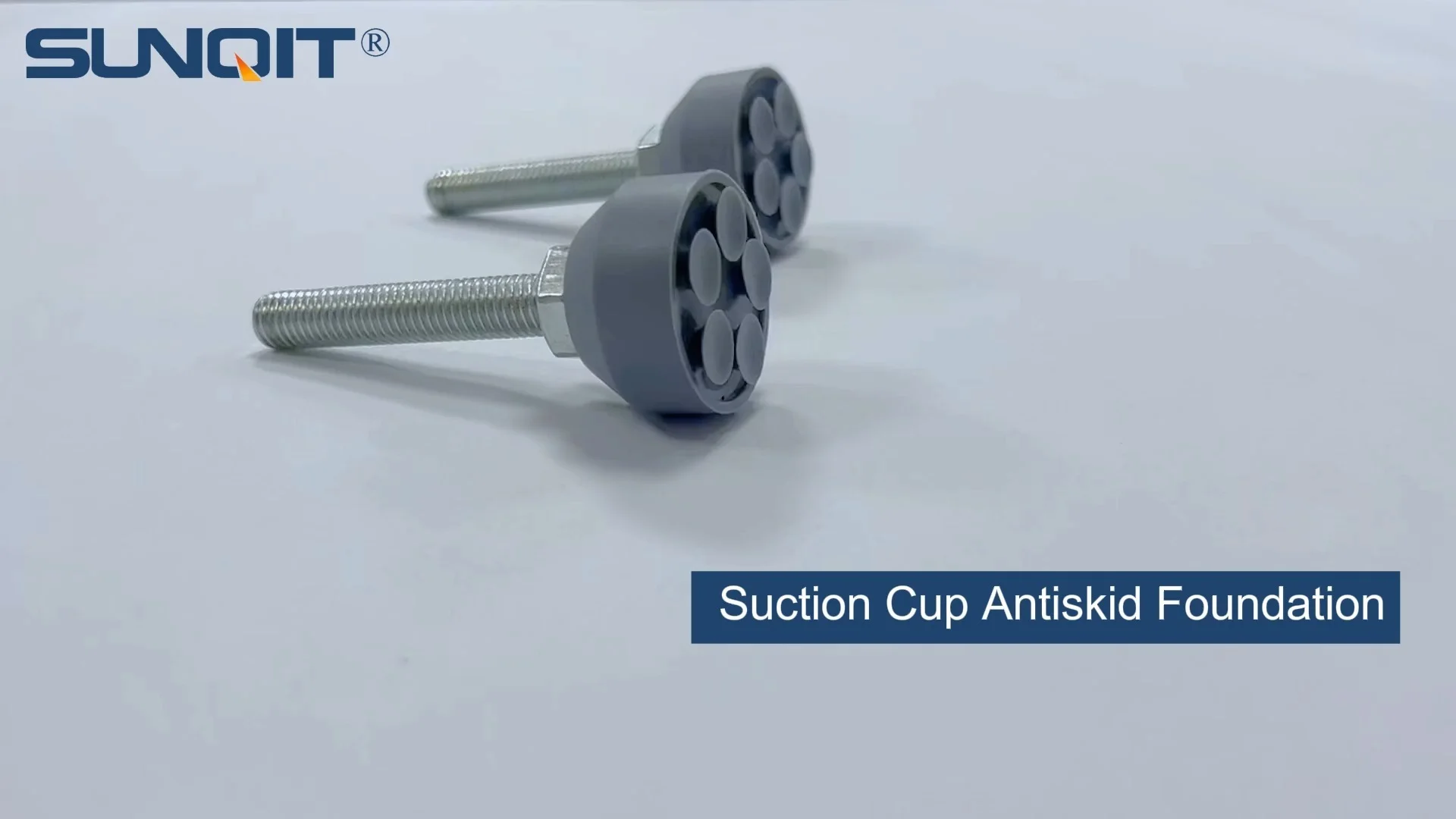
Suction Cup Anti-slip Foot Adjuster
D=35mm suction cup anti-slip foot adjusterï¼screw M10*55ï¼with a blot, used for workbench, flowrack pipe contact with groud.
Picture this: It's a busy Tuesday morning on the factory floor. Maria, an assembly line technician, is rushing to meet a production deadline. She leans over her workbench to pick up a small component, but as she does, the bench wobbles slightly. A screw rolls off the edge and clatters to the ground. She sighs, bends to retrieve it, and when she stands back up, notices that the plastic roller track guide rail on her material rack has shifted—again. The parts she'd carefully organized are now tilted, and a few have started to slide toward the edge. "Not again," she mutters. This isn't just a minor annoyance; it's costing her time, disrupting the flow, and worst of all, making her worry about whether the bench might tip if she pushes too hard. Sound familiar? For anyone working with industrial equipment—whether it's a lean pipe workbench, a roller track system, or a mobile turnover trolley—unstable, slippery, or poorly adjusted equipment is more than a hassle. It's a productivity killer, a safety risk, and a silent drain on efficiency.
The good news? There's a solution that doesn't involve jury-rigging with old washers, shoving folded cardboard under wobbly legs, or crossing your fingers and hoping for the best. Enter modular suction cup anti-slip foot adjusters: small but mighty components designed to transform how your equipment sits, stays, and supports your workflow. In this article, we'll dive into why these unassuming tools are game-changers for custom equipment solutions, how they integrate seamlessly with modular systems like lean pipe and aluminum profile setups, and why they're quickly becoming a must-have for anyone serious about building reliable, adaptable workspaces. Whether you're a plant manager looking to boost floor efficiency, a small business owner setting up a home workshop, or a technician tired of fighting with unstable gear, this is one innovation you won't want to overlook.
The Hidden Cost of Unstable Equipment: Why "Good Enough" Feet Just Aren't Enough
Before we jump into the specifics of suction cup anti-slip foot adjusters, let's talk about why the "feet" of your equipment matter so much. We often take them for granted—after all, they're just the parts that touch the floor, right? But in reality, they're the foundation of your entire workspace. A wobbly workbench isn't just annoying; it's a domino effect waiting to happen. When your work surface isn't level, precision suffers: measurements are off, parts don't align, and assembly takes longer. When a material rack shifts, it disrupts the flow of goods—components slide where they shouldn't, causing bottlenecks downstream. And when a mobile trolley with caster wheels suddenly rolls because its brakes can't grip the floor, you're looking at potential damage to parts, or worse, a safety hazard for anyone nearby.
Traditional foot adjusters—think basic plastic or metal pads—try to solve these problems, but they often fall short. Let's break down their limitations:
- One-size-fits-all frustration: Most standard feet are rigid, offering little to no adjustability. If your floor is uneven (and let's be real—most industrial floors are), you're stuck shimming with whatever's handy, which never lasts.
- Slippery when wet (or oily, or dusty): Smooth plastic or metal feet have minimal grip, especially on concrete floors common in factories. Add a spill, some oil, or even just dust, and suddenly your "stationary" equipment is sliding around like a hockey puck.
- Damage to floors (and equipment): Hard, unyielding feet can scratch or dent delicate floors (like in labs or cleanrooms) or, conversely, get scuffed and worn down on rough surfaces, losing their effectiveness over time.
- No compatibility with modular systems: If you're using a lean pipe or aluminum profile setup—systems built for flexibility—traditional feet often don't attach cleanly to modular joints or T-slots. You end up drilling holes, using zip ties, or compromising the modularity that made you choose the system in the first place.
The result? Wasted time, increased errors, higher risk of injury, and a workspace that feels like it's working against you instead of with you. So what's the alternative? A foot adjuster that's designed to adapt—to your floor, your equipment, and your ever-changing needs. That's where modular suction cup anti-slip foot adjusters come in.
Meet the Hero: What Are Modular Suction Cup Anti-Slip Foot Adjusters?
At first glance, a modular suction cup anti-slip foot adjuster might look like a simple upgrade to traditional feet. But don't let its size fool you—this little component packs a punch. Let's break down what makes it special:
Suction cup technology: The star of the show is the suction cup base, usually made of high-grade rubber or silicone. Unlike flat pads, which rely on friction alone, suction cups create a vacuum seal with the floor when pressure is applied. This seal drastically increases grip, even on smooth or slightly uneven surfaces. Think of it like a mini plunger for your equipment—once it's pressed down, it "sticks" without damaging the floor.
Modular adjustability: These aren't one-and-done feet. Most models feature a threaded stem that screws into a base, allowing you to adjust height by turning the cup. Need to level a workbench on a sloped floor? Twist the foot to raise or lower it until the surface is flat. Some even have swivel heads, so they can adapt to floors with minor bumps or grooves without losing contact.
Compatibility with modular systems: Here's where they really shine: these adjusters are built to play nice with the modular components you already use. Whether your equipment is framed with lean pipe, aluminum profile, or even stainless steel pipe series, there's a version designed to attach seamlessly. For example, many come with T-slot adapters that slide into aluminum profile accessories, or threaded inserts that fit into lean pipe joints. No drilling, no welding, no fuss—just clip, screw, or snap them into place and go.
Durable, industrial-grade materials: Let's face it—factory floors are tough. These adjusters are built to handle the abuse: oil, chemicals, heavy loads, and constant foot traffic. The suction cups resist wear and tear, the stems are often made of corrosion-resistant steel or aluminum, and the bases are reinforced to prevent cracking under pressure. They're not just for light-duty use; some can support up to 500 pounds per foot—more than enough for most workbenches, racks, or trolleys.
To put it simply: modular suction cup anti-slip foot adjusters are the Swiss Army knife of equipment feet. They level, they grip, they adapt, and they play well with others—making them the perfect addition to any custom setup.

From Lean Pipe Workbenches to Roller Tracks: How They Integrate with Your Modular World
The true beauty of these adjusters lies in how easily they fit into the modular systems you already rely on. Let's walk through a few common setups and see how they make a difference:
1. Lean Pipe Workbenches: Stability That Supports Precision
Lean pipe workbenches are beloved for their flexibility—you can build, modify, and expand them as your needs change. But that flexibility can sometimes come at the cost of stability, especially if you're using lightweight lean pipe or connecting multiple sections. Enter suction cup adjusters. By replacing the standard plastic feet on your lean pipe bench with these adjusters, you instantly add three key benefits:
- Leveling made easy: Lean pipe frames are often assembled with basic lean pipe joints, which are great for adjustability but can leave small gaps that make leveling tricky. With suction cup adjusters, you can tweak each foot individually to compensate for uneven floors, ensuring your work surface is perfectly flat—critical for tasks like assembly, inspection, or electronics work (hello, ESD workbench users!).
- No more sliding: If you've ever had a lean pipe workbench shift when you push or pull heavy parts, you know the frustration. The suction cups lock the bench in place, even if you're leaning on it or moving large components. This isn't just about convenience; it's about safety. A bench that stays put is less likely to tip, and parts are less likely to slide off the edge.
- Protect your floors (and your bench): Traditional lean pipe bench feet are often made of hard plastic or metal, which can scratch concrete or damage epoxy floors. The soft suction cup material acts as a buffer, preventing marks and scuffs. Plus, by reducing wobble, you'll extend the life of your bench—less stress on the lean pipe joints means fewer loose connections over time.
2. Aluminum Profile Systems: T-Slot Compatibility for Custom Rigs
Aluminum profile setups—like those using 4040 or 2020 aluminum extrusion profile—are the gold standard for custom equipment. Their T-slot design lets you attach everything from shelves to tools with ease. But even the sturdiest aluminum profile rack can wobble if its feet aren't up to par. Suction cup adjusters are a match made in heaven for these systems, thanks to their T-slot adapters. Here's how:
Imagine you're building a material rack B (3 row and 3 floor) using aluminum profile. You want it to hold heavy boxes of parts, but the floor in your storage area has a slight slope. Instead of shimming the legs, you can slide T-slot suction cup adjusters into the bottom of each aluminum profile leg. Twist each adjuster to raise or lower it until the rack is level, then press down to engage the suction cups. Now, even when you load the top shelf, the rack stays put—no more creeping across the floor or tilting under weight. And if you later need to move the rack? Simply release the suction cups (some have a small tab to break the seal), adjust the feet, and reposition. It's modularity at its finest.
Aluminum profile accessories like end caps or angle codes can even be used to reinforce the connection, ensuring the adjusters stay locked in place during heavy use. Whether you're building a workbench E (single deck-without caster) or a complex aluminum guide rail system, these adjusters add a layer of stability that turns "good" into "great."
3. Roller Tracks and Material Flow: Keeping the Line Moving Smoothly
Roller tracks—like plastic roller track guide rail yellow or aluminum roller track—are the backbone of efficient material flow. They keep parts moving from station to station, reducing manual handling and speeding up production. But if the track itself isn't stable, that flow turns into a bottleneck. A wobbly roller track can cause parts to jam, slide off, or slow down, disrupting the entire line.
Suction cup adjusters solve this by anchoring the roller track to the floor. For example, if you're using a 40 steel roller track with black ESD wheels (critical for electronics manufacturing), attaching suction cup feet to the track's support brackets ensures it stays level and stationary. Even when heavy bins glide over the rollers, the track doesn't shift. The suction cups absorb minor vibrations, preventing the "rattling" that can cause parts to misalign, and the adjustability means you can fine-tune the track's angle to control the speed of the flow—no more parts racing down too fast or getting stuck.
Roller track placon mount brackets or center support brackets can be modified to fit the adjusters, making installation a breeze. And because they're modular, you can add them to existing tracks without rebuilding the entire system—saving time and money.
4. Mobile Trolleys and Caster Wheels: The Best of Both Worlds (Mobility + Stability)
What if you need equipment that's both mobile and stable? Think about a turnover trolley with caster wheels: you want to roll it to the assembly line, but once it's there, you need it to stay put. Traditional caster wheels with brakes help, but even the best brakes can slip on smooth or oily floors. That's where combining casters with suction cup adjusters comes in.
Many modular trolleys are designed with a mix of casters and fixed feet. By replacing the fixed feet with suction cup adjusters, you get the best of both worlds: roll the trolley into place using the caster wheels, then lower the adjusters to lift the casters slightly off the floor (or keep them on the floor but engage the suction cups). Now the trolley is anchored—no rolling, no sliding, no unexpected movement. When you're ready to move it again, retract the adjusters, and the casters take over. It's like having a mobile workstation that turns into a stationary bench at the flip of a switch.
Caster accessories like brake levers can even be integrated with the adjusters, so lowering the feet automatically locks the casters—adding an extra layer of safety. Whether you're using a hand trolley A or a heavy-duty mobile rack, this combo makes mobility and stability coexist seamlessly.

Traditional vs. Modular Suction Cup Anti-Slip Foot Adjusters: A Head-to-Head Comparison
Still not convinced these adjusters are worth the switch? Let's put them head-to-head with traditional feet in the categories that matter most:
| Feature | Traditional Foot Adjusters | Modular Suction Cup Anti-Slip Foot Adjusters |
|---|---|---|
| Adjustability | Limited—often fixed height or basic threaded adjustment with no swivel. | Highly adjustable—height, swivel, and angle options to level on uneven floors. |
| Grip Strength | Relies on friction alone; slips easily on smooth, wet, or oily floors. | Suction cup creates vacuum seal; 3-5x better grip than traditional pads. |
| Compatibility with Modular Systems | Often requires custom drilling or modification to fit lean pipe/aluminum profile. | Designed for modular integration—T-slot adapters, lean pipe joint inserts, etc. |
| Floor Protection | Hard plastic/metal can scratch or dent floors; no shock absorption. | Soft suction cup material prevents scratches; absorbs minor vibrations. |
| Installation Time | May require tools, drilling, or welding; 30+ minutes per setup. | Tool-free or minimal tools; 5-10 minutes per setup (modular attachment). |
| Long-Term Durability | Prone to wear; plastic cracks, metal rusts, grip fades over time. | Industrial-grade materials; suction cups resist wear, stems corrosion-resistant. |
| Safety | Risk of tipping, sliding, or equipment movement; no failsafe grip. | Reduced tipping risk; vacuum seal provides stable base even under load. |
The verdict? Modular suction cup anti-slip foot adjusters outperform traditional feet in nearly every category that matters for industrial and workshop use. They're not just a marginal improvement—they're a complete upgrade.
Case Study: How One Factory Cut Downtime by 25% with Suction Cup Adjusters
Let's put this all into real-world context with a story from a mid-sized electronics manufacturer we'll call "TechFlow." TechFlow specializes in assembling circuit boards, and their production line relies heavily on lean pipe workbenches, aluminum profile material racks, and roller track systems to move components between stations. A few years ago, they were struggling with a recurring problem: workbenches that wobbled during assembly, causing technicians to slow down to avoid errors; material racks that shifted, leading to parts sliding off and jamming roller tracks; and mobile trolleys that rolled unexpectedly, even with caster brakes engaged.
Their solution at the time? The usual: shimming with cardboard, replacing worn plastic feet with metal ones (which scratched the floor), and even bolting some racks to the ground (which killed flexibility). None of it worked for long. Then, their plant manager, Raj, attended a trade show and stumbled upon modular suction cup anti-slip foot adjusters. Skeptical but desperate, he ordered a small batch to test on their most problematic workbenches and roller tracks.
The results were immediate. On the assembly line, technicians reported that the workbenches felt "rock solid"—no more wobbling, no more rolling parts. The roller tracks, which had previously jammed 2-3 times per shift, now ran smoothly. And the mobile trolleys? They stayed put when parked, but were still easy to move when needed. Raj was so impressed he ordered enough to outfit all their workbenches, racks, and trolleys. Within three months, TechFlow saw a 25% reduction in downtime caused by equipment issues, a 15% increase in assembly speed (technicians no longer slowed down to compensate for wobble), and zero reported injuries from sliding equipment. "We didn't realize how much time we were wasting until the problem went away," Raj said. "These feet paid for themselves in the first month."

Choosing the Right Adjuster: What to Look for When Shopping
Ready to upgrade your equipment with modular suction cup anti-slip foot adjusters? Here are a few key factors to keep in mind to ensure you pick the right ones for your needs:
- Weight capacity: Check the maximum load each adjuster can support. Most range from 100-500 pounds per foot, so make sure you choose ones that can handle your equipment's weight (plus any load you'll put on it).
- Suction cup size and material: Larger cups (3-4 inches in diameter) provide better grip, especially on uneven floors. Look for cups made of nitrile rubber or silicone—they're more resistant to oil, chemicals, and temperature changes than standard rubber.
- Adjustment range: How much height can they adjust? If your floors are very uneven, look for adjusters with a longer stem (1-3 inches of travel is typical).
- Compatibility: Ensure they work with your existing modular system. If you use lean pipe, look for models with lean pipe joint adapters. For aluminum profile, check for T-slot compatibility. Most suppliers list compatible systems, so don't hesitate to ask if you're unsure.
- Release mechanism: Some suction cups require you to pull a tab or twist to release the seal, while others release automatically when lifted. Choose one that's easy to operate—especially if you'll be moving equipment frequently.
And don't forget to buy from a reputable lean pipe supplier or aluminum profile accessories vendor—cheap knockoffs may save you a few dollars upfront, but they'll wear out quickly and won't provide the grip or durability you need.
The Future of Modular Workspaces: Small Components, Big Impact
In the world of custom equipment solutions, it's often the smallest components that make the biggest difference. Modular suction cup anti-slip foot adjusters might not be the flashiest innovation, but they embody the core principles of lean manufacturing and modular design: adaptability, efficiency, and solving problems at the source. By turning unstable equipment into rock-solid workspaces, they free up time, reduce stress, and create environments where people can focus on what matters—producing great work.
Whether you're building a new lean pipe workbench, upgrading an aluminum profile rack, or just tired of chasing rolling parts across your workbench, these adjusters are a simple, affordable way to take control of your workspace. They're proof that sometimes, the best solutions aren't about reinventing the wheel—they're about making sure the wheel (or in this case, the foot) does its job better than ever before.
So the next time you're setting up a new piece of equipment, don't overlook the feet. Invest in modular suction cup anti-slip foot adjusters, and watch as wobbly workbenches, sliding racks, and frustrating delays become a thing of the past. Your technicians (and your bottom line) will thank you.