- Company Articles
- Products and Technology
- Product knowledge
- Modular Three Way Lean Pipe Joint: Customization for Unique Needs

Modular Three Way Lean Pipe Joint: Customization for Unique Needs
Related Product
Three Way Lean Pipe Joint
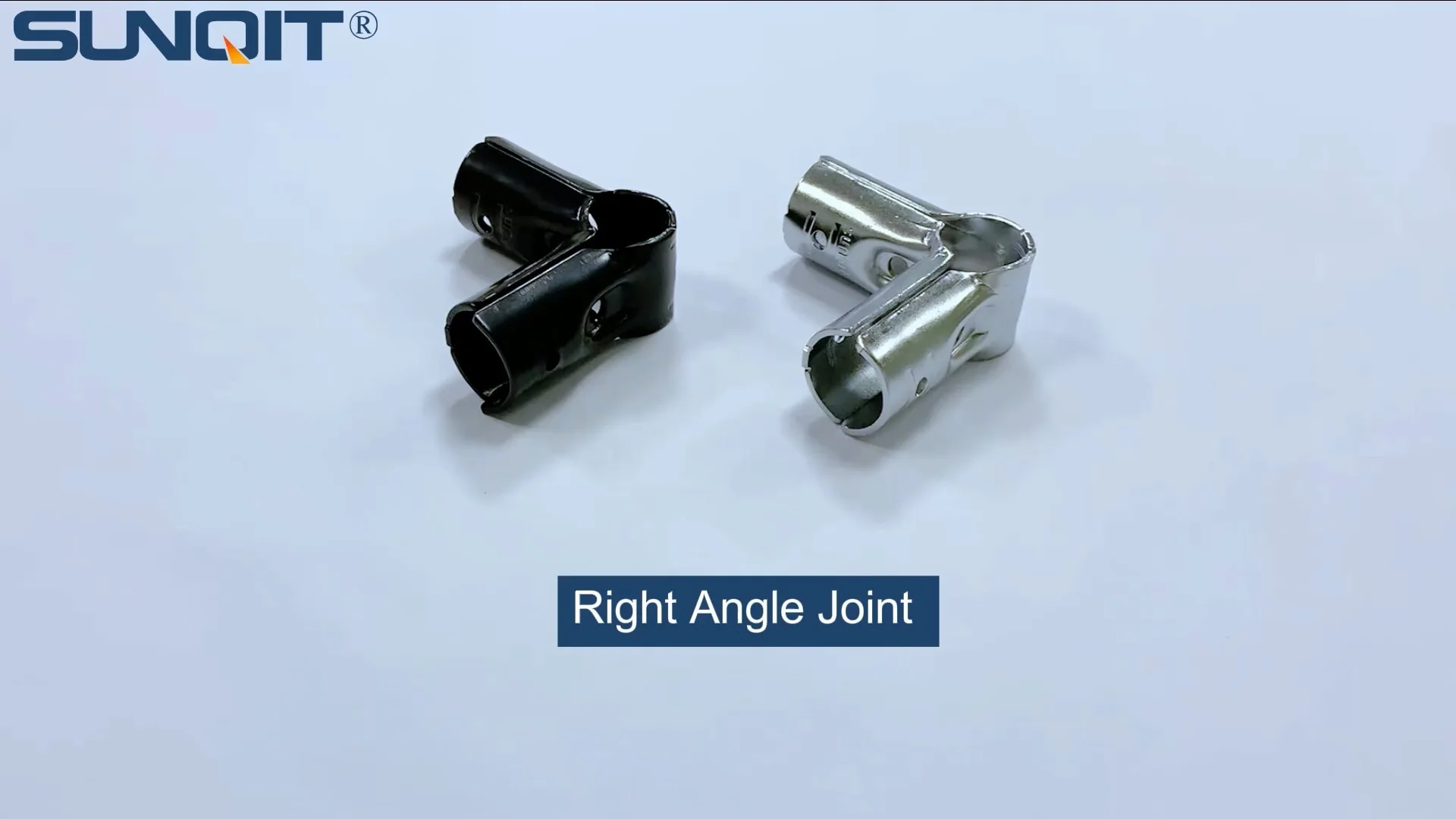
Three way lean pipe joint for 3 pcs 28MM lean pipe connection in straight angle, which used widely in workbench, flow rack, hand trolley frame connection.
Walk into any modern manufacturing facility, warehouse, or assembly line, and you'll likely notice a common theme: flexibility . In an era where production demands shift overnight, where product lines evolve, and where space constraints grow tighter by the day, rigid, one-size-fits-all equipment has become a liability. This is where lean systems step in—frameworks designed to eliminate waste, streamline workflows, and adapt to change. At the heart of these systems lies a humble yet powerful component: the modular three way lean pipe joint. It's not just a connector; it's the building block of customizable efficiency, enabling everything from lean pipe workbenches to dynamic flow racks that bend to your operation's unique rhythm.
But what makes this joint so special? Why has it become indispensable for businesses striving to stay agile in competitive markets? In this article, we'll dive deep into the world of modular three way lean pipe joints, exploring how they empower customization, integrate with key components like aluminum lean pipe and caster wheels , and transform static workspaces into adaptive ecosystems. Whether you're setting up a small workshop or scaling a large production line, understanding these joints could be the difference between stagnation and sustained success.
Understanding Lean Systems: The Foundation of Modern Efficiency
Before we unpack the modular three way lean pipe joint, let's first ground ourselves in the philosophy that birthed it: lean manufacturing. Coined by Toyota in the mid-20th century, lean is all about maximizing value while minimizing waste—waste of time, space, materials, and effort. Traditional manufacturing setups often suffer from "over-engineering" in rigidity: fixed conveyor belts that can't reroute, workbenches bolted to the floor that can't adjust, and storage racks that can't expand with inventory. These static structures trap businesses in inefficiency, forcing them to adapt their processes to the equipment rather than the other way around.
Enter the lean system : a dynamic framework built on the principle that equipment should serve the process, not hinder it. Lean systems prioritize adaptability, allowing teams to reconfigure workspaces in hours (or even minutes) to meet new demands. This flexibility isn't just about convenience—it directly impacts the bottom line. A study by the Lean Enterprise Institute found that manufacturers implementing lean practices reported up to 40% improvements in productivity and 50% reductions in lead times. At the core of this transformation are modular components that snap together, adjust, and evolve—components like the modular three way lean pipe joint.
Imagine a scenario: a electronics manufacturer suddenly lands a rush order for a new product line. Their existing assembly line, with fixed steel workbenches and immovable shelving, can't accommodate the new workflow. A traditional solution might involve purchasing new equipment, which takes weeks to arrive and install, or halting production to rewire the entire line. With a lean system, however, the team could use modular three way lean pipe joints to reconfigure their existing lean pipe workbench in a morning—adding extra shelves, adjusting heights for ergonomics, or even rolling it to a new location with the help of caster wheels . That's the power of adaptability, and it all starts with the right connectors.
What Is a Modular Three Way Lean Pipe Joint? Breaking Down the Basics
At first glance, a modular three way lean pipe joint might look like a simple plastic or metal piece with three openings. But its design is deceptively clever. Unlike traditional pipe fittings, which are often welded, glued, or threaded for permanent connections, modular three way lean pipe joints are engineered for quick, tool-free assembly and disassembly. They typically feature a clamp-style mechanism or a friction-fit design that allows lean pipes (hollow tubes made of steel, aluminum, or composite materials) to be inserted and secured in three directions—usually along the X, Y, and Z axes. This three-way connectivity is what unlocks 3D customization, turning flat, linear structures into multi-dimensional workspaces.
Let's break down the key features that make these joints so versatile:
1. Material Matters: Aluminum Lean Pipe and Beyond
While modular three way lean pipe joints can be made from various materials—including steel, plastic, and stainless steel— aluminum lean pipe has emerged as a fan favorite for most applications. Why? Aluminum strikes the perfect balance of strength, weight, and corrosion resistance. It's lightweight enough to be maneuvered by a single worker (critical for quick reconfigurations) yet durable enough to support heavy loads, whether that's tools on a workbench or boxes on a flow rack . Unlike steel, it won't rust in humid environments, making it ideal for food processing, pharmaceuticals, or outdoor warehouses. Plus, aluminum's smooth finish is easy to clean, a must for industries with strict hygiene standards.
The modular three way joint complements aluminum lean pipe beautifully. Most joints are designed with precision-machined openings that grip the pipe tightly without damaging it, ensuring a secure hold even under stress. Some models even include rubberized or plastic liners to prevent slippage and reduce noise during assembly—small touches that make a big difference in daily use.
2. Tool-Free Assembly: Speed Without Sacrifice
One of the biggest pain points of traditional industrial equipment is setup time. Welding pipes, drilling holes, or tightening bolts with specialized tools can turn a simple workspace adjustment into a full-day project. Modular three way lean pipe joints eliminate this hassle. Most use a hand-tightened lever, a twist-lock mechanism, or a cam-action clamp that requires nothing more than a firm grip to secure. This means a team can assemble a basic lean pipe workbench in under an hour, or reconfigure a flow rack between shifts with zero downtime.
Consider a small automotive parts supplier with a team of five. When they need to add a new assembly station for a custom order, they don't need to call in a contractor or shut down production. Instead, two workers can grab a bundle of aluminum lean pipes, a handful of three way joints, and some caster wheels , and have the station up and running by lunch. That's efficiency in action—and it's only possible because the joint prioritizes accessibility.
3. 3D Connectivity: Building Beyond the Flat Plane
Traditional pipe joints often limit you to two directions—straight or 90-degree angles—trapping you in flat, two-dimensional structures. The modular three way joint breaks this barrier by adding a third axis, allowing you to build upwards, outwards, and even diagonally. Need a workbench with overhead tool storage? Use three way joints to extend pipes vertically. Want a flow rack with tiered shelves that angle downward for gravity-fed product movement? Tilt joints along the Z-axis to create the slope. This 3D flexibility transforms simple frames into complex, multi-functional systems tailored to your exact workflow.
For example, a warehouse handling small electronics might use three way joints to build a flow rack with three levels: the top for incoming inventory, the middle for picking, and the bottom for returns. Each level can be angled slightly to let products glide into place, reducing the need for manual lifting. The joints ensure the structure stays stable even with varying weights, while the aluminum lean pipe keeps the whole setup lightweight enough to shift if the warehouse layout changes.

Customization in Action: From Workbenches to Flow Racks
The true magic of modular three way lean pipe joints lies in their ability to adapt to your needs—not the other way around. Whether you're designing a lean pipe workbench for a solo craftsman or a sprawling flow rack system for a distribution center, these joints act as the "Swiss Army knife" of lean systems, enabling endless configurations. Let's explore how they integrate into two common setups, and how components like caster wheels take customization to the next level.
Case Study 1: The Ergonomic Lean Pipe Workbench
A workbench is more than just a table—it's a command center. For assembly line workers, lab technicians, or mechanics, it's where precision happens, where tools live, and where hours of focused work unfold. A poorly designed workbench leads to fatigue, errors, and wasted motion; a well-designed one becomes an extension of the worker. Modular three way lean pipe joints make it possible to craft a workbench that fits your team , not the other way around.
Consider a medical device manufacturer where assembly technicians spend 8+ hours daily piecing together delicate components. Standard workbenches are either too high, too low, or lack storage for specialized tools. With modular three way joints and aluminum lean pipe , the company can build a custom solution:
- Adjustable Height: By using three way joints to connect vertical support pipes, the bench height can be tweaked by simply loosening the joints, sliding the pipes up or down, and retightening. This ensures every technician—whether 5'2" or 6'4"—can work at elbow height, reducing strain on shoulders and backs.
- Tool Storage on Demand: Overhead racks, side-mounted tool hooks, and under-bench drawers can all be added using three way joints. A technician assembling circuit boards might need a shelf for magnifying lamps above, while a colleague assembling casings could add a pegboard for screwdrivers and pliers. The joints allow these additions to be positioned exactly where they're needed, not just where the manufacturer decided.
- Mobility with Caster Wheels: By attaching caster wheels to the bench's base via three way joints, the workbench becomes portable. Need to move it to a testing station? Lock the caster brakes, roll it over, and unlock. No more lifting heavy equipment or disrupting workflows to access tools.
The result? A 20% reduction in reported fatigue (per internal surveys) and a 15% increase in assembly speed—all because the workbench was built around the workers, not the other way around. And when the company introduces a new product line with larger components? They'll simply reconfigure the joints to add wider shelves or raise the height, avoiding the cost of a brand-new bench.
Case Study 2: The Dynamic Flow Rack for Just-In-Time Inventory
In warehouses and distribution centers, flow racks are the backbone of just-in-time (JIT) inventory systems, ensuring products move smoothly from storage to picking stations. But not all products are created equal: a case of smartphones weighs far less than a case of power tools, and a pallet of clothing needs different spacing than a pallet of auto parts. Static flow racks force you to compromise—either wasting space on small items or cramming large items into ill-fitting slots. Modular three way lean pipe joints eliminate this compromise by letting you tailor the rack to your inventory.
Take a third-party logistics (3PL) provider handling everything from cosmetics to kitchen appliances. Their clients' needs change monthly, and their warehouse layout must keep up. With modular three way joints and aluminum lean pipe , they've built a flow rack system that transforms on demand:
- Adjustable Tiers: Three way joints connect horizontal and vertical pipes to create tiered shelves. For small cosmetics, they'll space tiers 12 inches apart; for bulky appliances, they'll widen the gap to 36 inches. No more one-size-fits-all shelving.
- Variable Slope: By angling some joints slightly, they can create gravity-fed lanes for fast-moving items (like shampoo bottles), letting products slide forward as the front ones are picked. For fragile items (like glassware), they'll reduce the slope or add non-slip mats—all without replacing the rack itself.
- Expandable Width: When a new client brings in a larger product line, they'll add additional vertical pipes and three way joints to widen the rack, doubling its capacity in an afternoon. No need for construction crews or new equipment—just a few extra pipes and joints.
Even better, by using caster wheels on the rack's base (connected via three way joints), the 3PL can reposition entire sections of the flow rack to align with seasonal demand. During the holiday rush, they'll roll racks closer to packing stations; in slower months, they'll spread them out to free up floor space for other operations. It's flexibility that turns fixed square footage into a dynamic asset.

Material Deep Dive: Why Aluminum Lean Pipe Reigns Supreme
We've mentioned aluminum lean pipe several times, but it's worth exploring why it's the material of choice for most modular three way joint applications. While steel and plastic pipes have their uses, aluminum strikes a rare balance of properties that make it ideal for lean systems:
Strength Without the Weight
Aluminum is surprisingly strong for its weight. A 1.5mm-thick aluminum lean pipe can support up to 150kg per linear meter—more than enough for most tools, parts, or boxes. Compare that to steel pipes of the same thickness, which might support 200kg but weigh twice as much. The lighter weight makes aluminum pipes easier to handle during assembly, reducing the risk of injury and cutting setup time. For a team reconfiguring a lean pipe workbench or flow rack , this translates to fewer strained muscles and more time focused on the task at hand.
Corrosion Resistance for Longevity
Steel pipes rust when exposed to moisture, chemicals, or humidity—common in food processing, automotive, or coastal warehouses. Plastic pipes, while rust-free, can warp under heat or crack under heavy loads. Aluminum, however, forms a natural oxide layer that resists corrosion, even in harsh environments. This means your lean system will last longer, with less maintenance. A warehouse using aluminum lean pipes and modular three way joints in a refrigerated area, for example, won't have to replace rusted components every few years—saving on replacement costs and downtime.
Sustainability and Recyclability
In an age where sustainability matters to customers and regulators alike, aluminum's recyclability is a major plus. Unlike plastic, which degrades during recycling, aluminum can be melted down and reused indefinitely without losing quality. When your lean system reaches the end of its life (or when you reconfigure it beyond recognition), the aluminum pipes and joints can be recycled, reducing your carbon footprint. For companies aiming for LEED certification or green manufacturing badges, this is more than a bonus—it's a competitive advantage.
Aesthetic and Ergonomic Benefits
Let's not overlook the little things: aluminum has a clean, modern look that brightens up workspaces. Unlike steel, which often requires painting (and repainting as chips appear), aluminum's natural finish stays sleek with minimal upkeep. This might seem trivial, but studies show that well-lit, visually appealing workspaces boost employee morale and productivity. Additionally, aluminum's smooth surface is gentler on hands than rough steel or sharp plastic edges, reducing the risk of cuts during assembly or reconfiguration.

The Role of Caster Wheels: Adding Mobility to Modular Setups
A modular system is only as flexible as its ability to move. Enter caster wheels —the unsung heroes that turn static lean pipe workbenches and flow racks into mobile workstations. When paired with modular three way joints, caster wheels unlock a new level of adaptability, letting you reposition equipment in seconds rather than hours.
But not all caster wheels are created equal. The right ones depend on your floor type, load capacity, and mobility needs:
- Swivel vs. Fixed Casters: Swivel casters rotate 360 degrees, making tight turns easy—ideal for workbenches that need to navigate around machinery. Fixed casters roll straight, providing stability for heavy flow racks that don't need frequent repositioning. Modular three way joints let you mix and match: two swivel casters (with brakes) and two fixed casters on a workbench, for example, balance maneuverability and stability.
- Load Capacity: A caster rated for 100kg won't cut it for a loaded flow rack. Always check the combined weight of the equipment and its contents, then choose casters with a 20% buffer. Modular joints ensure the casters attach securely to the pipe frame, distributing weight evenly to prevent tipping.
- Floor Protection: Hard plastic or rubber casters are gentler on concrete floors than metal ones, reducing scratches and noise. In warehouses with polished floors or labs with sensitive surfaces, this is non-negotiable. Some casters even come with soft, non-marking treads that leave no behind.
- Locking Mechanisms: Brakes are a must for mobile equipment. A simple foot brake on swivel casters ensures the workbench stays put during use, preventing accidents. Modular three way joints make it easy to install brakes at strategic points—like the front two casters of a workbench—for quick access.
Consider a furniture manufacturer with a small workshop. Their assembly line needs to shift between dining tables and chairs, which have different workflows. By attaching caster wheels to their lean pipe workbench (via three way joints), they can roll the bench to the saw station for cutting, then to the sanding area, then to the finishing booth—eliminating the need to carry heavy materials across the shop. The result? A 30% reduction in material handling time and a safer workspace with fewer trips over cords and obstacles.
The Benefits of Choosing Modular Three Way Lean Pipe Joints
By now, it's clear that modular three way lean pipe joints are more than just connectors—they're enablers of efficiency. But let's quantify the benefits, so you can see exactly how they impact your bottom line:
1. Cost Savings: Avoid "Rip and replace" Cycles
Traditional equipment often requires complete replacement when your needs change. A fixed steel workbench that's too short for a new product line? You'll need to buy a new one. A flow rack that can't expand with inventory? Time to invest in a larger model. Modular three way joints eliminate this waste by letting you reuse existing pipes and components. Need a taller workbench? Add extension pipes via joints. Need a wider flow rack? Add more vertical supports. Over time, this "build, adapt, reuse" cycle can cut equipment costs by 40-60% compared to rigid systems.
2. Faster Time-to-Market
In today's fast-paced markets, speed is everything. Whether you're launching a new product or pivoting to meet a sudden demand spike, delays in setting up production lines can cost you customers. Modular three way joints let you reconfigure workspaces in hours, not weeks. A consumer goods company introducing a limited-edition product, for example, can have a dedicated assembly line up and running in a day—beating competitors to store shelves and capturing market share.
3. Improved Ergonomics and Safety
Static workspaces often force workers into awkward positions: reaching for tools on high shelves, bending to access parts on low racks, or twisting to use equipment that's not aligned with their workflow. Modular three way joints let you design workspaces around human ergonomics, reducing the risk of musculoskeletal injuries. Adjustable-height lean pipe workbenches , overhead tool racks positioned at eye level, and flow racks angled for easy picking all contribute to a safer, healthier team. Fewer injuries mean fewer workers' compensation claims, lower absenteeism, and a more engaged workforce.
4. Scalability for Growth
Startups and small businesses often outgrow their equipment faster than they expect. A modular system grows with you. Add a few extra pipes and three way joints, and your initial lean pipe workbench becomes a double-wide station. Expand your flow rack with additional tiers as inventory grows. There's no need to overinvest in large equipment upfront—just start small and scale as revenue increases. This "pay-as-you-grow" model reduces financial risk and keeps cash flow healthy.
5. Reduced Waste and Environmental Impact
Lean systems are built on eliminating waste, and modular three way joints take this to heart. By reusing components, reducing the need for new materials, and choosing recyclable aluminum lean pipe , you'll shrink your environmental footprint. This isn't just good for the planet—it's good for your brand. Customers increasingly prefer to buy from eco-conscious companies, and regulators are tightening rules on waste and emissions. A modular lean system with aluminum pipes and joints helps you stay ahead of both trends.
Choosing the Right Modular Three Way Lean Pipe Joint: Key Considerations
Not all modular three way lean pipe joints are created equal. To ensure you're getting the right ones for your needs, keep these factors in mind:
Load Capacity
Start with the basics: how much weight will the joint need to support? A joint used in a lightweight lean pipe workbench for small parts might only need to handle 50kg, while one in a heavy-duty flow rack could need to support 200kg or more. Always check the manufacturer's load ratings, and factor in dynamic loads (e.g., if items will be sliding onto the rack) rather than just static loads.
Material Compatibility
Ensure the joint is designed for your pipe material. Most aluminum lean pipe joints have slightly larger openings than steel pipe joints, as aluminum has a different diameter tolerance. Using a steel joint with aluminum pipe could result in a loose fit, compromising stability. Look for joints labeled "for aluminum lean pipe" if that's your material of choice.
Environmental Conditions
Will the joint be used in a wet area? A cleanroom? A high-temperature environment? For wet or corrosive settings, choose joints made from stainless steel or aluminum with corrosion-resistant coatings. For cleanrooms, look for smooth, crevice-free designs that won't trap dust. For high heat, avoid plastic joints, which can warp—opt for metal instead.
Ease of Assembly
Not all joints are equally user-friendly. Some require a hex key to tighten, others use a simple lever. If your team will be reconfiguring the system frequently, prioritize tool-free joints—they'll save time and frustration. Test a sample joint before buying in bulk: can a worker with average strength tighten it securely in 30 seconds or less? If not, keep shopping.
Supplier Reliability
Finally, choose a reputable supplier. Look for companies with a track record in lean system components, positive customer reviews, and responsive support. A cheap joint might save you money upfront, but if it cracks under load or fails to grip the pipe, the cost of downtime and replacements will far exceed the initial savings. Ask for samples, check for certifications (like ISO 9001), and ensure the supplier can meet your volume needs—whether you're buying 10 joints or 1,000.
Overcoming Common Misconceptions About Modular Lean Systems
Despite their benefits, modular three way lean pipe joints and lean systems still face skepticism. Let's address the most common myths:
Myth 1: "Modular Systems Are Flimsy Compared to Fixed Equipment"
This couldn't be further from the truth. When properly assembled with high-quality joints and aluminum lean pipe , modular systems are surprisingly rigid. The three way joints distribute weight evenly across the structure, and many models include locking mechanisms to prevent slippage. In fact, some modular flow racks can support more weight than fixed steel racks, thanks to their ability to add reinforcement pipes exactly where needed.
Myth 2: "They're Too Expensive Upfront"
While modular joints and aluminum pipes may cost more than basic steel pipes upfront, the long-term savings more than make up for it. A fixed steel workbench might cost $200, but if you need to replace it in two years, that's $400 over four years. A modular workbench with aluminum pipes and three way joints might cost $300 upfront, but you can reconfigure it five times over four years, avoiding replacement costs. The math speaks for itself.
Myth 3: "They Take Too Long to Learn to Use"
Modular systems are designed for simplicity. Most workers can learn to assemble a basic lean pipe workbench in under an hour with minimal training. Manufacturers often provide color-coded instructions or video tutorials, and the tool-free design means there's no need to master complex equipment. In fact, many teams find modular systems easier to work with than traditional fixed equipment, as there's no drilling, welding, or heavy lifting required.
Conclusion: The Future of Workspaces Is Modular
In a world where change is the only constant, the modular three way lean pipe joint is more than a tool—it's a strategic asset. It transforms static workspaces into adaptive ecosystems, where lean pipe workbenches rise and fall with your team's needs, flow racks expand and contract with inventory, and caster wheels turn fixed square footage into dynamic, mobile productivity hubs. Paired with aluminum lean pipe , it offers strength without the weight, durability without the rust, and sustainability without the sacrifice.
Whether you're a small business just starting out or a large enterprise looking to modernize, the message is clear: rigid equipment belongs in the past. The future belongs to systems that adapt, grow, and evolve—systems built on the humble yet powerful modular three way lean pipe joint. It's time to stop letting your equipment dictate your workflow, and start letting your workflow dictate your equipment. Your team, your bottom line, and your competitive edge will thank you.