- Company Articles
- Products and Technology
- Product knowledge
- Modularity & Flexibility: How Four Way Straight Lean Pipe Joint Reduces Downtime

Modularity & Flexibility: How Four Way Straight Lean Pipe Joint Reduces Downtime
Related Product
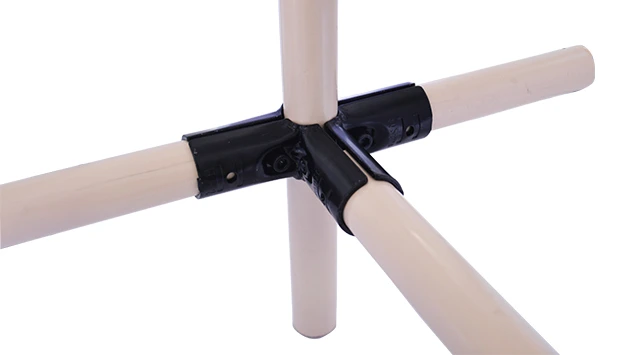
Four Way Straight Lean Pipe Joint
Four way lean pipe joint for 4 pcs 28MM lean pipe connection in straight angle, which used widely in workbench, flow rack, hand trolley frame connection.
The Cost of Downtime in Modern Manufacturing
In the fast-paced world of manufacturing, every minute counts. Whether you're running a small electronics assembly line or a large automotive plant, downtime isn't just an inconvenience—it's a bottom-line killer. Imagine a scenario: your team needs to reconfigure the production floor to accommodate a new product launch. With traditional fixed structures, this might mean days of halted operations, missed deadlines, and frustrated customers. Or worse, a sudden surge in demand for an existing product requires scaling up your workflow, but your rigid workbenches and material racks can't keep up. Sound familiar? You're not alone.
The truth is, today's manufacturers face a unique challenge: balancing efficiency with adaptability. Markets shift overnight, customer preferences evolve, and new technologies emerge—all requiring production lines that can pivot quickly. Yet, many still rely on outdated, one-size-fits-all systems that were built for a bygone era of mass production. The result? Unnecessary downtime, wasted resources, and a competitive disadvantage in an industry where agility is everything.
But what if there was a simpler way? What if the key to reducing downtime wasn't in overhauls or expensive automation, but in a small, unassuming component that makes your entire operation more flexible? Enter the four way straight lean pipe joint—a tiny but mighty tool that's quietly revolutionizing how manufacturers build, adapt, and grow their production systems. In this article, we'll explore how this unheralded hero of modular manufacturing is changing the game, one joint at a time.
What is Modularity, and Why Does It Matter?
Before we dive into the specifics of the four way straight lean pipe joint, let's talk about modularity. At its core, modularity is about building systems from interchangeable parts—parts that can be easily connected, disconnected, and reconfigured to meet changing needs. Think of it like building with Lego blocks: instead of a single, fixed structure, you have a set of pieces that can be rearranged into countless shapes, sizes, and functions.
In manufacturing, modularity isn't just a buzzword—it's a survival strategy. Here's why: First, it reduces waste. Traditional fixed systems often require custom fabrication for every new layout, leading to excess materials and labor costs. Modular systems, by contrast, use standardized components that can be reused repeatedly. Second, it speeds up innovation. When your assembly line can be reconfigured in hours instead of weeks, you can test new workflows, prototype products faster, and respond to market trends in real time. And third, it future-proofs your operation. As your business grows, modular systems grow with you—no need to tear down and rebuild from scratch.
But modularity alone isn't enough. To truly cut downtime, these systems need to be flexible. That's where the four way straight lean pipe joint comes in. It's the linchpin that holds modular manufacturing together, allowing you to build lean, adaptable structures that keep your production line moving—even when everything else is changing.

Enter the Four Way Straight Lean Pipe Joint: A Game-Changer in Flexibility
What is a Four Way Straight Lean Pipe Joint?
Let's start with the basics. A four way straight lean pipe joint is a small, durable connector designed to join lean pipes at a straight angle—hence the "four way" moniker, which means it can connect pipes in four directions (typically up, down, left, right, though configurations may vary by design). Made from materials like steel or aluminum, these joints are built to withstand the rigors of industrial use, with a simple yet ingenious design: a central hub with threaded holes, allowing lean pipes to be secured with bolts or set screws. No welding, no specialized tools, no fuss.
If you're new to lean manufacturing, you might be wondering: What's a lean pipe? Lean pipe (also called "lean tube") is a lightweight, corrosion-resistant pipe used to build modular structures like workbenches, flow racks, conveyor systems, and material carts. It's the backbone of lean systems—systems designed to eliminate waste, improve efficiency, and streamline workflows. And the four way straight joint is how you turn those pipes into something truly adaptable.
How It Works with Lean Pipe and Lean Systems
Picture this: You need to build a flow rack for your warehouse—a structure that uses gravity to move materials from the loading end to the picking end, reducing the need for manual lifting. With traditional methods, you'd hire a welder to fabricate a custom steel frame, which would take days and cost a small fortune. If you later need to adjust the height of the rack or add an extra shelf, you'd be back to square one.
With lean pipe and four way straight joints? It's a different story. You start with lengths of lean pipe—standardized, easy to cut to size—and a handful of four way joints. You screw the joints onto the pipes, connect them in the configuration you need (say, a 3-tier flow rack with vertical supports and horizontal shelves), and voilà: a sturdy, functional structure in a fraction of the time. Need to add a shelf later? Simply loosen the bolts, add a new pipe and joint, and tighten everything back up. No welding, no downtime, no hassle.
But the magic doesn't stop there. The four way joint's design ensures that connections are secure yet reversible. Unlike welded joints, which are permanent (and messy to undo), these joints let you disassemble and rebuild structures as often as needed. That means if your production line needs to shift from assembling smartphones to tablets, you can reconfigure your workbenches and material racks in hours—not days. And because the components are standardized, you can stock spare pipes and joints, so you're never caught off guard by a last-minute change.

The Benefits: How This Little Joint Cuts Downtime
Rapid Reconfiguration: From Hours to Minutes
The biggest selling point of the four way straight lean pipe joint? It slashes reconfiguration time. Let's say your team needs to adjust a workbench to accommodate a taller operator or a new tool. With a traditional wooden or welded steel workbench, this might involve sawing, drilling, or even replacing the entire bench—taking hours of production time. With a lean pipe workbench built using four way joints? You loosen the bolts, adjust the height of the legs, and tighten them back up. Total time? Maybe 15 minutes. That's downtime reduced by over 90%.
Take another example: a flow rack in your warehouse that's currently set up for small boxes needs to be reconfigured for larger, heavier components. With a modular system, you don't need to build a new rack. You simply add longer lean pipes to the vertical supports (using four way joints to extend the height) and adjust the horizontal shelves to wider spacing. The entire process can be done by a single worker with basic tools, without stopping the rest of the warehouse operation. Compare that to traditional fixed racks, which would require (demolition) and reconstruction—all while your team is left waiting for materials to move.
Reduced Assembly Time: Build It Once, Use It Again
Assembly time is another area where the four way joint shines. Traditional manufacturing structures often require custom fabrication: cutting metal, welding joints, painting surfaces. This not only takes time but also requires skilled labor (hello, expensive welders). Modular systems using lean pipe and four way joints, on the other hand, are designed for simplicity. Most workers can learn to assemble them in minutes, with nothing more than a hex key or wrench.
Consider a small electronics manufacturer that needs to set up a new assembly line for a seasonal product. With traditional methods, they might wait weeks for custom workbenches and conveyor systems. With lean pipe and four way joints? They can have the entire line built in a day—using in-house staff. And when the season ends, they can disassemble the line, pack up the pipes and joints, and store them for next year. No wasted materials, no ongoing storage costs for unused fixed structures.
Scalability Without Overhead
Growth is great, but it often comes with growing pains—especially when it comes to production capacity. Adding a new product line or increasing output for an existing one usually means investing in new equipment, which can be costly and time-consuming. Modular systems with four way joints eliminate this problem by letting you scale incrementally.
For instance, imagine your company lands a big order that requires doubling your assembly capacity. Instead of buying a whole new set of workbenches, you can simply add extensions to your existing ones using lean pipe and four way joints. Need more material storage? Add extra shelves to your flow racks. Short on conveyor space? Extend your roller track with additional sections connected by four way joints. Because these components are standardized, you can purchase only what you need, when you need it—no overbuying, no wasted capital.
Compatibility with Existing Systems
One of the biggest concerns for manufacturers considering modular systems is compatibility with their current setup. Will they need to replace everything? The answer, thankfully, is no. Four way straight lean pipe joints are designed to work with standard lean pipe sizes (often 28mm or 30mm in diameter), which are widely available from lean pipe suppliers. This means you can integrate them with existing lean pipe structures, flow racks, workbenches, and even roller tracks.
For example, if you already have a lean pipe workbench but need to add a side shelf for tools, you can simply attach a new pipe to the bench's vertical support using a four way joint. No need to replace the entire bench—just add the component you need. This backward compatibility is a huge win for businesses looking to dip their toes into modular manufacturing without a complete overhaul.
Real-World Applications: From Flow Racks to Workstations
To truly understand the impact of the four way straight lean pipe joint, let's look at some real-world applications. These examples show how this small component is making a big difference in factories, warehouses, and assembly lines around the world.
Case Study 1: Electronics Manufacturer Cuts Changeover Time by 80%
A mid-sized electronics company in California specializes in assembling circuit boards for medical devices. Their challenge? They produce over 50 different board models, each with unique assembly requirements. In the past, switching between models meant reconfiguring their workbenches—tasks that involved removing and reinstalling shelves, tool holders, and component bins. This process took an average of 4 hours per changeover, leading to significant downtime and missed production targets.
Then, they switched to lean pipe workbenches built with four way straight joints. Now, instead of rebuilding the entire bench, workers simply adjust the position of shelves and bins using the joints. For example, a board requiring more component storage gets an extra shelf added in 10 minutes; a smaller board gets the shelf removed just as quickly. Changeover time dropped from 4 hours to 45 minutes—a reduction of over 80%. The result? They can now run 3-4 model changes per day instead of 1, boosting output by 200% without adding staff or shifts.
Case Study 2: Automotive Supplier Eliminates Storage Waste with Modular Flow Racks
A Tier 1 automotive supplier in Michigan was struggling with storage inefficiency. They produced plastic interior parts for multiple car models, each with different sizes and packaging. Traditional fixed shelving meant they often had unused space on some shelves and overflow on others. When a new car model was introduced, they'd have to build custom racks, which took weeks and cost $10,000+ per rack.
They replaced their fixed racks with modular flow racks built using lean pipe and four way straight joints. Now, when a new part comes in, they simply reconfigure the flow rack's dividers and shelf heights using the joints. For example, a larger part might require wider spacing between dividers—easily adjusted by moving the four way joints along the horizontal pipes. No custom fabrication, no waiting for external vendors. The company estimates they've saved over $50,000 in rack-building costs in the first year alone, plus reduced storage waste by 30%.
Case Study 3: Food Packaging Plant Adapts to Seasonal Demand with Roller Track Extensions
A food packaging plant in Florida experiences extreme seasonal demand: during the summer, they package fresh produce, requiring fast-moving conveyor lines; in the winter, they shift to canned goods, which need slower, more controlled handling. In the past, they'd have to switch out entire conveyor systems, a process that took 3 days and required shutting down production.
Today, their conveyor lines are built using roller track and four way straight lean pipe joints. In summer, they extend the roller track with additional sections to speed up flow; in winter, they shorten the track and add buffer zones using the same joints. The entire seasonal reconfiguration now takes 8 hours—done overnight, with no production downtime. They've also reduced their conveyor maintenance costs by 40%, as modular roller track is easier to repair (simply replace a damaged section instead of the whole line).
Traditional vs. Modular: A Comparison
Still not convinced? Let's put traditional fixed systems head-to-head with modular systems using four way straight lean pipe joints. The table below breaks down the key differences in downtime, cost, and flexibility:
| Metric | Traditional Fixed Systems | Modular Systems (Four Way Joints) |
|---|---|---|
| Reconfiguration Time | Days to weeks (requires custom fabrication/welding) | Hours to minutes (bolt-on/bolt-off joints) |
| Assembly Cost | High (custom labor, specialized tools) | Low (standard parts, in-house assembly) |
| Scalability | Limited (requires full system replacement) | Unlimited (incremental additions with standard parts) |
| Downtime During Changes | High (production halts for reconfiguration) | Low (changes done during shifts or overnight) |
| Waste | High (unused fixed structures, excess materials) | Low (components reused/recycled) |
| Flexibility Rating | 1/5 (fixed design, no adaptability) | 5/5 (endless configurations, reusable parts) |
The data speaks for itself: modular systems with four way straight lean pipe joints outperform traditional fixed systems in every category that matters for reducing downtime and improving efficiency.
Why Choose Quality? The Importance of a Reliable Lean Pipe Supplier
Of course, not all four way straight lean pipe joints are created equal. To get the full benefits of modular manufacturing, you need high-quality components from a trusted lean pipe supplier. Cheap, poorly made joints can bend, strip, or break under stress—leading to unstable structures, safety hazards, and more downtime (the very problem you're trying to solve).
When choosing a supplier, look for joints made from durable materials like high-grade steel or aluminum, with precision threading to ensure a tight, secure fit. Check for certifications (e.g., ISO standards) that guarantee quality control. And don't forget about customer support: a good supplier will help you design your modular system, recommend the right components (including compatible lean pipe, roller track, and accessories), and provide after-sales service if you need help with reconfiguration down the line.
Investing in quality might cost a bit more upfront, but it pays off in the long run. A well-made four way joint will last for years, withstanding thousands of reconfigurations without losing strength. Compare that to a cheap joint that fails after a few uses—costing you time, money, and potentially even safety incidents.
Conclusion: Small Joint, Big Impact
In the world of manufacturing, it's often the smallest components that make the biggest difference. The four way straight lean pipe joint is a perfect example. It's not flashy, it's not high-tech, but it's a workhorse that enables modularity, flexibility, and efficiency—three things that directly reduce downtime and boost your bottom line.
Whether you're a small business looking to adapt to changing markets or a large enterprise aiming to streamline operations, modular systems built with lean pipe and four way joints offer a simple, cost-effective solution. They let you build what you need, when you need it; reconfigure on the fly; and scale without the overhead of traditional fixed systems. And in an industry where downtime is measured in dollars and cents, that's not just an advantage—it's a necessity.
So, the next time you're stuck staring at a rigid, outdated production line, remember: the key to reducing downtime might be smaller than you think. It's in the joints—the four way straight lean pipe joints that turn chaos into order, rigidity into flexibility, and downtime into productivity.