Multi-Angle Fixed Aluminum Joint Compatibility: Lean Pipes & Accessories
Related Product
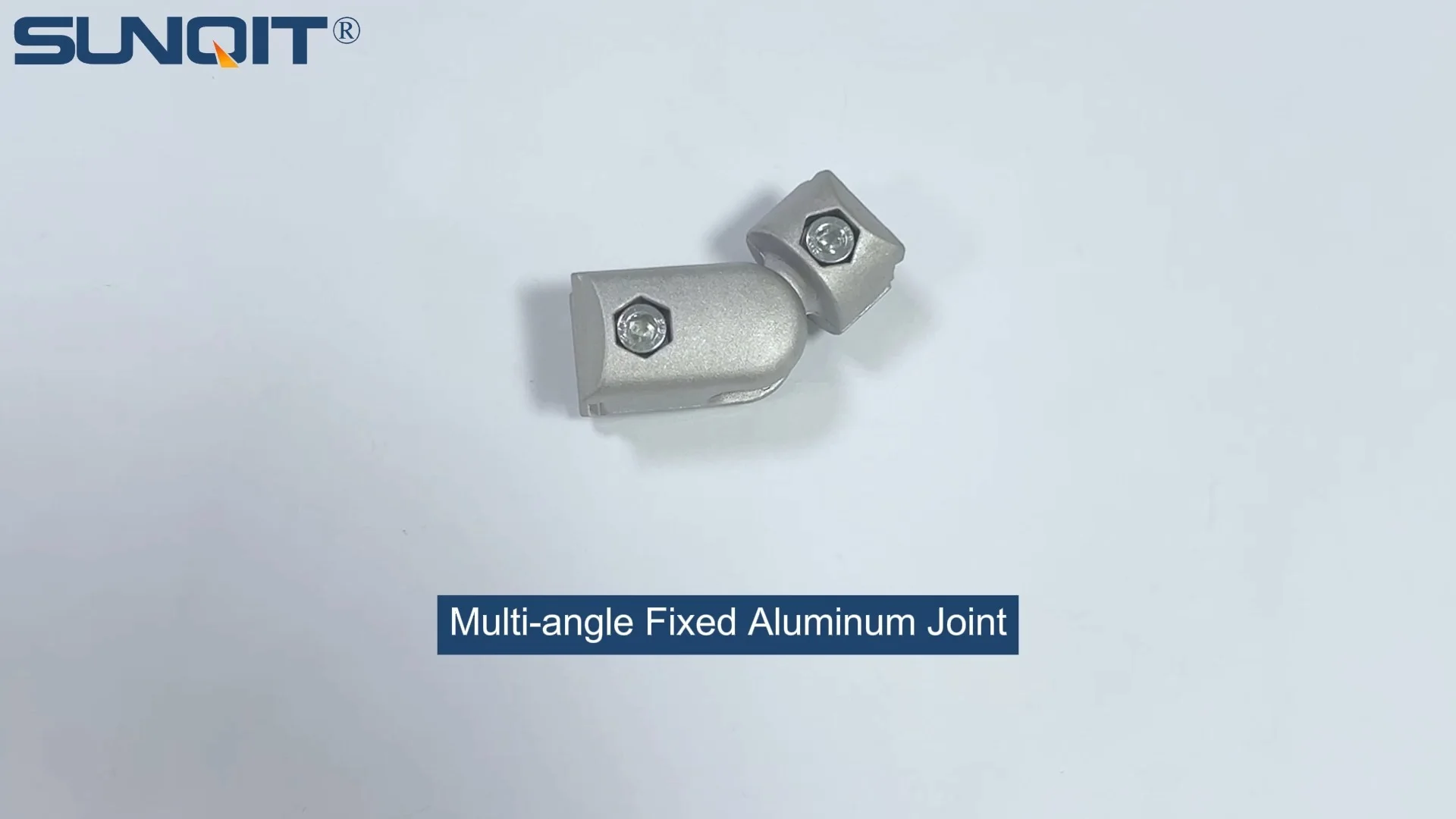
Multi-angle Fixed Aluminum Joint
Aluminum joint pipe connection for two pipe connection and work in mutiple angle.
Multi-angle Fixed Aluminum Joint

The Backbone of Flexible Manufacturing: Why Joints Matter

In the fast-paced world of manufacturing, where production lines shift, product designs evolve, and space constraints demand constant creativity, one thing remains clear: rigidity is the enemy of progress. Imagine a factory floor where every workbench, every material rack, every conveyor is bolted down, impossible to reconfigure without hours of welding or heavy machinery. That's a scene from the past. Today, the most successful operations thrive on adaptability—and at the heart of that adaptability lies a humble yet mighty component: the multi-angle fixed aluminum joint .

These unassuming connectors are the unsung heroes of lean manufacturing, quietly holding together the systems that keep products moving, workers efficient, and costs in check. But not all joints are created equal. When it comes to balancing strength, flexibility, and compatibility with the tools of the trade—like aluminum lean pipes and aluminum profile accessories —the multi-angle fixed aluminum joint stands out. It's not just a piece of hardware; it's a bridge between a static setup and a dynamic, responsive workspace. Let's dive into why these joints matter, how they play nice with the pipes and accessories you already use, and why they might just be the missing link in your quest for a truly lean operation.

What Are Multi-Angle Fixed Aluminum Joints, Anyway?

Let's start with the basics. A multi-angle fixed aluminum joint is exactly what it sounds like: a connector made from lightweight, durable aluminum, designed to join pipes or profiles at multiple angles—think 30°, 45°, 90°, even 135°—while maintaining a secure, fixed hold. Unlike fully rotational joints that swivel freely (useful in some cases but prone to unwanted movement), these joints lock into place once tightened, striking a perfect balance between flexibility in setup and stability during use.

Why aluminum, you might ask? Steel joints are strong, sure, but they're heavy and prone to rust if not treated. Plastic joints are lightweight but lack the load-bearing muscle needed for industrial use. Aluminum hits the sweet spot: it's corrosion-resistant, so it holds up in humid factories or outdoor storage areas; it's lightweight, making assembly and reconfiguration a one-person job instead of a two-person lift; and it's surprisingly strong, able to support heavy loads when paired with the right pipes. For manufacturers who need both durability and maneuverability, aluminum is the material of choice—and these joints lean into that advantage.

But what really sets multi-angle fixed aluminum joints apart is their design. Most feature a modular structure with pre-drilled holes or slots that align with the grooves of aluminum profiles, plus a clamping mechanism (often a hex bolt or cam lever) that tightens down to grip the pipe securely. This means no welding, no drilling, no special tools—just a wrench or even a hand-tightened lever to lock the joint in place. And because they're "multi-angle," they're not limited to straight lines or right angles. Need a workbench with a sloped shelf for easier access? A material rack with angled dividers to prevent products from sliding? A conveyor that bends around a corner? These joints make it possible, all without sacrificing the stability you need to keep operations running smoothly.

Compatibility 101: Aluminum Lean Pipes and the Joints That Love Them

Now, let's talk about the first piece of the puzzle: aluminum lean pipes . If you've spent any time in modern manufacturing, you've seen these sleek, silver pipes in action. They're the building blocks of everything from workbenches to flow racks, prized for their lightweight nature, resistance to dents, and ability to be cut to custom lengths. But a pipe is only as useful as the joints that hold it together—and multi-angle fixed aluminum joints were practically made for this partnership.

The secret to their compatibility lies in precision engineering. Most aluminum lean pipes come in standard diameters (common sizes include 28mm or 30mm), and multi-angle fixed aluminum joints are designed to match these dimensions exactly. The inner diameter of the joint's clamping area fits snugly around the pipe, creating a tight bond that won't slip under load. Whether you're using basic aluminum tubes, internal rotary aluminum joints, or even specialized options like corrugated aluminum pipes, the key is that the joint's grip is uniform and reliable.

Let's put this into perspective. Suppose you're assembling a workbench for an electronics assembly line. You need it to be sturdy enough to hold circuit boards, tools, and testing equipment, but also adjustable—maybe you want a shelf at a 45° angle to keep frequently used parts within arm's reach. Using a 90° fixed joint would limit you to straight shelves, but a multi-angle joint lets you set that shelf at exactly 45°, then lock it in. The aluminum lean pipe provides the structure, the joint provides the angle, and together, they create a workbench that adapts to the task, not the other way around.

Load capacity is another crucial factor. A well-designed multi-angle fixed aluminum joint, when paired with a high-quality aluminum lean pipe, can support surprisingly heavy weights—often up to 150kg or more per joint, depending on the pipe thickness and joint design. That means you can build everything from lightweight pick racks to heavy-duty material handling trolleys without worrying about sagging or collapse. It's a partnership that turns "good enough" into "built to last."

Beyond Pipes: Pairing with Aluminum Profile Accessories

Aluminum lean pipes are the stars of the show, but no manufacturing system is complete without the supporting cast: aluminum profile accessories . These are the little extras that turn a basic frame into a fully functional workspace—think pipe clamps, bracket mounts, end caps, and guide rails. And here's the good news: multi-angle fixed aluminum joints play well with almost all of them, turning a simple structure into something truly versatile.

Take, for example, roller track guide rails—those plastic or aluminum strips that help materials glide smoothly along flow racks. To mount these rails to an aluminum frame, you need brackets that can attach securely to both the rail and the pipe. Multi-angle fixed aluminum joints often feature additional holes or T-slot compatibility, allowing you to bolt on rail connectors or placon mounts without compromising the joint's grip on the pipe. This means you can angle a roller track to follow the contour of your production line, ensuring materials flow where they're needed, when they're needed—all held together by the same joint that's keeping the frame stable.

Another example: caster wheels. If you want your workbench or trolley to be mobile, you'll need to attach casters to the base. Many aluminum profile accessories include caster mounting plates, which can be bolted directly to multi-angle joints. Since the joints are fixed, the casters stay aligned, preventing the trolley from wobbling or veering off course. It's these small, seamless integrations that make multi-angle joints more than just connectors—they're hubs that bring together all the pieces of your lean system.

Even specialized accessories, like anti-slip leveling feet or suction cup bases for uneven floors, can be attached to multi-angle joints. The joint's aluminum construction is compatible with a wide range of fasteners (hex bolts, screws, rivets), so you're not limited to a single brand or type of accessory. This flexibility is a game-changer for facilities that source components from multiple suppliers or need to retrofit existing systems with new tools.

Real-World Applications: From Workbenches to Roller Tracks

Enough theory—let's talk about how this all works in practice. Multi-angle fixed aluminum joints, aluminum lean pipes, and aluminum profile accessories aren't just abstract concepts; they're the building blocks of real, working systems that solve everyday manufacturing challenges. Let's walk through two common applications to see how these components come together.

Application 1: The Adjustable Workbench
A workbench is the command center of any assembly line. It needs to be stable, ergonomic, and adaptable to different tasks. Let's say you're setting up a workbench for a small appliance manufacturer. The workers assemble mixers, so they need space for the motor housing, blades, and control panels, plus a shelf for tools and a bin for screws. Using aluminum lean pipes for the frame, you start with a basic rectangular structure: four vertical pipes for legs, connected by horizontal pipes at the top and bottom. But here's where the multi-angle joints shine: instead of a flat top shelf, you use a 15° angle joint to tilt the back edge of the shelf upward by 15°, preventing small parts from rolling off. For the tool shelf below, you use a 30° joint to angle it toward the worker, making pliers and screwdrivers easier to grab. Aluminum profile accessories like pipe clamps secure a power strip to the side, and caster wheels (mounted via bracket accessories) let the bench be moved when the line reconfigures. The result? A workbench that's not just a table, but a custom-tailored workspace.

Application 2: Smooth-Flow Roller Tracks
Roller tracks are essential for moving materials from one station to the next—think boxes of components sliding from the warehouse to the assembly line, or finished products moving to packaging. The key to a smooth roller track is alignment: if the track is even slightly crooked, materials jam, slowing down production. Multi-angle fixed aluminum joints ensure that the aluminum guide rails (like aluminum guide rail A or B) stay perfectly straight or follow a precise curve. For example, a 90° crossing joint can connect two perpendicular roller tracks, creating a corner that materials glide around without stopping. Swivel roller balls (1 inch or 0.5 inch) mount to the tracks via placon mounts, which attach to the joints. The joints' fixed angles keep the tracks level, so gravity does its job, and materials flow consistently. Even in high-traffic areas, the aluminum construction resists wear, ensuring the track stays aligned for years.

These are just two examples, but the possibilities are endless. From turnover trolleys that navigate tight aisles to material racks with adjustable shelves, multi-angle fixed aluminum joints turn simple pipes and accessories into systems that grow with your business.

Comparing Joint Types: Which One Fits Your Needs?

Not all multi-angle fixed aluminum joints are identical, and choosing the right one depends on your specific needs. To help you decide, let's compare some common types based on angle range, compatible pipes, and best use cases. This isn't an exhaustive list, but it'll give you a sense of the options available.

Joint Type Angle Range Compatible Pipe Material Best For Load Capacity (Approx.)
Standard Multi-Angle Fixed Joint 30°, 45°, 90°, 135° Aluminum lean pipe (28-30mm), basic aluminum tube Workbenches, light-duty racks 100-150kg per joint
Reinforced Multi-Angle Joint 45°, 90°, 135° Thick-walled aluminum pipe, stainless steel pipe Heavy-duty trolleys, industrial racks 200-250kg per joint
Internal Rotary Aluminum Joint 0-180° (fixed at any angle) Internal rotary aluminum tube, T-slot aluminum pipe Adjustable shelves, tilting work surfaces 80-120kg per joint
90° Crossing Joint 90° only (crossing pipes) Aluminum lean pipe, aluminum profile Roller tracks, intersecting frames 150-200kg per joint

As you can see, the standard multi-angle fixed joint is the most versatile, offering a range of angles for everyday use. If you're building something heavy-duty, like a rack for automotive parts, the reinforced version is worth the investment. For applications where you need to fine-tune angles (like a drafting table or a sloped conveyor), the internal rotary joint gives you infinite adjustability before locking into place. And for roller tracks or systems where pipes cross at 90°, the crossing joint ensures a clean, stable connection.

The Benefits for Lean Systems: More Than Just Flexibility

At this point, you might be thinking, "Okay, these joints are flexible and compatible—but how do they actually help my business run leaner?" Lean manufacturing is all about eliminating waste: waste of time, waste of space, waste of resources. Multi-angle fixed aluminum joints contribute to this goal in ways that might surprise you.

Time Savings During Setup and Reconfiguration
Traditional manufacturing setups often require welding, drilling, or hiring a contractor to modify workbenches or racks. With multi-angle fixed aluminum joints, assembly is a DIY job. No special skills needed—just a wrench and a few minutes per joint. Need to reconfigure a production line for a new product? Disassemble the old setup, adjust the angles on the joints, and rebuild. What used to take days now takes hours, keeping your team focused on production, not construction.

Reusability and Reduced Waste
Aluminum is infinitely recyclable, but more importantly, these joints and pipes are reusable. When a project ends or a system becomes obsolete, you can take it apart and rebuild something new. Unlike welded steel frames, which often end up in the scrapyard, aluminum lean pipes and multi-angle joints can be repurposed for years. This reduces waste and lowers long-term costs—no need to buy new materials every time your needs change.

Durability That Lowers Maintenance Costs
Aluminum resists rust and corrosion, even in humid or dusty environments. That means less time spent painting, repairing, or replacing rusted joints. The clamping mechanisms on multi-angle joints are also designed for repeated use—tighten and loosen them dozens of times, and they'll still grip like new. This durability translates to lower maintenance costs and fewer production disruptions.

Space Optimization
Multi-angle joints let you build upward and outward, making the most of limited floor space. A workbench with angled shelves takes up the same footprint but holds more tools. A roller track with a 45° bend fits around a corner instead of requiring a straight line. In manufacturing, space is money, and these joints help you squeeze every ounce of efficiency out of your facility.

Choosing the Right Joint: What to Look For

Now that you're sold on the benefits, how do you choose the right multi-angle fixed aluminum joint for your project? Here are a few key factors to consider:

Load Requirements : Start by calculating the maximum weight the joint will need to support. If you're building a shelf for small parts, a standard joint will do. For heavy machinery or pallet racks, opt for a reinforced model with thicker aluminum walls.

Angle Needs : Do you need fixed angles (30°, 90°, etc.) or the ability to set custom angles? Standard multi-angle joints offer preset options, while internal rotary joints let you dial in any angle between 0° and 180°.

Environment : Will the joint be exposed to moisture, chemicals, or extreme temperatures? Look for joints with corrosion-resistant finishes (like anodized aluminum) if you're working in a harsh environment.

Compatible Pipes and Accessories : Double-check that the joint's inner diameter matches your aluminum lean pipes. Most manufacturers list compatible pipe sizes (e.g., 28mm, 30mm), so there's no guesswork. Also, ensure it works with your existing accessories—clamps, brackets, and mounts should attach easily without adapters.

Supplier Reliability : Finally, choose a reputable supplier. Look for companies that offer warranties on their joints, provide clear specifications, and have a track record of quality. A cheap joint might save you money upfront, but a failed joint can bring your entire line to a halt.

Conclusion: Building a Lean Future, One Joint at a Time

In the end, multi-angle fixed aluminum joints are more than just connectors—they're the foundation of a manufacturing system that can keep up with the demands of today and tomorrow. They turn rigid setups into flexible workspaces, reduce waste, save time, and empower teams to build, adapt, and innovate without being limited by their tools.

Whether you're assembling a simple workbench, a complex roller track system, or anything in between, the partnership between these joints, aluminum lean pipes, and aluminum profile accessories is a recipe for success. It's a partnership that turns "we can't" into "we can," and "good enough" into "exactly what we need."

So the next time you look at your factory floor, take a closer look at those unassuming aluminum joints. They might not make headlines, but they're quietly building the future of manufacturing—one angle, one pipe, one perfectly aligned system at a time.


Get In Touch with us

Hey there! Your message matters! It'll go straight into our CRM system. Expect a one-on-one reply from our CS within 7×24 hours. We value your feedback. Fill in the box and share your thoughts!