- Company Articles
- Products and Technology
- Product knowledge
- Multi-Angle Fixed Aluminum Joint Customization: Can You Modify Angles?

Multi-Angle Fixed Aluminum Joint Customization: Can You Modify Angles?
Related Product
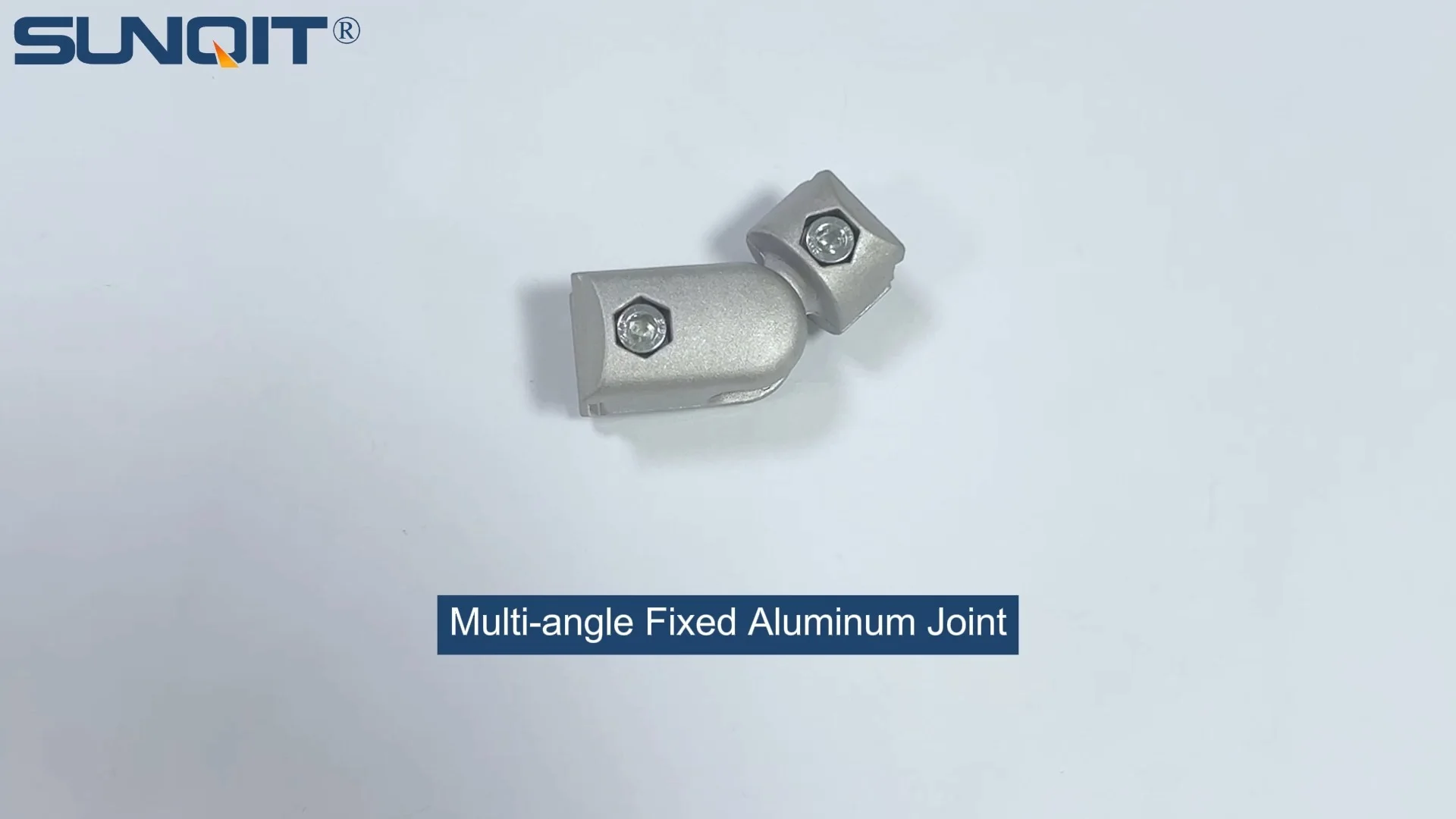
Multi-angle Fixed Aluminum Joint
Aluminum joint pipe connection for two pipe connection and work in mutiple angle.
The Backbone of Modern Workspaces – Aluminum Joints in Lean Systems
Walk into any modern manufacturing facility, warehouse, or production line, and you'll notice a common thread: structures built to adapt, endure, and streamline work. From workbenches where assembly happens to material racks organizing components, these setups don't just appear out of thin air. They're carefully constructed using modular components, and at the heart of many of these systems lie
aluminum lean pipe
and their accompanying joints. Among these, multi-angle fixed aluminum joints stand out as unsung heroes, quietly holding everything together while balancing stability and flexibility. But here's a question that often arises for those designing or upgrading their workspaces: Can you actually modify the angles of these "fixed" joints? Let's dive in.
What Are Multi-Angle Fixed Aluminum Joints?
Before we tackle angle modification, let's clarify what these joints are. Multi-angle fixed aluminum joints are specialized connectors designed to link
aluminum profile
(think of those T-slot aluminum tubes you see in workbenches or racks) at specific, pre-determined angles. Unlike adjustable joints that let you pivot or rotate pipes on-site, these are engineered for a tight, secure fit at angles like 30°, 45°, 90°, 135°, or even custom angles tailored to a project's needs.
Picture this: When building a
workbench
, you need the legs to connect perfectly perpendicular to the tabletop (90° angle) for stability. Or maybe you're constructing a material rack where horizontal and diagonal supports meet at 45° to reinforce the structure. That's where multi-angle fixed joints come in. They're the glue—literally and figuratively—that turns individual aluminum pipes into a cohesive, load-bearing system.

The Core Question: Can You Modify Their Angles?
Let's cut to the chase: Are these "fixed" joints truly set in stone, or is there wiggle room (pun intended) to tweak their angles? The short answer is: It depends on what you mean by "modify."
First, let's clarify the term "fixed." In manufacturing terms, "fixed" here refers to the joint's design intent: it's engineered to lock two or more aluminum pipes at a specific angle during assembly, with no built-in mechanism for on-site adjustment. Unlike a hinge or a swivel joint, you can't loosen a bolt and rotate the pipes to a new angle once the joint is installed. So, if you're hoping to grab a wrench and pivot a 90° joint to 120° on the factory floor, that's generally not feasible with standard off-the-shelf models.
But that doesn't mean customization is off the table. Many
aluminum profile supplier
offer custom angle options during the manufacturing process. If your project requires a non-standard angle—say, 110° for a specialized conveyor guide rail—you can work with suppliers to design and produce a joint tailored to that exact measurement. This is where "fixed" becomes a misnomer for some: while the joint itself isn't adjustable post-production, it can be customized pre-production to fit unique angles.

Key Factors Influencing Angle Modification
If you're considering modifying a multi-angle fixed aluminum joint—either by custom-ordering a specific angle or attempting to alter an existing one—several factors come into play. Let's break them down:
1. Material Composition: Aluminum Alloys Matter
Aluminum joints are typically made from alloys like 6061 or 6063, chosen for their strength, corrosion resistance, and machinability. These alloys are strong, but they're not indestructible. Trying to bend or reshape a cast aluminum joint to change its angle (say, using a vice or hammer) is a bad idea. You risk cracking the joint, weakening its structural integrity, or creating uneven stress points that could fail under load. Save the DIY metalworking for projects that don't involve supporting heavy equipment or materials! 2. Manufacturing Processes: Cast vs. Machined Joints
How a joint is made affects its modifiability. Many multi-angle joints are die-cast, meaning molten aluminum is poured into a mold to create the joint's shape. Die-casting produces consistent, complex shapes, but the resulting joint is solid and difficult to alter without specialized tools. On the other hand, some joints are CNC-machined from a solid block of aluminum. Machined joints offer more precision, and in rare cases, a skilled machinist might be able to adjust the angle by re-cutting the joint's faces—though this is costly, time-consuming, and not recommended unless absolutely necessary. 3. Application Context: What's at Stake?
Even if you could modify a joint's angle, ask yourself: Should you? If the joint is part of a critical structure like a roller track for heavy product transport or a workbench where precision assembly occurs, altering the angle could compromise safety or functionality. For example, a misaligned roller track might cause products to jam, slowing down production. In these cases, it's almost always better to order a custom joint from the start than to risk modifying an existing one.
Aluminum joints are typically made from alloys like 6061 or 6063, chosen for their strength, corrosion resistance, and machinability. These alloys are strong, but they're not indestructible. Trying to bend or reshape a cast aluminum joint to change its angle (say, using a vice or hammer) is a bad idea. You risk cracking the joint, weakening its structural integrity, or creating uneven stress points that could fail under load. Save the DIY metalworking for projects that don't involve supporting heavy equipment or materials! 2. Manufacturing Processes: Cast vs. Machined Joints
How a joint is made affects its modifiability. Many multi-angle joints are die-cast, meaning molten aluminum is poured into a mold to create the joint's shape. Die-casting produces consistent, complex shapes, but the resulting joint is solid and difficult to alter without specialized tools. On the other hand, some joints are CNC-machined from a solid block of aluminum. Machined joints offer more precision, and in rare cases, a skilled machinist might be able to adjust the angle by re-cutting the joint's faces—though this is costly, time-consuming, and not recommended unless absolutely necessary. 3. Application Context: What's at Stake?
Even if you could modify a joint's angle, ask yourself: Should you? If the joint is part of a critical structure like a roller track for heavy product transport or a workbench where precision assembly occurs, altering the angle could compromise safety or functionality. For example, a misaligned roller track might cause products to jam, slowing down production. In these cases, it's almost always better to order a custom joint from the start than to risk modifying an existing one.

Comparing Multi-Angle Fixed Aluminum Joints with Other Types
To better understand why multi-angle fixed joints are designed the way they are, let's compare them to two common alternatives: traditional lean pipe joints and adjustable aluminum profile connectors. This will help clarify when fixed joints are the right choice—and when modification might (or might not) be needed.
| Feature | Multi-Angle Fixed Aluminum Joint | Lean Pipe Joint (Traditional) | Adjustable Aluminum Profile Connector |
|---|---|---|---|
| Primary Material | Aluminum alloy (6061/6063) | Steel with plastic coating | Aluminum alloy with adjustable bolts |
| On-Site Adjustability | None (fixed angle post-installation) | Limited (some swivel, but less stable) | High (pivot/rotate via bolts) |
| Common Angles | 30°, 45°, 90°, 135°, custom | 90°, 180° (limited multi-angle options) | Variable (0°–180°, depending on model) |
| Load Capacity | High (rigid connection) | Medium (flexible but less durable) | Medium-High (adjustable but may loosen over time) |
| Typical Applications | Workbenches, heavy-duty racks, roller tracks | Lightweight trolleys, temporary structures | Prototyping, modular setups, non-critical loads |
| Custom Angle Availability | High (via supplier pre-production) | Low (limited to standard designs) | Medium (adjustable on-site, but fixed range) |
As the table shows, multi-angle fixed aluminum joints prioritize stability and load capacity over on-the-fly adjustability. This makes them ideal for permanent, high-use structures where precision and durability matter most. Lean pipe joints, while cheaper, lack the rigidity of aluminum, and adjustable connectors, while flexible, may not hold up as well under heavy loads. So, if you need a rock-solid connection at a specific angle, fixed aluminum joints are the way to go—even if that means ordering a custom angle upfront.
Practical Applications: Where These Joints Shine
Let's ground this in real-world examples. Multi-angle fixed aluminum joints are everywhere in lean manufacturing, but here are three common scenarios where their angle-specific design is critical:
1. Workbench Assembly: Stability for Precision Work
A workbench E (single deck-without caster) is a staple in electronics assembly, where technicians need a flat, stable surface to handle small components. The legs, cross-braces, and shelf supports all rely on multi-angle fixed joints to maintain perfect 90° and 45° angles. Even a 1° misalignment could make the bench wobble, affecting precision. In this case, fixed joints ensure the bench stays level and secure for years. 2. Material Racks: Organizing with Efficiency
Material rack B (3 row and 3 floor) is designed to hold bins of parts, tools, or finished products. Each shelf and vertical support connects via fixed joints at 90° angles to maximize storage space and prevent shelves from sagging under weight. Custom angles might be used here too—for example, if the rack needs to fit into a corner, requiring 135° joints to hug the walls. 3. Roller Tracks: Smooth Flow for Production
Roller track systems move products between workstations, and their alignment is critical. Fixed joints ensure the track stays at a consistent angle (often slightly inclined for gravity flow) so items glide smoothly without jamming. Modifying these angles on-site would disrupt the flow, leading to bottlenecks—hence the need for precision from the start.
A workbench E (single deck-without caster) is a staple in electronics assembly, where technicians need a flat, stable surface to handle small components. The legs, cross-braces, and shelf supports all rely on multi-angle fixed joints to maintain perfect 90° and 45° angles. Even a 1° misalignment could make the bench wobble, affecting precision. In this case, fixed joints ensure the bench stays level and secure for years. 2. Material Racks: Organizing with Efficiency
Material rack B (3 row and 3 floor) is designed to hold bins of parts, tools, or finished products. Each shelf and vertical support connects via fixed joints at 90° angles to maximize storage space and prevent shelves from sagging under weight. Custom angles might be used here too—for example, if the rack needs to fit into a corner, requiring 135° joints to hug the walls. 3. Roller Tracks: Smooth Flow for Production
Roller track systems move products between workstations, and their alignment is critical. Fixed joints ensure the track stays at a consistent angle (often slightly inclined for gravity flow) so items glide smoothly without jamming. Modifying these angles on-site would disrupt the flow, leading to bottlenecks—hence the need for precision from the start.
Navigating Customization: Working with Your Aluminum Profile Supplier
If you need a non-standard angle for your multi-angle fixed aluminum joint, the best approach is to collaborate with your
aluminum profile supplier
early in the design process. Reputable suppliers don't just sell parts—they offer engineering support to help you choose (or create) the right components for your project. Here's how to make the most of this partnership:
1. Share Your Design Goals
Be clear about what you're building. Is it a workbench, a material rack, or a custom conveyor? What angles do you need, and what loads will the structure bear? The more details you provide, the better your supplier can advise on whether a standard angle joint will work or if a custom design is needed. 2. Ask About Custom Tooling
Many suppliers have in-house or partner facilities that can create custom molds or CNC programs for unique joint angles. While this may add to the lead time (typically 2–4 weeks for small batches), it ensures the joint is engineered to your exact specifications—no modification needed later. 3. Consider Prototyping
For complex projects, ask if you can order a prototype joint before full production. This lets you test the angle in your structure and make adjustments before committing to a large order. It's a small investment that can save time and money down the line.
Be clear about what you're building. Is it a workbench, a material rack, or a custom conveyor? What angles do you need, and what loads will the structure bear? The more details you provide, the better your supplier can advise on whether a standard angle joint will work or if a custom design is needed. 2. Ask About Custom Tooling
Many suppliers have in-house or partner facilities that can create custom molds or CNC programs for unique joint angles. While this may add to the lead time (typically 2–4 weeks for small batches), it ensures the joint is engineered to your exact specifications—no modification needed later. 3. Consider Prototyping
For complex projects, ask if you can order a prototype joint before full production. This lets you test the angle in your structure and make adjustments before committing to a large order. It's a small investment that can save time and money down the line.
Accessories Matter: Complementing Joints for Optimal Performance
Multi-angle fixed aluminum joints don't work alone—they rely on
aluminum profile accessories
to create a complete system. These accessories can also influence whether you need to modify joints, so it's worth familiarizing yourself with them:
End Caps and Covers:
These fit over the ends of aluminum profiles to prevent sharp edges and protect against dust. They're purely functional but ensure the joint's connection points stay clean and secure.
Clamps and Brackets:
Aluminum pipe clamp
and brackets reinforce joints, especially in high-load areas. If a joint feels weak (even at the correct angle), adding a bracket might solve the problem better than modifying the joint itself.
Rubber Seals and Gaskets:
T-slot rubber seal covers fill gaps in aluminum profiles, reducing noise and preventing debris from entering joints. They don't affect angles, but they keep the entire system running smoothly.
By pairing the right accessories with your multi-angle fixed joints, you can often avoid the need for modification altogether. For example, if a shelf feels uneven, adding shims or adjusting the bracket positions might correct the issue without altering the joint angle.
Common Misconceptions About Fixed Joints
Let's debunk a few myths that often lead people to consider modifying multi-angle fixed aluminum joints:
Myth 1: "All fixed joints are the same."
Not true! Joints vary by manufacturer, material thickness, and design. A cheap, low-quality joint might feel "adjustable" because it's poorly made, but that's a red flag—it will likely fail under load. High-quality joints from reputable suppliers are precision-engineered to hold their angles without budging. Myth 2: "I can just bend the aluminum pipe to adjust the angle."
Aluminum profiles are strong, but they're not designed to be bent on-site. Bending a pipe to compensate for a joint angle will weaken it, leading to cracks or deformation over time. This is especially risky for load-bearing structures. Myth 3: "Custom angles are too expensive."
While custom joints cost more than standard ones, the price difference is often minimal for large orders. And when you factor in the cost of rework, downtime, or accidents from modified joints, custom becomes the more economical choice.
Not true! Joints vary by manufacturer, material thickness, and design. A cheap, low-quality joint might feel "adjustable" because it's poorly made, but that's a red flag—it will likely fail under load. High-quality joints from reputable suppliers are precision-engineered to hold their angles without budging. Myth 2: "I can just bend the aluminum pipe to adjust the angle."
Aluminum profiles are strong, but they're not designed to be bent on-site. Bending a pipe to compensate for a joint angle will weaken it, leading to cracks or deformation over time. This is especially risky for load-bearing structures. Myth 3: "Custom angles are too expensive."
While custom joints cost more than standard ones, the price difference is often minimal for large orders. And when you factor in the cost of rework, downtime, or accidents from modified joints, custom becomes the more economical choice.
The Bottom Line: Fixed Doesn't Mean Inflexible
So, can you modify the angles of multi-angle fixed aluminum joints? Technically, with enough machining or brute force, maybe—but practically, you shouldn't. These joints are designed for precision, stability, and safety, and their "fixed" nature is a feature, not a flaw. Instead of modifying existing joints, work with your supplier to order custom angles during production. This ensures your structure is built to last, performs as intended, and avoids costly mistakes.
At the end of the day, multi-angle fixed aluminum joints are a testament to the beauty of modular design: they balance rigidity where you need it with customization where you want it. Whether you're building a workbench, a material rack, or a full production line, these joints are the quiet foundation that lets you focus on what matters most—creating efficient, productive workspaces that adapt to your needs, without compromising on strength or safety.