- Company Articles
- Products and Technology
- Product knowledge
- Multi-Angle Fixed Aluminum Joint Design Innovations: 2025 Trends

Multi-Angle Fixed Aluminum Joint Design Innovations: 2025 Trends
Related Product
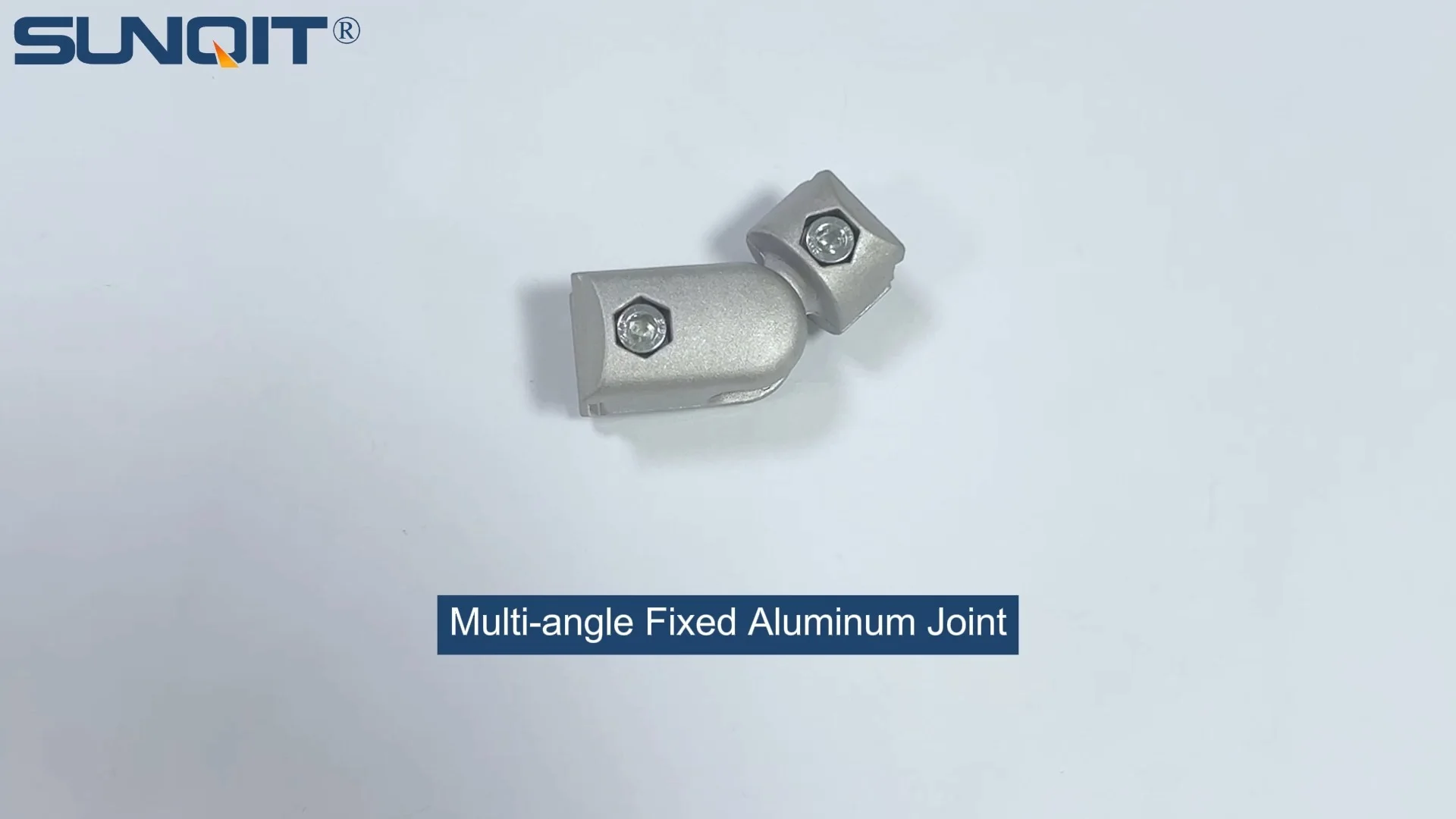
Multi-angle Fixed Aluminum Joint
Aluminum joint pipe connection for two pipe connection and work in mutiple angle.
Redefining Flexibility in Modern Manufacturing and Workspace Design
Introduction: The Hidden Cost of Rigid Workspaces
Walk into any manufacturing plant, warehouse, or assembly line, and you'll likely spot the same challenge: workspaces stuck in time. A workbench built for a specific task five years ago now struggles to adapt to new product lines. A material rack that once held small components groans under heavier loads. A conveyor system that worked for linear production now needs to pivot—literally—and there's no easy way to make it happen.
For the workers on the floor, this rigidity isn't just an inconvenience. It's a daily battle. Sarah, a production supervisor at a mid-sized electronics manufacturer, puts it bluntly: "Last month, we launched a new smartphone model, and suddenly our old workbenches were too low for the taller assembly kits. We had to prop them up with wooden blocks—unsafe, unstable, and a total waste of time. Our team deserved better."
For facility managers like Raj, the frustration runs deeper. "We budgeted for new equipment, but custom metal fabrication takes weeks, and if we change our process again next quarter? That investment becomes obsolete. It's like building a house with no doors—you're stuck before you even move in."
This is where the unsung hero of modern workspace design enters: the multi-angle fixed aluminum joint. Far more than a simple connector, this small but mighty component is quietly revolutionizing how we build, adapt, and reimagine industrial spaces. In 2025, as industries race to keep up with rapid product cycles, sustainability goals, and worker well-being, these joints are no longer optional—they're essential. Let's dive into how their design innovations are reshaping the future of lean systems, aluminum profiles, and the people who rely on them.
What Are Multi-Angle Fixed Aluminum Joints, Anyway?
At first glance, a multi-angle fixed aluminum joint might look like just another piece of hardware—a small, angular block with holes and grooves. But to anyone who's wrestled with traditional steel joints or welded structures, it's a game-changer. Simply put, these joints are engineered to connect aluminum extrusion profiles at multiple angles (think 30°, 45°, 90°, 135°, and beyond) while maintaining structural integrity and allowing for quick, tool-free adjustments.
Unlike their rigid steel counterparts, which often require welding, drilling, or specialized tools to modify, multi-angle fixed aluminum joints are designed for flexibility. They clamp onto aluminum profiles—those sleek, T-slot aluminum extrusion profiles you've seen in modern workbenches and material racks—and lock into place with minimal effort. Need to tilt a shelf 45° to improve ergonomics? Loosen a few knobs, adjust, and retighten. Want to add a crossbar at a 135° angle to create a custom cart? Snap the joint into place, secure it, and you're done.
But what truly sets them apart is their "fixed yet flexible" nature. "Fixed" because once locked, they hold steady under heavy loads—no wobbling, no slipping. "Multi-angle" because they eliminate the need for one-trick-pony connectors that only work at 90°. And "aluminum" because, unlike steel, they're lightweight, corrosion-resistant, and infinitely recyclable—tickling all the boxes for 2025's sustainability mandates.
Think of them as the Lego blocks of industrial design, but for grown-ups. They turn aluminum profiles from static building materials into a dynamic, adaptable toolkit. And in a world where change is the only constant, that's not just useful—it's transformative.

2025 Design Innovations: Building Smarter, Not Harder
So, what makes 2025 the year of the multi-angle fixed aluminum joint? It's not just hype—it's a convergence of material science, user-centric design, and industry demand. Let's break down the key innovations reshaping these yet powerful components.
Ergonomic Engineering: Tools? We Don't Need No Stinking Tools
Remember the days of fumbling with wrenches, Allen keys, and screwdrivers just to adjust a shelf? 2025 joints are leaving that frustration in the dust. The latest models feature "tool-less clamp systems" that use quick-release levers or twist-lock mechanisms. Maria, an assembly line worker in Detroit, tested a prototype last year: "I used to spend 20 minutes with a wrench just to reposition a material rack. Now, I twist a knob, move it, and twist back. It's like opening a water bottle—so simple, I can do it with one hand while holding a part."
Even better, these joints are designed with tactile feedback in mind. A satisfying "click" lets workers know when the joint is fully secured, eliminating guesswork and reducing the risk of loose connections. No more second-guessing if that shelf will hold—your hands (and ears) will tell you it's locked tight.
Material Science: Lighter, Stronger, Greener
Aluminum has long been prized for its strength-to-weight ratio, but 2025's joints take it further. Manufacturers are now blending aluminum with trace amounts of magnesium and silicon to create alloys that are 15% stronger than standard aluminum while remaining 30% lighter than steel. This means joints can support heavier loads—think 500+ pounds per connection—without adding bulk to workbenches or carts, making them easier to move and safer to handle.
Sustainability is also front and center. Most multi-angle fixed aluminum joints are now made from 100% recycled aluminum, and their modular design reduces waste. Unlike welded steel structures, which often end up in landfills when outdated, these joints can be disassembled, reused, or recycled into new components. For companies aiming for net-zero goals, this isn't just a selling point—it's a compliance requirement.
Modularity: One Joint, Endless Possibilities
Gone are the days of buying a separate joint for every angle. 2025's multi-angle fixed aluminum joints are "universal" by design, compatible with a wide range of aluminum profile accessories and T-slot aluminum extrusion profiles (from 20x20mm mini-profiles to 80x80mm heavy-duty beams). Whether you're building a small workbench E (single deck, no casters) or a large material rack B (3 rows, 3 floors), the same joint can adapt.
Some manufacturers are even adding "modular inserts"—interchangeable plastic or rubber components that let a single joint grip different profile sizes or add features like cable management channels. Need to run wires through your workbench? Swap in a cable-guide insert. Working with a non-standard profile? Pop in a custom-sized grip. It's like having a Swiss Army knife for your workspace.

The Unsung Partnership: Multi-Angle Joints and Aluminum Profiles
You can't talk about multi-angle fixed aluminum joints without talking about their soulmate: the aluminum extrusion profile. These two are a match made in industrial design heaven, and their partnership is what makes modern lean systems so powerful. Let's break down why this relationship matters.
Aluminum extrusion profiles are the "bones" of any workspace system—straight, strong, and full of T-slots that act as built-in connection points. But without the right joints, they're just fancy metal sticks. Multi-angle fixed aluminum joints are the "muscles" that bring them to life, allowing profiles to bend, twist, and connect in ways that would be impossible with traditional hardware.
Take, for example, a standard 40x40mm aluminum profile. With a traditional 90° steel bracket, it can form a simple square frame. But with a multi-angle joint, that same profile can become a 45° inclined shelf for easy part access, a 135° corner brace for a rolling cart, or even a 30° angled support for a conveyor system. The T-slots in the aluminum profile act as tracks, letting the joint slide into position and lock down exactly where it's needed—no drilling, no measuring, no mistakes.
2025 has also seen innovations in profile-joint compatibility. Brands like LeanTech and Alumina have developed "smart profiles" with color-coded T-slots that match joint sizes, so workers can instantly see which joint fits which profile. "It used to take new hires a week to learn which bracket goes with which beam," says Mike, a warehouse trainer in Chicago. "Now, they just match the blue slot with the blue joint—done. It's cut training time in half."
This partnership isn't just about functionality—it's about speed. In a lean system, downtime is the enemy. When a production line needs to reconfigure for a new product, every minute counts. With multi-angle joints and aluminum profiles, a team can disassemble an entire workbench, reconfigure it, and have it back up and running in under an hour. Compare that to traditional welded steel setups, which often require a contractor and a full day of work. It's like upgrading from a flip phone to a smartphone—once you experience the speed, you can never go back.

2025 Trends: Why Now Is the Tipping Point
So, why are multi-angle fixed aluminum joints suddenly everywhere in 2025? It's not a coincidence—three major trends are driving their adoption, and they're only accelerating.
1. The Rise of "Micro-Factories" and Rapid Prototyping
Gone are the days of massive, one-product factories. Today's manufacturers are leaning into "micro-factories"—small, agile production lines that can switch between products in hours, not weeks. Think a cosmetics company that produces 10 limited-edition lip glosses in a month, or a tech startup that iterates on a new gadget design weekly. These operations can't afford rigid infrastructure, and multi-angle fixed aluminum joints are their secret weapon.
"We launched five product lines last quarter alone," says Priya, founder of a sustainable packaging startup. "Each line needed a different workbench height, material rack layout, and conveyor angle. With aluminum profiles and multi-angle joints, we reconfigured our space overnight. If we'd used traditional steel, we'd still be waiting for welders."
2. Worker Well-Being Takes Center Stage
2025 isn't just about productivity—it's about people. OSHA and global safety standards are cracking down on ergonomic hazards, and for good reason: musculoskeletal injuries cost companies billions annually. Multi-angle fixed aluminum joints are helping solve this by letting workers customize their workspaces to their bodies.
A 5'2" assembly worker can lower their workbench to elbow height; a 6'4" colleague can raise theirs—no tools, no hassle. Material racks can be tilted to reduce bending, and conveyor systems can be angled to eliminate reaching. "Since we switched to adjustable workbenches with these joints, our injury rate dropped by 40%," says Tom, an HR manager at a automotive parts plant. "Workers aren't just safer—they're happier. And happy workers? They stay longer and care more."
3. Sustainability Isn't a Buzzword Anymore
With strict carbon neutrality deadlines looming, companies can't afford to waste materials. Multi-angle fixed aluminum joints support circular economies by design. They're made from recycled aluminum, they're reusable, and when they finally wear out, they're 100% recyclable. Compare that to steel joints, which often end up in landfills, or welded structures, which are nearly impossible to repurpose.
"Our sustainability report used to be a nightmare," admits Lisa, a sustainability officer at a consumer goods company. "Now, we track how many joints we reuse each quarter—last year, we saved 2 tons of metal from landfills just by reconfiguring old racks instead of buying new ones. That's not just good for the planet—it's good for our bottom line."
From Factory Floors to Labs: Real-World Applications
Multi-angle fixed aluminum joints aren't just for manufacturing—they're transforming industries across the board. Let's take a look at how they're making an impact in some unexpected places.
Electronics Manufacturing: Precision Meets Flexibility
In cleanrooms where microchips and circuit boards are assembled, precision is everything. Workbenches must be stable, (ESD-safe), and adaptable to tiny component sizes. Multi-angle joints excel here, allowing workers to adjust shelf heights by millimeters and angle tools for optimal visibility. One semiconductor plant in Taiwan reported a 25% reduction in assembly errors after switching to adjustable workbenches with multi-angle joints—all because workers could position parts exactly where their eyes and hands needed them.
Healthcare: Sterility and Speed
Hospitals and labs need equipment that's easy to clean, mobile, and configurable for different procedures. Aluminum profiles with multi-angle joints are perfect for this. Mobile medical carts can be reconfigured from surgical tool holders to medication dispensers in minutes, and their smooth aluminum surfaces resist bacteria growth. During the 2024 flu outbreak, one hospital in Canada used these joints to build 10 isolation room workstations in a single day—critical time saved when every second counted.
Retail and Warehousing: Adapting to Seasonal Chaos
Black Friday, back-to-school, holiday rushes—retail warehouses live and die by seasonal demand. Multi-angle joints let them reconfigure storage racks in hours, not days. A clothing warehouse can switch from wide, flat racks for summer dresses to tall, narrow racks for winter coats with just a few adjustments. "Last December, we needed to add 50% more shelf space for toys," says Jake, a warehouse manager at a major retailer. "With aluminum profiles and multi-angle joints, we built new racks from old ones in a weekend. No contractors, no downtime—just our team, working together."
Traditional vs. Modern: A Comparison You Can Feel
Still not convinced these joints are worth the switch? Let's put them head-to-head with traditional steel joints in a table that matters—one that focuses on the people who use them every day.
| Feature | Traditional Steel Joints | 2025 Multi-Angle Fixed Aluminum Joints |
|---|---|---|
| Assembly Time | 2–4 hours (welding, drilling, measuring) | 15–30 minutes (tool-less, click-and-lock) |
| Adjustability | Almost impossible (requires cutting/welding) | Unlimited (adjust angles in seconds) |
| Weight | Heavy (5–10 lbs per joint) | Lightweight (1–2 lbs per joint) |
| Worker Fatigue | High (lifting heavy tools, repetitive drilling) | Low (one-handed adjustments, no heavy tools) |
| Sustainability | Poor (often landfilled, hard to recycle) | Excellent (100% recycled, reusable, recyclable) |
| Cost Over Time | High (frequent replacements, labor costs) | Low (reusable, minimal labor, long lifespan) |
The numbers speak for themselves, but the real difference is in the stories. Sarah, the production supervisor we met earlier, sums it up: "With steel joints, we'd dread change. Now? We embrace it. Last week, a new intern suggested angling our material rack to reduce bending. We adjusted the joints in 10 minutes, and now everyone's asking why we didn't do it sooner. That's the power of these tools—they put the control back in our hands."
Looking Ahead: What's Next for Multi-Angle Joints?
2025 is just the beginning. As industries evolve, so will multi-angle fixed aluminum joints. Here's what we can expect in the next few years:
Smart Joints: Sensors and IoT Integration
Imagine a joint that can "talk"—alerting you when it's loose, tracking how often it's adjusted, or even predicting when it might need maintenance. Early prototypes are already in testing, with tiny sensors embedded in the joints that send data to a central dashboard. "If a shelf joint starts to loosen, we'll get an alert before it fails," says Raj, the facility manager. "That's not just preventative maintenance—that's peace of mind."
Custom Angles on Demand
3D printing is making its way into joint manufacturing, allowing companies to order custom angles (like 27° or 112°) for unique applications. No more forcing a project to fit standard angles—design the joint you need, print it, and install it the same day.
Even More Sustainability
Manufacturers are experimenting with bio-based lubricants for joint mechanisms and solar-powered production facilities. The goal? Zero-carbon aluminum joints by 2030.
Conclusion: Building a Workspace That Grows With You
Multi-angle fixed aluminum joints might not have the glamour of robots or AI, but they're the unsung heroes of modern workspace design. They're about more than just connecting metal—they're about connecting people to their work, companies to their sustainability goals, and industries to a future where change is met with flexibility, not frustration.
As we move into 2025 and beyond, one thing is clear: rigid workspaces are a relic of the past. The future belongs to systems that adapt, evolve, and put workers first—and at the heart of those systems are multi-angle fixed aluminum joints, aluminum extrusion profiles, and the lean systems they enable.
So, the next time you walk into a factory, lab, or warehouse, take a closer look at those sleek, adjustable workbenches and racks. Chances are, there's a multi-angle joint holding it all together—quietly, reliably, and ready for whatever comes next. And that's the beauty of it: in a world of constant change, these little joints give us something solid to build on.